
Creating a visually captivating holiday display isn’t just about covering every surface with lights—it’s about artistry, depth, and intention. One of the most elegant ways to elevate your outdoor lighting is by staggering the brightness of Christmas lights on bushes to produce a soft, natural gradient effect. This technique mimics the way light filters through foliage in nature, producing a luminous fade from bright to dim that draws the eye and adds dimension to your landscape.
Unlike uniform lighting, which can appear flat or overly intense, a gradient approach uses strategic variations in light density, bulb wattage, and color temperature to create a dynamic, organic glow. Whether you're working with boxwood hedges, evergreen shrubs, or decorative topiaries, mastering this method transforms your yard into a winter wonderland with professional finesse.
Selecting the Right Lights for Gradation
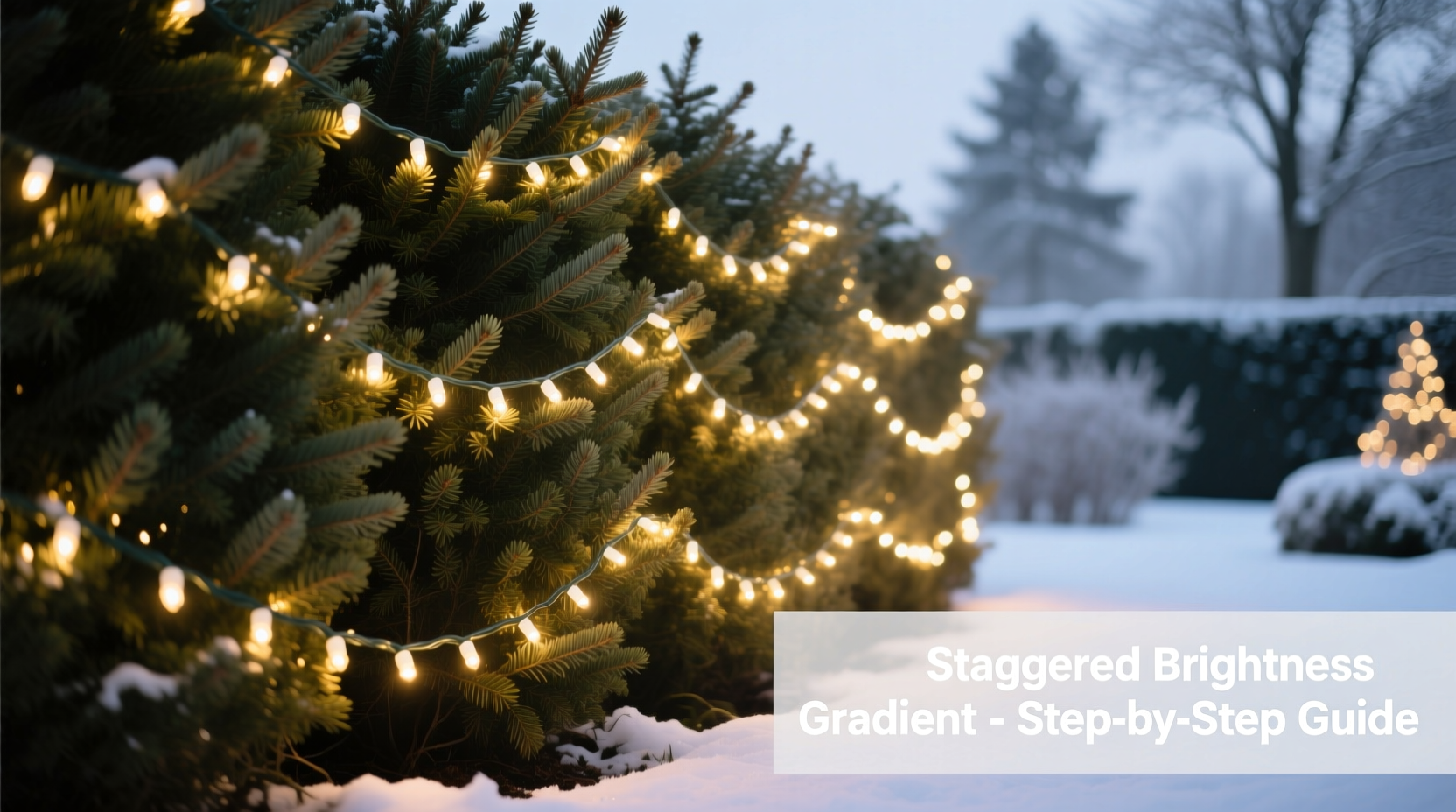
The foundation of any successful gradient lies in choosing the appropriate types of Christmas lights. Not all strings are created equal—some are better suited for subtle transitions than others. The key variables include bulb type, brightness (measured in lumens), color temperature (in Kelvin), and spacing between bulbs.
Incandescent mini lights offer a warm, nostalgic glow but consume more energy and generate heat. LED lights, on the other hand, are energy-efficient, long-lasting, and available in a wide range of brightness levels and color temperatures. For gradient effects, LEDs are generally preferred due to their versatility and lower heat output, making them safer for use on dry foliage.
When shopping for lights, look for options labeled as “dim-to-warm” or those offering multiple brightness settings. Some smart LED strings even allow individual bulb control via an app, enabling precise gradation without physical adjustments. However, even basic fixed-brightness strings can achieve excellent results when layered thoughtfully.
“Lighting gradients work best when you treat the bush like a canvas—each section receives a different brushstroke of brightness.” — Daniel Reyes, Landscape Lighting Designer
Planning the Gradient Layout
Before plugging in a single string, take time to assess your bushes. Consider their shape, height, density, and location relative to viewing angles—such as windows, walkways, or street visibility. A well-planned gradient enhances form rather than obscuring it.
Start by dividing each bush into three visual zones: base, midsection, and crown. The base should be moderately lit to anchor the plant without overwhelming nearby areas. The midsection builds intensity, drawing attention inward. The crown—the most visible part—should carry the brightest concentration of light, simulating sunlight catching the tips of branches.
For multi-bush arrangements, extend the gradient across the entire grouping. Begin with the darkest bush at one end and gradually increase brightness across subsequent plants. This creates a sweeping wave of light that guides the viewer’s gaze along your landscape.
Step-by-Step Guide to Implementing the Gradient
- Assess and zone each bush: Mark base, mid, and crown sections using small, removable tags or mental notes.
- Choose light strings with varying outputs: Select dim, medium, and bright sets—or use the same type but vary density.
- Begin at the base: Wrap or tuck lights sparsely, focusing on inner stems to avoid harsh outlines.
- Move to the midsection: Increase wrap density by 30–50%, following the natural curve of the bush.
- Highlight the crown: Concentrate the highest density of lights here, ensuring even coverage without clumping.
- Test during twilight: View the bush at dusk to evaluate contrast and adjust as needed.
- Refine spacing: Remove or reposition bulbs that create hotspots or uneven patches.
This process works whether you’re wrapping lights around the bush or inserting them deep into the foliage. For denser plants like holly or yew, consider using \"poking\" techniques—inserting individual bulbs into the interior to emit a glowing-from-within effect.
Using Density Instead of Wattage for Subtlety
One of the most effective—and often overlooked—methods for creating a brightness gradient is adjusting bulb density rather than switching between high- and low-wattage strings. This approach maintains consistent color quality while altering perceived brightness.
For example, use the same type of warm white LED string throughout, but apply it differently across zones:
- Base: One loop per foot of branch length.
- Midsection: Two loops per foot.
- Crown: Three or more loops per foot, or double-wrap for extra brilliance.
This method avoids the jarring transitions that can occur when mixing different bulb types. It also simplifies inventory—you only need one kind of light string—and ensures uniform maintenance and replacement.
Do’s and Don’ts of Gradient Lighting
| Do | Don't |
|---|---|
| Use lights with consistent color temperature across the gradient | Mix warm and cool whites within the same bush |
| Vary bulb density to control brightness naturally | Overwrap the base, making it brighter than the top |
| Secure wires with green twist ties or clips to minimize visibility | Use visible black zip ties or metal staples |
| Test the effect at night before finalizing placement | Install all lights in daylight and assume they’ll look good after dark |
| Layer multiple shorter strings instead of one long daisy-chained line | Exceed manufacturer-recommended string limits, risking overheating |
Real Example: Transforming a Front Yard Row of Boxwoods
In suburban Connecticut, homeowner Lisa Tran wanted to enhance her row of six evenly spaced boxwood bushes flanking her front steps. Initially, she wrapped each identically with standard warm white LEDs—functional, but unremarkable.
After researching gradient techniques, she redesigned her setup. She kept the two outermost bushes lightly wrapped—about 20 bulbs per plant—to serve as soft bookends. The second and fifth bushes received moderate coverage (40 bulbs each). The two center bushes, closest to the porch, were densely wrapped (70+ bulbs each) and featured double-lit crowns.
The result was immediate: a smooth luminous arc that pulled visitors’ eyes toward the entrance. Neighbors commented on the “professional” look, unaware it was achieved with the same lights and tools used before—just applied with intentional variation.
Lisa noted, “It took 20 minutes longer than my usual method, but the difference is night and day—literally.”
Advanced Techniques for Dynamic Effects
Once comfortable with static gradients, consider introducing motion or interactivity:
- Pulsing controllers: Use a slow-fade dimmer to make the entire gradient gently rise and fall in brightness, mimicking breathing light.
- Zoned timers: Program different sections of large bushes to illuminate sequentially, starting from the base and rising like dawn.
- Color accents: Embed a few soft blue or pale green bulbs deep within the midsection to suggest shadowed depth, enhancing the perception of brightness contrast.
These enhancements require minimal additional equipment but significantly increase visual interest. Just ensure that any added colors remain subtle—this is still a brightness gradient, not a rainbow display.
FAQ
Can I create a gradient effect with pre-lit garlands?
Yes, but with limitations. Pre-lit garlands typically have uniform spacing and brightness. To simulate gradation, layer multiple garlands—use one full-length on the crown, a partial wrap on the midsection, and none on the base. Alternatively, drape the garland unevenly, concentrating coils at the top.
How many bulbs do I need per bush for a gradient?
There’s no fixed number—it depends on bush size and desired effect. As a guideline: small bushes (2–3 ft) may need 10–50 bulbs total; medium (4–5 ft) 50–100; large (6+ ft) 100–200. Distribute them as 20% base, 30% mid, 50% crown.
Will this method work on deciduous shrubs without leaves?
Yes, especially if branches are thick and structured. The gradient will emphasize form rather than foliage. Use cooler white tones to highlight bare branching patterns, creating a frost-kissed aesthetic.
Checklist: Achieving a Perfect Brightness Gradient
- ☐ Assess bush size, shape, and viewing position
- ☐ Divide each bush into base, mid, and crown zones
- ☐ Choose LED strings with consistent color temperature
- ☐ Plan bulb distribution: sparse at base, dense at crown
- ☐ Test layout during twilight hours
- ☐ Avoid overloading circuits—stay within voltage limits
- ☐ Secure wires discreetly with green garden ties
- ☐ Step back and view from multiple angles before finalizing
Conclusion
Staggering Christmas light brightness on bushes is more than a decoration technique—it’s a design philosophy rooted in balance, subtlety, and visual storytelling. By moving beyond uniform illumination, you give your landscape depth, rhythm, and emotional resonance. The gradient effect doesn’t shout; it whispers elegance, inviting closer inspection and lingering admiration.
You don’t need expensive gear or advanced skills—just attention to detail and a willingness to think in layers. Start small: pick one bush, apply the zoning method, and observe how a simple change in bulb placement alters its presence at night. Once you see the transformation, you’ll want to refine every corner of your yard.




 浙公网安备
33010002000092号
浙公网安备
33010002000092号 浙B2-20120091-4
Comments
No comments yet. Why don't you start the discussion?