
A bullet journal is more than just a notebook—it’s a customizable system that combines planning, tracking, and reflection in one place. For beginners, the idea of starting from blank pages can feel overwhelming. But with the right approach, even the simplest layouts can bring clarity, focus, and intentionality to daily life. Unlike rigid planners, a bullet journal adapts to your needs, whether you're managing tasks, tracking habits, or exploring creativity. This guide walks through the essentials of getting started, offering straightforward layouts and proven strategies that make the process accessible and sustainable.
Understanding the Bullet Journal Method
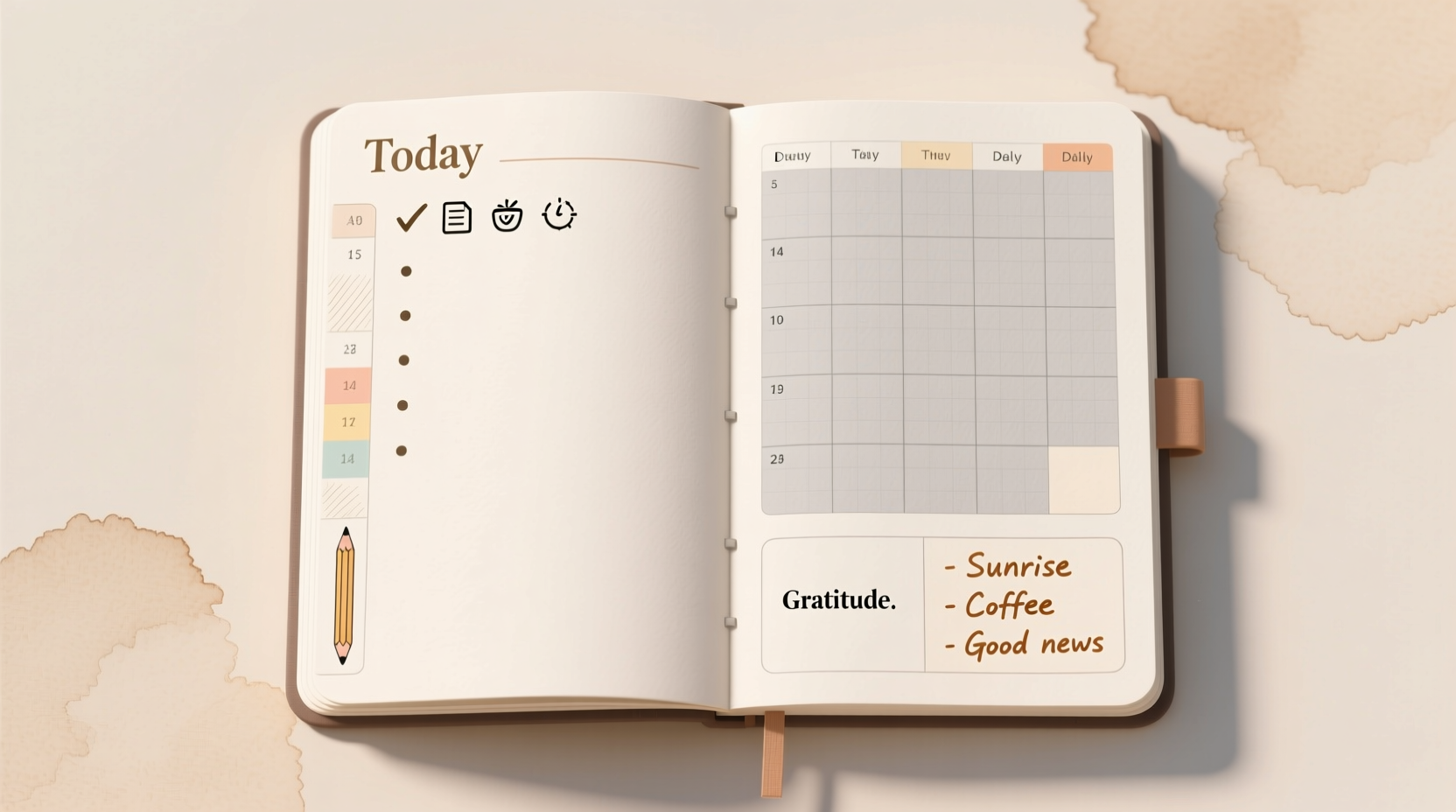
The bullet journal system was created by designer Ryder Carroll as a way to organize thoughts, tasks, and goals using rapid logging—a method that uses short entries marked with symbols. At its core, the system emphasizes intentionality: every entry serves a purpose, and every page is designed with function in mind.
The structure typically includes collections (custom lists), logs (daily, weekly, monthly), and indexes to help navigate content. What sets it apart is its flexibility. You don’t need artistic skills or expensive supplies to benefit. A pen and a dotted notebook are enough to begin.
“Productivity is not about doing more. It’s about being intentional with what you do.” — Ryder Carroll, Creator of the Bullet Journal Method
This philosophy underpins the entire practice. Instead of reacting to endless to-do lists, a bullet journal helps you prioritize what truly matters. Over time, patterns emerge—what habits support your well-being, which tasks consistently go undone, and where your energy flows most naturally.
Essential Supplies and Setup Tips
You don’t need an elaborate toolkit to begin. The goal is simplicity, not perfection. Here’s what actually matters when choosing your materials:
- Notebook: A dotted notebook works best because dots guide alignment without being distracting. Popular options include the Leuchtturm1917, Moleskine, or any affordable dot-grid journal.
- Pens: Use a fine-line pen (0.3–0.5mm) that doesn’t bleed through pages. A single black pen is sufficient; color can be added later if desired.
- Ruler: Helps create clean lines for borders and tables. A small 6-inch ruler fits easily in a bag.
- Optional extras: Highlighters, washi tape, or stickers can add flair but aren’t necessary for functionality.
Before writing anything, take a moment to define your purpose. Are you using the journal for time management? Mental health tracking? Goal setting? Knowing your “why” shapes how you design your pages and keeps you engaged over time.
Step-by-Step Guide to Creating Your First Bullet Journal
Follow this sequence to build a functional and sustainable bullet journal. These steps form the foundation of the system and can be completed in under an hour.
- Create an Index (Page 1–2): Reserve the first few pages for your index. As you add new collections or logs, note their titles and page numbers here so you can find them quickly.
- Design a Future Log (Pages 3–6): A six- or twelve-month overview lets you record birthdays, deadlines, vacations, and major events. Divide two pages into six sections (for a six-month log) or twelve (for a full year).
- Set Up Monthly Logs: At the start of each month, create two pages: one for a calendar view (listing dates and key events), and another for a task list (goals or priorities for the month).
- Begin Daily Logging: Each day, jot down tasks, events, and notes using bullet symbols. Use a dot (•) for tasks, a circle (○) for events, and a dash (–) for notes. Migrate unfinished tasks to the next day or month as needed.
- Add Collections as Needed: Collections are themed lists like “Books to Read,” “Meal Ideas,” or “Gratitude Log.” Place them wherever there’s space and index them accordingly.
This structure grows with you. There’s no pressure to fill pages immediately. Focus on consistency, not completeness.
Simple Layout Ideas for Beginners
One of the biggest hurdles for newcomers is deciding how to format pages. The following beginner-friendly layouts prioritize utility over aesthetics while remaining easy to maintain.
1. Weekly Spread (Two-Page Layout)
A clean, horizontal split across two facing pages works well for most users. On the left, list weekly tasks and goals. On the right, use a vertical column layout for each day (Monday–Sunday). Keep entries brief—just a few lines per day.
2. Habit Tracker Grid
Create a table with habits listed vertically and days of the month across the top. Fill in a checkbox or symbol each day you complete the habit. Ideal for tracking water intake, exercise, meditation, or screen time.
| Habit | 1 | 2 | 3 | 4 | 5 | ... | 30 |
|---|---|---|---|---|---|---|---|
| Meditate | ✓ | ✓ | ✗ | ✓ | ✓ | ... | |
| Drink 8 glasses | ✓ | ✗ | ✓ | ✓ | ✗ | ... | |
| No social media | ✓ | ✓ | ✓ | ✗ | ✓ | ... |
3. Brain Dump Page
Dedicate a page labeled “Brain Dump” to capture fleeting thoughts, worries, or ideas. Review it weekly and migrate actionable items to appropriate logs. This reduces mental clutter and improves focus.
4. Priority Matrix (Eisenhower Box)
Divide a page into four quadrants: Urgent/Important, Important/Not Urgent, Urgent/Not Important, and Neither. Assign tasks to each box to clarify what deserves attention now versus later.
5. Gratitude & Reflection Log
At the end of each week, write three things you’re grateful for and one lesson learned. This promotes mindfulness and emotional awareness without requiring lengthy journaling.
Common Mistakes and How to Avoid Them
Many beginners abandon their bullet journals within weeks due to unrealistic expectations. Recognizing these pitfalls early increases long-term success.
| Mistake | Why It Happens | Solution |
|---|---|---|
| Overcomplicating layouts | Trying to replicate Instagram-worthy spreads | Stick to pencil drafts first. Prioritize function over decoration. |
| Inconsistent migration | Leaving old tasks unreviewed | Schedule a 10-minute weekly review to carry forward or discard tasks. |
| Starting too big | Creating 20 collections on day one | Begin with index, future log, and daily logging. Add only what you need. |
| Fear of imperfection | Erasing or abandoning pages over small errors | Embrace mistakes. Cross out errors or draw arrows to corrections—this is part of the process. |
The journal reflects real life, not an idealized version of it. Missing a day isn’t failure—it’s data. Use gaps to understand your rhythms, not to self-criticize.
Mini Case Study: Sarah’s Journey from Chaos to Clarity
Sarah, a freelance graphic designer, struggled with scattered deadlines and constant overwhelm. She bought a bullet journal after seeing intricate spreads online but felt discouraged when her first attempt lasted only five days. The turning point came when she simplified.
She began again with just three elements: an index, a monthly calendar, and a daily log. Each morning, she spent three minutes listing her top three tasks. At week’s end, she reviewed unfinished items and adjusted her workload. Within a month, she noticed fewer missed deadlines and reduced anxiety.
She gradually added a habit tracker for sleep and a project log for client work. After six months, her journal became a trusted tool—not because it looked beautiful, but because it worked. Her spreads remained minimal, often just lines and bullet points, yet they delivered lasting results.
Sarah’s experience shows that effectiveness trumps aesthetics. Progress comes from regular use, not perfect handwriting or colorful designs.
Checklist: Launch Your Bullet Journal in One Sitting
Use this checklist to set up a functional bullet journal in under 60 minutes:
- ☐ Choose a dot-grid notebook and a reliable pen
- ☐ Number all pages (start with 1)
- ☐ Label first two pages “Index”
- ☐ Create a six-month Future Log (two pages per season)
- ☐ Set up this month’s Monthly Log (calendar + task list)
- ☐ Write today’s Daily Log with 3–5 key tasks
- ☐ Add one personal collection (e.g., “Books to Read”)
- ☐ Record page numbers in the Index
- ☐ Schedule a 10-minute weekly review (e.g., Sunday evening)
That’s all it takes to begin. No extra steps, no pressure. The rest evolves naturally.
Frequently Asked Questions
How often should I update my bullet journal?
Daily logging works best when done each morning or evening. Monthly and future logs are updated at the start of each period. Collections evolve as needed—there’s no fixed schedule. Consistency matters more than frequency.
What if I miss a few days?
Simply resume where you left off. Add a note like “Missed 3 days” and catch up briefly if needed. Don’t erase or restart—the gap itself is meaningful information about your capacity and routine.
Do I need to be artistic or good at drawing?
Not at all. While some enjoy decorative elements, the core system relies on symbols and structure, not artistry. Clean lines, legible writing, and clear organization are far more important than doodles or calligraphy.
Conclusion: Start Small, Stay Consistent
Starting a bullet journal isn’t about achieving perfection—it’s about creating a space for clarity, growth, and self-awareness. The simplest layouts often yield the greatest impact because they’re sustainable. Whether you’re managing a busy schedule, working toward personal goals, or simply seeking more presence in daily life, this tool adapts to your rhythm.
Don’t wait for the “perfect” notebook or the “right” time. Open a blank page today, write your first bullet, and let the process unfold. With each entry, you’re not just organizing tasks—you’re building a deeper relationship with your time and intentions.




 浙公网安备
33010002000092号
浙公网安备
33010002000092号 浙B2-20120091-4
Comments
No comments yet. Why don't you start the discussion?