
Dogs bark for many reasons—territorial instincts, excitement, fear, or alerting their humans. When the trigger is delivery trucks rumbling down the street, constant barking can become more than just a nuisance. It disrupts your peace, stresses your pet, and may even strain relationships with neighbors. The good news? This behavior is manageable. With consistent training, environmental adjustments, and an understanding of canine psychology, you can teach your dog to remain calm when UPS, FedEx, or Amazon vans pass by. This guide provides practical, humane strategies grounded in animal behavior science to help you regain control of your home environment.
Understanding Why Dogs Bark at Delivery Trucks
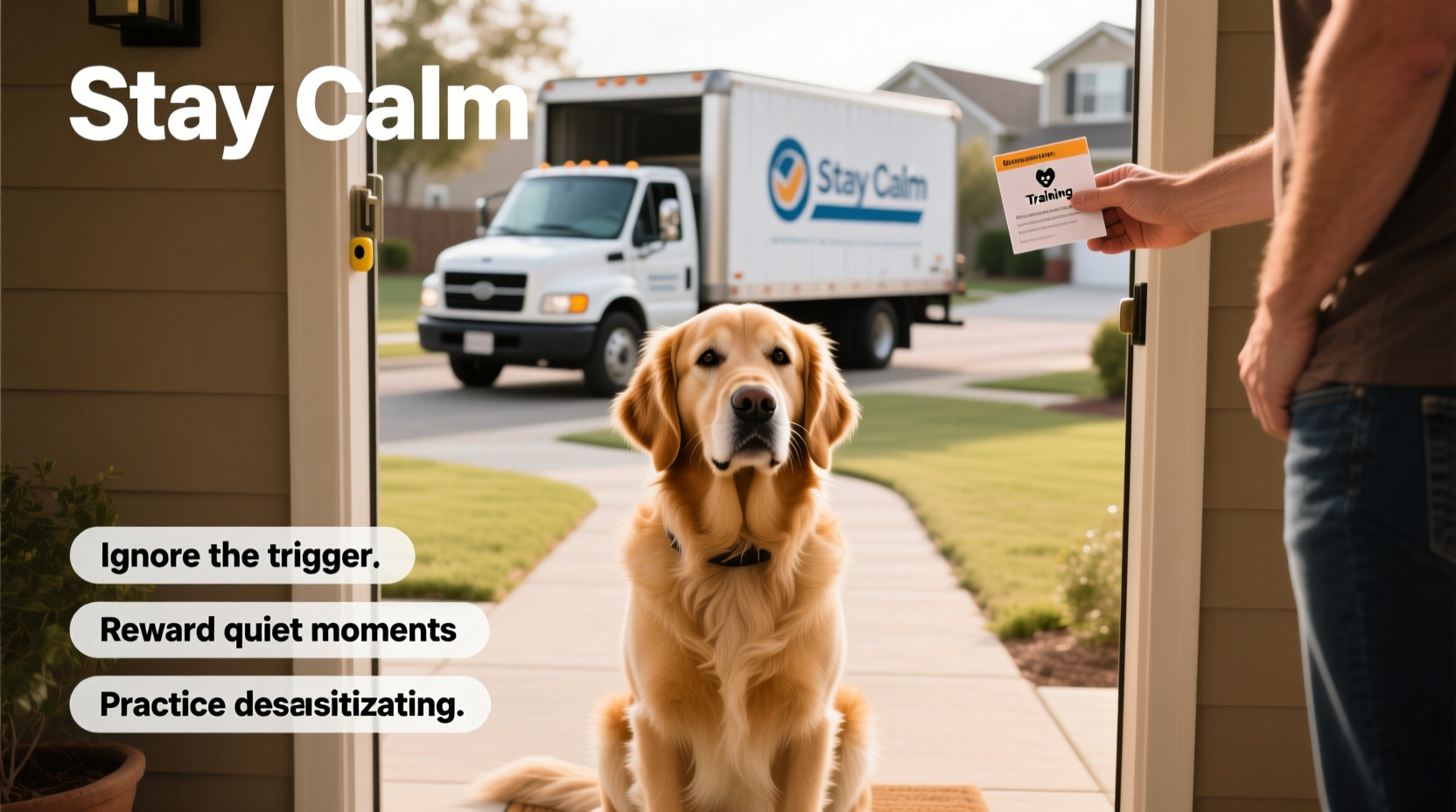
Dogs are naturally alert animals. Their acute hearing and strong territorial instincts make them excellent watchdogs—but sometimes too effective. Delivery trucks present a unique challenge because they combine multiple stimulating elements: loud engines, sudden movements, unfamiliar people approaching the property, and unpredictable schedules. These factors activate a dog’s fight-or-flight response, often resulting in persistent barking.
From a behavioral standpoint, barking at passing vehicles is usually rooted in one or more of the following:
- Guarding instinct: Your dog sees themselves as protector of the home.
- Fear or anxiety: The size, sound, or motion of trucks triggers unease.
- Overstimulation: Repetitive exposure without resolution leads to heightened reactivity.
- Reinforcement: Even unintentional attention (like looking at or speaking to the dog) can reinforce the behavior.
Before addressing the barking, it's essential to identify the underlying motivation. A fearful dog requires a gentler approach than one who barks out of excitement or dominance.
Step-by-Step Training Plan to Reduce Barking
Effective training isn’t about suppression—it’s about teaching an alternative behavior. The goal is to replace barking with calmness through positive reinforcement and gradual exposure. Follow this structured timeline over 4–8 weeks for best results.
- Phase 1: Manage the Environment (Week 1)
Prevent rehearsal of unwanted behavior. Use blackout curtains, close blinds, or block sightlines to the street. If your dog has access to windows or doors where trucks are visible, restrict that area temporarily using baby gates or closed doors.
- Phase 2: Teach “Look” or “Focus” Command (Weeks 2–3)
In a quiet setting, hold a treat near your eye and say “look.” When your dog makes eye contact, immediately reward. Practice multiple times daily until your dog consistently turns to you on cue—even with mild distractions.
- Phase 3: Desensitization & Counterconditioning (Weeks 4–6)
Play recorded sounds of delivery trucks at low volume while giving treats. Gradually increase volume only if your dog remains relaxed. Pair the sound with something positive like mealtime or play. The aim is to change your dog’s emotional response from alarm to anticipation of good things.
- Phase 4: Real-World Exposure (Weeks 7–8)
With your dog leashed indoors, allow brief, controlled exposure to real trucks. As soon as the truck appears, cue “look” and reward calm behavior. If barking occurs, gently redirect or move to a quieter room. Consistency is key—never let the dog “win” by barking the truck away.
- Phase 5: Maintenance & Generalization
Once progress is made, practice across different times of day and with various vehicles. Reinforce calm behavior consistently, even after success.
Effective Tools and Techniques to Support Training
While training is foundational, pairing it with supportive tools enhances effectiveness. Not all products are created equal—some may increase anxiety rather than reduce it.
| Tool/Method | Effectiveness | Best For | Caution |
|---|---|---|---|
| White noise machines | High | Muffling engine sounds indoors | Ensure volume isn’t stressful |
| Window film or frosted decals | High | Blocking visual triggers | Avoid complete darkness; maintain light |
| Treat-dispensing puzzle toys | Moderate-High | Redirecting focus during delivery hours | Use only with supervision |
| Anti-bark collars (spray/vibration) | Low-Moderate | Short-term management only | Can increase anxiety; not recommended as primary solution |
| Background music for dogs | Moderate | Reducing general stress levels | Results vary by individual |
Environmental modifications alone won’t solve the issue but can buy time for training to take effect. For example, applying static-cling window film with patterns can obscure fast-moving objects while still allowing natural light—a subtle yet powerful way to reduce visual stimulation.
Checklist: Daily Routine to Prevent Barking Episodes
Consistency is critical. Integrate these actions into your daily schedule to reinforce calm behavior:
- ✅ Close blinds or curtains during typical delivery hours (usually 9 AM – 3 PM).
- ✅ Provide a chew toy or food puzzle when outdoor activity increases.
- ✅ Practice the “look” command 2–3 times per day, even when no trucks are present.
- ✅ Avoid yelling “quiet”—this often sounds like joining in the barking to a dog.
- ✅ Reward calm behavior the moment a truck passes without incident.
- ✅ Monitor your own stress level—dogs pick up on human anxiety, which can amplify their reaction.
- ✅ Schedule walks outside peak delivery times to reduce outdoor exposure during training.
Real Example: How Max the Border Collie Learned Calmness
Max, a 3-year-old Border Collie in suburban Denver, barked frantically every time a delivery vehicle approached. His owner, Sarah, was embarrassed by noise complaints and worried about his stress levels. After consulting a certified dog trainer, she implemented a structured plan.
First, she installed frosted window decals on the front bay window. Then, she began training the “focus” command using small pieces of chicken. Within two weeks, Max responded reliably indoors. She introduced audio recordings of trucks at low volume, gradually increasing exposure while feeding him dinner. Over four weeks, Max went from lunging at the window to turning toward Sarah for a treat when he heard a truck.
Today, Max still watches vehicles pass, but he does so quietly—often lying down with a chew toy. The transformation didn’t happen overnight, but persistence paid off. “I finally feel like I can relax during the day,” Sarah said. “And Max seems less tense overall.”
“Dogs don’t misbehave out of defiance—they react based on how they’ve been conditioned. Change the association, and you change the behavior.” — Dr. Karen Becker, DVM, Canine Behavior Specialist
Common Mistakes That Undermine Progress
Even well-meaning owners can accidentally sabotage training efforts. Be mindful of these pitfalls:
- Inconsistency: Letting the dog bark sometimes but correcting other times teaches that barking works occasionally.
- Punishment-based methods: Yelling, spraying water, or using shock collars can damage trust and increase fear-related aggression.
- Ignoring the root cause: Treating symptoms without addressing anxiety or over-arousal leads to temporary fixes.
- Overexposure: Flooding a dog with too much stimulus too quickly can worsen sensitivity.
- Missing daily practice: Like any skill, obedience fades without regular reinforcement.
FAQ: Common Questions About Dog Barking at Trucks
How long does it take to stop a dog from barking at delivery trucks?
Most dogs show improvement within 4–6 weeks of consistent training. However, full behavior change can take 2–3 months, especially if the habit is deeply ingrained or linked to anxiety. Patience and daily practice are essential.
Are certain breeds more prone to barking at vehicles?
Yes. Herding breeds (like Border Collies, Shelties, and Australian Shepherds) and terriers tend to be more reactive due to high alertness and energy levels. However, any dog can develop this behavior with repeated exposure and lack of intervention.
Should I let my dog see delivery drivers to get used to them?
Not without careful conditioning. Unsupervised exposure can reinforce fear or reactivity. Instead, arrange controlled meet-and-greets—ask a driver (if safe and permitted) to toss treats from a distance while your dog stays inside or on a leash. Always prioritize safety and consent.
Conclusion: Building a Quieter, Calmer Home Environment
Stopping your dog from barking at delivery trucks isn’t about silencing them—it’s about helping them feel secure and teaching better responses. Through desensitization, positive reinforcement, and smart environmental adjustments, you can transform a chaotic reaction into calm composure. The journey requires time and consistency, but the results benefit both you and your dog. You’ll enjoy a quieter home, fewer neighbor complaints, and a stronger bond built on trust and communication.




 浙公网安备
33010002000092号
浙公网安备
33010002000092号 浙B2-20120091-4
Comments
No comments yet. Why don't you start the discussion?