
In the quiet hours after dark, many people find themselves trapped in a cycle of endless scrolling—swiping through social media, news feeds, or video platforms long past bedtime. This behavior, commonly known as \"doom scrolling,\" doesn’t just steal minutes; it erodes sleep quality, disrupts circadian rhythms, and leaves you feeling groggy and unfocused the next day. The blue light from screens suppresses melatonin, the hormone that signals sleep, while emotionally charged content keeps the mind alert. Breaking this habit isn’t about willpower alone—it requires intentional changes to your environment, routines, and mindset. Here’s how to regain control of your nights and restore a healthy sleep schedule.
Understanding Doom Scrolling and Its Impact on Sleep
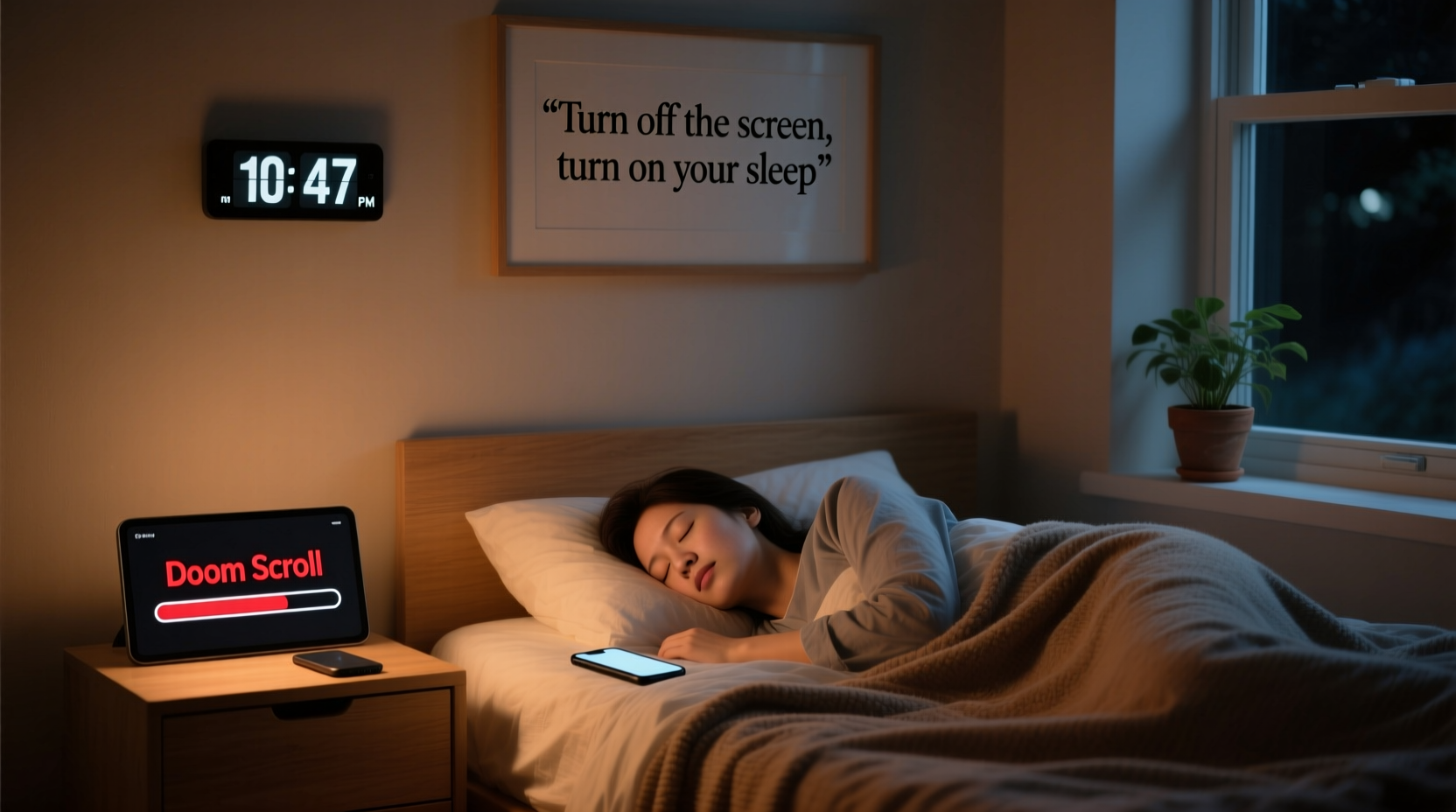
Doom scrolling refers to the compulsive consumption of negative or anxiety-inducing online content, often late at night. It’s fueled by algorithmic design that prioritizes engagement over well-being. Platforms serve content that triggers emotional reactions—fear, outrage, curiosity—keeping users glued to their screens. Over time, this becomes a conditioned response: stress leads to phone use, which leads to more stress, and eventually, delayed sleep onset.
The consequences extend beyond lost hours. Chronic nighttime screen exposure interferes with the body’s natural wind-down process. Melatonin production is delayed, reducing sleep efficiency and deep sleep duration. A 2021 study published in Sleep Health found that individuals who used smartphones within 30 minutes of bedtime took longer to fall asleep and reported lower sleep satisfaction.
“Even 20 minutes of screen time before bed can delay melatonin release by up to 90 minutes.” — Dr. Rebecca Robbins, Sleep Scientist, Harvard Medical School
This disruption accumulates. Poor sleep impairs memory, weakens immunity, increases irritability, and raises the risk of long-term conditions like depression and cardiovascular disease. Recognizing doom scrolling as a behavioral loop—not just a bad habit—is the first step toward breaking it.
Practical Strategies to Break the Cycle
Changing nighttime routines requires more than simply telling yourself “no” to the phone. Effective strategies work with human psychology, not against it. Below are evidence-based approaches to reduce screen dependency and support healthier sleep hygiene.
Create a Digital Sunset Routine
Just as sunrise signals awakening, a digital sunset signals winding down. Designate a cutoff time—ideally 60 to 90 minutes before bed—when all screens are powered off. This includes phones, tablets, laptops, and TVs. Use this time for low-stimulation activities: reading a physical book, journaling, light stretching, or listening to calming music.
Replace Scrolling with Intentional Alternatives
Habit substitution works because it addresses the underlying need driving the behavior. Doom scrolling often serves as an escape from stress, boredom, or loneliness. Instead of resisting the urge, redirect it. Keep a list of satisfying offline alternatives nearby:
- Sketch or doodle in a notebook
- Practice gratitude journaling
- Brew herbal tea (chamomile, valerian root)
- Do a 5-minute breathing exercise
- Organize a drawer or shelf
These activities provide gentle mental engagement without overstimulation. Over time, they become automatic replacements for reaching for your phone.
Optimize Your Environment for Low-Tech Evenings
Your surroundings shape your behavior. If your phone is within arm’s reach, temptation wins. Make it harder to access:
- Charge your phone outside the bedroom
- Use a traditional alarm clock instead of your phone
- Keep a notebook and pen on your nightstand for late-night thoughts
- Install warm, dim lighting (under 3000K) to signal relaxation
A 2020 study in Behavioral Sleep Medicine showed that participants who removed smartphones from the bedroom fell asleep 27% faster on average.
Step-by-Step Guide to Resetting Your Nighttime Routine
Changing ingrained habits takes consistency and structure. Follow this seven-day timeline to gradually replace doom scrolling with sustainable evening practices.
- Day 1–2: Audit Your Current Habits – Track every instance of screen use after 8 PM. Note duration, platform, and emotional state. Awareness builds motivation.
- Day 3: Set a Digital Cutoff Time – Choose a realistic time (e.g., 9:30 PM). Use phone settings to enable “Bedtime Mode” or “Screen Time Limits” for social apps.
- Day 4: Prepare Replacement Activities – Stock your living space with books, puzzles, or art supplies. Have them visible and accessible.
- Day 5: Relocate Charging Stations – Move phone charging to the kitchen or hallway. Buy a $10 analog alarm if needed.
- Day 6: Implement a Wind-Down Sequence – Example: 9:00 PM — brush teeth, 9:10 — read 10 pages, 9:20 — stretch, 9:30 — lights out.
- Day 7: Evaluate and Adjust – Reflect: Did you scroll less? How was sleep quality? Tweak timing or activities as needed.
By the end of the week, the new routine should feel less forced. Continue refining it over the next month for lasting change.
Do’s and Don’ts of Nighttime Screen Management
| Do | Don’t |
|---|---|
| Use grayscale mode after 8 PM to reduce visual appeal of apps | Scroll through news or social media in bed |
| Enable “Do Not Disturb” during wind-down hours | Respond to non-urgent messages after bedtime |
| Read fiction or poetry to calm the mind | Watch intense shows or play stimulating games |
| Practice box breathing: inhale 4s, hold 4s, exhale 4s, pause 4s | Use your phone as an alarm if it tempts you to check notifications |
| Write down worries to clear your mind before sleep | Engage in heated online discussions at night |
Real-Life Example: How Sarah Reduced Her Screen Time by 78%
Sarah, a 34-year-old marketing consultant, routinely stayed up until 1:00 AM scrolling through Twitter and Instagram. She’d wake up exhausted, rely on coffee, and feel anxious by midday. After learning about doom scrolling’s impact, she implemented small changes:
- She began charging her phone in the kitchen and used an old-school alarm clock.
- At 9:00 PM, she lit a lavender-scented candle and read paperback novels.
- She installed a screen time tracker and set app limits for social media.
Within two weeks, Sarah was consistently in bed by 10:30 PM. She reported improved mood, sharper focus at work, and no longer needed afternoon naps. “I didn’t realize how much mental clutter I was absorbing at night,” she said. “Now, my evenings feel peaceful, not chaotic.”
Expert-Backed Tools and Settings to Limit Nighttime Use
Modern smartphones come with built-in tools designed to support digital wellness. Leverage them strategically:
- iOS Screen Time: Set app limits for social networks and enable Downtime after a specific hour.
- Android Digital Wellbeing: Use Focus Mode to disable distracting apps during evenings.
- Grayscale Mode: Turn off color display at night—this reduces dopamine-driven engagement.
- Night Shift / Blue Light Filter: Schedule it to activate automatically at sunset.
- Third-party Apps: Consider Freedom or Moment to block problematic sites during set hours.
These tools aren’t foolproof, but they create friction—just enough to interrupt autopilot scrolling and prompt conscious choice.
FAQ: Common Questions About Stopping Doom Scrolling
Why is it so hard to stop scrolling even when I’m tired?
Your brain is wired to seek novelty and reward. Social media delivers unpredictable bursts of stimulation (likes, comments, surprising content), activating the same neural pathways as gambling. This makes it especially difficult to disengage, even when physically exhausted. The key is not willpower, but designing your environment to reduce temptation.
What if I need my phone for emergencies?
If you’re responsible for urgent calls (e.g., healthcare worker, parent), keep the phone nearby but out of reach—and in Do Not Disturb mode. Allow only critical contacts to bypass silence. Alternatively, use a secondary device like a smartwatch for alerts without full phone access.
Can reading on a tablet be okay if it’s in night mode?
E-readers with e-ink displays (like Kindle) are generally safe because they don’t emit blue light. However, tablets—even with night mode—still produce some glare and cognitive load. For optimal sleep, opt for printed books. If using a tablet, limit sessions to under 20 minutes and avoid interactive content.
Final Checklist: Your 7-Day Action Plan
- Track current screen use after 8 PM for two days.
- Set a digital curfew (e.g., 9:30 PM).
- Move phone charging out of the bedroom.
- Download a screen time management app.
- Buy a physical alarm clock if needed.
- Stock your evening space with low-tech activities (books, journal, puzzles).
- Implement a 30-minute wind-down routine with no screens.
Conclusion: Reclaim Your Nights, Restore Your Energy
Doom scrolling isn’t a personal failing—it’s a predictable outcome of technology designed to capture attention. But you have the power to redesign your relationship with screens. By setting boundaries, creating friction around phone use, and replacing scrolling with calming rituals, you can protect your sleep and improve your overall well-being. Small changes compound: going to bed 30 minutes earlier each night adds up to nearly four extra days of sleep per year. Start tonight. Put this article down, place your phone across the room, and choose one action from the checklist. Your future self—well-rested, focused, and present—will thank you.




 浙公网安备
33010002000092号
浙公网安备
33010002000092号 浙B2-20120091-4
Comments
No comments yet. Why don't you start the discussion?