
Jeans are a wardrobe staple—durable, versatile, and timeless. But over time, frequent washing can dull their color, leaving them looking worn and washed out long before they should. While modern detergents clean effectively, they often strip away the indigo dye that gives denim its signature deep blue hue. Fortunately, there’s a natural, cost-effective solution hiding in your kitchen: salt and vinegar.
These two common household items have been used for generations to set dyes in fabrics and protect colors during laundering. When applied correctly, salt and vinegar can significantly reduce fading, helping your jeans retain their rich tone and structural integrity for years. This guide dives into the science behind these methods, provides step-by-step instructions, and shares real-world tips from textile care experts to keep your denim vibrant and long-lasting.
The Science Behind Dye Fading in Denim
Denim is typically dyed with indigo, a pigment that adheres to the surface of cotton fibers rather than penetrating deeply. This surface-level bonding makes the dye prone to washing off over time, especially when exposed to water, heat, and agitation. Each wash cycle loosens more dye particles, leading to gradual fading and color loss.
Water temperature plays a major role. Hot water opens up cotton fibers, allowing dye molecules to escape more easily. Agitation from machine tumbling increases friction, accelerating the breakdown of the dye layer. Even mild detergents contain surfactants designed to lift stains and oils—which unfortunately include fabric dyes.
This is where salt and vinegar come in. Both act as mordants—substances that help fix dyes to fabric by improving molecular adhesion. Salt (sodium chloride) strengthens ionic bonds between the dye and fiber, while acetic acid in vinegar slightly lowers the pH of the wash environment, tightening the fibers and reducing dye solubility.
“Natural mordants like salt and vinegar don’t just preserve color—they also reduce the need for chemical-heavy detergents, making them ideal for eco-conscious laundry routines.” — Dr. Lena Torres, Textile Chemist at Sustainable Apparel Research Institute
How Salt Helps Prevent Jeans from Fading
Salt has long been used in textile processing to stabilize dyes during manufacturing. You can replicate this effect at home by adding salt during your first few washes—or even during an initial soak before wearing new jeans.
When dissolved in water, salt increases the ionic strength of the solution, which reduces the electrostatic repulsion between negatively charged dye molecules and cotton fibers. This allows the dye to bind more tightly, minimizing runoff during rinsing.
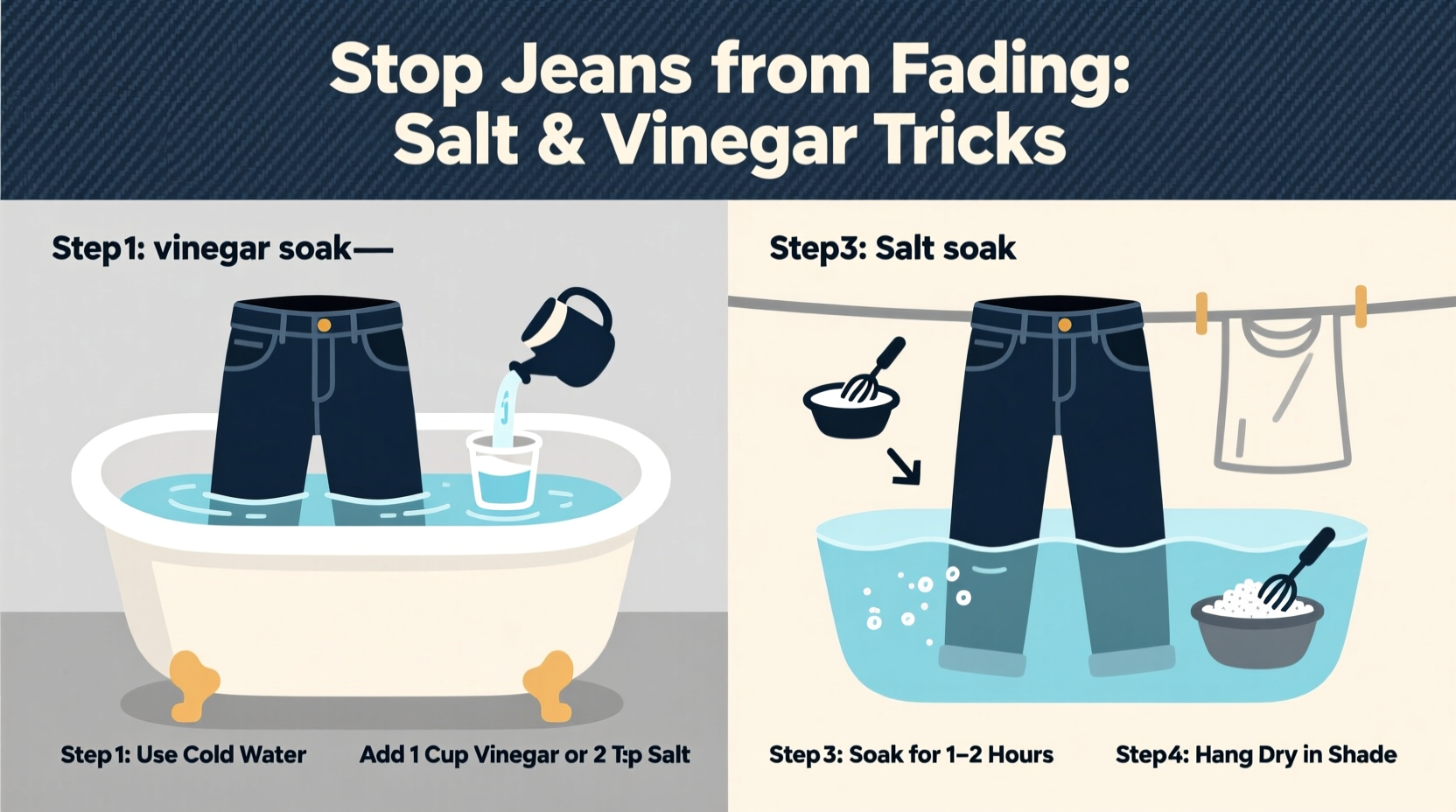
Step-by-Step: First Wash Protection Using Salt
- Fill a clean bathtub or large basin with cold water.
- Add ½ cup of non-iodized coarse salt per gallon of water.
- Submerge your new pair of jeans completely.
- Let them soak for 4–6 hours (or overnight for maximum effect).
- Rinse briefly under cold running water—do not wring.
- Hang to dry away from direct sunlight.
This process helps “set” the dye before regular wear and washing begins. It’s especially effective for raw or unsanforized denim, which hasn’t undergone industrial pre-shrinking or finishing treatments.
Vinegar’s Role in Color Preservation
Vinegar—specifically white distilled vinegar—is another powerful ally in the fight against fading. Its acetic acid content mildly contracts cotton fibers, creating a tighter weave that traps dye particles inside. Additionally, vinegar neutralizes alkaline residues left behind by detergents, which can degrade dyes over time.
Unlike commercial fabric softeners that coat fibers with chemicals, vinegar acts as a natural conditioner without compromising absorbency or breathability. It also helps eliminate odors caused by bacteria buildup in denim, particularly useful if you follow a “wash less” denim care philosophy.
Using Vinegar in the Wash Cycle
To integrate vinegar into your routine:
- Add ½ cup of white vinegar to the rinse cycle when washing jeans.
- For front-loading machines, pour it directly into the fabric softener dispenser.
- For top-loaders, add it during the final rinse phase.
The vinegar smell dissipates completely once the jeans are dry. Over time, consistent use can visibly slow down fading, especially along high-friction areas like pockets, thighs, and hems.
“I’ve seen customers maintain near-original color depth in their favorite jeans for over two years simply by adding vinegar to every wash.” — Marcus Reed, Denim Care Specialist at Urban Raw Workshop
Combining Salt and Vinegar: A Powerful One-Time Treatment
While both salt and vinegar work well individually, combining them in a single pre-treatment soak offers enhanced protection. This method is best performed before the first wear of a new pair of jeans.
Complete DIY Color-Lock Soak Procedure
- Prepare a solution of 1 gallon cold water, ½ cup coarse salt, and ½ cup white vinegar.
- Stir until salt is fully dissolved.
- Turn jeans inside out and submerge completely.
- Soak for 8 hours or overnight.
- Remove and rinse lightly under cold water—no soap needed.
- Air-dry flat or hung vertically, avoiding direct heat or sunlight.
This treatment creates a synergistic effect: salt stabilizes the dye at the molecular level, while vinegar tightens the fiber structure. The result is a stronger bond between indigo and cotton, dramatically reducing initial dye bleed and long-term fading.
Best Practices for Washing Treated Jeans
Even with salt and vinegar treatment, improper washing habits can undo your efforts. Follow these guidelines to maximize results:
| Do’s | Don’ts |
|---|---|
| Wash inside out in cold water | Use hot or warm water |
| Wash infrequently (every 5–10 wears) | Wash after every single wear |
| Use gentle, dye-free detergent | Use bleach or strong enzymatic cleaners |
| Line dry or lay flat | Tumble dry on high heat |
| Add vinegar to rinse cycle | Overload the washing machine |
Additionally, turning jeans inside out protects the outer surface from abrasion against other clothes and the drum walls. Cold water prevents fiber expansion, keeping dye locked in place.
Real-World Example: A Two-Year Denim Test
In 2022, textile enthusiast Jordan Lee conducted a personal experiment comparing two identical pairs of raw selvedge jeans from the same brand and batch. One pair received a salt-and-vinegar soak before wear; the other was washed normally from day one.
Both were worn weekly under similar conditions—commuting, casual outings, occasional sitting at a desk. After six months, the untreated pair showed noticeable lightening on the front thighs and seat. By 18 months, the contrast between original and faded areas was stark, with ghost fades beginning to dominate.
The treated pair, however, retained 85–90% of its original depth. Minimal fading occurred, mostly concentrated in natural stress zones like knee bends. Even at the two-year mark, the jeans looked freshly broken in rather than worn out.
Jordan attributed the difference primarily to the initial soak, combined with consistent cold washing and vinegar rinses. “It’s not magic,” he said in a blog post, “but it’s science working quietly in the background.”
Additional Tips for Long-Lasting Denim
Beyond salt and vinegar, several lifestyle adjustments can extend the life of your jeans:
- Spot clean small stains with a damp cloth and mild soap instead of full washes.
- Air out jeans after wearing by hanging them outside or near a window for 30 minutes.
- Rotate multiple pairs to reduce strain on individual seams and fibers.
- Repair minor damage early—small holes or loose threads can be stitched before becoming major issues.
- Store folded, not hung, to prevent waistband stretching.
Frequently Asked Questions
Can I use apple cider vinegar instead of white vinegar?
While apple cider vinegar contains acetic acid, its color and additional organic compounds may stain light denim or leave residue. Stick to clear, distilled white vinegar for best results.
Will salt damage my washing machine?
No—when used in recommended amounts (½ cup per load), salt dissolves completely and poses no risk to modern machines. However, avoid excessive use over time if you have hard water, as mineral buildup could occur.
Do these methods work on colored or black jeans?
Yes. While most studies focus on indigo denim, salt and vinegar also help preserve reactive dyes used in black, gray, and colored cotton fabrics. The principle of dye stabilization applies across dye types.
Final Checklist: How to Keep Jeans From Fading
- Pre-soak new jeans in salt and vinegar solution before first wear.
- Always wash jeans inside out in cold water.
- Use minimal, gentle detergent—preferably one formulated for darks.
- Add ½ cup white vinegar to the rinse cycle.
- Limit washing frequency; spot clean when possible.
- Air dry away from direct sunlight.
- Store properly—folded on a shelf, not hung by the belt loops.
Conclusion: Preserve Your Denim, One Wash at a Time
Preserving the color and quality of your jeans doesn’t require expensive products or complicated routines. With just salt and vinegar—two affordable, non-toxic ingredients—you can significantly slow down fading and extend the lifespan of your favorite pairs. These methods are rooted in textile science and proven through everyday use by denim enthusiasts worldwide.
Start with a single pair. Try the salt-and-vinegar soak. Follow it with mindful washing habits. Watch how much longer they stay bold, crisp, and true to their original look. Once you see the difference, you’ll never treat your denim the same way again.




 浙公网安备
33010002000092号
浙公网安备
33010002000092号 浙B2-20120091-4
Comments
No comments yet. Why don't you start the discussion?