
Cats scratch. It’s not a behavioral flaw—it’s a natural, deeply ingrained instinct. Scratching helps them shed old claw sheaths, stretch muscles, mark territory through scent glands in their paws, and relieve stress. When your cat targets the couch, it’s rarely out of malice. More often, it’s because the couch offers the right texture, height, or location for their needs. Rather than punishing this normal behavior, the smarter—and more humane—approach is to redirect it. With patience, consistency, and an understanding of feline psychology, you can protect your furniture while keeping your cat happy and fulfilled.
Why Cats Scratch Furniture (And Why Punishment Doesn’t Work)
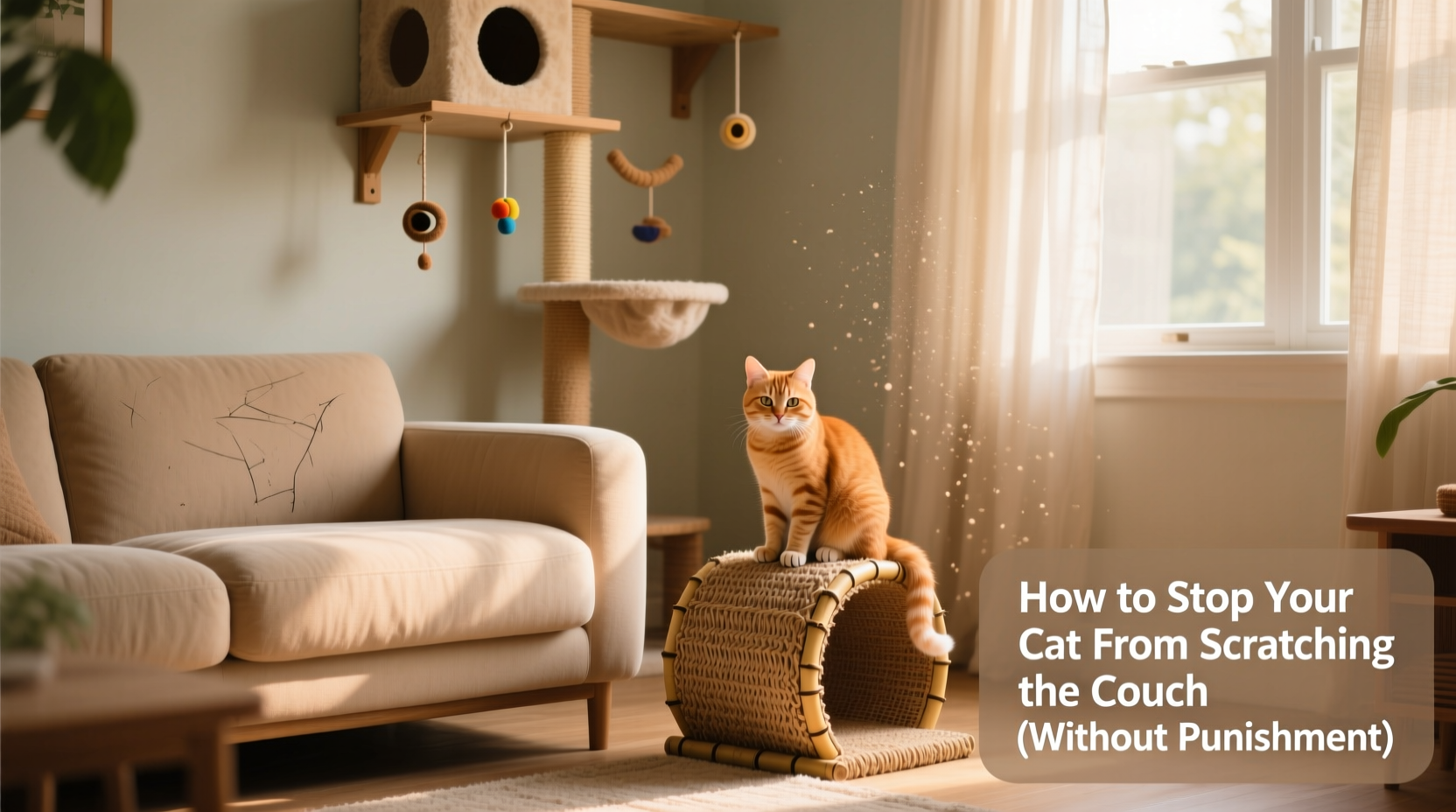
Understanding the root causes of scratching is the first step toward solving it. Cats don’t scratch to annoy you; they do it because it serves multiple biological and psychological functions:
- Claw maintenance: Scratching removes the outer layer of claws, keeping them sharp and healthy.
- Muscle stretching: The motion stretches tendons and muscles in the legs and back.
- Scent marking: Cats have scent glands between their paw pads. Scratching deposits their unique odor, helping them feel secure in their environment.
- Stress relief: Repetitive actions like scratching can be calming, especially in unfamiliar or tense situations.
Punishing a cat for scratching—whether through yelling, spraying water, or physical reprimands—only damages trust and increases anxiety. A stressed cat may scratch more, not less, as a coping mechanism. Worse, punishment can lead to fear-based behaviors such as hiding, aggression, or litter box avoidance. Instead of suppressing the behavior, focus on guiding it toward acceptable outlets.
“Cats aren’t being destructive when they scratch—they’re communicating and caring for themselves. Our job is to meet their needs in ways that work for both species.” — Dr. Sarah Ellis, Feline Behavior Scientist, University of Lincoln
Redirect, Don’t Repress: The Power of Positive Reinforcement
The most effective way to change feline behavior is through redirection and reward, not correction. Cats respond best when good choices are made easy and appealing. Start by introducing alternatives that fulfill the same needs as the couch—but better.
Choose scratching surfaces based on your cat’s preferences. Some cats prefer vertical posts, others horizontal or angled scratchers. Materials matter too: sisal rope, corrugated cardboard, and carpet remnants each appeal to different cats. Observe what your cat already likes—if they favor the corner of the couch, replicate that angle and texture in a post.
Once you’ve placed an alternative, make it irresistible. Sprinkle it with catnip, attach dangling toys, or use silver vine powder. Reward your cat immediately when they use it—even with a treat or gentle praise. Over time, consistent positive reinforcement strengthens the habit.
Step-by-Step Guide to Couch-Safe Living
Changing scratching behavior takes time. Follow this 4-week plan to transition your cat away from the couch:
- Week 1: Assess and Introduce
Identify which part of the couch is targeted and why. Is it near a window? Is the fabric loosely woven? Install one or more scratching posts nearby, matching the preferred texture and orientation. - Week 2: Make the Couch Less Appealing
Use temporary deterrents: double-sided tape, aluminum foil, or plastic slip covers. These textures are unpleasant to walk on but won’t harm your cat. Pair this with daily encouragement on the new scratching post using treats or play. - Week 3: Reinforce Alternatives
Increase rewards for correct use. If your cat scratches the post after waking up, offer a treat or initiate a short play session. Avoid scolding if they return to the couch—simply block access temporarily and redirect. - Week 4: Secure Long-Term Habits
Gradually remove deterrents from the couch once consistent use of the post is established. Keep the post well-maintained and replace worn areas to prevent loss of interest.
This timeline isn’t rigid—some cats adapt in days, others take months. The key is consistency and avoiding mixed signals. Never allow scratching on the couch sometimes and punish it other times. Clear boundaries help cats feel secure.
Do’s and Don’ts: What Works (and What Backfires)
| Do’s | Don’ts |
|---|---|
| Provide multiple scratching options in high-traffic areas | Use sprays or devices that startle or scare your cat |
| Trim your cat’s claws regularly to reduce damage | Yell at or chase your cat after scratching |
| Use pheromone diffusers (like Feliway) to reduce stress-related scratching | Remove all scratching opportunities—this increases frustration |
| Rotate scratchers to maintain novelty | Assume one type of post suits all cats |
| Protect vulnerable couch areas with washable covers or pads | Declaw your cat—this is painful and ethically controversial |
Real-Life Example: Turning a Couch Destroyer into a Post Pro
Sophie adopted Luna, a three-year-old tabby, who quickly developed a habit of shredding the armrest of her vintage sofa. Sophie tried everything—spraying water, covering the area with bubble wrap, even moving the couch—but nothing worked long-term. After consulting a certified cat behaviorist, she shifted her approach.
She placed a tall sisal-wrapped post directly beside the couch and rubbed it with silver vine. Every time Luna approached the armrest, Sophie gently lifted her to the post and dangled a feather toy above it. Within two weeks, Luna began using the post independently. Sophie then slowly moved the post to a sunlit corner near the window—Luna’s favorite lookout spot. By week six, the couch was untouched, and Luna had claimed the post as her daily ritual station.
The turning point wasn’t discipline—it was making the right choice more rewarding than the wrong one.
Essential Tools and Products That Help
You don’t need expensive gadgets, but a few strategic tools can speed up the process:
- Sisal scratching posts: Durable and satisfying for deep scratching. Look for models anchored firmly to prevent tipping.
- Horizontal scratchers: Ideal for cats who prefer lying down while scratching, especially older or arthritic cats.
- Soft Paws or vinyl nail caps: Safe, glue-on covers that prevent damage while allowing normal scratching behavior. Last 4–6 weeks per application.
- Double-sided sticky tape: Non-toxic adhesive strips that deter walking and scratching on treated surfaces.
- Feliway Classic Diffuser: Mimics natural facial pheromones, helping reduce stress-related marking behaviors.
FAQ: Common Questions About Cat Scratching
Will my cat ever stop scratching completely?
No—and they shouldn’t. Scratching is a lifelong necessity for cats. The goal isn’t elimination, but redirection to appropriate surfaces. With proper outlets, your cat can scratch freely without damaging your home.
How many scratching posts does my cat need?
Veterinary behaviorists recommend at least one scratching station per floor of your home, plus one per cat. Ideally, include both vertical and horizontal options. High-traffic areas like living rooms and bedrooms are priority zones.
Is it okay to trim my cat’s claws?
Yes. Regular trimming reduces the risk of snagging and minimizes damage to furniture. Use cat-specific clippers and avoid the pink quick. If unsure, ask your vet or groomer to demonstrate. Most cats tolerate it well when introduced gradually.
Final Checklist: Your Action Plan
Use this checklist to ensure you’re covering all bases in your effort to protect your couch:
- ✅ Identify why your cat prefers the couch (texture, location, habit)
- ✅ Provide at least one suitable scratching alternative nearby
- ✅ Use positive reinforcement when your cat uses the correct surface
- ✅ Apply temporary deterrents to the couch (tape, foil, covers)
- ✅ Trim your cat’s claws every 2–3 weeks
- ✅ Monitor progress and adjust placement or type of scratcher as needed
- ✅ Be patient—behavior change takes time and consistency
Conclusion: Harmony Starts with Understanding
Your cat doesn’t see the couch as furniture—they see it as a canvas for natural expression. Rather than fighting instinct, work with it. By offering better options, reinforcing good choices, and removing temptation—not trust—you create a home where both you and your cat thrive. The result isn’t just an intact sofa, but a deeper bond built on mutual respect. Start today: place a post, add a sprinkle of catnip, and let your cat choose wisely.




 浙公网安备
33010002000092号
浙公网安备
33010002000092号 浙B2-20120091-4
Comments
No comments yet. Why don't you start the discussion?