
Every holiday season begins with the same frustrating ritual: pulling out last year’s Christmas lights only to find them knotted into an impenetrable mess. Untangling strands wastes time, risks damaging delicate bulbs, and saps the joy from seasonal preparations. Yet, a simple, low-cost solution exists—one that’s been used by decorators, electricians, and organized households for decades. By winding lights around cardboard spools, you can preserve their condition, save time, and eliminate frustration year after year.
This method leverages basic physics—controlled tension and consistent looping—to prevent knots before they form. Unlike stuffing cords into bins or loosely wrapping them around your hand, the cardboard spool technique keeps each strand isolated, taut, and accessible. It’s also sustainable, relying on repurposed materials like shipping tubes or custom-cut discs, reducing plastic waste and storage clutter.
The Science Behind Tangles and Why Cardboard Spools Work
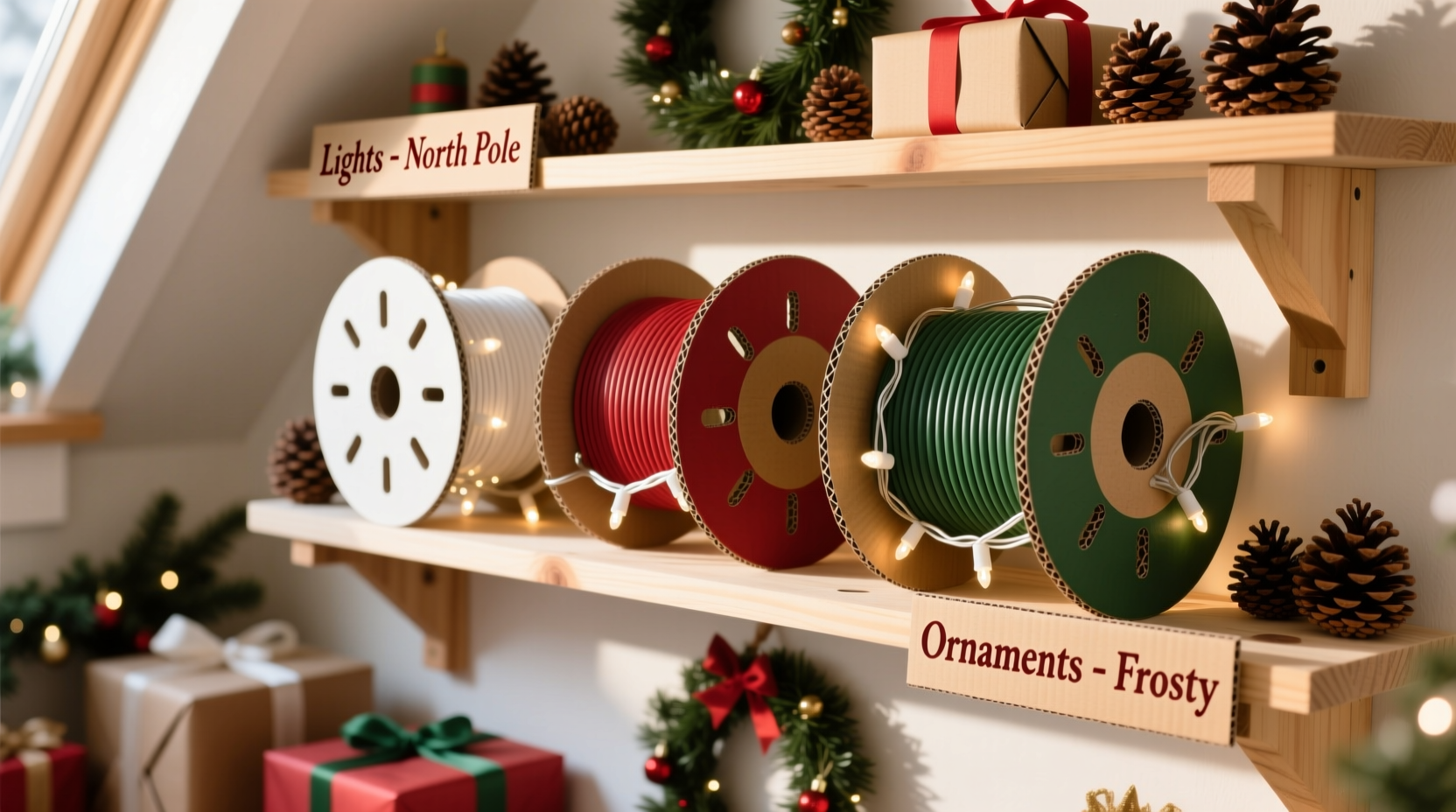
Light cords tangle due to random motion and loose coiling. When stored haphazardly, even slight shifts in storage boxes cause wires to twist, loop over themselves, and bind tightly. This phenomenon is governed by principles in knot theory and polymer physics—long, flexible strands naturally evolve toward higher entropy states, meaning disorder increases over time unless constrained.
Cardboard spools counteract this by providing a rigid, circular frame that maintains uniform coil diameter and tension. Each loop lies flat and parallel, minimizing crossover points where knots typically begin. The material itself—corrugated or solid cardboard—is lightweight yet sturdy enough to resist warping under moderate pressure. Additionally, cardboard is non-conductive and won’t degrade wire insulation, making it safe for electrical use.
“Proper storage isn’t just about convenience—it directly impacts the lifespan of your lights. A well-wound strand experiences less stress on solder joints and filaments.” — Daniel Reeves, Electrical Systems Technician
Step-by-Step Guide to Creating and Using Cardboard Spools
Building an effective storage system requires minimal tools and effort. Follow these steps to prepare and wind your lights correctly.
- Gather materials: Collect empty toilet paper rolls, paper towel tubes, or cut circular discs from corrugated cardboard (6–8 inches in diameter). You’ll also need scissors, a utility knife, masking tape, and optionally, labels or markers.
- Prepare the spool: For tube-based spools, reinforce both ends with cardboard caps. Cut two small slits at one end of the tube to anchor the light plug. If using flat discs, sandwich the cord between two identical circles and secure with tape around the outer edge.
- Anchor the plug: Insert the male end (the plug) through the slit or hole in the spool. Fold it back and tape it lightly to prevent slipping during winding.
- Begin winding: Hold the spool in one hand and guide the cord with the other. Wrap the strand in a single direction, keeping loops tight but not stretched. Maintain even spacing—overlapping increases friction and potential snags.
- Secure the end: Once fully wound, use a rubber band, Velcro tie, or adhesive tab to hold the final loop. Label the spool with color, length, bulb type, or location (e.g., “Front Porch – 50 Red LEDs”).
- Store upright: Place spools vertically in a bin or shelf to avoid pressure on the coils. Keep them in a cool, dry place away from rodents and moisture.
Types of Cardboard Spools and Their Best Uses
Different lighting setups call for different spool designs. Matching the right spool type to your lights ensures optimal protection and accessibility.
| Spool Type | Best For | Limits |
|---|---|---|
| Toilet Paper Roll | Short strands (10–25 lights), indoor mini-lights | Too narrow for thick cords; collapses under tension |
| Paper Towel Tube | Medium strands (25–50 lights), net lights, icicle lights | Open ends allow slippage; needs end caps |
| Circular Double-Disc | All types, especially heavy-duty or commercial-grade strings | Requires more cardboard and prep time |
| Reinforced Tube (with flanges) | Long runs (100+ bulbs), outdoor rope lights | Bulkier to store; best for dedicated holiday containers |
For heavier or longer strands, consider reinforcing standard tubes with duct tape along the seams and adding cardboard flanges at both ends to act as barriers. These function like industrial spools, preventing lateral shift and maintaining alignment.
Real Example: A Homeowner’s Transformation
Sarah Mendoza, a homeowner in Portland, Oregon, spent nearly three hours untangling lights each November for five consecutive years. Frustrated, she experimented with various methods—plastic reels, zip ties, and foam tubes—but none prevented knots entirely. After reading about electricians using cardboard cores for cable management, she repurposed old Amazon shipping tubes and cereal box scraps to create custom spools.
She labeled each spool by room and light type, then stored them in a designated plastic tote. Last December, she retrieved her first strand: unwound it smoothly in under 30 seconds, with zero knots. Over the season, she saved an estimated four hours in setup time. “It felt like I got my weekend back,” she said. “Now I actually look forward to putting up lights.”
Checklist: Preparing Your Lights for Storage
- ✔ Test all strands before storing—replace burnt-out bulbs or faulty sections
- ✔ Clean off dust, sap, or residue with a dry cloth
- ✔ Choose appropriately sized spools for each light type
- ✔ Anchor the plug securely before winding
- ✔ Wind in a consistent direction with even tension
- ✔ Secure the end with a reusable tie (avoid metal clips that can pinch wires)
- ✔ Label each spool clearly with content and intended use
- ✔ Store in a climate-controlled area, away from pests and sharp objects
Avoiding Common Mistakes
Even with the right tools, improper technique can undermine your efforts. Here are frequent errors and how to prevent them.
- Overwinding thin cords: Applying too much tension can stretch filaments or damage solder points. Let the cord lie naturally as you wrap.
- Mixing light types on one spool: Never combine different voltages or bulb styles. Mismatched strands risk electrical issues when reused.
- Using damp cardboard: Moisture weakens structure and promotes mold. Always use dry materials and store in low-humidity areas.
- Leaving excess slack: Loose ends unravel during storage. Secure both plug and tail firmly.
- Stacking spools haphazardly: Pressure from above can deform cardboard. Use dividers or individual compartments if stacking is unavoidable.
“Tangles aren’t inevitable—they’re a sign of poor strain management. A little discipline in storage pays off every holiday season.” — Linda Tran, Seasonal Decor Consultant
Frequently Asked Questions
Can I reuse the same cardboard spool for multiple seasons?
Yes, provided it remains structurally sound. Inspect spools annually for cracks, warping, or insect damage. Reinforce weakened areas with tape or replace as needed. Most well-maintained spools last 3–5 years.
What if I don’t have enough cardboard?
Many businesses give away packaging materials for free. Ask local moving companies, warehouses, or grocery stores for surplus tubes and boxes. Alternatively, use sturdy plastic bobbins or 3D-printed reels as long-term alternatives.
Are there fire risks with cardboard storage?
No, as long as lights are unplugged and stored properly. Cardboard does not pose a hazard when kept away from heat sources and live circuits. Never store hot or recently used lights inside enclosed cardboard containers.
Expanding the System: Organizing Multiple Light Types
For homes with extensive displays—outdoor trees, roof lines, window outlines, and animated figures—a scalable system is essential. Dedicate separate spools for each circuit or zone. Group spools by location (e.g., “Roof,” “Tree,” “Porch”) and store them in labeled bins.
Consider creating a lighting map—a simple sketch of your home showing where each strand goes. Attach it to the storage container so next year’s setup follows a clear plan. This reduces guesswork and prevents mismatched lengths or colors.
For large installations, assign spools numbered tags and maintain a digital inventory. Apps like Google Sheets or Notion can track length, bulb count, power requirements, and storage location—ideal for troubleshooting mid-season.
Conclusion: Make Next Holiday Season Effortless
Storing Christmas lights without tangling isn’t magic—it’s method. The cardboard spool technique transforms chaos into order using accessible materials and straightforward principles. Once implemented, it becomes a self-sustaining habit that saves time, preserves equipment, and enhances the joy of decorating.
You don’t need expensive organizers or complex tools. Start with what you have: leftover tubes, scrap cardboard, and a few minutes of focused attention. Apply consistent winding, proper anchoring, and clear labeling, and you’ll never wrestle with a nest of wires again.




 浙公网安备
33010002000092号
浙公网安备
33010002000092号 浙B2-20120091-4
Comments
No comments yet. Why don't you start the discussion?