
Vintage band tees are more than just clothing—they’re wearable history, each one a snapshot of music culture, personal memories, and artistic expression. Whether it’s a faded Grateful Dead tour shirt from the '70s, a Nirvana flannel from the Seattle era, or a Misfits horror-punk classic, these garments carry emotional and often monetary value. But cotton doesn’t last forever, and screen prints degrade quickly under poor conditions. Exposure to light, moisture, heat, and improper folding can lead to irreversible fading, yellowing, cracking ink, and fabric deterioration. Preserving these pieces requires thoughtful handling and strategic storage. This guide delivers practical, science-informed techniques to keep your vintage band tees in museum-worthy condition for decades.
Understand What Causes Damage to Vintage Tees
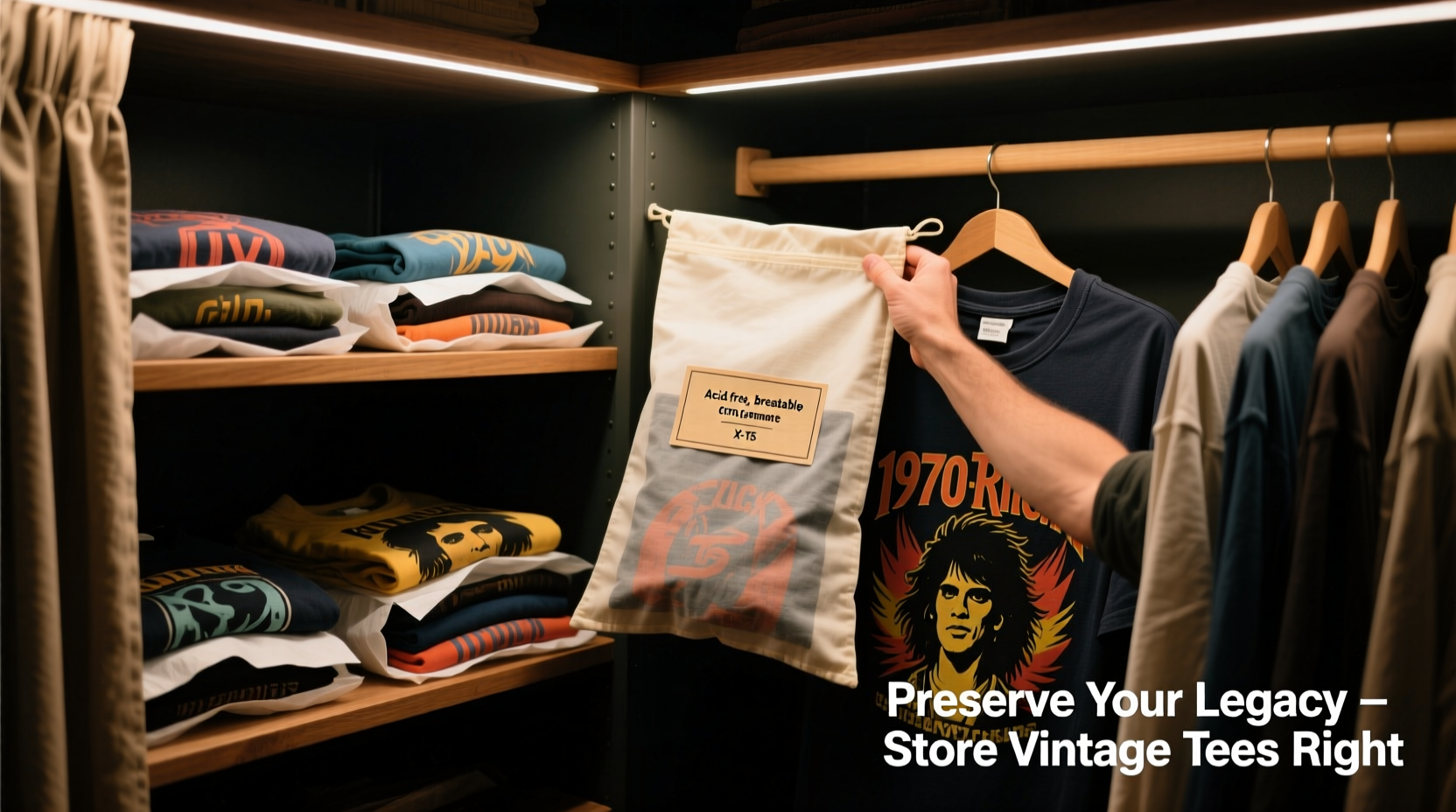
The enemy of vintage apparel isn’t time—it’s environment. While aging is inevitable, most visible degradation results from preventable exposure factors. The primary culprits include:
- UV radiation: Sunlight and artificial light break down dyes and weaken cotton fibers, leading to fading and brittleness.
- Humidity and moisture: Damp environments encourage mildew, which eats at fabric and causes yellow stains. High humidity also accelerates chemical breakdown in printed inks.
- Heat: Elevated temperatures speed up oxidation and dye migration, particularly problematic for plastisol and water-based screen prints.
- Oxygen exposure: Over time, oxygen causes natural fibers like cotton to yellow, especially in areas not exposed to light (like under collars or sleeves).
- Folding stress: Repeated creasing along the same lines creates weak points where fabric can split or ink can crack.
- Pollutants: Airborne chemicals, cigarette smoke, and even perfume residues can react with fabric dyes and degrade material integrity.
Preservation begins with eliminating or minimizing these threats. The goal isn't just to delay wear—it's to maintain structural integrity and visual authenticity.
Step-by-Step Guide to Preparing Tees for Storage
Storing a vintage tee properly starts long before it hits the shelf. Cleanliness, inspection, and preparation are essential to avoid trapping contaminants that accelerate decay.
- Inspect thoroughly: Lay the shirt flat on a clean surface. Check for stains, insect damage, thinning fabric, or cracked print. Note any issues for future monitoring.
- Clean gently—if necessary: Only wash if visibly soiled or if there’s odor. Use cold water, a pH-neutral detergent (like Woolite or The Laundress Delicate), and hand-wash or delicate machine cycle. Avoid bleach, fabric softeners, and enzymes.
- Air dry flat: Never use a dryer. Heat damages fibers and shrinks cotton. Lay the shirt on a clean towel, reshape to original dimensions, and let dry away from sunlight.
- Deodorize naturally: If odors persist after washing, place the shirt in a sealed container with activated charcoal or baking soda for 24–48 hours.
- Press carefully: If ironing is needed, use low heat with a pressing cloth between the iron and print. Never apply direct heat to screen-printed designs.
Once cleaned and dried, allow the shirt to rest for 24 hours in a climate-controlled room to ensure all moisture has dissipated before storage.
Best Storage Methods: Folding vs. Hanging vs. Rolling
How you store a vintage tee determines its longevity. Each method has pros and cons depending on fabric weight, print type, and frequency of access.
| Method | Best For | Risks | Expert Recommendation |
|---|---|---|---|
| Folding | Lightweight cotton, frequently accessed shirts | Crease formation, ink cracking over time | Use acid-free tissue paper to cushion folds; rotate position every 6 months |
| Hanging | Heavy concert jackets, tees with embellishments | Shoulder stretching, gravity-induced sagging | Only use padded hangers; avoid wire or plastic |
| Rolling | Fragile prints, rare or archival pieces | Requires more space, less convenient access | Store rolled in archival tubes or drawers lined with inert materials |
Folding remains the most widely recommended method for standard vintage tees. To fold correctly:
- Lay the shirt face-down on a clean surface.
- Smooth out wrinkles and align seams.
- Fold sleeves inward along the shoulder line.
- Fold bottom hem up to meet collar, avoiding direct creases across graphics.
- Insert acid-free tissue paper between folds to prevent friction and absorb residual moisture.
For collectors with multiple high-value items, rolling preserves integrity best. Roll loosely around a cardboard tube wrapped in unbleached muslin, then place inside a breathable cotton garment bag.
“Cotton is a living fiber. It breathes, reacts to humidity, and degrades when compressed. Proper folding with buffer materials is non-negotiable for long-term preservation.” — Dr. Lila Chen, Textile Conservator, Smithsonian Institution
Choosing the Right Storage Environment and Containers
The location and container matter as much as the method. A perfect fold means little if stored in a damp basement or plastic bin.
Ideally, vintage tees should be kept in a stable environment with:
- Temperature: 65–70°F (18–21°C)
- Relative humidity: 45–55%
- No direct or indirect sunlight
- Good air circulation (but no drafts)
- 远离 sources of pollution (e.g., paint fumes, tobacco smoke)
Storage containers should be:
- Acid-free boxes: Specifically designed for archival storage. Look for ones labeled “lignin-free” and “buffered” to neutralize acids.
- Breathable fabric drawers: Cotton or linen-lined storage units allow airflow while blocking dust.
- Muslin garment bags: Superior to plastic or vinyl, which trap moisture and promote mildew.
Avoid common pitfalls:
Plastic bins may seem practical but only use them if they’re made from polypropylene (look for recycling code #5) and are fully opaque. Even then, place tees inside cotton bags first to create a breathable barrier.
Mini Case Study: Preserving a 1984 Iron Maiden Tour Shirt
Mark R., a collector from Portland, inherited his father’s 1984 World Slavery Tour Iron Maiden tee. The shirt was in good condition but had faint yellowing under the arms and a slight musty odor. Instead of storing it in a plastic tub as initially planned, he consulted a local textile conservator.
He followed this process:
- Hand-washed with a conservation-grade detergent.
- Dried flat in a darkened room.
- Inserted acid-free tissue into the fold lines.
- Stored vertically in an archival box lined with unbleached cotton.
- Kept in a closet on an interior wall, away from exterior heat and light.
After two years, the shirt showed no further discoloration. Mark rotates the fold every six months and checks for pests quarterly. His approach demonstrates how small, consistent actions prevent large-scale degradation.
Do’s and Don’ts of Vintage Tee Storage
| Do | Don’t |
|---|---|
| Store in a cool, dark, dry place | Leave tees in direct sunlight or near windows |
| Use acid-free tissue paper in folds | Fold directly over printed graphics |
| Rotate folded positions every 6 months | Store in attics, basements, or garages |
| Keep in breathable fabric containers | Use plastic bags or vacuum seals |
| Inspect annually for pests or mold | Wash unless absolutely necessary |
This balance of proactive care and environmental control ensures both aesthetic and structural preservation.
Frequently Asked Questions
Can I hang my vintage band tees?
You can, but it’s generally not recommended for long-term storage. Hanging puts stress on shoulder seams and can stretch the neckband over time. If you must hang, use padded, non-slip hangers and only for short durations (e.g., display). Rotate between hanging and folding every few months.
How often should I check my stored tees?
Inspect at least once every six months. Look for signs of insect activity (tiny holes, frass), musty smells, or discoloration. This allows early intervention before damage spreads. Also, rotating fold lines helps prevent permanent creasing.
Is it safe to store vintage tees in cedar chests?
Cedar repels moths, but the oils can transfer to fabric and cause staining over time. If using cedar, line the chest with acid-free paper or unbleached cotton fabric to create a barrier. Never let the shirt touch bare wood.
Essential Preservation Checklist
Follow this checklist to ensure your vintage band tees remain in optimal condition:
- ✅ Inspect each tee for stains, holes, or odor before storage
- ✅ Clean only when necessary, using cold water and gentle detergent
- ✅ Dry flat away from sunlight
- ✅ Fold with acid-free tissue paper in creases
- ✅ Store in acid-free box or breathable cotton bag
- ✅ Keep in a dark, climate-stable room (65–70°F, 45–55% humidity)
- ✅ Avoid plastic containers and vacuum sealing
- ✅ Rotate fold lines every 6 months
- ✅ Inspect twice yearly for pests or deterioration
- ✅ Limit handling—wear cotton gloves when examining fragile pieces
Conclusion: Treat Your Tees Like Artifacts
Vintage band tees are cultural artifacts, each bearing the marks of music history and personal journey. With minimal effort and informed practices, they can survive for generations. The key lies not in perfection but in consistency—stable conditions, careful handling, and periodic maintenance. Fading and damage aren’t inevitable. They’re the result of neglect. By applying these strategies, you honor the legacy of the music and the craftsmanship behind every print and thread.




 浙公网安备
33010002000092号
浙公网安备
33010002000092号 浙B2-20120091-4
Comments
No comments yet. Why don't you start the discussion?