
Canvas shoes are a wardrobe staple—lightweight, breathable, and effortlessly stylish. Whether you own classic Chuck Taylors, espadrilles, or minimalist slip-ons, one common issue persists: they often feel snug at first wear. While some break in naturally, others pinch or restrict movement, especially across the toes or midfoot. The temptation is to force them loose with aggressive stretching techniques, but doing so can compromise the integrity of the canvas fibers, weaken stitching, or distort the shoe’s shape.
The good news is that effective stretching doesn’t require brute force. With patience and the right approach, you can gently expand canvas footwear to match your foot’s contours while preserving the material’s strength and appearance. This guide outlines safe, tested methods that respect the delicate nature of woven cotton canvas, ensuring long-term comfort without sacrificing structural quality.
Why Canvas Requires Gentle Handling
Unlike leather, which responds well to moisture and molding, canvas is a tightly woven cotton fabric that lacks natural elasticity. It softens over time, but aggressive stretching—especially when wet—can cause fibers to stretch unevenly, leading to sagging, pilling, or permanent deformation. Additionally, many canvas shoes have rubberized backing or laminated layers that can delaminate if soaked improperly or exposed to high heat.
The goal isn’t to “stretch” in the traditional sense, but rather to encourage controlled relaxation of the fabric through gradual wear and targeted conditioning. Think of it as coaxing the shoe into flexibility, not forcing it.
“Canvas isn’t meant to be stretched like leather. You’re not reshaping it—you’re helping it adapt.” — Marcus Lin, Footwear Restoration Technician, 12 years in specialty shoe care
Step-by-Step Guide: Safe Stretching Methods
The following techniques prioritize fiber preservation while delivering measurable comfort improvements. Each method works best when combined with consistent use and proper aftercare.
1. Wear Them Indoors with Thick Socks
This is the most natural and safest way to break in canvas shoes. By wearing them around the house with slightly thicker socks than usual, you apply steady pressure that mimics real-world conditions without exposing the shoes to outdoor abrasion or weather.
- Choose wool or cotton blend socks (avoid synthetic materials that trap moisture).
- Put on the shoes and walk for 30–60 minutes daily.
- Focus on flexing your feet—walking up stairs, standing on tiptoes, or gently pressing against door frames helps open tight zones.
- After each session, let the shoes air dry away from direct heat.
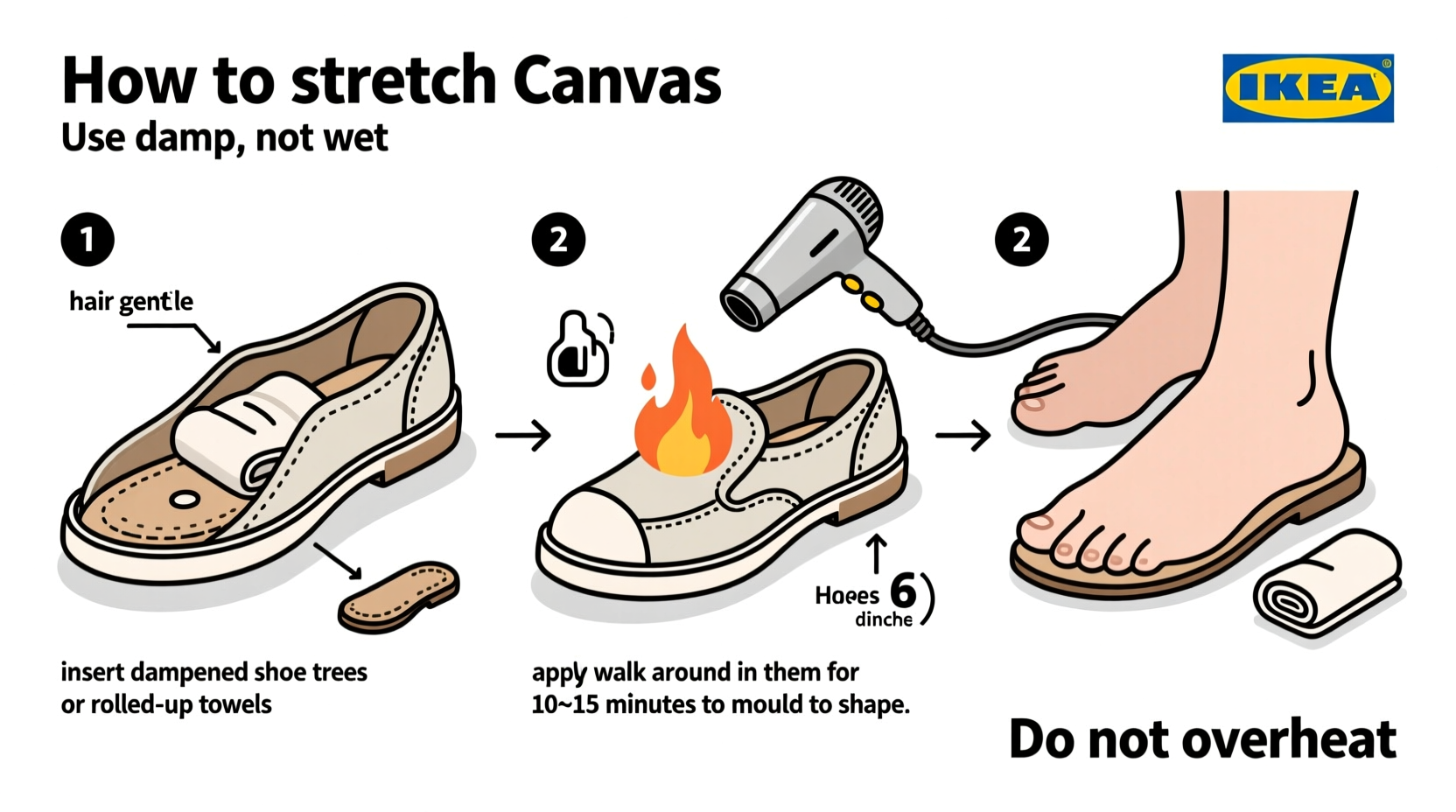
2. Use a Hairdryer and Flex Method (Low Heat Only)
Heat temporarily relaxes canvas fibers, allowing them to conform more easily. However, excessive heat can scorch or shrink the material. This technique uses brief exposure to low heat followed by immediate shaping.
- Wear the shoes with medium-thick socks.
- Use a hairdryer on the lowest heat setting to warm tight areas (toe box, sides) for no more than 30 seconds per zone.
- Flex your foot and wiggle toes while warm—this encourages micro-shifts in the weave.
- Walk in them for 10–15 minutes, then remove and let cool in shape.
- Repeat over 3–5 days.
Caution: Never hold the dryer closer than 6 inches or exceed 30 seconds per area. Avoid heating glued seams directly, as this may weaken adhesion.
3. Stuffing Technique for Overnight Expansion
Ideal for broadening width or length slightly, stuffing applies passive pressure overnight. Unlike water expansion (which damages canvas), dry filling avoids moisture-related degradation.
- Fill plastic sandwich bags with uncooked rice or dried beans.
- Seal tightly and insert into problem areas (e.g., toe box for cramped toes).
- Gently tap with a spoon to push the bag deeper without tearing.
- Leave overnight (max 8 hours).
- Remove and assess fit the next day.
For length issues, roll a clean cotton sock tightly and place it under the insole to lift the arch slightly, encouraging forward stretch.
4. Damp Cloth Conditioning (Moisture-Controlled)
A minimal-moisture method that softens fibers just enough to enhance pliability without soaking. This is not the same as submerging shoes in water—a common mistake that leads to warping and mildew.
- Dampen a clean cloth with room-temperature water—wring thoroughly until only slightly moist.
- Press the cloth against tight spots for 20–30 seconds.
- Immediately wear the shoes for 20 minutes with thin socks.
- Let dry naturally for 12+ hours before repeating.
This method works best on pre-worn shoes that need minor adjustments, not brand-new stiff pairs.
Do’s and Don’ts: Protecting Fabric Integrity
To avoid irreversible damage, follow these guidelines when attempting any form of canvas shoe modification.
| Do | Don't |
|---|---|
| Use low heat and short durations when applying warmth | Apply direct high heat (e.g., oven, radiator, blow dryer on high) |
| Condition with barely damp cloths, never soak | Submerge shoes in water or leave wet overnight |
| Stretch gradually over several days | Force feet into shoes causing visible pulling or creasing |
| Stuff with soft, moldable materials (rice bags, socks) | Use rigid objects like books or wood blocks that can tear seams |
| Air dry at room temperature, away from sunlight | Dry near heaters or in direct sun, which fades and weakens fabric |
Checklist: How to Stretch Canvas Shoes Safely
Follow this checklist to ensure you're enhancing comfort without risking damage:
- ☐ Assess fit issues: Identify whether tightness is in length, width, or heel grip
- ☐ Start with indoor wear using thick socks for 3–5 sessions
- ☐ Use rice-filled bags for overnight passive stretching
- ☐ Apply heat only on low setting, max 30 seconds per area
- ☐ Condition with a lightly damp cloth if needed
- ☐ Allow full drying time between attempts (minimum 12 hours)
- ☐ Monitor for signs of wear: fraying, seam separation, discoloration
- ☐ Stop immediately if material feels strained or distorted
Real Example: Recovering a Pair of Vintage Keds
Sophia, a vintage clothing collector, purchased a rare pair of 1970s Keds online. Though true to size, the canvas had stiffened over decades of storage and felt uncomfortably tight across the ball of her foot. Instead of returning them, she opted for a cautious stretching plan.
She began by wearing the shoes indoors with cotton-blend socks for 45 minutes each evening. After three days, she noticed slight softening but still experienced pressure. She then used the rice-bag method, targeting the forefoot, leaving them stuffed overnight. On day six, she applied a barely damp cloth to the upper and wore them briefly while warm. By day ten, the shoes felt broken in—comfortable enough for all-day wear—with no visible distortion or damage to the original stitching or logo patch.
Her success came from patience and avoiding quick fixes. “I almost tried putting them in the wash,” she admitted. “But reading about how moisture ruins old canvas made me stop. Taking it slow saved them.”
Expert Insight: When to Accept Limits
Not all shoes can—or should—be stretched. Some designs have inherent limitations due to construction, age, or material blend.
“Some canvas shoes are built with reinforced panels or fused linings that resist stretching by design. Trying to force them compromises durability. If a shoe pinches after two weeks of careful wear, it’s likely the wrong size—not just tight.” — Lena Torres, Sustainable Footwear Consultant
Torres emphasizes that repeated stretching attempts on unsuitable models lead to premature failure. Instead, she recommends considering exchange options or using inserts for minor fit corrections. For example, a thin gel heel grip can prevent slippage without altering the shoe, and metatarsal pads can relieve pressure points caused by shallow toe boxes.
Frequently Asked Questions
Can I put canvas shoes in the washing machine to soften them?
No. Washing machines agitate fabric aggressively and expose shoes to prolonged moisture, which weakens canvas fibers and can detach soles or cause mildew. Hand spot-cleaning with mild soap and water is acceptable, but full immersion or machine washing should be avoided.
Will freezing water inside the shoes stretch them?
This method—filling bags with water and freezing them inside the shoe—is popular for leather or synthetic sneakers, but it's risky for canvas. As water expands, it can stretch fibers beyond recovery, distort shape, and promote internal dampness that leads to mold. It’s not recommended for woven cotton uppers.
How long does it take to stretch canvas shoes safely?
With gentle methods, expect 5–10 days of consistent effort for noticeable improvement. Rushing the process increases the risk of damage. True adaptation often continues over several weeks of regular wear.
Conclusion: Patience Preserves Quality
Stretching canvas shoes isn’t about transformation—it’s about thoughtful adaptation. The fabric will never stretch like leather, nor should it. Respecting its limits ensures your favorite pairs remain wearable, attractive, and structurally sound for seasons to come.
By combining intelligent wear patterns, controlled conditioning, and vigilant aftercare, you can achieve a custom-like fit without sacrificing longevity. Avoid shortcuts that promise instant results; they often deliver only short-term relief at the cost of long-term integrity.




 浙公网安备
33010002000092号
浙公网安备
33010002000092号 浙B2-20120091-4
Comments
No comments yet. Why don't you start the discussion?