
Tight leather boots can be more than just uncomfortable—they can cause blisters, restrict circulation, and even lead to long-term foot issues. While professional stretching services exist, they aren’t always accessible or affordable. The good news is that you don’t need specialized tools or expertise to loosen stiff leather at home. With patience and the right techniques, you can gradually stretch your boots while preserving the integrity of the material. This guide walks through scientifically sound, field-tested methods that respect both comfort and craftsmanship.
Understanding Leather and Why It Feels Tight
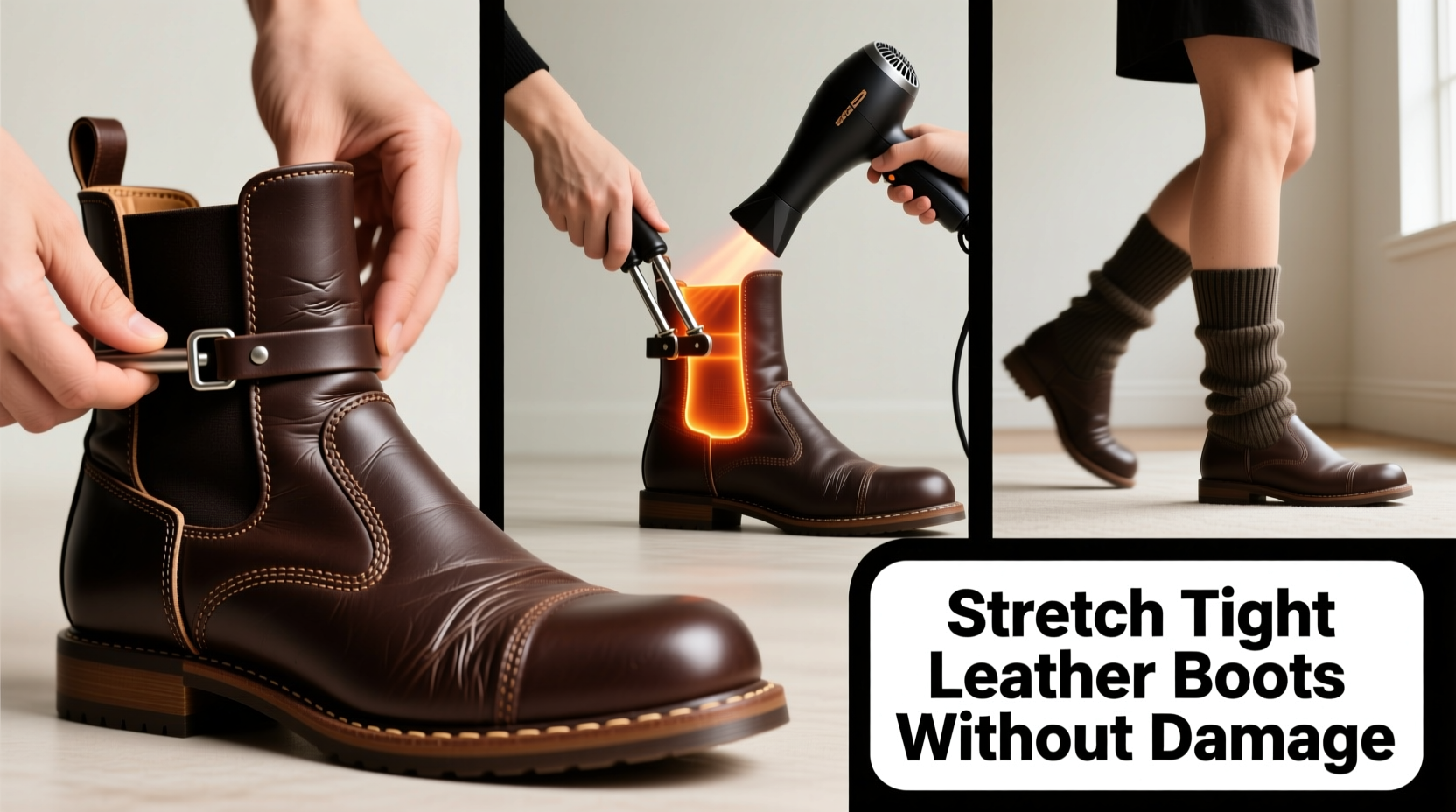
Leather is a natural material derived from animal hides, most commonly cowhide. Its structure consists of interwoven collagen fibers that give it strength and flexibility. When new, these fibers are densely packed, making the leather feel rigid. Over time—and with proper treatment—the fibers relax, allowing the material to conform to the shape of your foot.
The tightness in new boots often stems from two factors: manufacturing precision and moisture loss. High-quality leather boots are cut and stitched to exact dimensions, leaving little room for initial expansion. Additionally, during storage and shipping, leather loses some of its natural moisture, causing it to shrink slightly and become less pliable.
It's important to recognize that leather cannot be stretched like fabric. Instead, it responds best to controlled stress combined with moisture and heat—conditions that mimic the body’s natural warmth and humidity. Rushing the process with excessive force or harsh chemicals risks cracking, warping, or permanently deforming the boot.
“Leather is alive in a sense—it breathes, absorbs, and adapts. Treat it gently, and it will mold beautifully to your foot.” — Daniel Reyes, Master Shoemaker & Restoration Specialist
Safe Home Stretching Methods That Work
Several household-friendly techniques allow gradual stretching without compromising the leather’s finish or structural integrity. Each method leverages moisture, heat, or mechanical pressure in a way that encourages fiber relaxation rather than forced distortion.
1. The Wear-and-Walk Method (With Thick Socks)
This is the simplest and most traditional approach. By wearing thick socks—preferably wool or thermal blends—you increase the volume inside the boot, applying gentle outward pressure as you move.
Steps:
- Apply a leather conditioner to the interior and exterior of the boots to keep the material supple.
- Pull on two pairs of thick socks.
- Put on the boots and walk around your home for 20–30 minutes.
- Remove them and let them rest for at least 6 hours before repeating.
Repeat this process over 3–5 days. Avoid walking long distances initially to prevent blisters.
2. The Freezer Bag Technique
Water expands when frozen, and this principle can be used to stretch leather from the inside out—without soaking the material directly.
Steps:
- Fill two sturdy zip-top plastic bags with water, leaving about an inch of space at the top.
- Place one bag inside each boot, ensuring it reaches the toe box.
- Seal the bags tightly and place the boots upright in the freezer.
- Leave them overnight (at least 8 hours).
- Remove and let the ice melt completely before taking out the bags.
As the water freezes, it expands and applies even pressure to the inner walls of the boot, gently stretching tight areas. Because the leather isn’t submerged, there’s minimal risk of discoloration or stiffness.
3. Alcohol and Heat Application (For Spot Stretching)
If only specific areas—like the instep or heel—are too tight, targeted stretching can help. A solution of rubbing alcohol and water softens localized leather fibers, allowing them to stretch under light pressure.
Mix equal parts isopropyl alcohol and water in a spray bottle. Lightly mist the interior of the tight area. Immediately put on the boots with medium-thick socks and walk for 20 minutes. The alcohol reduces surface tension in the fibers, while body heat accelerates flexibility.
Note: Do not over-saturate. One light spray per session is sufficient.
What Not to Do: Common Mistakes That Damage Leather
Many well-intentioned attempts to stretch boots end up harming the material. These practices may offer quick relief but compromise durability and appearance.
| Mistake | Why It’s Harmful | Better Alternative |
|---|---|---|
| Using a hairdryer on high heat | Excessive heat dries out oils, leading to cracks and creases | Wear boots near a heater (not directly) or use body heat |
| Soaking boots in water | Causes swelling, uneven drying, and potential lining separation | Use sealed water bags or damp cloths for controlled moisture |
| Hammering or forcing with tools | Breaks fiber bonds, distorts shape, damages sole attachment | Apply steady pressure via socks or stretching sprays |
| Skipping conditioning | Dry leather resists stretching and becomes brittle | Condition every 2–3 sessions to maintain suppleness |
Step-by-Step Weekly Stretching Plan
For best results, follow a structured timeline that balances stretching with recovery time. Leather needs rest between sessions to re-stabilize its fibers.
- Day 1: Clean boots with a dry cloth. Apply leather conditioner and let absorb for 30 minutes.
- Day 2: Perform the thick sock method for 30 minutes. Insert shoe trees afterward.
- Day 3: Rest day—allow boots to air in a ventilated area away from direct heat.
- Day 4: Try the freezer bag technique overnight.
- Day 5: After thawing, wear with medium socks for 20 minutes.
- Day 6: Spot-treat tight zones with alcohol-water mix and wear briefly.
- Day 7: Evaluate fit. If still tight, repeat the cycle once more.
Most users notice improvement within one week. Full adaptation may take up to two cycles depending on leather thickness and original stiffness.
Real-Life Example: Breaking in Work Boots
James, a warehouse supervisor in Portland, bought a pair of full-grain leather work boots for their durability and ankle support. Within two days, he developed painful pressure points across the top of his feet. Rather than returning them, he decided to try home stretching.
He began with the thick sock method, wearing the boots around the house for short intervals. On the third night, he used the freezer bag trick. By day six, he was able to wear them during a four-hour shift with only mild discomfort. After ten days of consistent care, the boots felt custom-fitted. He credits the success to patience and avoiding shortcuts like heat guns or water soaks.
“I thought I’d have to live with the pain or get new ones,” James said. “But treating the leather like it has memory made all the difference.”
Essential Checklist for Safe Boot Stretching
- ✅ Clean boots thoroughly before starting
- ✅ Condition leather every few days during the process
- ✅ Use thick socks to apply internal pressure
- ✅ Try the freezer method for deep toe-box expansion
- ✅ Avoid direct heat sources like radiators or blow dryers
- ✅ Allow 6–12 hours of rest between stretching sessions
- ✅ Monitor for signs of over-stretching (baggy sides, loose heel)
- ✅ Stop if seams begin to lift or leather shows white creasing
Frequently Asked Questions
Can I stretch leather boots if they’re already polished?
Yes, but avoid getting moisture on the polished surface. Focus stretching efforts on the interior. If using sprays, wipe excess immediately. Reapply polish only after the boots have fully dried and stabilized.
How much can leather boots realistically stretch?
Leather typically expands by about 5–10% in circumference with proper treatment. This is usually enough to relieve tightness but won’t convert a size 9 into a comfortable size 10. If the boots are fundamentally too small, stretching won’t solve the issue.
Is it safe to use commercial stretching sprays?
Most reputable leather stretching sprays contain ethanol, glycerin, and conditioners that soften fibers safely. However, always test on a small, hidden area first. Avoid products with strong solvents or artificial fragrances, which can degrade finishes.
Conclusion: Patience Pays Off in Perfect Fit
Stretching tight leather boots at home doesn’t require special equipment or risky hacks. What it does require is consistency, care, and respect for the material’s natural behavior. By combining moisture, gentle pressure, and time, you can transform stiff, uncomfortable footwear into a personalized fit that supports your feet through seasons of wear.
The key is to treat leather not as an inert shell, but as a responsive, living material that adapts when treated with intelligence and patience. Whether you're breaking in hiking boots, dress oxfords, or winter chukkas, the methods outlined here preserve quality while enhancing comfort.




 浙公网安备
33010002000092号
浙公网安备
33010002000092号 浙B2-20120091-4
Comments
No comments yet. Why don't you start the discussion?