
Once confined to weekend errands and casual Fridays, the denim jacket has evolved into a versatile wardrobe staple capable of bridging the gap between relaxed and refined. When styled correctly, it can elevate a formal outfit with an air of effortless sophistication. But misstep in fit, fabric, or coordination, and the look quickly veers into disheveled territory. The key lies not in rejecting formality, but in balancing contrast with intention.
The modern professional wardrobe no longer demands rigid conformity. A well-cut blazer might be the default choice for meetings, but there’s growing appreciation for layered looks that retain polish while embracing individuality. The denim jacket, particularly in dark washes and structured silhouettes, offers that balance—if handled with care.
Choose the Right Denim Jacket
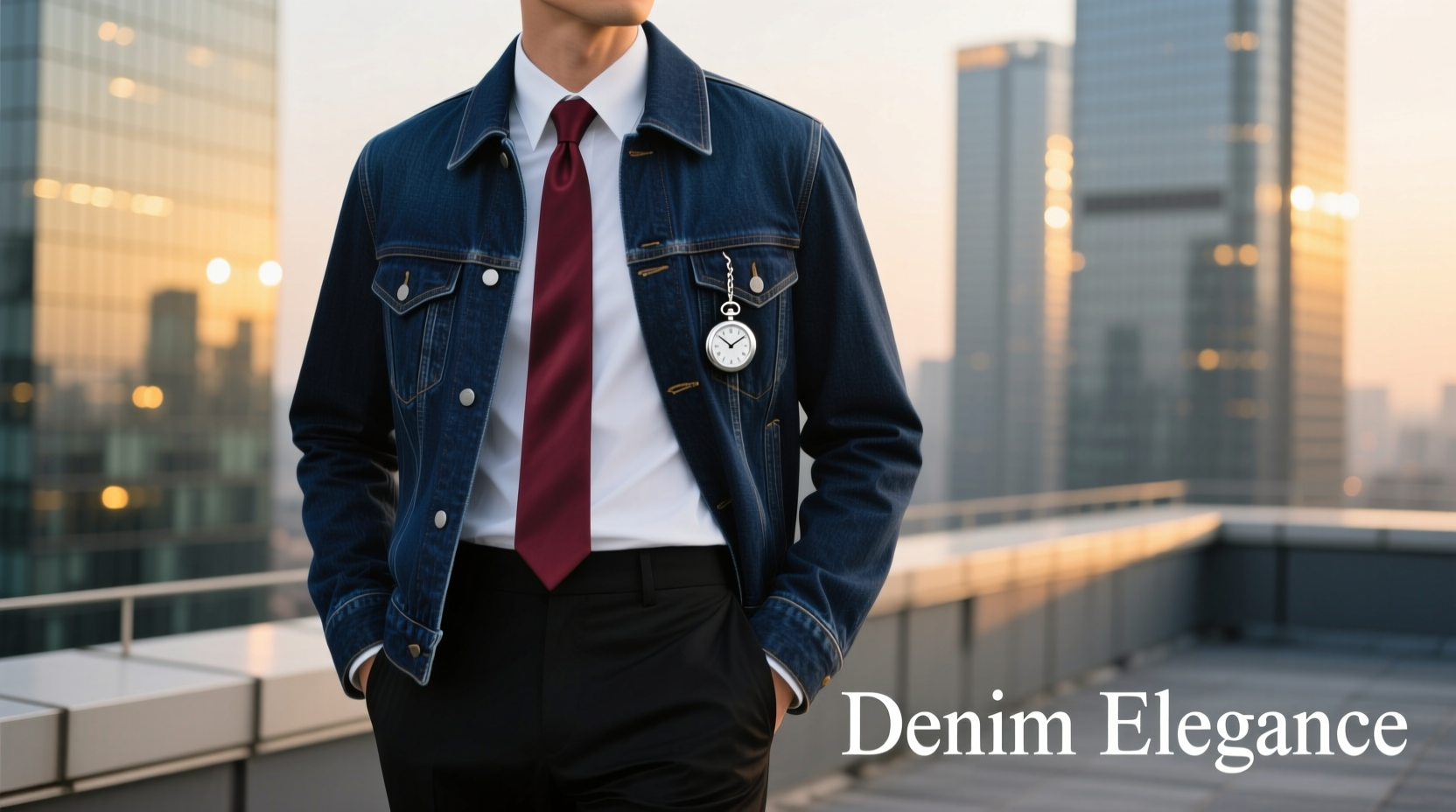
Not all denim jackets are created equal, especially when integrating them into formal ensembles. The foundation of a successful pairing begins with selecting a jacket that reads as intentional rather than afterthought.
Opt for a dark indigo or black rinse denim. These tones mimic the depth of traditional suiting fabrics and reduce visual disruption. Avoid stonewashed, faded, or heavily distressed versions—they signal informality too strongly. Look for clean finishes, minimal hardware, and subtle stitching. A tailored cut with slightly tapered sides and a clean collar enhances structure, making it easier to pair with dress shirts or blazers.
Fabric weight matters. Medium-weight denim (around 10–12 oz) holds its shape better than lightweight versions, which can wrinkle easily and appear flimsy under a wool coat or over a crisp shirt. Consider Japanese or selvedge denim options—they offer durability and a refined texture often appreciated in elevated styling circles.
Pairing Principles: Matching Formality Levels
The goal isn't to disguise the denim jacket as formalwear, but to ensure it complements the level of formality already present in the rest of your outfit. Think of it as introducing a counterpoint—like jazz in a classical concert—that still harmonizes with the overall composition.
A common mistake is layering a rugged denim jacket over a full suit. This creates tonal dissonance: the sharpness of tailored trousers clashes with the inherent casualness of raw denim edges. Instead, consider wearing the jacket over a blazer, not instead of one. This technique, known as “reverse layering,” keeps the formal element visible while adding depth and texture.
For example, wear a navy wool blazer, a white dress shirt, and chinos. Then drape a slim-fit black denim jacket over the top. The blazer remains the dominant formal layer, while the denim adds edge without undermining professionalism.
| Outfit Element | Suitable for Denim Overlap | Best Paired With |
|---|---|---|
| Full two-piece suit | No | Overcoat or tailored overjacket |
| Blazer + dress pants | Limited | Dark denim only, worn briefly during transitions |
| Blazer + chinos | Yes | Structured dark-wash denim jacket |
| Dress shirt + tie | Yes | Denim as outermost layer in smart-casual settings |
| Turtleneck + sport coat | Yes | Black denim for tonal contrast |
Color and Texture Coordination
Harmony in color ensures the denim doesn’t dominate or distract. Stick to a cohesive palette where the jacket supports, rather than competes with, the rest of the ensemble.
Dark indigo pairs well with charcoal gray, deep navy, olive green, and even burgundy. Black denim expands compatibility further, working seamlessly with monochrome schemes or pinstripe trousers when used thoughtfully. Avoid pairing light blue denim with formal pieces—it reads too casually and disrupts continuity.
Texture plays an equally important role. Pairing a stiff, dry denim jacket with a soft cashmere sweater or fine-gauge merino creates an appealing tactile contrast. However, avoid combining multiple rugged textures—such as suede shoes, corduroy pants, and raw denim—within the same outfit. Too much texture overwhelms the eye and diminishes elegance.
“The secret to blending casual and formal is editing. One contrasting piece adds interest; two or more create confusion.” — Marcus Reed, Menswear Stylist & Creative Director at Threadline Studio
Step-by-Step Guide: Building a Polished Denim-Layered Look
Follow this five-step process to integrate a denim jacket into a formal-leaning outfit without sacrificing sophistication.
- Start with a formal base: Choose a dress shirt or turtleneck. Add a tie or pocket square if the setting allows. This establishes the tone of the outfit.
- Add a mid-layer (optional): A lightweight blazer, unstructured sport coat, or fine-knit cardigan provides transitional depth. Ensure it fits cleanly under the denim jacket.
- Select the right denim: Reach for a dark, well-fitted jacket with minimal distressing. Button it only occasionally—for brief periods like commuting or outdoor transitions.
- Pick complementary bottoms: Wool trousers, dress chinos, or flannel pants work best. Avoid jeans unless they’re black, slim, and free of fading or rips.
- Finish with refined footwear: Loafers, oxfords, or minimalist leather boots ground the look. Stay away from sneakers unless they’re pristine white leather models in highly casual-professional environments.
This method works exceptionally well in creative industries, client-facing roles with relaxed dress codes, or transitional moments like evening networking events after work.
Real-World Example: The Client Dinner Transition
James, a marketing consultant in Toronto, frequently attends after-work dinners with clients. His office requires business casual attire, but evenings demand something sharper. He uses his black denim trucker jacket as a bridge.
During the day, he wears a light gray blazer over a pale blue shirt with khaki chinos. As the meeting ends, he swaps the blazer for a matte black denim jacket—same shirt and pants. He adds brown brogues and a minimalist watch. At dinner, he drapes the denim over the back of his chair, revealing the dressier layers underneath.
The denim served its purpose: warmth during the commute, a stylish outer layer, and a signal of approachability—without ever appearing underdressed.
Common Mistakes and How to Avoid Them
- Wearing ripped or frayed denim with formal wear: Even small holes undermine authority. Reserve damaged denim for weekends.
- Letting the jacket hang open awkwardly: Either button it fully during colder moments or remove it entirely in indoor settings.
- Mismatched formality in shoes: No matter how perfect the jacket and shirt, chunky boots or worn sneakers will drag the whole look down.
- Over-accessorizing: A denim jacket already adds visual weight. Skip flashy watches, chains, or patterned scarves that compete for attention.
- Ignoring grooming: An unkempt beard, wrinkled shirt, or scuffed shoes paired with denim intensifies sloppiness. Keep the rest of your presentation sharp.
Checklist: Denim Jacket Integration Readiness
Before stepping out in a formal-leaning outfit featuring a denim jacket, run through this checklist:
- ✅ Denim is dark (indigo or black), clean, and unworn-looking
- ✅ Jacket fits snugly across shoulders and chest without pulling
- ✅ Rest of outfit maintains a formal baseline (dress shirt, tailored pants)
- ✅ Shoes are polished and appropriate (no sneakers or flip-flops)
- ✅ Outer layer is removed indoors or when seated for meetings
- ✅ Grooming is impeccable (hair, nails, facial hair, etc.)
- ✅ Environment accepts smart-casual or creative-professional dress
Frequently Asked Questions
Can I wear a denim jacket to a job interview?
Generally, no—unless the company culture is explicitly creative or tech-forward (e.g., design agencies, startups). In traditional sectors like finance, law, or government, opt for a wool blazer instead. If you do wear denim, make it black, perfectly fitted, and layered under a charcoal coat for added legitimacy.
Is it okay to wear a denim jacket over a suit jacket?
Rarely. Doing so compresses the lapels, distorts the shoulder line, and risks creasing the suit. Instead, wear the denim *under* a topcoat or trench during transit, then remove it before entering the office. Alternatively, replace the suit jacket with a blazer and layer the denim on top for a more forgiving silhouette.
What kind of denim jacket works best with formal wear?
A black or dark indigo trucker-style jacket with a minimalistic design—two chest pockets, brass buttons, no patches or embroidery. Look for brands that emphasize tailoring, such as Acne Studios, Reiss, or Orslow. Vintage Levi’s Type III in good condition can also work if cleaned and pressed.
Final Thoughts: Elevate, Don’t Erase
Styling a denim jacket with formal outfits isn’t about rebellion—it’s about refinement through contrast. The most polished men understand that true style lies in control: choosing when to relax the rules, how far to push them, and when to pull back. A denim jacket, when selected and worn with precision, becomes not a downgrade in formality, but an upgrade in character.
It signals confidence. It says you know the rules well enough to bend them. But it only works if every other element—the fit, the fabric, the grooming—remains disciplined. Sloppiness enters not through the denim itself, but through neglect elsewhere in the ensemble.




 浙公网安备
33010002000092号
浙公网安备
33010002000092号 浙B2-20120091-4
Comments
No comments yet. Why don't you start the discussion?