
Leather jackets carry an undeniable aura of rebellion, confidence, and cool—but that doesn’t mean they’re off-limits in the workplace. With thoughtful styling, a leather jacket can transition from weekend biker aesthetic to polished office-ready outerwear. The key lies not in rejecting the jacket’s inherent edge, but in balancing it with refined pieces, neutral tones, and professional silhouettes. Whether you're navigating a corporate environment or a creative workspace, integrating a leather jacket into your work wardrobe is entirely possible—with finesse.
The challenge isn’t the jacket itself; it’s context. A black moto jacket paired with ripped jeans and combat boots sends one message. The same jacket layered over a silk blouse and tailored trousers tells a different story—one of intentionality, sophistication, and quiet confidence. This guide breaks down exactly how to achieve that balance, so you can enjoy the durability and timeless appeal of leather without raising eyebrows at the boardroom door.
Choose the Right Cut and Color
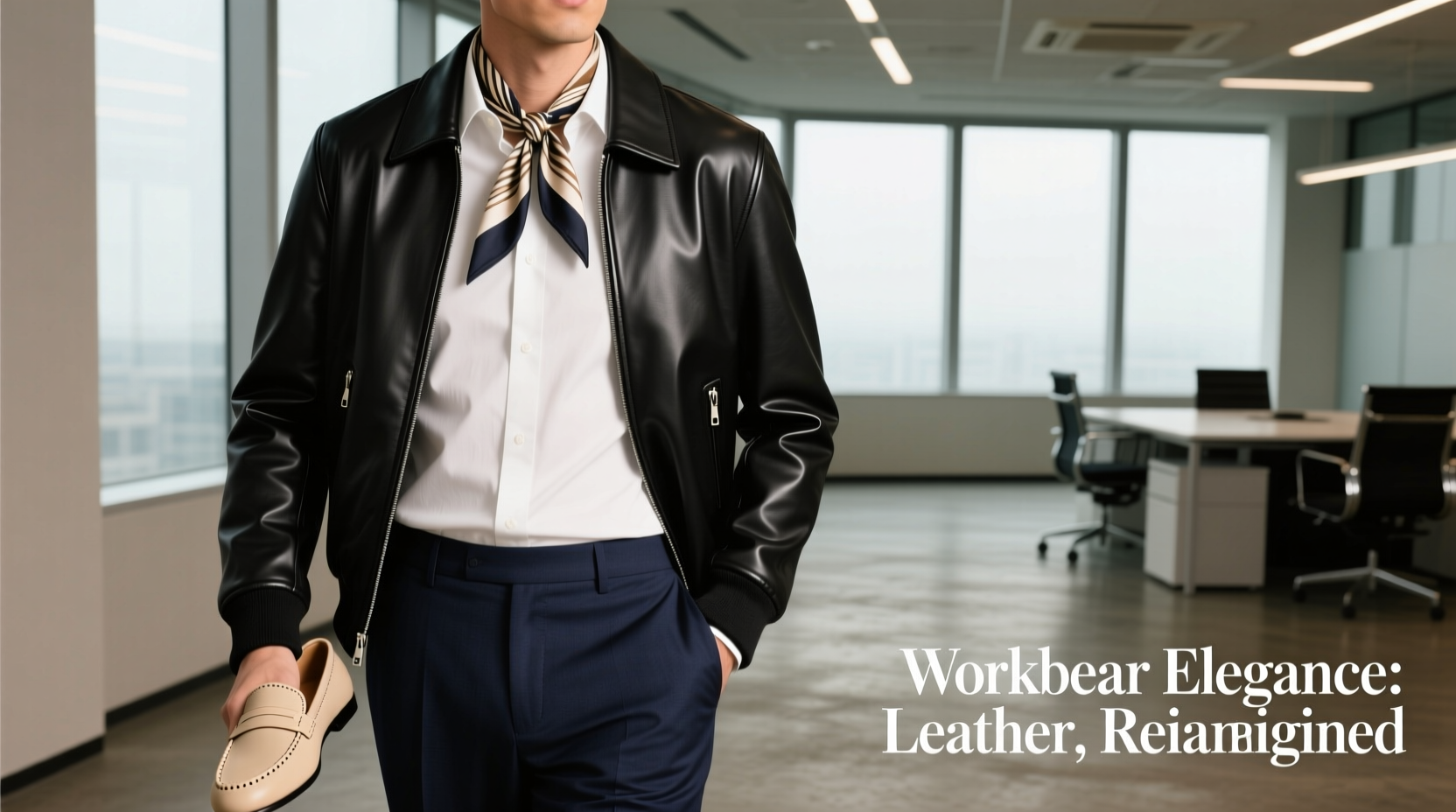
Not all leather jackets are created equal when it comes to workplace appropriateness. The cut and color set the tone before you even step into the office.
A classic **bomber**, **blazer-style**, or **cropped trench-inspired** leather jacket tends to read more professional than a full-zip moto with asymmetrical zippers and hardware. These styles mimic traditional suiting or outerwear shapes, making them easier to integrate into business-casual or smart-office looks.
Color plays an equally important role. While black remains the most versatile, it also carries the strongest “edgy” connotation when styled aggressively. Consider alternatives like:
- Navy – modern, subdued, and less severe than black.
- Taupe or camel – warm, elegant, and pairs beautifully with wool and knit fabrics.
- Olive green – earthy and understated, especially in matte finishes.
- Dark brown – rich and professional, reminiscent of heritage outerwear.
Glossy finishes amplify attitude; matte or pebbled textures feel more refined and office-appropriate. A matte taupe blazer-cut leather jacket, for instance, reads more like elevated tailoring than rock-and-roll gear.
Balance with Professional Bottoms and Layers
The foundation of taming a leather jacket lies in what you pair it with. Think of the jacket as the statement piece—it should be offset by conservative, clean-lined garments below the waist and underneath.
For bottoms, prioritize:
- Tailored wool trousers
- High-waisted cigarette pants
- Mid-length pencil skirts (knee or just below)
- Dark, non-distressed denim in straight or slim cuts (in casual offices)
These choices ground the outfit in professionalism. A sleek pair of black trousers instantly elevates the entire ensemble, making the leather jacket feel like a deliberate layer rather than a costume.
On top, focus on softness and polish. Crisp button-down shirts, fine-gauge merino sweaters, or silk blouses provide textural contrast and visual harmony. Tuck in your top to emphasize structure—this small gesture signals intentionality and formality.
“Outerwear should complement your silhouette, not dominate it. A leather jacket works best in professional settings when it enhances, rather than interrupts, the overall line.” — Clara Nguyen, Style Consultant at Elevate Wardrobe Studio
Dress It Down with Texture, Not Attitude
One of the most effective ways to neutralize the “edge” of a leather jacket is through fabric pairing. Leather naturally contrasts with softer, more refined textiles. Use this to your advantage.
Pairing leather with silk, cashmere, or fine wool creates a juxtaposition that feels luxurious, not rebellious. For example:
- A charcoal gray cashmere turtleneck under a navy leather bomber.
- An ivory silk shell beneath a cropped black leather jacket with a collared shirt layered on top.
- A fitted merino sweater dress with knee-high boots and a belted leather trench coat.
In each case, the softness of the inner layers tempers the hardness of the leather. The result is a sophisticated blend of strength and elegance—perfect for environments where personal expression is welcome within boundaries.
Avoid pairing leather jackets with band tees, graphic prints, mesh, or distressed fabrics during work hours. Even if those pieces are meaningful to you personally, they amplify the casual or subcultural associations of leather.
Footwear and Accessories Matter
Your shoes and accessories can make or break the office-readiness of a leather jacket. They act as subtle cues about your intentions.
Opt for footwear that leans formal:
- Pointed-toe ankle boots
- Loafers (especially horsebit or tassel styles)
- Classic pumps or block-heel mules
- Polished oxfords or brogues (for gender-neutral styling)
Avoid chunky combat boots, platform sneakers, or studded heels—they reinforce the “rebel” narrative. Instead, choose minimalist designs in neutral leathers like black, tan, or burgundy.
Accessories should follow the same principle: refinement over rebellion. A structured tote, a simple watch, or delicate gold jewelry adds polish. Steer clear of chains, skull motifs, or oversized rings during work hours.
| Do | Don’t |
|---|---|
| Wear with a structured tote or leather briefcase | Pair with a graffiti-print backpack |
| Add a silk scarf tied at the neck | Layer multiple silver chains |
| Choose minimalist stud earrings | Wear bold statement cuffs |
| Carry a classic watch | Stack multiple punk-style bracelets |
Step-by-Step Guide: Transitioning Your Leather Jacket from Weekend to Workweek
Follow this five-step process to adapt your favorite leather jacket for the office:
- Evaluate the jacket’s design. Is it a moto, bomber, or blazer style? Does it have excessive zippers or studs? If yes, consider wearing it only in very casual workplaces—or reserve it for after-hours.
- Select a professional base layer. Choose a collared shirt, turtleneck, or blouse in a neutral or muted tone. Avoid graphics or slogans.
- Add structured bottoms. Pair with tailored trousers, a pencil skirt, or dark, clean-cut jeans depending on your office culture.
- Layer strategically. Wear the jacket open to reveal your polished outfit underneath. This softens the visual weight of the leather.
- Finish with office-appropriate footwear and accessories. Closed-toe shoes, minimal jewelry, and a professional bag complete the transformation.
Real-World Example: Maya’s Office-Ready Look
Maya, a marketing strategist at a mid-sized tech firm, owns a black asymmetric-zip leather moto jacket she loves—but her hybrid workplace has client-facing days that require a more polished appearance. On casual Fridays, she wears it with jeans and boots, no issue. But for presentation days, she adapts it.
Her go-to work version:
- A cream silk button-up blouse, partially tucked
- High-waisted black wool-blend trousers
- Black pointed-toe ankle boots with a low block heel
- A structured cognac tote
- Small gold hoop earrings and a minimalist watch
She wears the leather jacket open, allowing the silk blouse and tailored pants to take center stage. The jacket adds warmth and a touch of personality without overwhelming the look. Colleagues have commented positively on her “effortlessly put-together” style—proof that edge can coexist with professionalism when balanced correctly.
Checklist: Is Your Leather Jacket Office-Appropriate?
Before heading to work, run through this checklist:
- ✅ Jacket is clean, conditioned, and free of scuffs or stains
- ✅ Cut is streamlined (bomber, blazer, or minimal moto)
- ✅ Color is neutral (black, brown, navy, taupe)
- ✅ Paired with structured, professional bottoms
- ✅ Layered over a polished top (blouse, button-down, fine knit)
- ✅ Footwear is closed-toe and refined
- ✅ Accessories are minimal and elegant
- ✅ Overall vibe is intentional, not rebellious
Frequently Asked Questions
Can I wear a leather jacket in a corporate office?
Yes, but with careful styling. Opt for a blazer-cut leather jacket in navy or brown, wear it over a dress shirt and tie (for men) or a silk blouse and trousers (for women), and keep accessories conservative. In strict corporate environments, it may be better reserved for business-casual Fridays or client-light days.
What if my leather jacket has visible zippers or hardware?
Hardware doesn’t automatically disqualify a jacket. The key is balance. Wear it open over a long-line cardigan or coat-style top, and pair it with softer fabrics and formal footwear. The goal is to shift focus from the hardware to the overall composition of the outfit.
Is faux leather more appropriate for the office?
Not necessarily. High-quality faux leather can look sleek and professional, but cheap versions often appear plasticky and less durable. A well-made genuine leather jacket in a muted color and minimalist cut will typically project more polish than a synthetic alternative with flashy details.
Final Thoughts: Confidence Meets Context
Styling a leather jacket for work isn’t about diluting your personality—it’s about aligning your self-expression with the expectations of your environment. The leather jacket, when thoughtfully integrated, becomes a symbol of quiet confidence rather than loud rebellion.
The most stylish professionals don’t abandon their individuality; they refine it. By choosing the right cut, pairing with polished pieces, and paying attention to details like footwear and layering, you can wear your leather jacket with pride—even in meetings.




 浙公网安备
33010002000092号
浙公网安备
33010002000092号 浙B2-20120091-4
Comments
No comments yet. Why don't you start the discussion?