
Modern farmhouse Christmas decor strikes a rare balance: it feels warmly nostalgic yet thoughtfully current, intentionally imperfect yet deeply curated. Unlike traditional red-and-green maximalism or minimalist Scandinavian austerity, this aesthetic embraces weathered wood, burlap, dried botanicals, and hand-stitched details—all anchored by a calm, neutral foundation. Styling a tree in this style isn’t about buying a themed kit; it’s about layering texture, honoring craft, and letting nature lead the palette. Done well, your tree becomes a quiet centerpiece—not shouting for attention, but inviting slow appreciation. This guide walks through every intentional decision, from branch structure and lighting rhythm to ornament curation and finishing touches—all grounded in real practice, not trend cycles.
1. Start with the Right Tree—and Prep It Thoughtfully
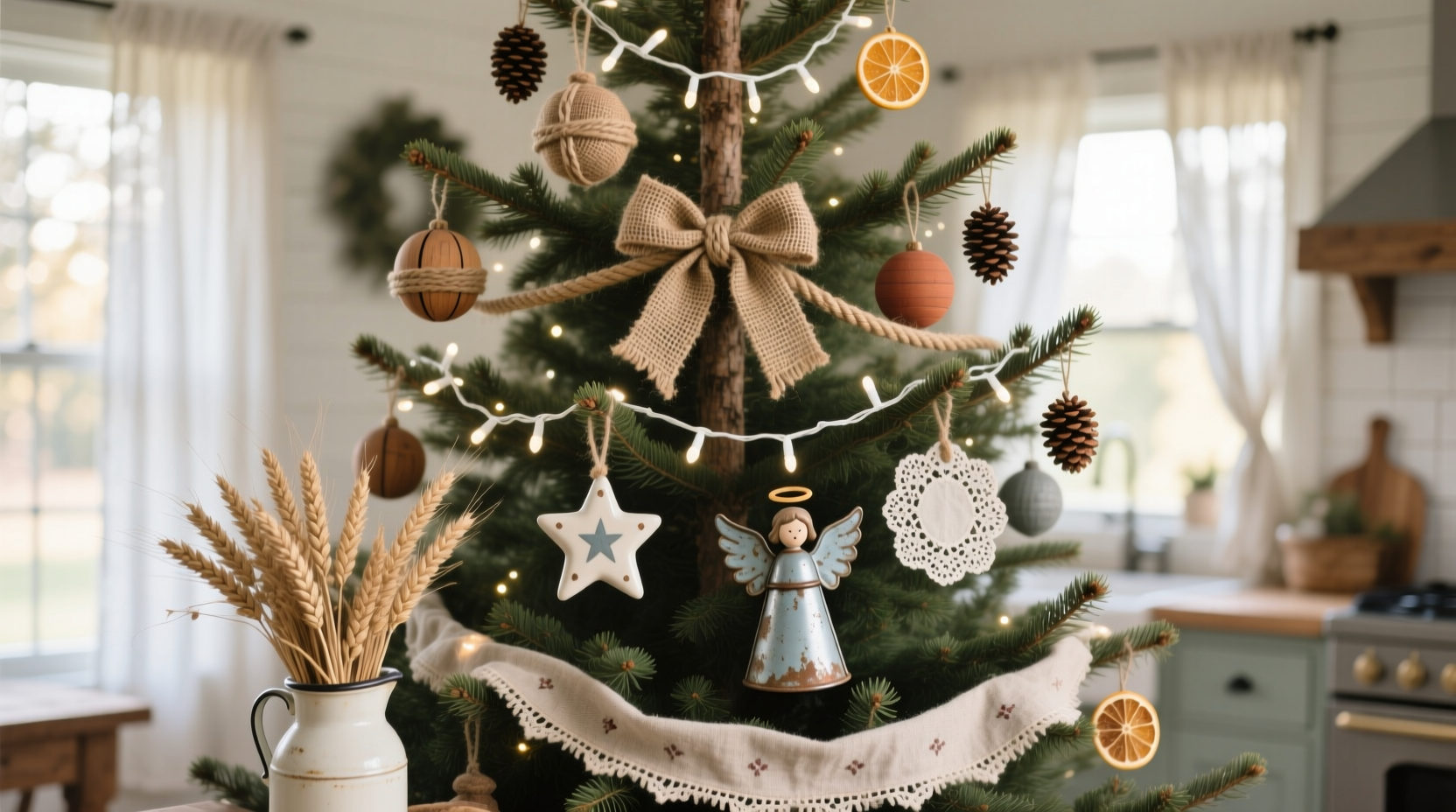
The foundation of any modern farmhouse tree is authenticity in form and texture. Skip artificial trees that mimic glossy, dense firs. Instead, choose a real Noble Fir, Fraser Fir, or Colorado Blue Spruce—or, if opting for artificial, select one labeled “natural needle,” “unlit,” and “lightly frosted” (not glittered or pre-lit with multicolored bulbs). Real trees offer subtle variation in branch density and needle tone—essential for the organic look. Artificial trees should have visible branch separation, slight irregularity in tip direction, and matte, non-reflective foliage.
Before decorating, let the tree acclimate indoors for 24 hours. Then, gently fluff branches outward—not upward—to create an open, airy silhouette. Remove any overly tight or downward-drooping lower branches to reveal the trunk’s natural grain. This exposes raw wood as part of the design, reinforcing the rustic anchor. Avoid flocking or heavy sprays; if you desire subtle texture, lightly mist lower branches with diluted white chalk paint (1 part paint to 4 parts water), then blot with cheesecloth for a soft, aged patina.
2. Lighting: Warm, Sparse, and Purposeful
Lighting sets the emotional temperature of the tree. Modern farmhouse rejects bright, uniform strings. Instead, use warm-white (2200K–2700K) LED micro lights—preferably battery-operated for flexibility and safety. Opt for 100–150 lights for a standard 7-foot tree. String them *by hand*, starting at the trunk and working outward, spacing bulbs 4–6 inches apart. Focus density toward the interior and lower two-thirds of the tree; leave upper branches and outer tips deliberately sparser. This creates depth, shadow play, and a sense of quiet glow—not illumination.
Avoid icicle lights, curtain lights, or blinking modes. If using vintage-style Edison bulbs, limit to 3–5 on the lower third only—treat them like heirloom accents, not primary lighting. Never wrap lights tightly around branches; drape them loosely, allowing some wire to show subtly beneath foliage. This reinforces the “made by hand” rhythm.
3. The Ornament Strategy: Texture Over Color, Story Over Symmetry
Modern farmhouse ornamentation follows three non-negotiable principles: prioritize natural or tactile materials (wood, linen, clay, dried citrus, wool, jute); restrict the color palette to ivory, oat, charcoal, sage, rust, and raw wood tones; and curate pieces with visible craftsmanship—stitching, grain, brushstrokes, or gentle asymmetry.
Begin with a base layer of 3–5 large-scale “anchor” ornaments (4–6 inches): hand-thrown ceramic balls in matte glazes, unfinished walnut slices drilled and wired, or linen-wrapped spheres stuffed with lavender. Space these evenly across the midsection, slightly deeper into the tree than surface level.
Next, add medium ornaments (2–3.5 inches) in groups of three or five—never even numbers. Mix materials within each group: one raw wood star, one linen pouch filled with cinnamon sticks, one air-dry clay disc stamped with a wheat motif. Hang these at varying depths—not all flush with the branch tip—to enhance dimension.
Finally, scatter small accents (¾–1.5 inches): dried orange slices (baked at 200°F for 2.5 hours until leathery), mini pinecones dipped halfway in ivory milk paint, or tiny brass bells with twine loops. These should feel like discoveries—not placed, but *found*.
| Ornament Type | Recommended Materials | Avoid |
|---|---|---|
| Large Anchors | Hand-thrown stoneware, walnut slices, linen-wrapped wool | Plastic balls, mirrored glass, metallic foil |
| Medium Groupings | Air-dry clay, burlap-wrapped foam, dried citrus + eucalyptus | Symmetrical sets, identical mass-produced items |
| Small Fillers | Baked orange slices, raw pinecones, miniature wooden birds | Glossy plastic berries, glitter-coated items, plastic snowflakes |
4. Ribbon, Garlands & Finishing Layers: The Art of Gentle Restraint
Ribbon and garlands define the tree’s rhythm—but in modern farmhouse, less is structurally essential. Use only *one* ribbon treatment and *one* garland type. For ribbon, choose 2.5-inch-wide natural burlap, unbleached linen tape, or heavyweight cotton webbing in oat or charcoal. Cut 3–4 lengths of varying lengths (36\", 48\", 60\"). Pinch each length at the center and drape over a sturdy branch, letting both ends fall naturally—no bows, no knots, no tucking. Allow slight fraying at cut edges; this signals authenticity.
For garlands, skip popcorn or beaded strands. Instead, make or source a simple dried botanical garland: alternating slices of dried orange, whole cinnamon sticks, star anise, and small eucalyptus stems bound with thin jute twine. Drape it once—low and loose—around the tree’s midsection, securing only at two points with hidden floral wire. Let it sag gently between anchors; rigidity contradicts the aesthetic.
Topper choice is critical. A classic farmhouse tree uses either a simple jute-wrapped twig wreath (6–8 inches, hung flat against the topmost branch cluster) or a single oversized, unglazed ceramic star (handmade, slightly irregular, matte finish). Avoid angels, deer, or anything figurative unless it’s a family heirloom with visible age and patina.
5. Real-World Execution: A Case Study from Hudson Valley
In late November 2023, Sarah Mitchell—a textile designer and owner of a restored 1820s barn studio in New York’s Hudson Valley—styled her 7.5-foot Fraser fir for a client photo shoot. She began with zero ornaments on hand. Over three days, she gathered materials: fallen walnut branches (cut into 3-inch discs, sanded smooth but left unstained), leftover linen scraps from her sewing studio (stuffed with dried lavender and stitched by hand into 4-inch pouches), and citrus from her orchard (sliced and baked low for 36 hours). She used only 120 warm-white micro LEDs, strung over six hours with deliberate gaps. Her ribbon was 100% unbleached cotton webbing—cut with pinking shears to encourage soft fraying. She added no glitter, no tinsel, no artificial greenery. The result? A tree that looked “like it had been there for years”—grounded, calm, and quietly full of story. Clients reported guests spent more time standing before it, touching the walnut slices, smelling the lavender, and asking about the maker behind each piece. That’s the power of intentionality over inventory.
“The modern farmhouse tree succeeds not because it’s ‘rustic’—but because it refuses to hide its making. Every knot, every uneven glaze, every frayed edge says: this was touched by human hands, and that matters.” — Elena Ruiz, Interior Designer & Author of *Hearth & Home: The Craft of Intentional Living*
6. Step-by-Step Styling Timeline (60-Minute Process)
- Minutes 0–5: Fluff branches, expose trunk, wrap base with natural twine.
- Minutes 5–15: Hand-string warm-white micro lights, focusing on interior and lower two-thirds. Test brightness—dimmer is better.
- Minutes 15–25: Hang 3–5 large anchor ornaments at varied depths in the midsection.
- Minutes 25–40: Place 4–5 groupings of medium ornaments (3–5 per group), mixing materials and hanging at staggered heights.
- Minutes 40–50: Drape ribbon lengths and botanical garland—no tension, no symmetry.
- Minutes 50–60: Add small fillers (dried citrus, pinecones) by hand—12–18 total. Step back. Remove any piece that feels “placed” rather than “settled.”
7. Common Pitfalls & How to Avoid Them
- Mistake: Overloading the top third. Correction: Reserve upper branches for light and air—only one topper, no ornaments above the midpoint.
- Mistake: Using “farmhouse” as code for beige-on-beige monotony. Correction: Introduce subtle contrast—charcoal-dyed wool next to raw oak, rust-dusted eucalyptus beside ivory linen.
- Mistake: Prioritizing thrift-store finds over material integrity. Correction: A chipped ceramic mug makes a poor ornament; a cracked walnut slice does not—it celebrates natural fracture.
- Mistake: Hiding the tree stand. Correction: Use a simple black metal stand or raw cedar block—visible, honest, structural.
8. FAQ
Can I incorporate family heirlooms into a modern farmhouse tree?
Absolutely—and it’s encouraged. Heirlooms align perfectly with the aesthetic’s reverence for history and craft. Integrate them thoughtfully: hang a tarnished brass bell among dried citrus, place a hand-embroidered felt ornament beside a clay disc, or tuck a vintage wooden toy into the lower branches. Let their age and uniqueness speak without competing with new pieces.
What if I live in an apartment with limited storage? How do I preserve handmade ornaments?
Store ornaments in breathable, acid-free boxes lined with unbleached muslin. Layer pieces with crumpled kraft paper—not bubble wrap or plastic. Keep dried botanicals in airtight jars with silica gel packets to prevent moisture damage. Label each box with the year and material (e.g., “2023 Walnut Slices – Store Flat”). Avoid stacking heavy ceramics directly on delicate linens.
Is it possible to achieve this look on a budget?
Yes—modern farmhouse thrives on resourcefulness. Gather fallen branches, bake your own citrus slices, sew ornaments from fabric scraps, and forage pinecones or dried grasses. The most expensive item should be the tree itself. One well-chosen ceramic piece (even secondhand) carries more weight than twenty mass-produced ornaments.
Conclusion
A modern farmhouse Christmas tree isn’t styled—it’s composed. Like a well-worn recipe passed down, it gains meaning through repetition, adaptation, and respect for raw materials. It doesn’t demand perfection; it invites participation—the quiet joy of threading twine, the patience of baking citrus, the satisfaction of sanding a walnut slice until its grain sings. This tree won’t dazzle with flash, but it will hold space for presence. It will smell of lavender and pine resin. It will catch the low winter light and cast soft, generous shadows. And when guests pause before it—not to snap a photo, but to trace a stitch or turn a wooden star in their palm—that’s when you’ll know it succeeded.




 浙公网安备
33010002000092号
浙公网安备
33010002000092号 浙B2-20120091-4
Comments
No comments yet. Why don't you start the discussion?