
Winter fashion walks a fine line between warmth and elegance. A well-chosen scarf can elevate your coat ensemble, adding color, texture, and insulation. But too often, the combination ends up looking overstuffed or shapeless—especially around the neck and shoulders. The secret lies not in avoiding scarves altogether, but in mastering their integration with outerwear. With the right fabrics, knots, layering strategies, and proportions, you can stay warm while maintaining a streamlined silhouette. This guide breaks down proven techniques to help you wear a scarf under or over your coat without sacrificing style or comfort.
Choose the Right Scarf Material and Weight
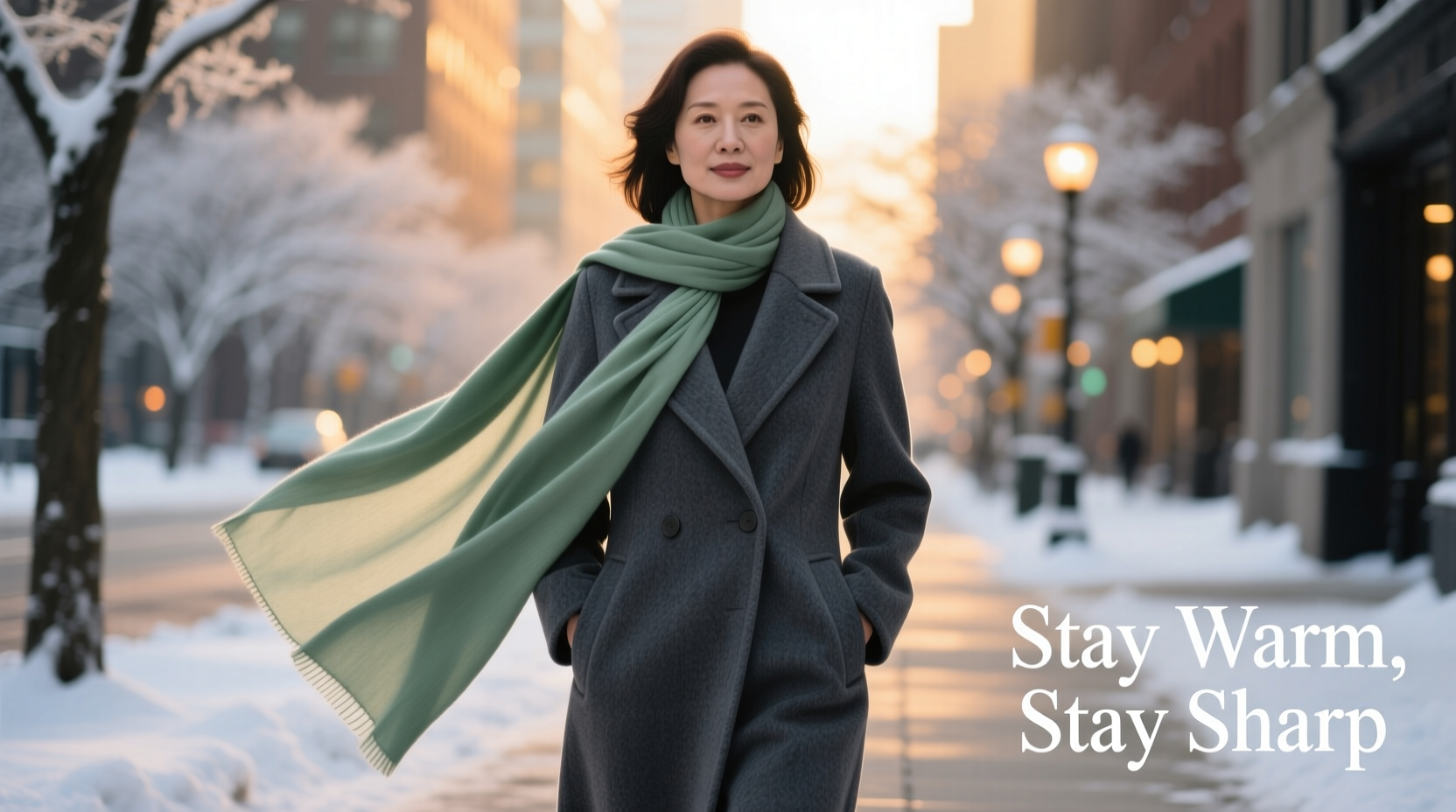
The foundation of a non-bulky scarf-and-coat pairing starts with selecting an appropriate fabric. Heavy wool or oversized knit scarves may seem ideal for frigid weather, but they often create excess volume at the collar, disrupting the clean lines of your coat.
Opt instead for lightweight yet insulating materials such as:
- Cashmere: Luxuriously soft and warm without bulk, cashmere drapes beautifully and resists pilling when cared for properly.
- Fine Merino Wool: Thinner than traditional wool, it provides excellent thermal regulation and breathability.
- Silk-Lined Wool: Combines the warmth of wool with the smooth glide of silk, reducing friction under coat collars.
- Microfiber or Technical Blends: Modern performance scarves offer wind resistance and moisture-wicking properties in slim profiles.
Avoid double-layered scarves unless they’re made from featherlight yarns. Even then, drape rather than loop tightly to prevent puffiness around the jawline.
Master the Art of Proportional Layering
Bulk often arises not from the scarf itself, but from how it interacts with other layers. The key is maintaining proportionality between your base layers, scarf, and coat.
Follow this layering sequence:
- Base Layer: Begin with a thin, form-fitting turtleneck or mock neck in merino wool or thermal knit. Avoid thick sweaters underneath unless your coat has generous tailoring.
- Scarf Placement: Drape the scarf over the base layer but under the coat collar. This keeps warmth trapped close to the body while allowing the coat’s structure to remain visible.
- Coat Fit: Ensure your coat has enough room in the shoulders and upper chest to accommodate the added layer without strain. A snug fit will amplify any perceived bulk.
For tailored coats like wool trench styles or single-breasted peacoats, consider wearing the scarf draped loosely outside the coat. This draws the eye upward and elongates the torso, creating a slimmer appearance.
“Balance is everything in winter layering. A scarf should complement your coat, not compete with it.” — Lena Moretti, Fashion Stylist & Wardrobe Consultant
Essential Scarf Tying Techniques for a Sleek Look
How you tie your scarf affects both comfort and visual weight. Some knots add unnecessary volume; others streamline your profile. Below are three elegant, low-bulk methods ideal for pairing with structured coats.
1. The Drape-and-Tuck
Ideal for long rectangular scarves (70”–80”), this method emphasizes length and flow.
- Place the scarf around your neck so one end hangs slightly longer than the other.
- Let both ends fall naturally in front, either crossed or parallel.
- Tuck the shorter end into your coat or jacket, just below the waist.
- Leave the longer end loose to trail gently down the front.
This creates vertical lines that flatter the figure and avoids bunching at the chin.
2. The Parisian Knot
A timeless favorite among European professionals, this knot sits neatly under the collar.
- Fold a square scarf diagonally into a triangle, then roll it from the wide edge to the tip to form a slim band.
- Wrap it around your neck once, allowing the ends to hang evenly.
- Tie a simple knot at the front or side, tucking the knot just beneath your jawline.
- Adjust so the scarf lies flat under your coat collar.
The rolled design minimizes thickness while still providing warmth.
3. The Ascot Fold
Best suited for silk or lightweight cotton scarves, this formal style works under overcoats and blazers.
- Lay the scarf flat and fold one-third of it toward the center, then repeat with the opposite side to create a layered band.
- Place it around your neck with the folded edges facing outward.
- Cross the ends in front, bring them up and tuck them into the top fold near your throat.
- Smooth the fabric so it lies flush against your chest.
This technique adds sophistication without adding inches.
Do’s and Don’ts When Styling Scarves with Coats
To avoid common pitfalls, refer to this quick-reference table outlining best practices.
| Do | Don’t |
|---|---|
| Match scarf size to coat silhouette—narrow scarves with fitted coats, wider ones with looser cuts. | Wear a wide, fluffy scarf with a slim-fit wool coat—it disrupts the line. |
| Drape one end inside and one outside the coat for asymmetrical balance. | Let both ends disappear completely under the coat—it defeats the decorative purpose. |
| Use a scarf pin or brooch to secure folds and prevent shifting. | Over-tighten knots, which can wrinkle the coat collar and restrict movement. |
| Choose scarves in complementary tones rather than clashing prints. | Mix multiple bold patterns (e.g., plaid scarf with herringbone coat). |
| Iron or steam lightweight scarves to maintain crisp drape. | Wear wrinkled or twisted scarves—they look messy and add visual clutter. |
Real-World Example: Olivia’s Workweek Commute
Olivia, a 34-year-old architect in Montreal, struggled each winter with looking professional while braving sub-zero temperatures. Her wool wrap coat often clashed with her favorite cable-knit scarf, creating a rounded shoulder effect that distorted her posture in client meetings.
She revised her approach by switching to a long, charcoal-gray cashmere scarf (75” x 10”). Each morning, she wears a black merino mock neck, drapes the scarf around her neck with one end tucked into her coat and the other flowing down, and secures the fold with a minimalist silver clasp just below her chin. The result? A polished, elongated neckline that complements her coat’s lapel without adding visible thickness.
“I used to think warmth meant bulk,” she says. “Now I realize it’s about smart layering. I’m just as warm—and people actually notice my coat, not just the scarf on top of it.”
Seasonal Adjustments and Climate Considerations
Your location and daily exposure to cold influence how strictly you must minimize bulk. In milder climates (e.g., 30–45°F / -1–7°C), focus on aesthetics and light insulation. In extreme cold (below 20°F / -6°C), prioritize function—but not at the expense of all style.
In harsher environments:
- Use a thin thermal balaclava under your base layer, then cover it with a lightweight scarf. This traps heat without requiring a thick outer wrap.
- Consider a heated scarf for prolonged outdoor exposure—some models are only 1/8 inch thick and integrate seamlessly under collars.
- Pair a short snood (a cowl-style neck warmer) with a high-collared coat. It stays in place and eliminates dangling ends that catch wind.
For transitional weather, reversible scarves offer versatility—one side plain for office wear, the other patterned for evening outings—all without changing your core outfit.
Frequently Asked Questions
Can I wear a scarf with a high-neck coat without looking stuffed?
Yes, but choose a very thin scarf—such as silk or fine-gauge merino—and wear it underneath the coat’s collar. Let a small portion peek out for subtle texture. Avoid looping it multiple times, which compresses the fabric and creates pressure points.
What length scarf works best with long coats?
For full-length coats (knee or below), use a scarf between 70” and 85” in length. This allows enough fabric to drape elegantly without dragging on the ground. Shorter scarves (55”–60”) risk looking undersized and disproportionate.
How do I stop my scarf from slipping under my coat?
Use a small safety pin or discreet clip to anchor the scarf to your sweater or blouse at the shoulder. Alternatively, opt for a scarf with a slight texture (like herringbone weave) that grips fabric better than smooth silk. Wearing the scarf over your coat eliminates this issue entirely for short commutes.
Final Checklist: Styling Your Scarf Without Bulk
Before heading out, run through this checklist to ensure a refined, balanced look:
- ✅ Scarf material is lightweight but warm (cashmere, fine wool, silk blend)
- ✅ Base layer is snug, not bulky
- ✅ Coat has enough room in shoulders and chest to accommodate the scarf
- ✅ Scarf is tied using a low-profile knot or drape (e.g., Parisian knot or drape-and-tuck)
- ✅ Ends are positioned intentionally—one inside, one outside, or both flowing freely
- ✅ Colors and textures coordinate with the coat, not clash
- ✅ Scarf lies flat and doesn’t twist or bunch under the collar
Conclusion: Elevate Your Winter Style with Intentional Layering
Styling a scarf with a coat shouldn’t mean choosing between comfort and elegance. By selecting the right materials, applying thoughtful tying techniques, and respecting the proportions of your outerwear, you can achieve a look that’s both cozy and polished. Winter dressing is an opportunity to express refinement through detail—from the drape of fabric to the placement of a fold. These small choices accumulate into a powerful impression of intentionality and personal care.




 浙公网安备
33010002000092号
浙公网安备
33010002000092号 浙B2-20120091-4
Comments
No comments yet. Why don't you start the discussion?