
Curly bobs with bangs are a bold, stylish choice that combines vintage charm with modern texture. But when your fringe starts puffing up into a halo of frizz every time you step outside, the look can go from chic to chaotic in minutes. The truth is, curly hair—especially short curly styles—is inherently more prone to dryness, shrinkage, and environmental disruption. When bangs enter the equation, they’re exposed to more friction, airflow, and touch, making them the first to misbehave.
The key isn’t avoiding bangs altogether—it’s mastering the balance between definition, moisture, and protection. With the right tools, timing, and technique, you can maintain soft, bouncy curls and sleek, intentional bangs that frame your face beautifully—without turning into a frizzy storm.
Understanding the Frizz Factor in Curly Bangs
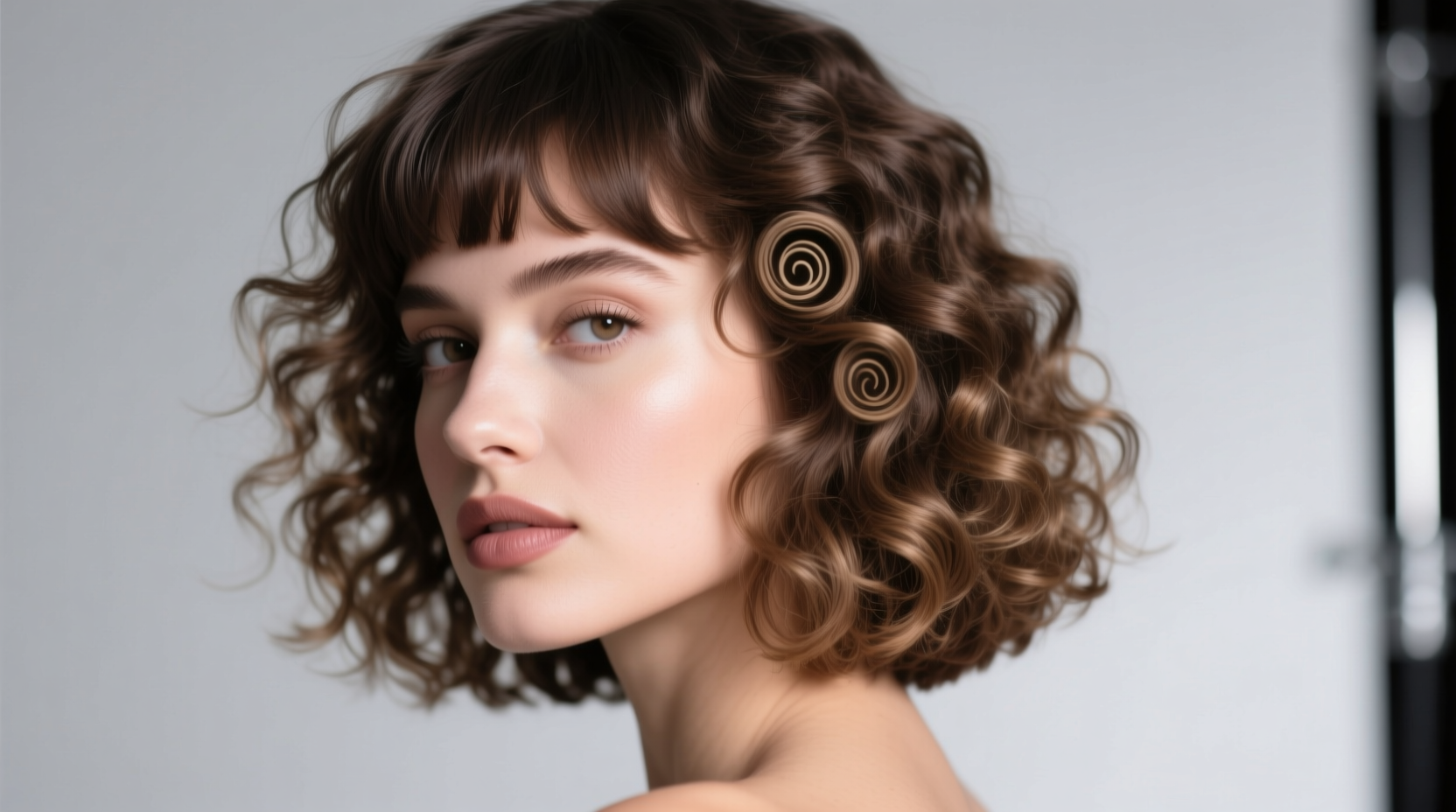
Frizz occurs when the cuticle layer of the hair lifts due to humidity, mechanical damage, or lack of moisture. Curly hair has a naturally raised cuticle structure, which makes it more vulnerable. Bangs, being shorter and often finer than the rest of the hair, are even more delicate. They’re also constantly exposed to:
- Airflow (from fans, wind, or walking)
- Frequent touching (pushing back, brushing)
- Sweat and forehead oils
- Dry indoor heating or air conditioning
These factors disrupt curl formation and cause flyaways. On a curly bob, where volume and shape are already tightly balanced, frizzy bangs can throw off the entire silhouette.
“Bangs on a curly bob need extra attention because they’re both highly visible and structurally fragile. A little imbalance in moisture or technique leads to big visual consequences.” — Lila Monroe, Celebrity Curl Stylist & Educator
Step-by-Step Guide: Styling Your Curly Bob Bangs Without Frizz
Success begins before you even pick up a comb. The process spans prep, application, drying, and finishing. Follow this timeline for consistently polished results.
- Start with damp, freshly washed hair. Never style dry curls unless you’re refreshing. Wet or damp hair allows products to distribute evenly and locks in hydration from the start.
- Apply a leave-in conditioner. Focus extra on the bangs. Use a lightweight formula to avoid weighing down fine front sections. Smooth it through using fingertips in a downward motion to encourage alignment.
- Layer a curl cream or mousse. Choose a product designed for definition and hold. Apply a pea-sized amount to the bangs, scrunching gently upward to encourage curl clumping without disturbing direction.
- Diffuse with care. Attach a diffuser to your blow dryer. Set it to low heat and medium speed. Cup the bangs gently in the diffuser bowl and hover without touching the scalp. Dry until about 80% done—over-drying causes brittleness.
- Lock in with a light oil or serum. Once fully dry, apply a single drop of argan or jojoba oil to your pointer finger and lightly smooth over the surface of the bangs. This seals the cuticle and tames micro-frizz.
- Minimize touch. Resist the urge to brush or flip your bangs throughout the day. Touch = friction = frizz. If repositioning is needed, use a tiny bit of water or a curl refresher spray on your fingertips instead.
Product Selection: Do’s and Don’ts
Using the wrong products is one of the fastest ways to sabotage your style. Curly bangs don’t need heavy hold—they need hydration, flexibility, and subtle control. The table below outlines what works and what to avoid.
| Category | Do’s | Don’ts |
|---|---|---|
| Leave-In Conditioner | Lightweight, water-based formulas with glycerin (in moderation) and aloe vera | Heavy butters like shea or coconut oil as base ingredients |
| Styling Cream | Creams with humectants and film-formers like PVP or polyquaternium | Alcohol-heavy gels or stiff pomades |
| Finishing Oil | Argan, jojoba, or squalane oil (1–2 drops max) | Mineral oil or petroleum-based products |
| Drying Tools | Low-heat diffuser with wide prongs | Direct heat, flat brushes, or high-speed drying |
Always patch-test new products behind the ear or on the neck to check for irritation, especially since bangs sit close to the eyes and forehead.
Real-Life Example: Maya’s Transformation
Maya, a 28-year-old graphic designer, loved her curly bob but dreaded her bangs. “They’d start out cute in the morning,” she said, “but by noon, they looked like I’d stuck my finger in a socket.” She was using a thick curl butter all over, including her bangs, and smoothing them daily with a boar bristle brush—a major contributor to frizz.
After switching to a lightweight leave-in, applying mousse only to roots and mid-lengths, and diffusing instead of air-drying, her routine changed. She began using a microfiber towel to scrunch her bangs during drying and applied a rice water spray for added shine and strength. Within two weeks, her bangs stayed defined and calm all day—even on humid days.
“The biggest shift wasn’t the products,” Maya noted. “It was stopping myself from touching them. Once I let them be, they behaved.”
Expert Tips for Long-Term Frizz Prevention
Maintaining frizz-free bangs isn’t just about styling—it’s about ongoing care. Incorporate these habits into your weekly routine for lasting results.
- Trim regularly. Split ends travel quickly up short strands. Schedule trims every 6–8 weeks to keep ends healthy and prevent unraveling in the bang area.
- Use a microfiber towel or cotton T-shirt. Regular towels roughen the cuticle. Gently plop or scrunch curls to remove excess water without friction.
- Refresh, don’t re-wash. Between washes, revive curls with a DIY mix of water, a drop of conditioner, and a spritz of glycerin (1:1:1 ratio). Mist onto bangs and scrunch lightly.
- Avoid silicones if buildup is an issue. While some silicones offer temporary smoothing, non-water-soluble types accumulate and block moisture. Opt for water-soluble options like dimethicone copolyol.
- Protect from pollution and UV rays. Yes, sunlight damages curly hair. Consider a UV-protectant hair mist if you spend long hours outdoors.
Essential Checklist: Frizz-Free Curly Bang Routine
Keep this checklist handy for consistent results:
- Wash hair with sulfate-free shampoo 1–2 times per week
- Rinse thoroughly and squeeze out excess water with a microfiber towel
- Apply leave-in conditioner focusing on mid-lengths to ends and bangs
- Use curl cream or mousse sparingly on bangs—pea-sized amount
- Diffuse on low heat, cupping bangs gently
- Once dry, apply 1 drop of facial-grade oil to seal
- Avoid touching or brushing throughout the day
- Sleep on silk or satin to reduce friction
- Refresh with water + conditioner spray between washes
- Schedule trims every 6–8 weeks
Frequently Asked Questions
Can I use a flat iron on curly bangs to tame frizz?
No—flat irons break the natural curl pattern and damage the delicate cuticle, especially on fine or frequently styled hair. Heat exposure increases porosity, making frizz worse over time. If you must straighten, use a ceramic flat iron at the lowest effective temperature (under 300°F), apply a heat protectant, and limit use to once a month. Better alternatives include finger-coiling with gel or using clips to train the direction while damp.
Why do my bangs frizz more than the rest of my hair?
Bangs are shorter, so they lack the weight that helps longer curls clump together. They’re also closer to the forehead, which produces oil and sweat that can disrupt curl formation. Additionally, they’re touched more frequently—pushed back, tucked, or brushed—which introduces friction and static. Their exposure to airflow and environmental changes is also greater, accelerating moisture loss.
How can I make my curly bangs last longer between washes?
Extend freshness by using a dry shampoo formulated for curly hair—spray at the roots only, avoiding the ends. Refresh with a water-conditioner mix in a spray bottle. Avoid powdery formulas near the ends, as they can cause grittiness and tangles. At night, loosely pin bangs back with a satin-covered clip to minimize contact with skin and bedding.
Final Thoughts: Embrace the Texture, Control the Chaos
Styling bangs on a curly bob doesn’t have to mean surrendering to frizz. It requires intentionality—not perfection. The goal isn’t glassy, rigid strands, but soft, defined curls that enhance your features without demanding constant correction. By understanding your hair’s needs, choosing the right products, and adopting gentle techniques, you transform frustration into confidence.
Curly hair thrives on consistency, not complexity. Small shifts—like swapping your towel, adjusting product amounts, or resisting the urge to touch—add up to dramatic improvements. And remember: your bangs are part of your expression. Let them move, breathe, and live—but guide them with care.




 浙公网安备
33010002000092号
浙公网安备
33010002000092号 浙B2-20120091-4
Comments
No comments yet. Why don't you start the discussion?