
Layered necklaces are a signature of modern elegance—effortlessly combining delicate chains, statement pendants, and varying lengths to create depth and personality. But the moment you reach into your jewelry box and pull out a knotted mess, that elegance fades fast. Tangled necklaces aren’t just frustrating; they can damage delicate links, snap chains, and turn a quick styling session into a 20-minute detangling ordeal.
The good news: with the right techniques, organization habits, and styling strategies, you can wear multiple necklaces daily without constant knots. It’s not about luck—it’s about system. From smart layering principles to foolproof storage, this guide delivers practical, field-tested methods used by stylists and jewelers alike.
Choose the Right Chain Lengths Strategically
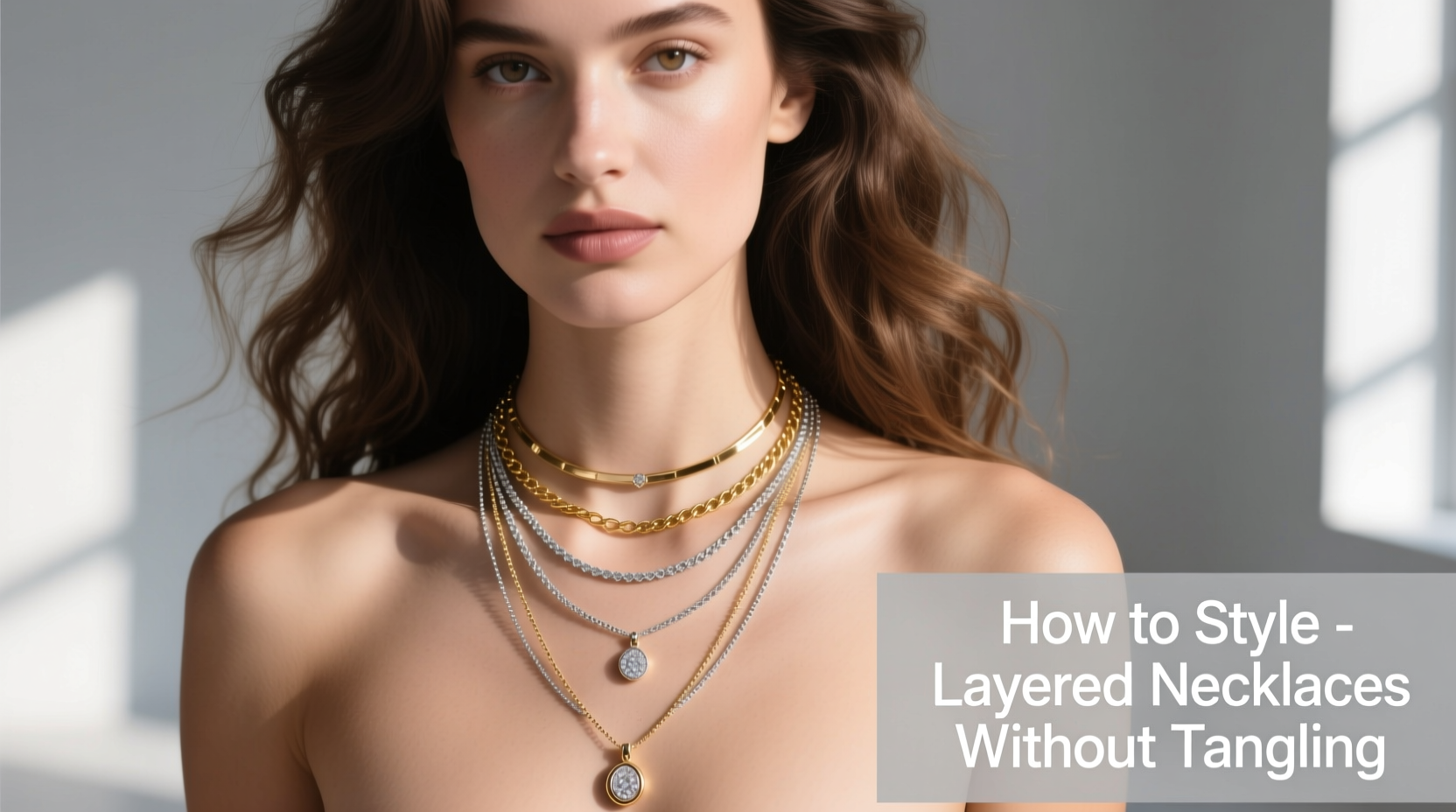
One of the most effective ways to prevent tangling is through intentional layering. When chains are too close in length, they naturally rub against each other and twist during movement. The solution? Use the “rule of thirds” when selecting necklace lengths.
This means spacing each chain at least 1–2 inches apart from the next. For example:
- Choker: 14–16 inches (sits snug at the base of the neck)
- Princess: 17–19 inches (falls just below the collarbone)
- Matinee: 20–24 inches (drapes mid-chest)
- Opera: 28–34 inches (reaches sternum or lower)
By staggering lengths, each necklace occupies its own visual and physical space, reducing friction and overlap. A choker won’t catch on an opera-length chain if there’s enough distance between them.
Use Anti-Tangle Materials and Clasps
The type of metal and clasp you choose plays a bigger role than most realize. Thin, flimsy chains made from soft metals like fine gold-fill or silver are more prone to kinking and knotting. Thicker, sturdier chains—such as cable, figaro, or snake chains—resist twisting better.
Also consider the clasp design. Lobster clasps are secure but bulky; spring rings can snag. Toggle clasps are sleek and less likely to catch on adjacent chains. Magnetic clasps offer ease but may lack security for active wear.
“Opt for necklaces with uniform weight distribution. A heavy pendant on one end and a light chain on the other creates imbalance—this increases spinning and tangling.” — Lena Torres, Jewelry Designer & Stylist
Another pro tip: add silicone stoppers or micro beads near the clasp to limit chain movement. These tiny components act as buffers, preventing chains from sliding into one another.
Follow a Step-by-Step Layering Routine
How you put on your necklaces matters. Slipping them over your head all at once dramatically increases the chance of entanglement. Instead, adopt a deliberate dressing sequence.
- Start with the longest chain. Drape it around your neck and fasten the clasp at the back. Let it settle naturally.
- Add the middle-length piece next. Ensure it rests above the first but doesn’t cross over it unnecessarily.
- Finish with the shortest (or choker) layer. This minimizes contact with longer chains already in place.
- Adjust gently. Use your fingers to guide each chain into position, avoiding pulling or twisting.
When removing necklaces, reverse the process: take off the shortest first, then work down to the longest. This prevents catching and pulling.
Store Necklaces to Prevent Tangles Before They Start
Most tangles happen not during wear—but in storage. Tossing multiple necklaces into the same drawer or pouch is a recipe for chaos. Prevention begins the moment you take them off.
Here are three proven storage methods:
- Hanging organizers: Use a wall-mounted jewelry display with hooks or loops. Each necklace hangs separately, maintaining its shape.
- Individual pouches: Soft fabric bags (like velvet or cotton) protect chains and keep them isolated. Label them by length or use.
- Roll-up travel cases: These feature slits or elastic loops that hold chains in place, ideal for travel or compact spaces.
Avoid storing necklaces in humid areas like bathrooms. Moisture weakens metal and promotes oxidation, which makes chains brittle and more prone to breakage when untangled.
| Storage Method | Best For | Common Pitfalls to Avoid |
|---|---|---|
| Hanging Display | Daily wear, visible access | Overcrowding hooks; exposure to sunlight |
| Individual Pouches | Mixed materials, travel | Forgetting to label; using synthetic linings that cause friction |
| Roll-Up Organizer | Minimalists, frequent travelers | Rolling too tightly; mixing heavy and delicate chains |
| Jewelry Box with Compartments | Large collections, gift storage | Leaving clasps unfastened; stacking pieces |
“Proper storage isn’t vanity—it’s preservation. I’ve seen clients ruin $1,200 necklaces because they stored them like hair ties.” — Marcus Reed, Master Jeweler, Reed & Co. Atelier
Create a Detangling Emergency Kit
Even with the best habits, tangles happen. When they do, don’t panic—and never yank. Sudden force can snap a chain or distort links permanently.
Instead, keep a small detangling kit ready. Here’s what to include:
- Lint-free cloth (to clean after handling)
- Fine-tip tweezers (non-serrated)
- Toothpick or crochet hook (for loosening tight knots)
- Drop of baby oil or jojoba oil (lubricates without residue)
- Flat surface with good lighting
Detangling timeline:
- Lay the necklace on a flat, well-lit surface.
- Secure both ends with tape or clips to prevent further twisting.
- Apply a tiny drop of oil to the knot—this reduces friction.
- Use the toothpick to gently pry open the knot from the outside in.
- If the knot is deep, use tweezers to isolate individual loops.
- Once free, wipe the chain with a soft cloth and inspect for damage.
For extremely tight knots, let the oil sit for 5–10 minutes before resuming. Patience is key—rushing leads to breaks.
Real-Life Example: Emma’s Morning Struggle Turned Solution
Emma, a marketing executive in Chicago, loved layered necklaces but dreaded her mornings. She owned six delicate gold chains she wore daily, but they always tangled overnight. One Monday, she spent 25 minutes untangling a knot that eventually snapped her favorite pendant chain.
Frustrated, she reevaluated her routine. She invested in a hanging jewelry organizer with labeled hooks, assigned each necklace a permanent spot, and began putting them on in order of length. She also replaced two ultra-thin chains with slightly thicker ones for better durability.
Within a week, her morning routine improved. No more knots. No more frustration. “It felt like such a small change,” she said, “but it gave me back time and peace of mind. Now my necklaces look intentional—not chaotic.”
Checklist: How to Keep Layered Necklaces Tangle-Free
Follow this daily and weekly checklist to maintain tangle-free elegance:
- ✅ Always fasten clasps before storing
- ✅ Store each necklace separately (hooks, pouches, or slots)
- ✅ Layer from longest to shortest when wearing
- ✅ Remove in reverse order (shortest first)
- ✅ Inspect chains weekly for early signs of wear
- ✅ Clean gently with a dry microfiber cloth once a week
- ✅ Avoid wearing layered necklaces during intense physical activity
- ✅ Keep a detangling kit in your bathroom or vanity
FAQ: Common Questions About Layered Necklace Care
Can I wear layered necklaces every day?
Yes, but rotate them regularly. Daily wear increases friction and stress on chains. Give each piece a rest to extend its lifespan.
Why do my necklaces tangle even when stored alone?
Even single chains can self-tangle if not secured. Always fasten the clasp before storing. An open clasp acts like a hook, catching on itself.
Is it safe to use oil when detangling?
Yes, but only use non-greasy oils like jojoba, baby oil, or specialized jewelry lubricants. Apply sparingly and wipe off completely afterward.
Final Thoughts: Style Shouldn’t Come at the Cost of Sanity
Layered necklaces are a form of self-expression—bold, subtle, romantic, or edgy. They shouldn’t come with the hidden cost of daily frustration. With thoughtful selection, mindful wearing, and disciplined storage, you can enjoy complex, beautiful layering without the knots.
It’s not about perfection. It’s about consistency. A few small changes—like spacing lengths properly, using individual storage, and adopting a layering order—add up to a dramatically smoother experience. Over time, these habits become second nature, freeing you to focus on what really matters: looking and feeling your best.




 浙公网安备
33010002000092号
浙公网安备
33010002000092号 浙B2-20120091-4
Comments
No comments yet. Why don't you start the discussion?