
Teaching a parrot to speak is one of the most rewarding aspects of bird ownership. Unlike robotic mimicry, meaningful vocal learning in parrots reflects intelligence, emotional connection, and cognitive engagement. However, many owners fall into the trap of repeating words endlessly—“Say hello, say hello!”—only to see their bird lose interest or become stressed. This method, known as repetition fatigue, undermines learning and can damage the trust between bird and caregiver.
Modern avian cognition research shows that parrots learn best through context, social interaction, and pattern recognition—not rote drilling. By aligning training with natural learning behaviors, you can teach your parrot simple words effectively while preserving its curiosity and enthusiasm.
Understanding Parrot Cognition and Vocal Learning
Parrots are not audio recorders. They’re problem solvers. In the wild, species like African Greys, Amazons, and Budgerigars use vocalizations to maintain flock cohesion, signal danger, and establish territory. Captive parrots apply these same cognitive tools to human language, often attaching meaning to words based on repeated associations.
Dr. Irene Pepperberg’s groundbreaking work with Alex, an African Grey, demonstrated that parrots can grasp concepts like color, shape, and quantity—and use words functionally, not just imitatively. Alex didn’t repeat “green” because he was forced to; he said it when asked, “What color?” about a green object. This functional use of language is what we should aim for in teaching our own birds.
“Parrots don’t learn language through repetition alone. They learn through relevance. A word must mean something in their world.” — Dr. Irene Pepperberg, Avian Cognitive Scientist
Repetition fatigue occurs when a word is isolated from context and drilled excessively. The bird stops listening because there’s no reward, no variation, and no understanding. Instead of fostering communication, this approach breeds avoidance or even aggression.
Step-by-Step: Teaching Words Through Contextual Exposure
The key to avoiding repetition fatigue is embedding target words into real-life moments. This mirrors how human children learn language—by hearing words used naturally during daily routines.
- Choose Meaningful Words: Start with high-value, emotionally relevant words such as “hello,” “good morning,” “treat,” “step up,” or “no.” These are more likely to be adopted because they’re tied to predictable events.
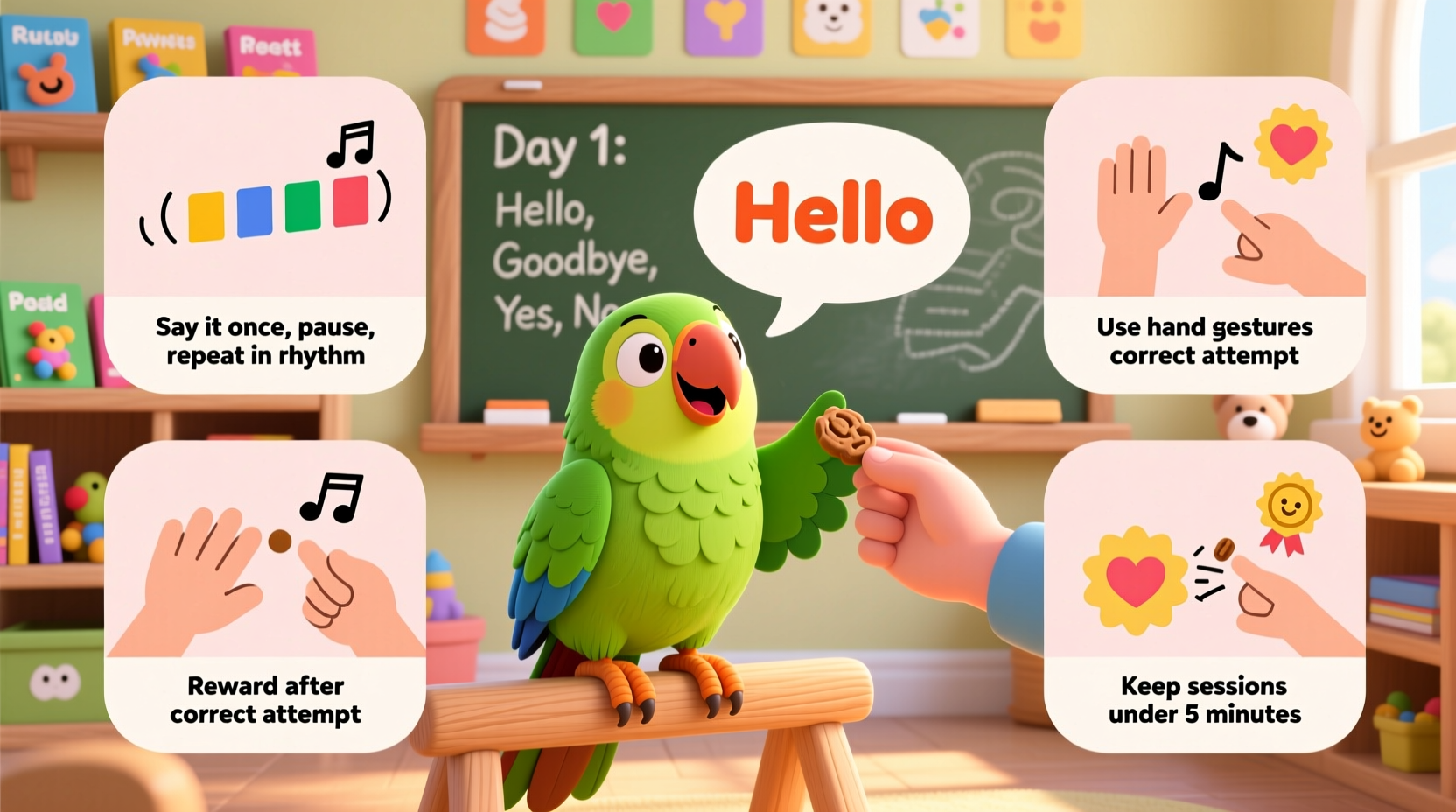
- Pair Word with Action: Say “step up” every time you offer your finger or a perch. Do not repeat it multiple times. Use it once, clearly, at the moment the action happens.
- Wait for Imitation: Once your parrot has heard the phrase in context 5–10 times, it may attempt to mimic. When it does—even if the sound is faint or distorted—respond immediately with praise or a small treat.
- Reinforce Spontaneously: If your bird says “hello” when someone enters the room, acknowledge it enthusiastically. This strengthens the link between word and situation.
- Expand Gradually: After mastery of one word, introduce another using the same method. Wait at least a week before adding new vocabulary to prevent cognitive overload.
Creating a Low-Pressure Learning Environment
Stress inhibits learning. A parrot that feels pressured to perform will shut down or develop nervous habits like feather plucking. To prevent this, make language exposure a passive, enjoyable part of daily life.
Use background labeling throughout the day. For example:
- When offering water: “Here’s your water.”
- During cage cleaning: “I’m changing your tray.”
- At sunrise: “Good morning, sunshine!”
These statements aren’t directed at the bird as commands. They’re environmental cues that help the parrot associate sounds with objects and actions. Over time, the bird begins to anticipate phrases and may vocalize them proactively.
Maintain a consistent routine. Parrots thrive on predictability. If “dinner” is always announced at 5:30 PM with the same phrase, the bird will begin to expect and eventually echo it.
Do’s and Don’ts of Parrot Language Training
| Do | Don’t |
|---|---|
| Use words during natural interactions | Repeat words 10+ times in a row |
| Reward spontaneous attempts | Force interaction when the bird is tired or scared |
| Keep sessions under 5 minutes | Train for long periods without breaks |
| Use a happy, consistent tone | Shout or scold for silence |
| Introduce one word at a time | Teach multiple words simultaneously |
Mini Case Study: Teaching “Treat” Without Repetition
Sarah, a parrot owner in Portland, wanted her 3-year-old Quaker Parrot, Milo, to say “treat.” She had tried repeating the word during feeding time but saw no progress after two weeks. Milo would look away or preen instead.
She changed her approach. Instead of saying “treat, treat, treat,” she began saying only once: “Milo, want a treat?” as she opened the snack container. She paused, offered the treat silently, and praised him verbally when he took it.
After five days, Milo started making soft clicking sounds when he heard the container open. On day eight, he emitted a raspy “trr…” Sarah responded with immediate excitement: “Yes! That’s right—treat!” and gave him an extra seed.
By day 14, Milo was clearly saying “treat” when he saw the container. The breakthrough came not from repetition, but from association, timing, and positive reinforcement.
Expert-Backed Techniques to Enhance Retention
Beyond contextual learning, several advanced strategies improve retention without overloading the bird:
- Modeling with Purpose: Talk to other people in front of your parrot using target words. For example, say to your partner, “Should we give Milo a treat?” This shows the word being used socially, which increases its perceived value.
- Delayed Reinforcement: Wait a few seconds after the bird attempts a word before rewarding. This encourages clearer articulation, as mumbled sounds won’t trigger the reward.
- Environmental Triggers: Place visual cues near target words. A picture of a banana next to the fruit bowl can help the bird connect “banana” with the object.
- Turn-Taking Games: Play simple back-and-forth exchanges. Say “hello,” then pause expectantly. If the bird chirps or attempts speech, respond as if in conversation. This mimics natural vocal turn-taking in flocks.
Checklist: Healthy Parrot Language Training Routine
Follow this checklist daily to ensure effective, low-stress learning:
- ☑ Choose one target word for the week
- ☑ Use the word once per interaction during natural routines
- ☑ Observe the bird’s body language—stop if signs of stress appear (fanned tail, pinned eyes)
- ☑ Reward any vocal attempt with praise or a small treat
- ☑ Limit direct training to 3–5 short sessions (under 5 minutes each)
- ☑ Label objects and actions casually throughout the day
- ☑ Celebrate spontaneous speech—don’t ignore it, even if imperfect
Frequently Asked Questions
How long does it take for a parrot to learn a simple word?
With consistent, contextual training, most parrots begin attempting a word within 1–3 weeks. Clear pronunciation may take several more weeks. Species vary—African Greys often learn faster than Cockatiels, but individual temperament plays a larger role than breed.
My parrot isn’t trying to speak at all. Should I be worried?
Not necessarily. Some parrots are late bloomers. Others communicate primarily through body language. Ensure your bird is healthy, socialized, and not stressed. Continue casual labeling and wait. Many birds start speaking between 8 months and 2 years of age.
Can too much repetition harm my parrot?
Yes. Excessive repetition can lead to stress, vocal fatigue, and learned helplessness—a state where the bird stops responding because it believes effort doesn’t matter. It can also strain your relationship. Focus on quality of interaction, not quantity of repetition.
Conclusion: Building Communication, Not Compliance
Teaching your parrot to speak isn’t about forcing words out of a reluctant bird. It’s about building a shared language rooted in trust, context, and mutual respect. When we abandon mechanical repetition and embrace the way parrots naturally learn, we unlock not just vocabulary—but connection.
The goal isn’t a parrot that says “hello” because it was trained to, but one that greets you spontaneously because it understands the joy of communication. By integrating words into daily life, respecting your bird’s pace, and celebrating small victories, you create an environment where speech emerges naturally—not as a trick, but as a gift.




 浙公网安备
33010002000092号
浙公网安备
33010002000092号 浙B2-20120091-4
Comments
No comments yet. Why don't you start the discussion?