
Parrots are among the most intelligent birds in the animal kingdom, capable of remarkable vocal mimicry and complex social learning. Unlike simple instinctual calls, human speech is a learned behavior for parrots—one that requires patience, consistency, and the right training approach. The most effective method for teaching a parrot to talk combines positive reinforcement with strategic repetition. This technique not only increases the likelihood of success but also strengthens the bond between bird and owner. When executed correctly, it fosters trust, mental stimulation, and long-term communication.
Understanding Parrot Vocal Learning
Not all birds can imitate human speech, but species like African Greys, Amazon parrots, Budgerigars, and Cockatiels have evolved specialized neural pathways that allow them to learn and reproduce sounds. These birds do not understand language in the way humans do, but they excel at associating sounds with outcomes or contexts. In the wild, this ability helps them integrate into flocks by mimicking calls. In captivity, they apply the same skill to human voices.
The key to unlocking this potential lies in recognizing that vocal mimicry is a form of social bonding. A parrot doesn’t speak to communicate abstract ideas—it speaks because it wants to belong. When you respond positively to its attempts, you reinforce the idea that speaking is a rewarding behavior.
“Parrots don’t just repeat words—they assign emotional value to them based on context and response.” — Dr. Irene Pepperberg, Avian Cognition Researcher
The Science Behind Positive Reinforcement
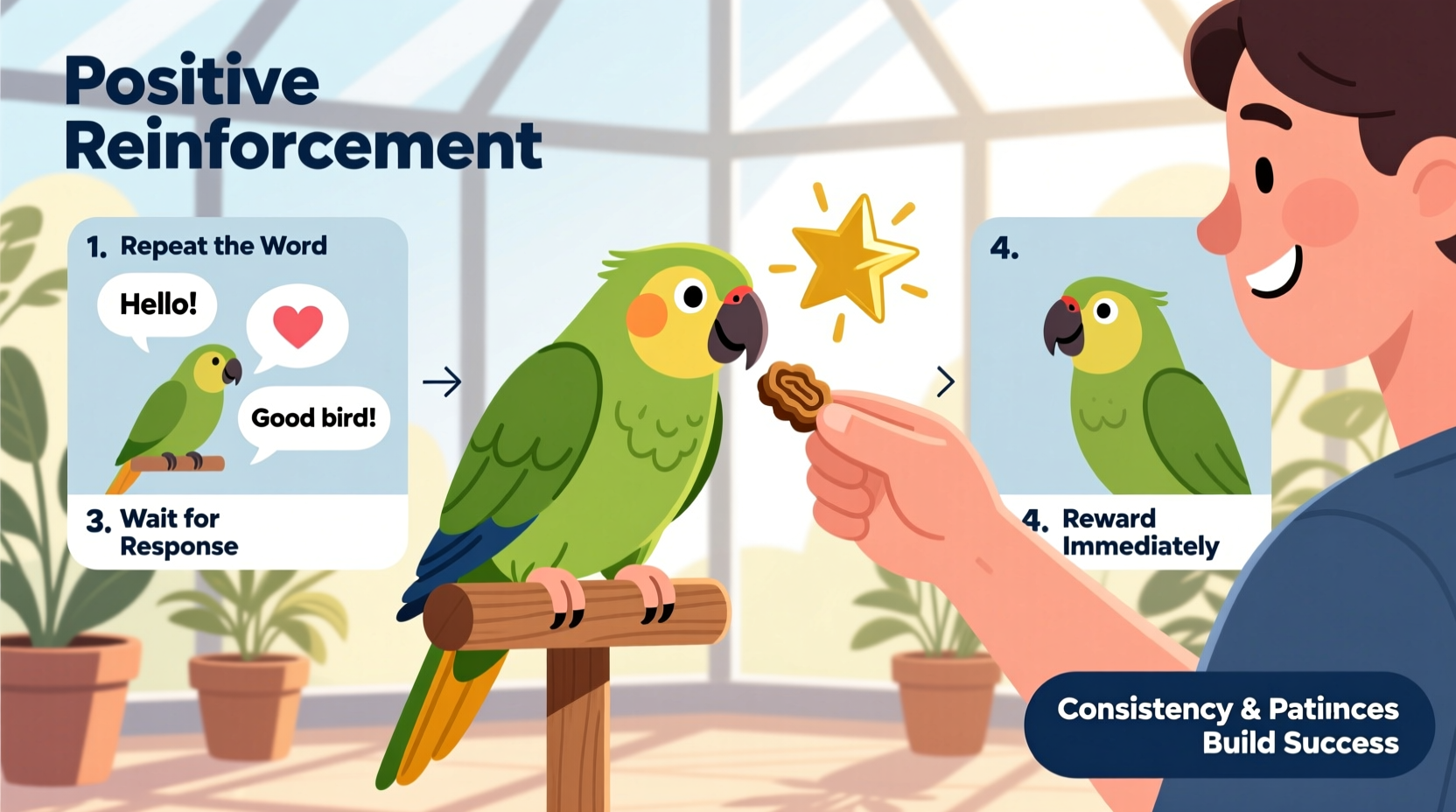
Positive reinforcement works by immediately following a desired behavior with a reward, increasing the probability that the behavior will be repeated. In parrot training, this means offering something valuable—a treat, praise, or attention—right after the bird makes a sound resembling a word.
Timing is critical. The reward must come within one to two seconds of the target behavior. Delayed rewards confuse the bird and weaken the association. For example, if your parrot says “hello” while stepping onto your hand, give a sunflower seed *immediately*—not after placing it back in the cage.
Rewards should be individualized. Some parrots prefer millet sprays; others respond better to head scratches or verbal praise. Observe what motivates your bird and use that as leverage. Over time, you can phase out food rewards in favor of social ones, making the interaction more natural.
Step-by-Step Guide to Teaching Speech
Teaching a parrot to talk isn't about volume or frequency alone—it's about clarity, consistency, and context. Follow this structured timeline to maximize progress.
- Build Trust First (Weeks 1–4): Before any formal training, ensure your parrot feels safe and bonded with you. Spend time near the cage, talk calmly, and offer treats through the bars. A stressed bird won’t engage in learning.
- Select Target Words (Week 5): Choose 1–3 simple, meaningful words such as “hello,” “good,” or the bird’s name. Avoid long phrases or mumbled sentences. Speak each word clearly and consistently.
- Create Daily Repetition Sessions (Week 6 onward): Dedicate 5–10 minutes, 2–3 times per day, to focused training. Say the target word slowly and clearly, then pause. If the bird makes any sound remotely similar, reward instantly.
- Add Context (Ongoing): Use the word in real situations. Say “hello” when entering the room or “bye-bye” when leaving. This helps the bird associate the sound with an event.
- Shape Approximations (Weeks 8+): Reward close attempts—even a grunt or whistle that resembles part of the word. Gradually raise the standard as accuracy improves.
- Introduce New Words Slowly (After Mastery): Once your parrot reliably produces one word, begin teaching another using the same process. Never overload with multiple words at once.
Progress varies by species and individual. An African Grey might begin forming words within weeks, while a Pionus may take months. Consistency over intensity yields the best results.
Optimizing Repetition Without Burnout
Repetition is essential, but mindless drilling leads to disengagement. Effective repetition involves variation, rhythm, and environmental integration.
Say the target word during natural interactions—while feeding, cleaning, or playing. Pair it with gestures (waving for “hello”) to enhance memory. Record yourself saying the word clearly and play it softly in the background during the day, but never as a substitute for live interaction. Parrots learn best from dynamic social input, not passive audio loops.
Limit training sessions to prevent fatigue. Signs of burnout include turning away, fluffing feathers, or excessive preening. End the session on a positive note—even if the bird didn’t speak, reward calm attention.
| Do’s | Don’ts |
|---|---|
| Speak slowly and clearly with exaggerated mouth movements | Yell or repeat words rapidly in frustration |
| Use the same pronunciation and tone every time | Vary how you say the word (“hi,” “hey,” “hellooo”) |
| Train in a quiet environment with minimal distractions | Attempt lessons during loud household activity |
| Reward effort, not perfection | Ignore attempts because they’re not “good enough” |
Real Example: Teaching Milo the Young Congo African Grey
Milo, a six-month-old Congo African Grey, showed interest in human sounds but hadn’t produced recognizable words. His owner, Sarah, began a structured training plan using positive reinforcement. Each morning and evening, she sat near his cage and said “Milo” in a cheerful tone. Whenever he chirped, whistled, or made a vocalization after hearing the word, she immediately offered a small piece of almond and praised him verbally.
Within three weeks, Milo began producing a raspy “me-loo.” Sarah rewarded even this approximation enthusiastically. She used the word when offering food, entering the room, and during playtime. By week seven, Milo was clearly saying his name on cue. Encouraged, Sarah introduced “step up” using the same method. After ten weeks of consistent practice, Milo responded to both commands and used them spontaneously in context.
The breakthrough wasn’t due to genius or luck—it was the result of daily, patient repetition paired with immediate, joyful rewards.
Common Challenges and How to Overcome Them
Not every parrot will become a chatterbox, and that’s normal. However, many obstacles can be addressed with adjustments in technique.
- Lack of interest: Ensure the bird is healthy and not stressed. Increase social interaction and confirm that rewards are motivating.
- Mumbling or unclear speech: Focus on one word at a time. Reward clearer attempts and ignore mumbled versions. Model crisp pronunciation.
- Only mimics household noises: This is common. Redirect attention by isolating the bird during training and minimizing exposure to distracting sounds like phones or TVs.
- Speaks only to certain people: Parrots often bond strongly with one person. Encourage others to participate in feeding and training to broaden responsiveness.
“Many owners quit too soon. It takes hundreds of repetitions before a parrot forms a new sound. Persistence pays off.” — Dr. Susan Friedman, Animal Behavior Consultant
Checklist: Essential Steps for Success
Use this checklist to stay on track and measure progress:
- ✅ Establish a trusting relationship before beginning training
- ✅ Choose 1–3 simple, high-frequency words to start
- ✅ Schedule short, consistent training sessions (5–10 min, 2–3x/day)
- ✅ Use immediate positive reinforcement (treats, praise, touch)
- ✅ Repeat words clearly and consistently in tone and pronunciation
- ✅ Provide contextual cues (say “hello” when greeting)
- ✅ Reward approximations and gradually shape clearer speech
- ✅ Monitor for signs of stress or disinterest and adjust accordingly
- ✅ Be patient—some birds take months to speak their first word
- ✅ Celebrate small victories to stay motivated
Frequently Asked Questions
Can all parrots learn to talk?
No—not all parrot species are equally capable. African Greys, Amazons, Budgies, and some Macaws are known for strong talking abilities. Others, like Pionus or Quakers, may learn a few words but are less vocal. Even within talkative species, individual birds vary in aptitude and willingness.
My parrot hasn’t spoken after months. Should I keep trying?
Yes, if the bird is otherwise healthy and engaged. Some parrots remain silent for six months or longer before attempting words. Continue positive interactions and training, but avoid forcing it. Enjoy your parrot for who it is, not just what it can do.
Is it okay to use recorded audio to train my parrot?
Recordings can supplement training but should never replace live interaction. Parrots learn best through social engagement. If used, keep recordings low-volume and limited to a few hours a day. Avoid looping sounds endlessly, as this can cause stress.
Conclusion: Building a Lifelong Conversation
Teaching your parrot to talk is not just about hearing your voice echoed back—it’s about creating a shared language rooted in trust and mutual understanding. Positive reinforcement transforms training from a mechanical exercise into a joyful ritual. Repetition ensures that learning sticks, but it’s the emotional connection that makes the bird want to participate.
Every grunt, whistle, or slurred syllable is a step toward communication. Celebrate each milestone, stay consistent, and remember that progress is measured in patience, not speed. Whether your parrot learns five words or fifty, the journey deepens your bond and enriches both your lives.




 浙公网安备
33010002000092号
浙公网安备
33010002000092号 浙B2-20120091-4
Comments
No comments yet. Why don't you start the discussion?