
Teaching a parrot to talk is one of the most rewarding experiences a bird owner can have. Unlike training dogs or cats, vocal mimicry in parrots requires patience, consistency, and an understanding of avian psychology. Many people approach this task with excitement but quickly become frustrated when progress stalls. Some resort to repeating words louder or more aggressively, hoping repetition alone will work. This method not only fails—it damages trust and increases stress in intelligent, sensitive birds.
Parrots are not machines that absorb language through volume. They are social creatures who learn through interaction, observation, and emotional safety. The key to successful speech training lies in creating a calm, positive environment where learning feels like play, not pressure. When done right, teaching your parrot to talk strengthens your bond and deepens mutual understanding.
The Science Behind Parrot Speech
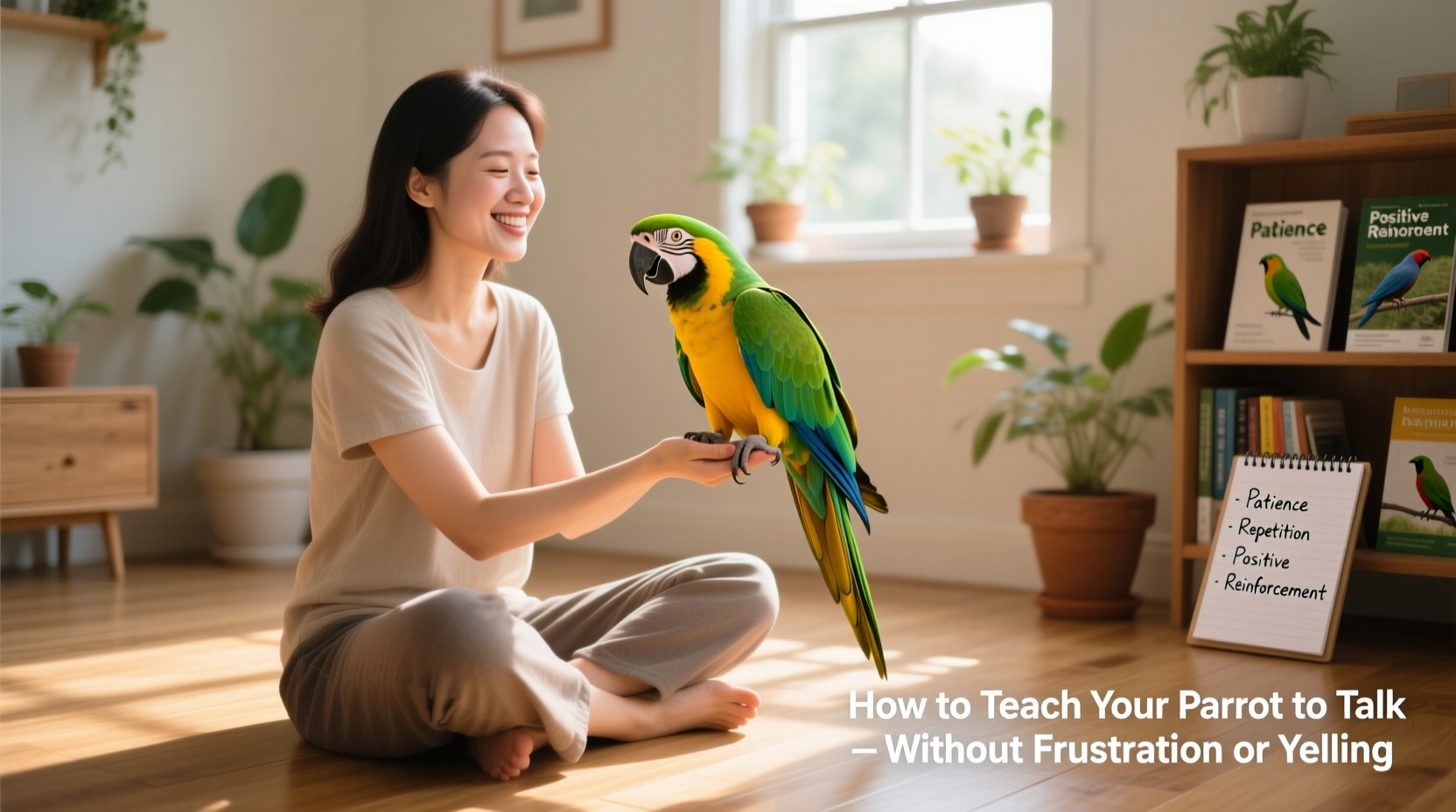
Not all birds can mimic human speech, but several parrot species—including African Greys, Amazon parrots, Budgerigars, and Cockatiels—possess the neurological capacity to imitate sounds with remarkable accuracy. This ability stems from a specialized brain structure called the \"song system,\" which allows them to process and reproduce complex audio patterns.
However, mimicking speech doesn’t mean comprehension. Most parrots use words contextually rather than linguistically. For example, a bird might say “Hello!” when someone enters the room because it has associated that sound with the event, not because it understands greetings. Over time, with consistent reinforcement, some parrots do begin to grasp meaning, especially if words are tied to actions or emotions.
“Parrots don’t learn language the way children do. They learn through association, rhythm, and repetition in a safe social setting.” — Dr. Irene Pepperberg, Avian Cognition Researcher
Dr. Pepperberg’s decades of research with Alex, an African Grey, demonstrated that parrots can understand concepts like color, shape, and number when taught using positive reinforcement and clear contextual cues. Her work underscores a critical principle: yelling or forcing repetition hinders cognitive engagement. Calm, structured interaction fosters it.
Creating the Right Environment for Learning
A parrot’s willingness to speak depends heavily on its emotional state. A stressed, anxious, or isolated bird will not engage in vocal experimentation. Before introducing any formal training, ensure your bird’s living conditions support mental wellness.
- Stable routine: Parrots thrive on predictability. Feed, interact, and train at consistent times each day.
- Social integration: Keep the cage in a family area where the bird can observe daily life without being overwhelmed.
- Minimal noise pollution: Avoid loud TVs, sudden noises, or chaotic environments during training sessions.
- Safe space: Provide perches, toys, and retreat areas so your bird feels in control of its surroundings.
Step-by-Step Guide to Teaching Speech Calmly
Success comes from breaking down the process into manageable, low-pressure steps. Follow this timeline over weeks or months, adjusting based on your bird’s personality and pace.
- Choose Your First Word Wisely
Pick a short, clear word with strong phonetic contrast—like “hello,” “step,” or “up.” Avoid multi-syllable words or mumbled phrases. Say it slowly and distinctly. - Use It in Context Daily
Say the word every time you enter the room, offer food, or step near the cage. Pair it with a gesture (e.g., raising your hand for “hello”) to reinforce meaning. - Wait for Imitation Attempts
Your bird may babble or make partial sounds. Respond with enthusiasm and a treat—even if it’s not perfect. Reward effort, not just accuracy. - Repeat in Short Bursts
Train in sessions no longer than 5–10 minutes, 2–3 times a day. End on a positive note before interest wanes. - Add New Words Gradually
Only introduce a second word once the first is consistently repeated. Too many inputs cause confusion. - Phase Out Treats, Keep Praise
Once the word is learned, reduce food rewards but maintain verbal praise and affection to sustain motivation.
“My Congo African Grey started saying ‘good morning’ after three weeks of cheerful repetition during breakfast. I never raised my voice—just smiled and gave a sunflower seed when he tried.” — Linda R., parrot owner for 7 years
Do’s and Don’ts of Parrot Speech Training
| Do | Don't |
|---|---|
| Speak clearly and slowly in a natural tone | Yell, repeat rapidly, or exaggerate pronunciation |
| Keep training sessions short and fun | Force interaction when the bird is tired or hiding |
| Reward attempts with treats or head scratches | Punish silence or incorrect sounds |
| Use the same word consistently in the same context | Switch target words frequently |
| Let the bird see your mouth movements | Turn away or speak from another room |
Understanding Individual Differences
Not every parrot will talk, and that’s okay. While species like African Greys have high mimicry potential, individual temperament plays a major role. Some birds are naturally quiet observers; others are vocal show-offs. Gender does not reliably predict ability—both male and female parrots can become excellent talkers.
Age matters too. Young birds, especially under two years old, are more receptive to learning new sounds. However, older parrots can still acquire words if introduced gently and consistently. The myth that “older birds can’t learn” is largely unfounded—what changes is the speed and motivation to try.
If your parrot isn’t speaking after months of patient effort, consider these possibilities:
- It may be learning silently and speak unexpectedly later.
- It could prefer whistling or making other sounds instead.
- Underlying health issues (e.g., respiratory infections) might affect vocalization.
- It may feel insecure or lack sufficient social bonding.
“I had a rescue cockatiel who didn’t utter a word for a year. Then one morning, he softly said ‘pretty boy’—his first phrase at age five. Trust the process.” — Mark T., avian behavior volunteer
Positive Reinforcement Checklist
Use this checklist to ensure your training remains effective and humane:
- ✅ Choose one simple word to start
- ✅ Say it clearly and calmly during daily interactions
- ✅ Repeat 3–5 times per session, 2–3 times daily
- ✅ Offer a small treat or gentle praise when your bird makes any sound resembling the word
- ✅ Keep sessions under 10 minutes
- ✅ End on a positive moment (even if no progress was made)
- ✅ Avoid training when the bird is stressed, molting, or ill
- ✅ Record progress weekly in a journal or voice memo
When Yelling Backfires—and What to Do Instead
Yelling at a parrot, whether out of frustration or in misguided attempts to “model” loud speech, creates fear and distrust. Parrots interpret raised voices as aggression or danger. A bird that associates speech with tension will either shut down completely or respond with defensive screaming of its own.
Instead of raising your voice, raise your energy level positively. Smile, widen your eyes slightly, and use an upbeat tone when praising attempts. Parrots read facial expressions and body language keenly. Enthusiasm without volume builds confidence.
If your bird starts mimicking angry tones or household arguments, it’s a sign it has absorbed negative vocal patterns. To reverse this:
- Stop reacting to unwanted phrases with attention (even scolding gives reinforcement).
- Introduce a replacement word paired with high-value rewards.
- Use neutral phrases like “okay” or “all good” during tense moments to model calmness.
- Play soft music or nature sounds to reduce exposure to harsh human voices.
Frequently Asked Questions
How long does it take for a parrot to start talking?
There’s no fixed timeline. Some budgies begin mimicking within weeks; African Greys may take 6–12 months. Consistency matters more than speed. Focus on daily interaction, and let progress unfold naturally.
Can I use recordings to teach my parrot?
Recordings are less effective than live interaction. Parrots learn best through social engagement, not passive listening. If used at all, play short clips of clear speech sparingly and always follow up with face-to-face practice.
My parrot only screams. How do I encourage talking instead?
Screaming often signals unmet needs—attention, boredom, or discomfort. Address the root cause first. Then, wait for quiet moments to introduce words. Reward silence and soft vocalizations immediately. Over time, replace screaming with targeted speech through positive association.
Conclusion: Patience Is the True Teacher
Teaching a parrot to talk is not about dominance or repetition—it’s about connection. The most eloquent parrots aren’t those subjected to drills and demands, but the ones raised in homes where communication is joyful, reciprocal, and respectful. When you eliminate frustration and yelling from the equation, you create space for genuine learning to occur.
Your parrot is watching you, listening to your tone, and responding to your energy. Every calm interaction builds trust. Every rewarded attempt builds confidence. Progress may be slow, but it will be lasting. Celebrate small victories: a chirp that sounds like “hi,” a whispered echo, a sudden phrase out of context. These are milestones born of patience, not pressure.




 浙公网安备
33010002000092号
浙公网安备
33010002000092号 浙B2-20120091-4
Comments
No comments yet. Why don't you start the discussion?