
Distinguishing an authentic Louis Vuitton bag from a counterfeit requires attention to detail, knowledge of brand-specific craftsmanship, and familiarity with common fakes. With counterfeiters becoming increasingly sophisticated, relying solely on price or logo appearance is no longer enough. Whether you're buying pre-owned, browsing online marketplaces, or verifying a recent purchase, understanding the key markers of authenticity can save you from costly mistakes. This guide walks through the most reliable methods to verify a Louis Vuitton bag’s legitimacy, using proven inspection techniques trusted by collectors and authentication experts.
Examine the Stitching and Construction Quality
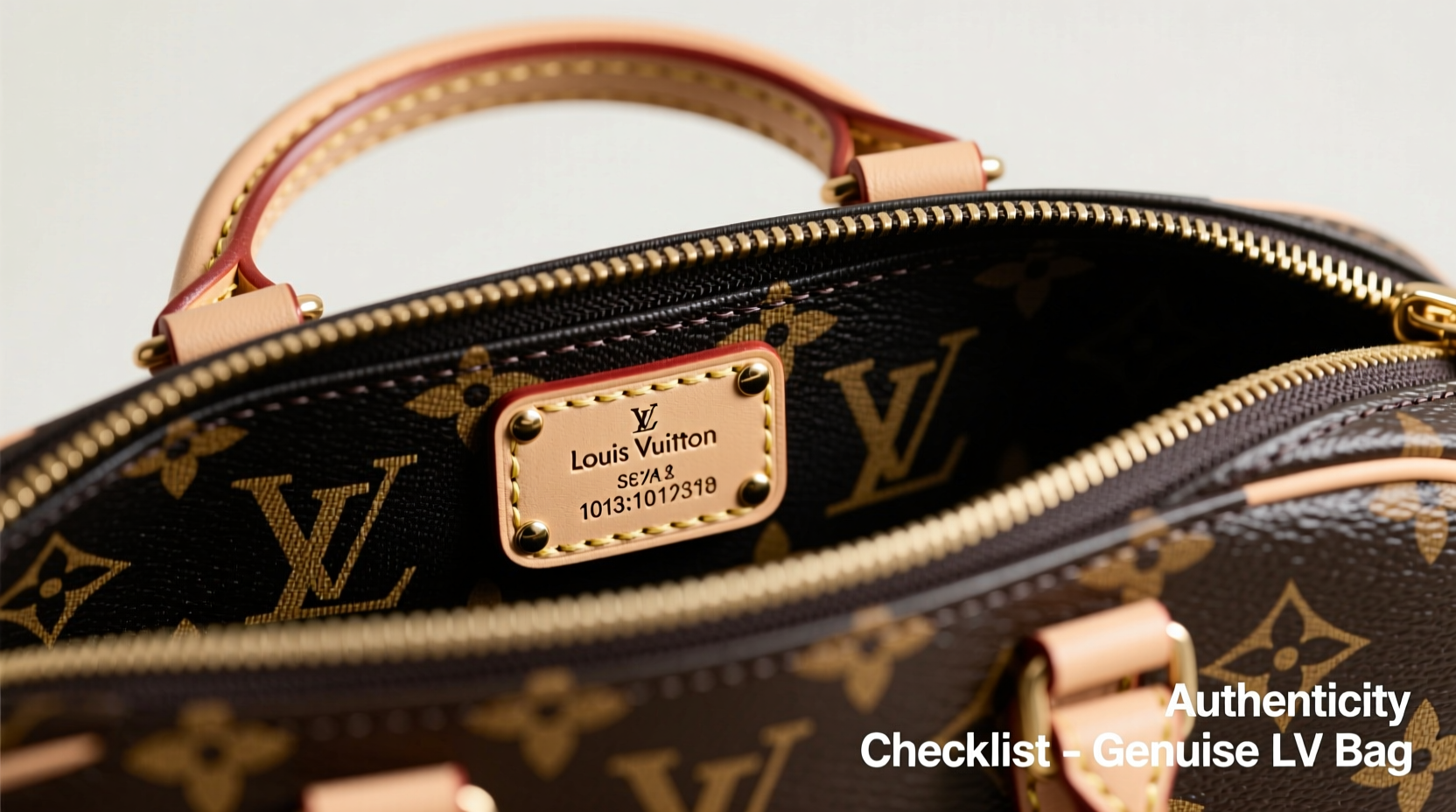
Louis Vuitton is renowned for its meticulous handcraftsmanship, particularly in stitching. The brand uses a consistent, high-standard technique across all genuine products. One of the first things to inspect is the quality and uniformity of the thread.
- Stitching should be straight, evenly spaced, and free of loose ends or skipped stitches.
- The thread used is always a creamy beige color — never pure white or off-white.
- Stitch count varies by model, but typically ranges between 7 to 11 stitches per inch. Fewer than 6 may indicate a fake.
- All seams are double-stitched for durability, especially around stress points like handles and strap attachments.
Counterfeit bags frequently use uneven stitching, incorrect thread color (often white), or machine-sewn patterns that lack the precision of LV’s handcrafted finish. If the stitching looks rushed or varies in tension, proceed with caution.
Analyze the Logo and Pattern Alignment
The iconic LV monogram pattern is one of the most counterfeited designs in fashion. However, Louis Vuitton ensures perfect alignment of the pattern across panels — a feature most fakes fail to replicate accurately.
On a genuine Louis Vuitton bag:
- The floral motifs and “LV” logos align seamlessly where panels meet — even at corners and zippers.
- The pattern flows continuously; there are no abrupt cuts or misaligned repeats.
- The shape and proportion of the LV logo are precise: the “L” is narrow and tall, while the “V” is wide and slightly rounded at the base.
“Pattern alignment is one of the fastest ways to spot a fake. No luxury brand allows mismatched prints — Louis Vuitton included.” — Sarah Lin, Luxury Authentication Specialist
Many counterfeiters print the pattern separately on each panel, leading to visible misalignment when pieces are sewn together. Look closely at the junctions between the front, sides, and bottom of the bag. If the flowers don’t line up or the “LV” symbols are cut awkwardly, it’s likely not authentic.
Inspect the Hardware Details
Louis Vuitton uses high-quality metal components that are both durable and precisely engraved. The weight, finish, and engraving of zippers, buckles, and studs can reveal authenticity.
| Feature | Genuine LV | Fake Indicator |
|---|---|---|
| Material | Brass or palladium-coated metal | Lightweight zinc or plastic |
| Weight | Heavy, solid feel | Feels flimsy or hollow |
| Engraving | Clean, deep laser etching with brand name | Shallow, blurry, or missing engravings |
| Zipper Pull | Marked with “YKK” or “N°10” and “LV” logo | Generic zipper or incorrect markings |
The font used on engravings is also specific. For example, genuine brass plaques use a serif typeface with consistent letter spacing. Fakes often use blocky or overly stylized fonts. Additionally, authentic hardware ages gracefully, developing a subtle patina over time, whereas fake metals tend to chip, tarnish quickly, or turn green against the skin.
Decode the Date Code and Serial Markings
Until 2021, Louis Vuitton used date codes instead of serial numbers to identify production details. Since then, the brand transitioned to a new QR-coded system called “Smart Tags,” but older models still circulate widely.
Understanding how to read a date code helps determine where and when the bag was made:
- Date codes are typically stamped on interior leather tags or fabric linings.
- They consist of two letters followed by four digits (e.g., AR1234).
- The first two letters indicate the factory location (e.g., “AR” = France, “SD” = USA).
- The numbers represent the week and year of production (e.g., “1234” = week 12, year 2034 — though dates must be cross-checked with known timelines).
After 2021, Louis Vuitton began embedding NFC chips and QR codes inside select bags. These can be scanned via the LV app to verify authenticity. However, many vintage and non-handbag items still rely on traditional markings.
Be cautious of sellers who claim “no date code means vintage authenticity.” While some very old models lack them, most post-1980s bags include a code. Missing, scratched, or poorly stamped codes are red flags.
Assess the Vachetta Leather and Patina Development
Vachetta leather — the natural, un-dyed cowhide used for handles, trim, and straps — is a signature element of many Louis Vuitton bags. Its ability to develop a rich honey-brown patina over time is highly valued by collectors.
Authentic vachetta has distinct characteristics:
- Starts as a pale cream color and darkens naturally with exposure to sunlight, oils, and handling.
- Feeling firm yet supple, not overly soft or greasy.
- May have natural grain variations and minor imperfections — signs of real leather, not flaws.
Fake vachetta is often pre-darkened to mimic aging, giving it an unnatural, uniform brown tone from the start. It may also feel plasticky or overly stiff. Authentic vachetta takes months or years to darken gradually.
“A well-developed patina tells a story. But if the leather is already dark on a ‘new’ bag, someone’s trying to fake history.” — Marcus Reed, Vintage Luxury Curator
Additionally, genuine vachetta will absorb moisture slightly and may show water spots initially — another sign of authenticity. Counterfeit versions often repel water due to synthetic coatings.
Step-by-Step Authentication Checklist
To ensure thorough verification, follow this systematic process when evaluating a Louis Vuitton bag:
- Check the overall symmetry — Is the bag balanced? Do both sides mirror each other?
- Inspect the canvas — Is the pattern aligned at seams? Does the color match known LV shades?
- Examine stitching — Are stitches even, tight, and in creamy beige thread?
- Test the hardware — Is it heavy, engraved clearly, and resistant to scratching?
- Locate the date code — Is it present, legible, and consistent with production timelines?
- Evaluate vachetta leather — Does it look naturally light with potential to age?
- Review interior lining — Should be smooth textile (cotton or microfiber) with clean edges and proper branding.
- Compare with official references — Use LV’s website or authenticated databases to confirm design accuracy.
Real-World Example: Spotting a High-Quality Replica
Jenna, a frequent shopper on resale platforms, found a seemingly perfect Neverfull Tote listed at 60% below retail. The photos showed excellent condition, correct monogram pattern, and claimed French origin. She requested additional images and noticed something subtle: the pattern didn’t align perfectly at the side gusset. Zooming in, she saw that the “L” in “LOUIS” on the interior stamp was thinner than standard, and the stitching near the base had inconsistent tension.
She contacted a third-party authenticator who confirmed her suspicions — the bag was a “super fake,” designed to deceive casual buyers. Thanks to her attention to stitching and logo proportions, Jenna avoided a $2,000 loss. Her experience underscores the importance of scrutinizing even small details that replicas often get wrong.
Frequently Asked Questions
Can I authenticate a Louis Vuitton bag without opening it?
Partial authentication is possible externally — checking canvas alignment, hardware, shape, and stitching — but full verification requires examining interior date codes, lining quality, and internal construction. A closed bag cannot be fully confirmed.
Does Louis Vuitton offer authentication services?
Official Louis Vuitton stores do not authenticate third-party bags for liability reasons. However, the brand uses QR/NFC smart tags on newer models that can be verified through their mobile app. For older bags, independent professional authenticators are recommended.
Are all Louis Vuitton bags made in France?
No. While many are produced in France, Louis Vuitton also manufactures in the USA, Spain, Italy, and Germany. The country of origin is indicated by the date code prefix. “AR,” “MB,” or “SP” suggest non-French production — which doesn’t affect authenticity if other markers are correct.
Final Thoughts and Call to Action
Authenticating a Louis Vuitton bag isn’t about memorizing a single rule — it’s about building a holistic understanding of craftsmanship, materials, and brand standards. From stitch density to patina development, every detail contributes to the bigger picture. As counterfeits grow more convincing, relying on expertise and careful inspection becomes essential.
Whether you’re investing in your first designer piece or expanding a curated collection, take the time to verify before you buy. Use this guide as a foundation, consult trusted resources, and when in doubt, seek professional authentication. Your vigilance protects not just your wallet, but the integrity of luxury craftsmanship.




 浙公网安备
33010002000092号
浙公网安备
33010002000092号 浙B2-20120091-4
Comments
No comments yet. Why don't you start the discussion?