
Finding the perfect foundation match is often seen as the holy grail of makeup application. But even the most precise shade can betray you hours after application—shifting from a seamless blend to an orange or muddy tone that no longer complements your complexion. This phenomenon is commonly known as oxidation, and it affects countless wearers, regardless of skin type or brand loyalty. Understanding how to identify foundation oxidation—and more importantly, how to manage it—is essential for maintaining a fresh, natural finish throughout the day.
Oxidation occurs when the ingredients in your foundation react with oxygen, your skin’s natural oils, pH levels, or environmental factors. The result? A noticeable shift in color, usually toward warmer or darker tones. While some change is normal due to warmth activating certain formulas, true oxidation is excessive and undesirable. Recognizing the signs early can save time, money, and the frustration of reapplying makeup midday.
What Is Foundation Oxidation?
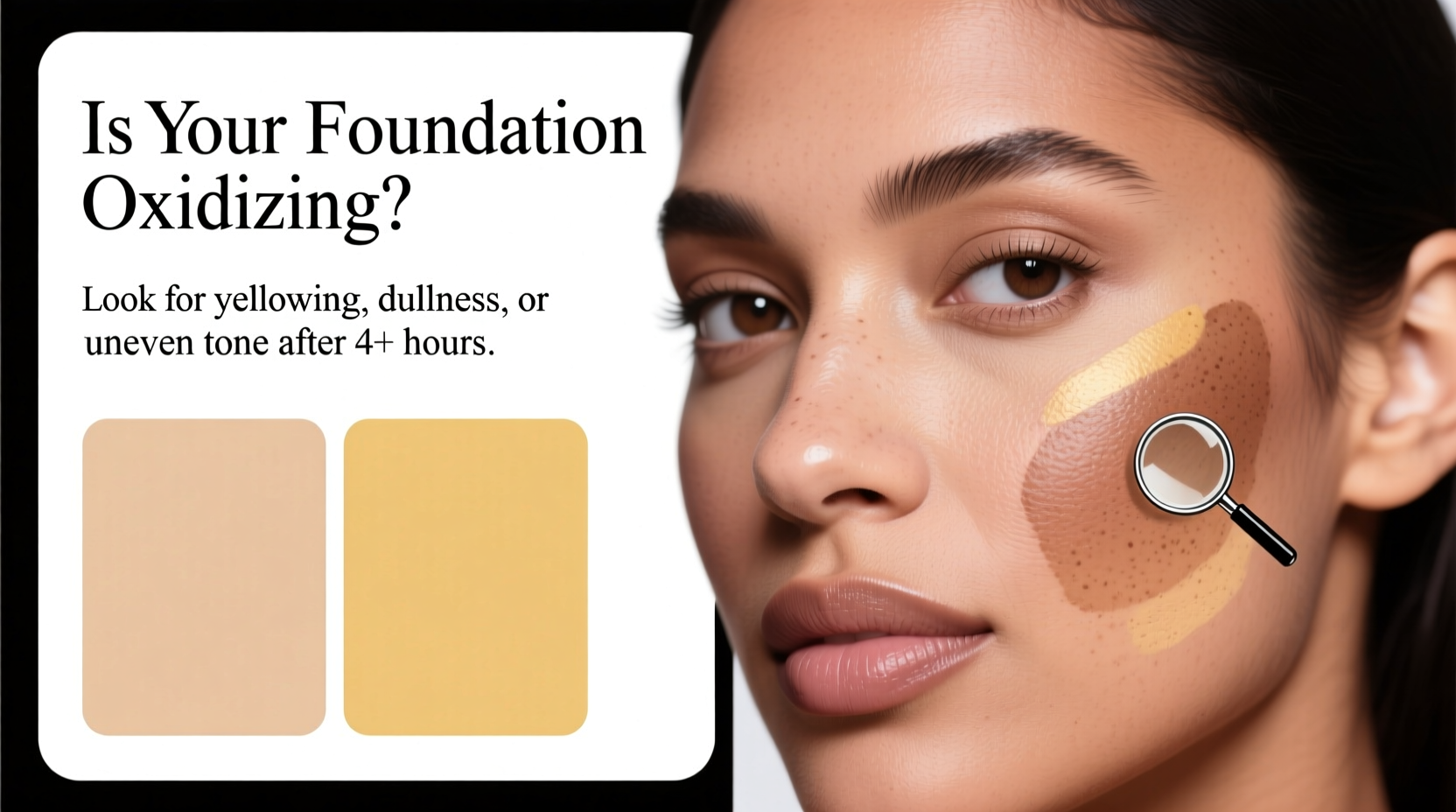
Foundation oxidation is a chemical reaction that alters the appearance of your foundation after it's applied. It typically manifests as a darkening or warming of the shade within 30 minutes to a few hours post-application. What started as a cool beige may turn noticeably golden or even orange, especially along the jawline or on areas with higher sebum production like the T-zone.
This process isn't the same as settling into pores or blending with natural undertones. True oxidation changes the actual pigment chemistry of the product. Common culprits include ingredients such as iron oxides, certain silicones (like dimethicone), and preservatives that interact with air and skin chemistry over time.
Not all foundations oxidize equally. Formulas with higher oil content, alcohol, or synthetic emollients are more prone to this reaction. Conversely, mineral-based or water-based foundations tend to remain stable but may lack longevity.
How to Identify Oxidation vs. Other Issues
It's easy to mistake oxidation for poor blending, incorrect shade selection, or environmental influences. However, distinguishing between these issues is key to finding the right solution.
Here’s how oxidation differs from other common concerns:
- Blending errors: Uneven application or harsh lines at the jaw can create the illusion of discoloration, but these resolve with proper buffing or sponging.
- Settling into pores: Some foundations appear darker because they sink into fine lines or textured areas, not because the color changed chemically.
- Sun exposure: UV rays can temporarily darken skin, particularly in sensitive individuals, but this affects bare skin—not just foundation-coated areas.
- Oil buildup: Shine from sebum can make foundation look deeper in tone, especially under lighting, but wiping the surface won’t reveal a truer base shade if oxidation has occurred.
The hallmark of oxidation is consistency across clean, well-blended areas. If multiple zones of your face—cheeks, forehead, chin—shift uniformly toward a warmer hue within a short window, and the change persists after blotting, oxidation is almost certainly at play.
Step-by-Step Guide to Testing for Oxidation
You don’t need lab equipment to detect oxidation. With a simple at-home test, you can determine whether your foundation holds up through the day.
- Swatch on clean skin: Apply a thin line of foundation along your jawline in natural light. Avoid moisturizer or primer on one side to compare results.
- Wait 5–10 minutes: Allow initial blending and absorption. Take a photo for reference.
- Check again at 30, 60, and 120 minutes: Compare each stage visually. Look for yellowing, darkening, or warmth creeping in.
- Blot excess oil: Use a tissue or blotting paper gently. If the color remains warm or orange, it’s likely oxidized.
- Evaluate undertone shift: Does the foundation now clash with your neck? Has it turned red-orange instead of staying neutral?
- Repeat with different primers: Sometimes skincare or base layers accelerate oxidation. Try isolating variables to pinpoint causes.
This method helps eliminate guesswork. Many people assume their original swatch at the store was wrong, when in reality, the formula simply reacted unpredictably once exposed to their unique skin chemistry.
Common Signs Your Foundation Is Oxidizing
Recognizing oxidation early prevents mismatched touch-ups and wasted product. Watch for these unmistakable indicators:
| Sign | Description | Timeframe Typically Observed |
|---|---|---|
| Color Darkening | Foundation appears visibly deeper than upon application, often by one or more shades. | 30–90 minutes |
| Warm Undertone Shift | Cool or neutral shades develop yellow, orange, or red undertones. | 45+ minutes |
| Inconsistent Finish | Mismatch between freshly applied areas (e.g., recent touch-up) and previously applied sections. | 2+ hours |
| Jawline Discrepancy | Face looks darker than neck despite correct initial match; creates a \"floating head\" effect. | Throughout the day |
| Patchy Appearance After Blotting | Blotting reveals a deeper base layer rather than restoring clarity or brightness. | Midday onward |
If three or more of these signs align with your experience, oxidation is highly probable. Keep in mind that slight warming due to body heat is normal—especially with silicone-heavy formulas—but dramatic shifts indicate instability in the product-skin interaction.
Why Does Foundation Oxidize? Key Contributing Factors
Several internal and external elements contribute to oxidation. Understanding them allows for better product selection and routine adjustments.
- Skin pH Levels: Everyone has a slightly different skin pH, which ranges from 4.5 to 6.2. Alkaline-leaning skin can trigger faster oxidation in certain formulations.
- Natural Oils (Sebum): Oilier complexions increase contact between foundation and lipid-rich environments, accelerating chemical reactions.
- Skincare Ingredients: Vitamin C, niacinamide, AHAs/BHAs, and certain moisturizers can interact with pigments and destabilize foundation chemistry.
- Environmental Exposure: Humidity, pollution, and airborne particles can degrade ingredients over time.
- Formula Composition: Foundations containing iron oxides, alcohol denat, or high concentrations of silicones are more susceptible.
- Air Exposure in Packaging: Pump or jar containers expose product to oxygen repeatedly, potentially degrading it before use.
“Oxidation isn’t always about the foundation being ‘bad’—it’s about compatibility. The right formula for one person might oxidize severely on another due to biological differences.” — Dr. Lena Patel, Cosmetic Chemist & Skincare Formulation Expert
How to Prevent or Minimize Foundation Oxidation
While you can’t completely control your skin’s chemistry, you can adjust your routine to reduce oxidation risk.
Use a Barrier Primer
A silicone-free or antioxidant-rich primer creates a buffer between your skin and foundation. Look for options with vitamin E, green tea extract, or ceramides that stabilize the environment.
Adjust Your Skincare Timing
Allow serums and moisturizers to fully absorb—ideally 10–15 minutes—before applying makeup. Active ingredients need time to penetrate so they don’t sit on top and react with foundation.
Opt for Stable Formulas
Mineral foundations, water-based liquids, or powder-to-liquid hybrids tend to resist oxidation better than oil-heavy or silicone-dominant products. Check ingredient lists for minimal alcohol and synthetic additives.
Store Foundation Properly
Keep bottles away from humid bathrooms and direct sunlight. Heat and moisture speed up ingredient degradation, making oxidation more likely—even before application.
Apply in Thin Layers
Thicker applications trap more air and oil, increasing reaction potential. Build coverage gradually using a damp sponge or stippling brush for even distribution.
Mini Case Study: Sarah’s Oxidation Struggle
Sarah, a 32-year-old office worker with combination skin, purchased a popular long-wear foundation after matching perfectly at a beauty counter. By lunchtime, her face appeared two shades darker and distinctly orange, especially around her nose and chin. Embarrassed, she avoided video calls and reapplied concealer constantly.
After consulting a makeup artist, she learned her morning vitamin C serum was reacting with the iron oxides in the foundation. She switched to applying the serum at night and began using a niacinamide-infused primer. Within days, the oxidation issue diminished dramatically. Her foundation now stays true for over eight hours with only minor touch-ups needed.
This case illustrates how easily overlooked skincare steps can sabotage makeup performance—even with professional-level application techniques.
Checklist: How to Evaluate and Manage Foundation Oxidation
Follow this practical checklist to assess and address oxidation effectively:
- ☐ Test new foundation on your jawline for at least two hours before purchasing
- ☐ Photograph your face immediately after application and again at hourly intervals
- ☐ Review ingredient list for common oxidizers: alcohol denat, iron oxides, high dimethicone
- ☐ Separate active skincare from makeup application times
- ☐ Try a protective primer to create a neutral base
- ☐ Store foundation in a cool, dry place out of direct light
- ☐ Reevaluate seasonal changes—oxidation may worsen in summer due to increased oil and humidity
- ☐ Consider switching to a non-comedogenic, low-reactivity formula if problems persist
Frequently Asked Questions
Does oxidation mean I chose the wrong shade?
Not necessarily. You may have selected the correct shade initially, but oxidation caused a chemical shift. Always test beyond the first five minutes to see how the color evolves.
Can powder foundations oxidize too?
Yes, though less commonly. Powder formulas contain fewer reactive liquids, but ingredients like iron oxides and talc treated with dyes can still undergo oxidative changes, especially when exposed to moisture or sweat.
Is there a way to fix oxidized foundation during the day?
Once oxidation occurs, you can't reverse it on the skin. Your best bet is gentle blotting followed by a light layer of corrector or translucent powder to mute the warmth. For severe cases, consider a makeup wipe reset and reapplication.
Conclusion: Take Control of Your Foundation’s Performance
Foundation oxidation doesn’t have to ruin your makeup routine. By learning to spot the signs early and understanding the underlying causes, you gain the power to choose products that work *with* your skin, not against it. Pay attention to formulation details, refine your prep steps, and conduct real-time tests before integrating any new foundation into your daily regimen.




 浙公网安备
33010002000092号
浙公网安备
33010002000092号 浙B2-20120091-4
Comments
No comments yet. Why don't you start the discussion?