
Skin reacts in real time to the products it encounters. While most people assume breakouts are caused by hormones or diet, the truth is often closer to home: their skincare routine. Introducing new products, overloading actives, or using incompatible ingredients can trigger inflammation, clogged pores, and persistent acne—even if those products are marketed as “dermatologist-approved” or “non-comedogenic.” Recognizing when your regimen is doing more harm than good is the first step toward restoring balance. The key isn’t necessarily to use fewer products, but to use the right ones—strategically and sustainably.
Signs Your Skincare Routine Is Causing Breakouts
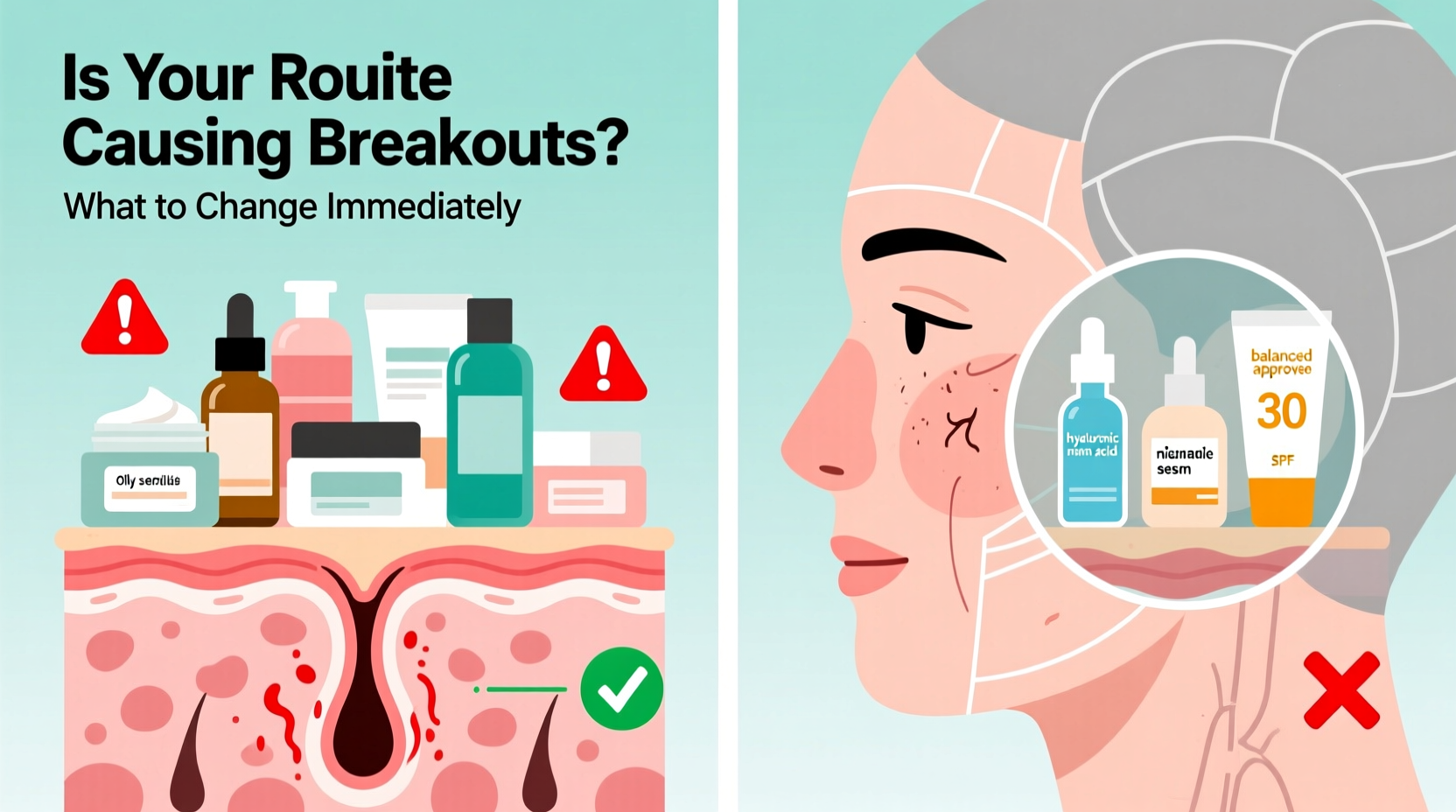
Breakouts aren't always a sign of poor hygiene or hormonal imbalance. When they appear shortly after introducing a new product or increasing usage frequency, the cause may be irritation, barrier disruption, or ingredient incompatibility. Look for these red flags:
- New blemishes appear in unusual areas — such as along the jawline, cheeks, or forehead where you apply heavier creams or oils.
- Breakouts coincide with product changes — especially within 3–14 days of adding a serum, moisturizer, or sunscreen.
- Increased redness, stinging, or tightness — signs of a compromised moisture barrier that makes skin more vulnerable to bacteria and inflammation.
- Whiteheads or small bumps under the surface — often linked to pore-clogging ingredients like silicones or heavy emollients.
- Worsening acne despite consistent cleansing — suggesting over-cleansing or stripping the skin, which triggers rebound oil production.
These symptoms don’t always mean you need stronger acne treatments—they may signal that your current routine is overwhelming your skin’s natural defenses.
Common Culprits Behind Routine-Induced Breakouts
Even products labeled “oil-free” or “for sensitive skin” can contribute to congestion and irritation. Understanding problematic ingredients and habits helps pinpoint the source.
Overuse of Active Ingredients
Retinoids, AHAs (like glycolic acid), BHAs (like salicylic acid), and vitamin C are effective—but only when used correctly. Applying too much, too often, or layering multiple actives can damage the skin barrier, leading to micro-inflammation and breakouts that resemble acne but are actually irritant-induced.
Poor Product Layering Order
Applying thick creams before lightweight serums traps air and prevents absorption, creating an environment where bacteria thrive. The correct order—cleanser, toner, essence, serum, moisturizer, sunscreen—is not just aesthetic; it impacts function.
Comedogenic Ingredients
Certain oils, silicones, and waxes can clog pores in acne-prone individuals. Common offenders include coconut oil, lanolin, isopropyl myristate, and some forms of dimethicone. These don’t affect everyone, but if you’re experiencing persistent closed comedones, they may be the culprit.
Over-Cleansing or Using Harsh Formulas
Double cleansing might be necessary for makeup wearers, but doing so twice daily with sulfates or alcohol-based cleansers strips essential lipids. This leads to transepidermal water loss, prompting the skin to produce excess sebum—a direct path to breakouts.
“Many patients come in with worsening acne after starting ‘clean’ skincare regimens. Often, it’s not the impurities but the over-exfoliation and pH imbalance that disrupt their skin.” — Dr. Nina Rodriguez, Board-Certified Dermatologist
Immediate Changes to Make in Your Routine
If you suspect your skincare is triggering breakouts, don’t panic. You don’t need to start from scratch—just reset with intention. Follow this timeline to stabilize your skin quickly and safely.
Day 1: Simplify to Basics
Strip your routine down to four core steps: gentle cleanser, hydrating toner, lightweight moisturizer, and broad-spectrum SPF (morning). At night, replace SPF with moisturizer. Eliminate all actives, exfoliants, masks, and essences for at least five days.
Days 2–5: Monitor Reactions
Track changes daily. You may experience purging initially (small, transient bumps), but true irritation—burning, flaking, spreading redness—means further simplification is needed. If breakouts persist beyond day 7, consider switching to fragrance-free, hypoallergenic versions of your basics.
Day 6: Reintroduce One Product at a Time
After your skin calms, add back one product every 3–4 days. For example, on day 6, try a hyaluronic acid serum. Observe for any new congestion or sensitivity. If none appears by day 9, consider adding a low-strength BHA (0.5% salicylic acid) 2–3 times per week.
Week 2 Onward: Build Back Strategically
Only reintroduce products that serve a clear purpose. Avoid layering more than seven total products unless medically advised. Focus on formulation compatibility—e.g., avoid combining niacinamide with acidic formulas unless buffered properly.
Skincare Ingredient Do’s and Don’ts for Acne-Prone Skin
Not all ingredients are created equal—even naturally derived ones. Use this guide to evaluate labels wisely.
| Category | Do’s | Don’ts |
|---|---|---|
| Cleansers | Gentle surfactants (decyl glucoside), ceramides, micellar water | Sulfates (SLS/SLES), alcohol denat, menthol |
| Moisturizers | Non-comedogenic oils (squalane, jojoba), glycerin, niacinamide | Coconut oil, shea butter (in high concentrations), lanolin |
| Sunscreen | Zinc oxide (micronized), titanium dioxide, gel-based formulas | Oxybenzone, octinoxate, heavy cream textures |
| Actives | Low-dose retinol (0.25%), PHA, azelaic acid | High-concentration AHAs (>10%), undiluted vitamin C, physical scrubs |
| Preservatives & Additives | Eco-friendly preservatives (radish root ferment), fragrance-free | Synthetic fragrances, parabens (if sensitive), dyes |
This table serves as a quick-reference filter when shopping. Always check ingredient lists—not marketing claims.
Real Example: How Sarah Fixed Her Maskne Without Changing Doctors
Sarah, a 28-year-old teacher, developed painful jawline cysts six months into mask-wearing. She assumed it was “maskne” and began using a medicated benzoyl peroxide wash twice daily, followed by a mattifying serum and oil-free moisturizer. Within three weeks, her skin became dry, flaky, and breakout-prone across her chin and neck.
She consulted a dermatology nurse practitioner who asked about her routine. It turned out Sarah was using a silicone-heavy primer underneath her moisturizer, sealing in trapped sweat and bacteria. She also applied a thick occlusive balm at night, thinking it would “heal” her irritation—but it was clogging follicles.
The fix? She stopped double-cleansing, switched to a non-comedogenic gel moisturizer, and applied a thin layer of zinc oxide sunscreen instead of primer. Within 10 days, inflammation reduced significantly. After four weeks, her jawline cleared without prescription medication.
Sarah’s case illustrates that sometimes, less intervention—not more—is the solution.
Essential Checklist: Reset Your Skincare Safely
Use this checklist to audit and correct your routine immediately:
- ✅ Stop all exfoliating acids and retinoids for 5–7 days.
- ✅ Switch to a fragrance-free, sulfate-free cleanser.
- ✅ Replace heavy creams with a lightweight, non-comedogenic moisturizer.
- ✅ Eliminate facial oils known to clog pores (e.g., coconut, wheat germ).
- ✅ Apply sunscreen last in the morning, choosing a matte or gel formula.
- ✅ Avoid touching your face throughout the day, especially after applying products.
- ✅ Wash pillowcases and reusable masks every 1–2 days.
- ✅ Reintroduce one active at a time, waiting 3–4 days between additions.
- ✅ Track reactions in a notebook or app (e.g., Think Dirty, MySkinTrack).
- ✅ Consult a dermatologist if breakouts persist beyond 6 weeks post-reset.
Frequently Asked Questions
Is purging real, and how is it different from a reaction?
Yes, purging is real—but limited to certain ingredients like retinoids, AHAs, and BHAs. It occurs when increased cell turnover pushes existing clogs to the surface, resulting in small whiteheads or papules that resolve within 4–6 weeks. A reaction, however, includes itching, burning, widespread redness, or hives, and indicates intolerance or allergy—not purging.
Can drinking more water fix skincare-induced breakouts?
While hydration supports overall skin health, drinking water alone won’t reverse topical irritation or clogged pores. Topical barrier repair and proper product selection have a far greater impact. However, chronic dehydration can impair skin resilience, making it more prone to damage from harsh products.
Should I stop moisturizing if I have oily, acne-prone skin?
No. Skipping moisturizer tricks skin into producing more oil to compensate for dryness, worsening breakouts. Instead, choose an oil-free, non-comedogenic gel moisturizer with humectants like glycerin or hyaluronic acid. Proper hydration strengthens the barrier and reduces sebum overproduction.
Conclusion: Take Control of Your Skin Health
Your skincare routine should protect, nourish, and enhance—not provoke or inflame. Breakouts are not inevitable, nor are they always hormonal. Often, they are signals from your skin asking for gentler treatment. By recognizing early warning signs, eliminating common irritants, and rebuilding your regimen with precision, you can achieve clarity without extreme measures.
The goal isn’t flawless skin overnight, but sustainable balance. Start today: review your products, simplify where needed, and listen closely to how your skin responds. Small, informed changes yield lasting results.




 浙公网安备
33010002000092号
浙公网安备
33010002000092号 浙B2-20120091-4
Comments
No comments yet. Why don't you start the discussion?