
Determining whether a wool sweater is made from genuine animal fiber or synthetic material can be surprisingly difficult just by touch or appearance. Many modern fabrics mimic the softness and drape of real wool so closely that even experienced shoppers are fooled. While labels offer guidance, they aren’t always accurate—especially with vintage pieces, secondhand finds, or imported garments. One of the most reliable ways to confirm fiber content is the burn test. When performed carefully, this method reveals clear differences between natural wool and synthetic alternatives like acrylic, polyester, or nylon.
The burn test leverages the distinct chemical composition of fibers. Natural proteins like wool behave differently under heat than petroleum-based synthetics. Observing how a small sample burns—its smell, flame behavior, residue, and afterglow—can provide definitive clues about what your sweater is truly made of. However, this test must be done responsibly and with caution. It involves open flame and should never be conducted on an entire garment. Instead, use a discreet thread pulled from an inside seam or hem.
Why the Burn Test Matters for Wool Identification
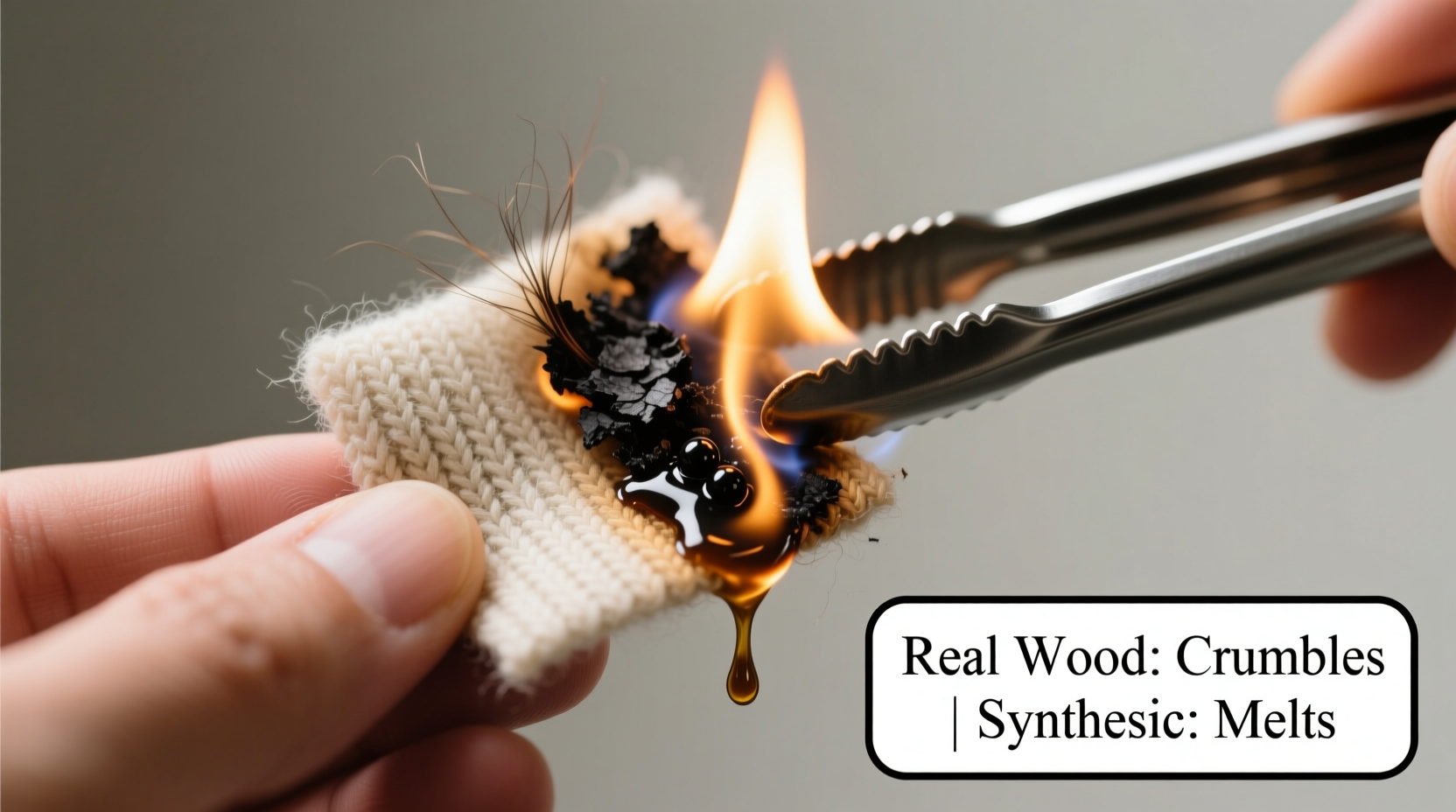
In today’s textile market, “wool” is often used loosely. A tag might list “wool blend,” but without percentages, you can’t know how much actual wool is present. Some low-cost items labeled as wool are mostly acrylic with only a small percentage of real fiber added to justify the claim. Real wool offers benefits that synthetics struggle to match: temperature regulation, moisture wicking, odor resistance, and biodegradability. If you're investing in quality outerwear or sensitive to synthetic materials, knowing the truth behind the label matters.
Synthetic fibers, while durable and inexpensive, tend to trap heat, retain odors, and generate static. They also contribute to microplastic pollution when washed. For eco-conscious consumers, allergy sufferers, or those living in variable climates, wearing real wool makes a tangible difference in comfort and sustainability.
The burn test cuts through marketing ambiguity. Unlike visual inspection or stretch tests, which are subjective, burning a fiber produces objective results rooted in science. This makes it one of the oldest and most trusted methods among textile professionals, tailors, and vintage clothing restorers.
Step-by-Step: How to Perform the Burn Test Safely
Conducting a burn test requires preparation and attention to safety. Never rush this process. Use only a single thread extracted from an inconspicuous area such as an internal seam allowance. Avoid cutting from visible areas unless absolutely necessary.
- Gather Supplies: You’ll need a lighter or match, metal tweezers (to avoid burning fingers), a ceramic plate or metal tray, access to water or a fire extinguisher, and good ventilation.
- Extract a Fiber Sample: Pull a 1–2 inch thread from the sweater’s interior seam. If possible, test both the main fabric and any contrasting yarns separately.
- Secure Your Workspace: Work on a non-flammable surface away from curtains, paper, or other combustibles. Keep a bowl of water nearby to extinguish the sample.
- Hold the Thread with Tweezers: Use metal tweezers to grip one end of the fiber. Hold it over the tray.
- Apply Flame: Light the free end with a steady flame. Observe how it ignites, burns, and extinguishes.
- Observe Key Characteristics: Note the speed of burning, color of flame, smoke, odor, and residue left behind.
- Extinguish Completely: Drop the sample into water once observations are complete. Do not assume it’s out just because the flame disappears.
Repeat the test with a second thread if results are unclear. Consistency across samples increases accuracy.
What Different Fibers Reveal During the Burn Test
Fibers react uniquely to heat based on their molecular structure. Below is a detailed comparison of how real wool behaves versus common synthetic imposters.
| Fiber Type | Burn Behavior | Flame Color | Smell | Residue |
|---|---|---|---|---|
| Real Wool | Slow to ignite; may self-extinguish when flame removed | Dull yellow or orange | Strong burnt hair or feathers | Brittle, crushable black ash with a dark bead |
| Acrylic | Ignites quickly; continues melting and flaming | Bright yellow, sometimes sputtering | Chemical, plastic, or acrid | Hard, dark plastic bead that doesn’t crush |
| Polyester | Melts before burning; shrinks from flame | Yellow with black smoke | Sweet, chemical, or somewhat smoky | Black, hard, glossy bead |
| Nylon | Melts easily; may drip dangerously | Blue at base, yellow tip | Celery-like or paraffin wax | Beige to brown hard bead |
| Wool Blend (e.g., 50% wool/50% acrylic) | Combination: some melting, partial self-extinguishing | Mixed characteristics | Hybrid smell—burnt hair with chemical undertone | Mixture of ash and melted globules |
The distinctive smell of burning protein—like singed hair—is the most telling sign of real wool. This occurs because wool is composed of keratin, the same protein found in human hair and nails. Synthetics, derived from polymers, produce fumes resembling melted plastic. The residue further confirms the result: real wool leaves a light, crumbly ash, while synthetics form dense, unyielding beads.
“Among vintage collectors and restoration experts, the burn test remains a gold standard for fiber verification—when done safely. No other at-home method gives such immediate, chemically grounded insight.” — Dr. Lena Pruitt, Textile Conservation Specialist, University of Edinburgh
Real-World Example: Identifying a Mystery Sweater
Sarah bought a cream-colored turtleneck sweater at a thrift store marked “100% Wool” for $12. It felt soft and warm, but something seemed off—the texture was slightly too smooth, and it developed pilling after just two wears. Skeptical, she decided to run a burn test before washing it in cold water, which could damage synthetic blends.
She pulled a thread from the inner side seam and took it outside. Using tweezers and a lighter, she applied flame. The thread ignited quickly, curled up, and dripped molten droplets onto the ceramic plate. The smell was sharp and chemical. Once extinguished in water, the residue was a hard, black bead.
The evidence was clear: the sweater was not wool, but likely acrylic. Sarah avoided machine washing it in hot water, which would have caused shrinking or deformation. She relabeled it in her closet and adjusted her care routine accordingly. Though disappointed, she appreciated knowing the truth—and saved herself from potential damage.
Important Safety Warnings and Limitations
The burn test is powerful but carries risks. Open flames can cause fires, especially indoors or near flammable materials. Melting synthetics can drip and burn skin or surfaces. Always take precautions:
- Never perform the test near children, pets, or flammable fabrics.
- Use minimal fiber—only one thread at a time.
- Wear eye protection if available.
- Do not inhale fumes directly; stand upwind or use ventilation.
- Avoid testing blended fabrics with metallic threads or coatings—they may release toxic gases.
Additionally, the burn test has limitations. It cannot distinguish between types of wool (e.g., merino vs. lambswool) or identify specific synthetic blends without lab analysis. It also won’t detect treatments like mothproofing or flame retardants. For precise quantification—such as verifying a 70/30 wool-polyester blend—a professional lab test is required.
Moreover, never rely solely on the burn test for valuable or historical garments. Conservators use non-destructive methods like spectroscopy. Destroying even a small thread may reduce the value or integrity of rare textiles.
Alternative Methods to Confirm Wool Content
If you’re uncomfortable with fire, several other techniques can help assess fiber type—though none are as definitive as the burn test.
- Touch and Drape: Real wool feels warm and slightly springy. It drapes softly but retains shape. Acrylic often feels smoother, colder, and more static-prone.
- Water Absorption Test: Place a drop of water on an inconspicuous area. Wool absorbs moisture slowly without beading. Synthetics tend to repel water initially.
- Static Test: Rub the fabric briskly. Wool rarely generates static. Acrylic and polyester often crackle and cling.
- Microscopic Examination: Under magnification, wool fibers appear scaly and irregular. Synthetics look smooth and uniform.
- Label Research: Look for certifications like ZQ Merino, Responsible Wool Standard (RWS), or Oeko-Tex, which verify authenticity and ethical sourcing.
These methods work best in combination. For instance, a sweater that passes the static test but fails the water absorption check may still be suspect.
FAQ: Common Questions About Wool and the Burn Test
Can I do the burn test on a wet sweater?
No. Moisture will prevent ignition and distort results. Always use a dry fiber sample taken from inside the garment.
Is the burn test safe for all colors and dyes?
Generally yes, but some dark or heavily dyed fabrics may produce harsher fumes. Ensure proper ventilation and avoid prolonged inhalation.
Will the burn test damage my sweater?
If done correctly with a single hidden thread, no visible damage occurs. Always choose a seam that won’t affect the garment’s appearance or structural integrity.
Checklist: How to Confidently Identify Real Wool
- Inspect the garment label—but don’t trust it blindly
- Feel the texture: Is it warm, slightly coarse, and elastic?
- Check for static buildup when rubbed
- Extract a thread from an internal seam
- Perform the burn test in a safe, ventilated area
- Observe flame, smell, and residue carefully
- Compare results to known wool and synthetic profiles
- Adjust care routine based on findings (e.g., hand wash wool, avoid high heat)
- Consider lab testing for high-value or uncertain items
Conclusion: Know What You Wear
Understanding the true composition of your clothing empowers smarter choices—about care, comfort, ethics, and environmental impact. The burn test, though simple, provides profound insight into one of the most commonly misrepresented materials in fashion. With careful execution, it transforms uncertainty into confidence.
Whether you’re curating a sustainable wardrobe, managing allergies, or restoring vintage pieces, knowing if your wool sweater is real or synthetic is essential. Don’t accept labels at face value. Test, observe, and verify. Your clothes deserve honest evaluation—and so do you.




 浙公网安备
33010002000092号
浙公网安备
33010002000092号 浙B2-20120091-4
Comments
No comments yet. Why don't you start the discussion?