
Parrots are among the most intelligent birds in the animal kingdom, capable of complex vocal mimicry that can rival human speech patterns when trained properly. While many owners marvel at their pet’s ability to repeat words, few achieve truly clear, intentional communication. The difference lies not in luck or the bird’s species alone—it’s in consistency, timing, and method. Training a parrot to speak clearly isn’t about volume or repetition alone; it’s about building a relationship rooted in trust, routine, and positive reinforcement. This guide outlines practical, proven strategies to help your parrot develop crisp, understandable speech through structured daily practice.
Understanding Parrot Vocal Learning
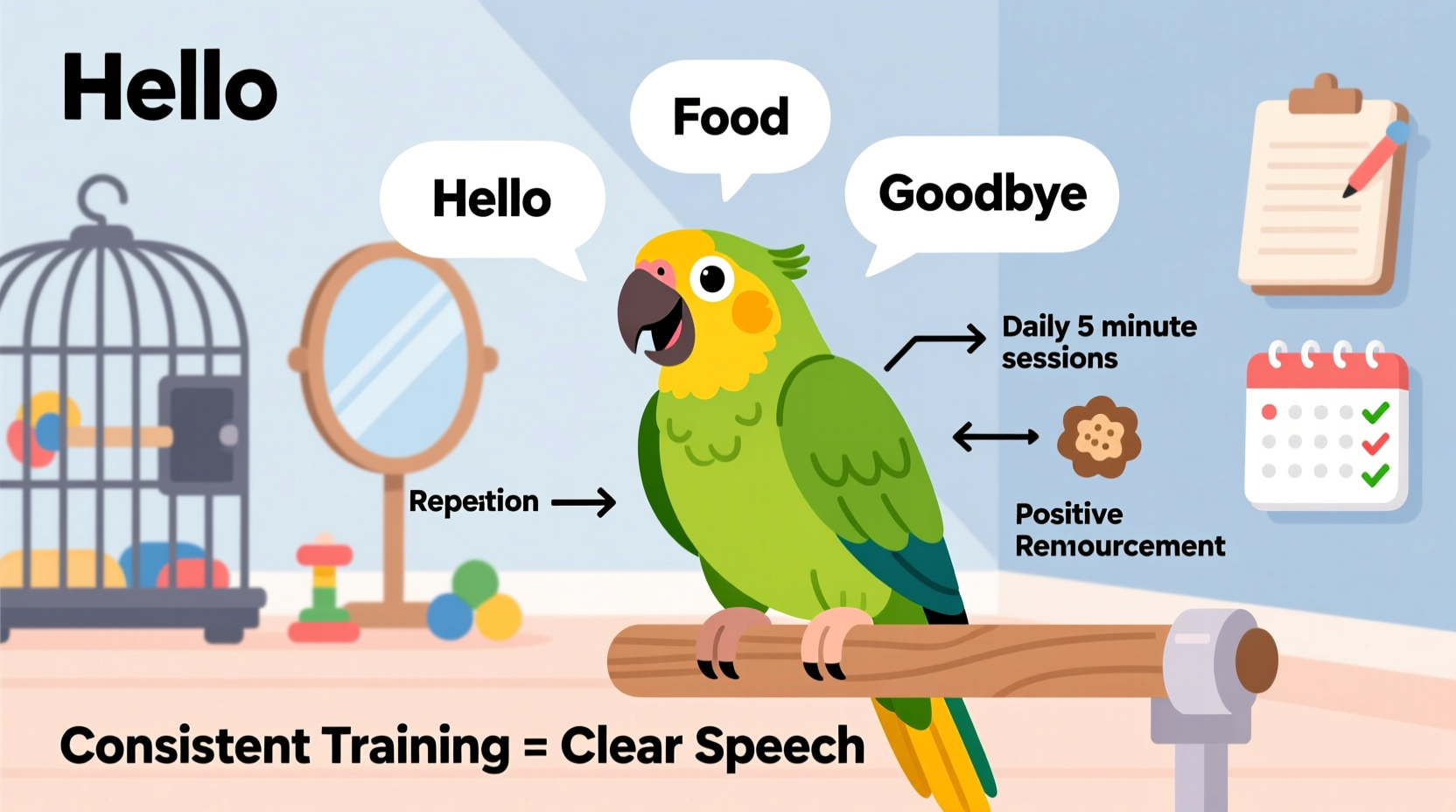
Unlike simple sound imitation, parrot vocalization is a learned behavior influenced by social interaction, environment, and cognitive engagement. Species such as African Greys, Amazon parrots, and Budgerigars have demonstrated advanced capabilities in mimicking human speech with clarity and context. However, even naturally gifted talkers require deliberate training to refine pronunciation and associate words with meaning.
Parrots do not understand language in the human sense, but they excel at pattern recognition. They observe tone, frequency, body language, and emotional cues tied to specific words. When a phrase is consistently paired with a reward—such as attention, treats, or affection—the bird begins to link the vocalization with a positive outcome.
“Parrots aren’t just repeating sounds—they’re engaging socially. Clear speech emerges when the bird feels safe, stimulated, and rewarded for trying.” — Dr. Irene Pepperberg, Avian Cognition Researcher
The key to clarity lies in reducing background noise, speaking slowly, and reinforcing correct attempts immediately. Birds raised in quiet homes with focused interaction tend to develop cleaner diction than those exposed to muffled or rapid speech.
Step-by-Step Training Timeline
Effective training unfolds over weeks and months, not days. A phased approach ensures the bird builds confidence without stress. Follow this 12-week timeline to lay a solid foundation for clear talking:
- Weeks 1–2: Bonding & Observation – Spend time near the cage daily, speaking softly. Observe your parrot’s natural vocalizations and reactions to different tones.
- Weeks 3–4: Single-Word Introduction – Choose one short, meaningful word (e.g., “hello,” “good”) and repeat it clearly during feeding or greeting times. Use the same intonation each time.
- Weeks 5–6: Reinforcement & Repetition – Say the word slowly three times per session, then pause. If the bird makes any similar sound, reward instantly with a treat or praise.
- Weeks 7–8: Clarity Refinement – Focus on enunciation. Record your voice and compare it to the bird’s attempt. Adjust your pitch and pace to match what the parrot responds to best.
- Weeks 9–10: Contextual Practice – Use the word in real situations. Say “hello” only when entering the room. This strengthens association.
- Weeks 11–12: Introduce a Second Word – Once the first word is spoken clearly and regularly, begin the process again with a new term.
Do’s and Don’ts of Speech Training
Mistakes in technique can delay progress or discourage vocalization altogether. Use this table to align your habits with best practices:
| success\">Do | Don't |
|---|---|
| Speak slowly and clearly with exaggerated mouth movements | Shout or over-enunciate aggressively |
| Use high-value rewards like sunflower seeds or verbal praise | Withhold attention after an incorrect attempt |
| Train at the same time each day (e.g., morning feeding) | Switch words or phrases frequently |
| Minimize household noise during sessions | Play TV or music in the background |
| Record progress weekly to monitor clarity improvements | Expect immediate results or punish silence |
Creating the Ideal Learning Environment
A parrot’s surroundings directly impact its willingness and ability to learn. A chaotic or isolated environment hinders vocal development. To optimize conditions:
- Place the cage in a central area where family activity occurs, but avoid high-traffic zones that cause stress.
- Maintain a consistent light-dark cycle. Parrots learn best during daylight hours, especially mid-morning.
- Ensure the bird gets at least 30 minutes of supervised out-of-cage time daily to reduce anxiety and increase alertness.
- Eliminate competing sounds—turn off fans, radios, or loud appliances during training.
- Use a dedicated training perch near you while working, so the bird focuses solely on your voice.
Environmental enrichment also plays a role. Rotate toys that encourage vocalization, such as mirrors (for social stimulation) or recordable buttons that play back words. These tools reinforce auditory memory and provide independent practice.
Case Study: Teaching Milo the Grey to Say \"Good Morning\"
Milo, a 2-year-old African Grey, lived in a busy household with inconsistent routines. His owner reported that he muttered indistinct sounds but never formed clear words. A structured plan was introduced:
Each morning at 8:15 a.m., the owner sat beside Milo’s cage with a small cup of millet spray. She said “Good morning, Milo!” in a warm, rising tone—exaggerating the “morn-ing” syllable. After speaking, she paused and waited. On day three, Milo chirped a rough “moh-nin.” She immediately offered the treat and gentle head scratches.
By week six, Milo began saying “good morning” unprompted when he saw her enter the room. Audio recordings showed measurable improvement in vowel clarity. By week ten, visitors regularly commented on how articulate he sounded. The breakthrough came not from more repetition, but from precise timing, emotional warmth, and unwavering consistency.
Checklist for Daily Training Success
Follow this checklist every day to ensure steady progress:
- ☑ Choose one target word or phrase for the current phase
- ☑ Schedule two 5-minute sessions at consistent times
- ☑ Eliminate background distractions before starting
- ☑ Speak slowly and clearly, facing the bird directly
- ☑ Reward any approximation of the sound immediately
- ☑ End each session positively—even if no progress is made
- ☑ Record audio once per week to track vocal clarity
- ☑ Avoid introducing new words until the current one is mastered
This routine builds predictability, which parrots thrive on. Over time, the bird learns that effort leads to reward, increasing motivation to refine its speech.
Frequently Asked Questions
Can all parrots learn to talk clearly?
No, not all parrots develop clear speech. While species like African Greys, Yellow-Naped Amazons, and male Budgies are known for strong vocal abilities, individual temperament, early exposure, and training quality play critical roles. Some birds may mimic environmental sounds instead of words, which is still a sign of intelligence.
What age should I start training my parrot to talk?
The optimal window is between 3 and 12 months of age, when young parrots are most receptive to vocal learning. However, adult birds can still learn new words with patience and consistency. Older parrots may take longer but often produce clearer speech due to better breath control.
Why does my parrot mumble or slur words?
Mumbling usually results from incomplete learning or poor auditory models. Ensure you're speaking slowly and distinctly. Also, check for health issues—respiratory infections or beak deformities can affect articulation. If slurring appears suddenly, consult an avian veterinarian.
Advanced Techniques for Clearer Speech
Once basic words are established, elevate clarity with these techniques:
- Syllable Isolation: Break words into parts. For “water,” say “wa” first, reward response, then add “ter.” Combine only when both segments are clear.
- Shadowing: Repeat the bird’s approximation back to them with improved clarity. If they say “heh-lo,” respond with “Hello! That’s right!” This models better pronunciation.
- Context Chaining: Link words to actions. Say “step up” only when asking them to climb onto your hand. Over time, they’ll use the phrase anticipatorily.
- Voice Recording Playback: Use a device to play your clear recordings during absence. Limit to 10-minute loops to avoid overstimulation.
Some trainers use audio software to slow down their own voice and analyze pitch alignment with the bird’s range. Matching frequencies increases audibility and comprehension.
Conclusion: Patience, Consistency, and Connection
Training a parrot to talk clearly is less about teaching speech and more about cultivating communication. The clearest voices emerge not from rote drills, but from daily rituals grounded in trust and mutual engagement. Progress may seem slow at first, but each subtle improvement—a sharper consonant, a clearer vowel—is a milestone worth celebrating.
Success doesn’t require special equipment or exotic methods. It demands presence: showing up at the same time, saying the same words, and responding with joy when your bird tries. Over months, these moments accumulate into genuine dialogue. Whether your parrot greets you with a crisp “hello” or sings your favorite phrase on cue, the bond you’ve built will resonate far beyond words.




 浙公网安备
33010002000092号
浙公网安备
33010002000092号 浙B2-20120091-4
Comments
No comments yet. Why don't you start the discussion?