
Puppy biting is one of the most common challenges new dog owners face. While it's a natural part of development—puppies explore the world with their mouths—it can become problematic if not properly guided. The good news is that with consistency, patience, and the right approach, you can teach your puppy to stop biting using methods that strengthen your bond rather than create fear or anxiety.
Unlike outdated training philosophies that rely on dominance or correction, modern canine behavior science supports gentle, reward-based techniques. These approaches not only reduce unwanted behaviors like biting but also foster emotional security and long-term obedience. This guide outlines practical, evidence-backed strategies to help your puppy learn appropriate mouthing behavior—without resorting to yelling, physical punishment, or isolation as primary tools.
Understanding Why Puppies Bite
Biting in puppies isn’t aggression—it’s communication, exploration, and play. From three weeks to six months, puppies go through a teething phase where chewing soothes sore gums. They also use their mouths during social interactions with littermates, learning bite inhibition (how hard is too hard) through feedback from peers.
When a puppy bites another pup too hard, the bitten puppy yelps and stops playing. This teaches moderation. Without this feedback loop—especially in puppies removed early from litters—humans must step in to provide clear, consistent signals about what’s acceptable.
Common triggers for biting include:
- Overexcitement during play
- Teething discomfort
- Seeking attention
- Lack of mental or physical stimulation
- Fear or overstimulation
Recognizing these causes allows you to respond appropriately—not with frustration, but with redirection and teaching.
Gentle, Proven Training Techniques That Work
The goal isn’t to eliminate all mouthy behavior overnight, but to gradually shape it into something manageable and socially appropriate. Below are five scientifically supported methods used by professional trainers and veterinary behaviorists.
1. Redirect to Appropriate Chew Toys
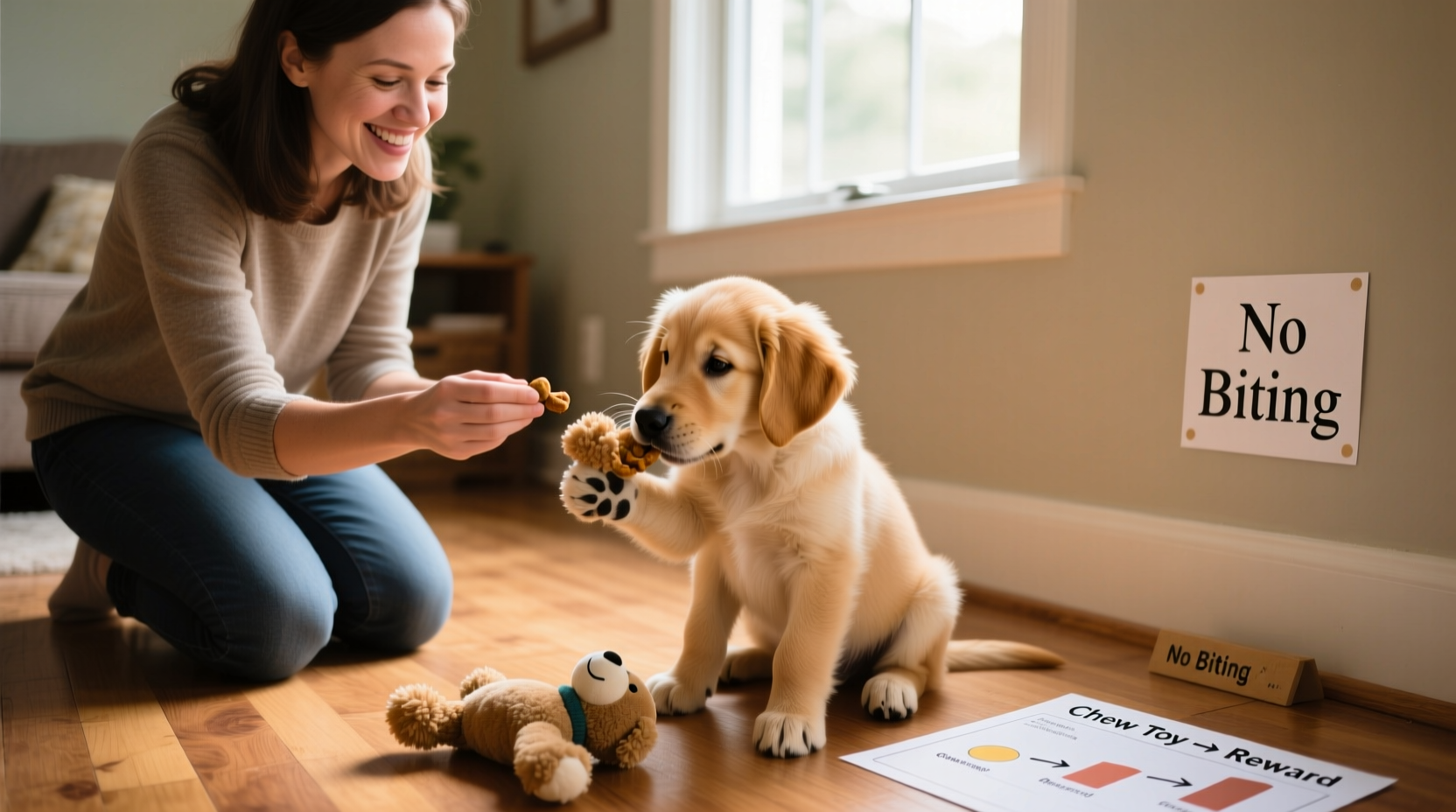
When your puppy bites your hand or clothing, immediately stop moving and offer an acceptable chew toy. Say “Here!” or “This!” in a cheerful tone as you present the toy. When the puppy engages with it, praise enthusiastically.
This technique uses positive reinforcement—rewarding desired behavior—to shift focus away from human skin. Over time, the puppy learns: “When I feel like biting, toys get me attention and treats.”
2. Use Time-Outs, Not Punishment
If your puppy continues to bite despite redirection, implement a brief time-out. Stand up, turn away, and leave the room for 20–30 seconds. Do not yell or touch the puppy—this could escalate excitement or fear.
The key is consistency: every bite = end of play. Puppies crave interaction, so removing it teaches that biting ends fun. After the pause, return calmly and resume only if the puppy is settled.
“Time-outs work because they mimic natural puppy social consequences. In a litter, rough play leads to exclusion. We’re simply applying the same principle in a controlled way.” — Dr. Sarah Carter, Certified Applied Animal Behaviorist
3. Teach Bite Inhibition Through Yelping
When bitten too hard, let out a high-pitched “yelp” similar to what a littermate would make. Immediately stop interacting and withdraw attention for a few seconds. If the puppy backs off, praise softly and offer a toy.
This mimics natural feedback from other puppies. It’s important not to scream or jerk your hand away aggressively, which may scare or excite the puppy further. Keep it brief and neutral.
4. Manage Arousal Levels
Many bites occur when puppies become overstimulated. Watch for signs: rapid movements, stiff posture, intense staring, or repetitive nipping. Before reaching this point, initiate calming activities—chewing on a frozen Kong, short training sessions, or quiet cuddle time.
Prevention is more effective than correction. By managing energy and environment, you reduce opportunities for inappropriate biting.
5. Reward Calm Behavior Consistently
Use small treats or affection to reinforce moments when your puppy chooses not to bite—such as lying quietly nearby or licking instead of grabbing. Mark the behavior with a word like “Good” the instant it happens.
Over weeks, this builds a habit of self-control. The puppy begins to associate calmness with positive outcomes.
Step-by-Step Timeline: First 4 Weeks of Bite Training
Change takes time. Here’s a realistic week-by-week plan to guide your progress:
- Week 1 – Awareness & Redirection: Focus on recognizing bite triggers. Carry toys at all times. Redirect every bite attempt to an appropriate object. Begin using the yelp method after firm bites.
- Week 2 – Introduce Time-Outs: When redirection fails, apply a 20-second time-out. Be consistent—every bite ends play. Start short “settle” exercises (e.g., asking puppy to lie down for 10 seconds).
- Week 3 – Increase Duration: Extend calm interactions. Reward longer periods of non-biting behavior. Practice in slightly more stimulating environments (e.g., living room vs. quiet bedroom).
- Week 4 – Generalize Skills: Test training with different family members and in varied settings. Maintain rules—no exceptions. Celebrate improvements, even small ones.
By the end of four weeks, most puppies show significant improvement—if not complete cessation—of unwanted biting, provided the program is followed consistently.
Do’s and Don’ts: What Actually Helps (and What Hurts)
| Do | Don’t |
|---|---|
| Redirect biting to toys immediately | Let playful nipping continue “because it’s cute” |
| Use a cheerful voice when offering alternatives | Yell, slap, or hold the puppy’s mouth shut |
| End play calmly after a bite | Chase or wrestle as punishment |
| Provide plenty of chewable options | Give old shoes or socks as chew items |
| Practice short training sessions daily | Ignore biting until it becomes a serious issue |
Mistakes often come from misunderstanding puppy development. For example, some owners believe pinning a puppy down establishes dominance. Research shows this increases fear and defensive behavior. Gentle guidance yields better long-term results.
Real-Life Example: Training Bella, the Mouthy Beagle
Bella, a 12-week-old beagle, joined her new home full of energy. Her owners loved her—but were frustrated when she bit hands during petting, zoomed around nipping ankles, and cried when placed in her crate.
Working with a certified trainer, they implemented a structured plan:
- Kept rope toys in every room
- Used a high-pitched “ouch!” followed by 30 seconds of ignored attention when bitten
- Introduced two 5-minute training sessions per day using tiny treats for sitting and soft touches
- Provided a frozen Kong filled with yogurt each evening
Within three weeks, Bella’s biting dropped by over 80%. By week six, she solicited toys when excited and accepted gentle handling without snapping. Her owners reported feeling more confident and connected to her.
Their success came not from stricter control, but from understanding Bella’s needs and responding with clarity and kindness.
Essential Checklist for Success
- Keep durable chew toys accessible at all times
- Redirect every bite to an appropriate object
- Use a yelp or “ouch” sound after hard bites
- Apply a 20–30 second time-out if biting persists
- Reinforce calm behavior with treats or praise
- Avoid rough play (tug-of-war, wrestling)
- Schedule regular potty breaks and naps to manage energy
- Practice basic commands (sit, touch, wait) multiple times daily
Frequently Asked Questions
Is it normal for my puppy to bite so much?
Yes. Most puppies bite frequently between 8 and 20 weeks of age. This behavior typically declines as they mature and learn bite inhibition. Consistent training helps accelerate this process.
Should I ever use physical corrections like tapping the nose?
No. Physical corrections can damage trust, increase fear-based aggression, and worsen biting long-term. Studies show that aversive methods are less effective and riskier than positive reinforcement. Stick to redirection, time-outs, and rewards.
What if my puppy only bites certain people?
This often relates to differing reactions. Some family members may unintentionally encourage biting by playing roughly or giving attention during nipping. Ensure everyone follows the same rules. Children should always be supervised and taught not to pull or tease.
Final Thoughts: Patience Builds Trust
Training a puppy not to bite isn’t about suppression—it’s about education. Every interaction is an opportunity to teach your puppy how to live harmoniously in a human world. Gentle techniques don’t just stop biting; they build confidence, improve communication, and deepen your relationship.
Progress may be slow some days. There will be setbacks—especially during growth spurts or teething peaks. But with steady application of these methods, nearly every puppy learns to replace biting with healthier behaviors.
You’re not just raising a dog. You’re shaping a companion. And the foundation you lay now—with empathy, consistency, and respect—will echo throughout your dog’s life.




 浙公网安备
33010002000092号
浙公网安备
33010002000092号 浙B2-20120091-4
Comments
No comments yet. Why don't you start the discussion?