
Cats are naturally curious and agile creatures. Their instinct to climb, explore elevated spaces, and investigate scents makes the kitchen counter an irresistible destination. While it might seem harmless at first, allowing your cat onto food preparation surfaces poses hygiene risks and can become a persistent behavioral issue. The good news is that you don’t need to resort to sprays, startling noises, or physical deterrents to correct this behavior. With patience, consistency, and humane training techniques, you can guide your cat toward more appropriate habits.
Training isn't about dominance—it's about communication. By understanding why your cat jumps on counters and offering better alternatives, you create a home environment where both you and your feline companion thrive.
Why Cats Jump on Counters: Understanding the Behavior
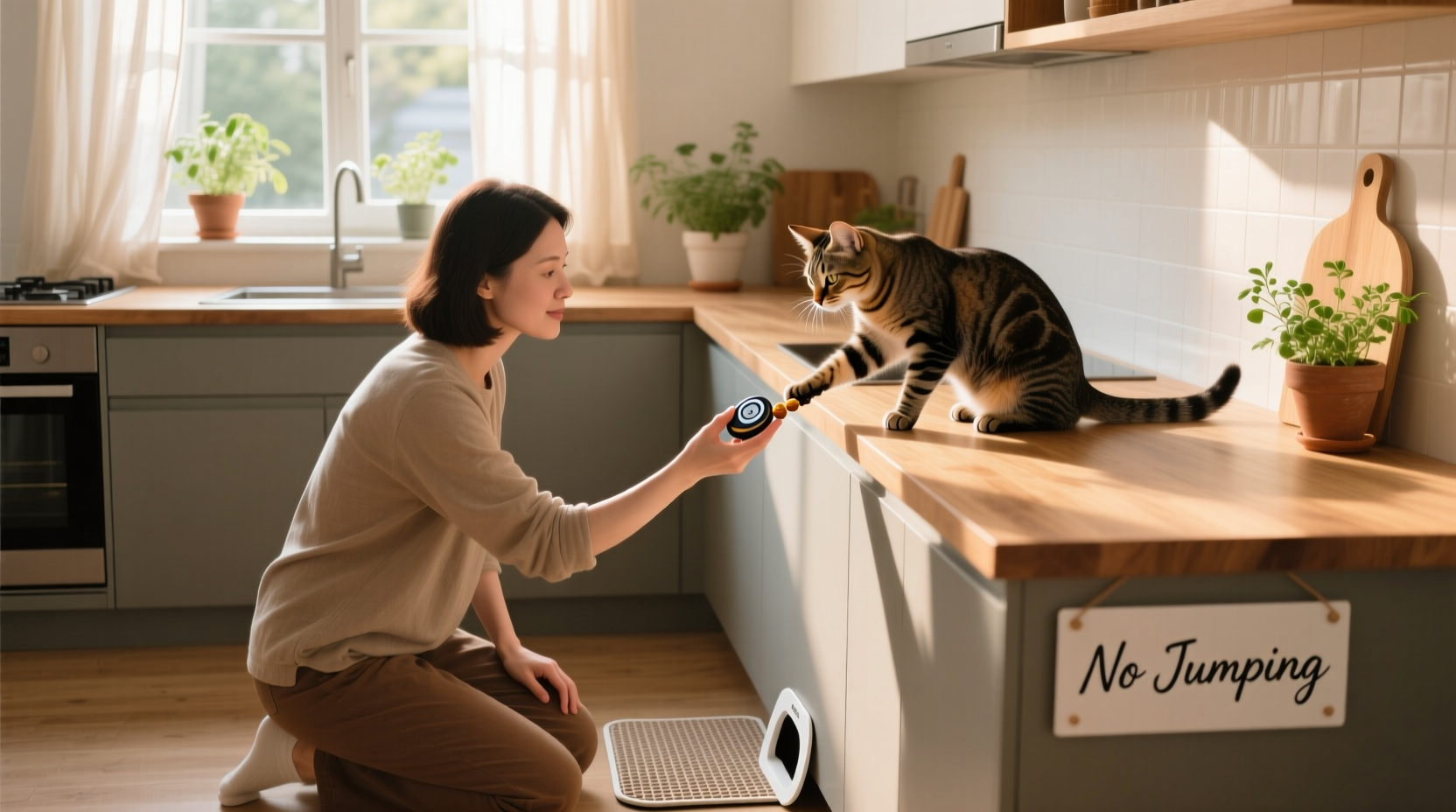
Cats aren’t being defiant when they leap onto kitchen counters—they’re responding to instinct and environmental cues. Several motivations drive this behavior:
- Elevation for safety: Cats feel secure when they can observe their surroundings from above. Counters offer a prime vantage point.
- Curiosity and scent exploration: Counters often carry interesting smells—food residue, packaging, spices—which attract cats with their powerful sense of smell.
- Warmth and comfort: Surfaces near stoves or ovens may retain heat, making them cozy spots.
- Attention-seeking: If jumping on the counter consistently results in interaction—even if it’s shooing them off—it reinforces the behavior.
- Lack of stimulation: Indoor cats without sufficient vertical space or enrichment may default to countertops as one of the few high areas available.
Recognizing these underlying reasons shifts the focus from punishment to redirection. Instead of asking “How do I stop my cat?” ask “What does my cat need, and how can I meet it in a better way?”
Humane Training Strategies That Work
The foundation of humane cat training is consistency, redirection, and environmental management. Unlike dogs, cats respond best when they associate desired behaviors with rewards—not corrections. Here are proven, stress-free strategies to discourage counter-surfing.
1. Remove Incentives
If your cat associates the counter with food or interesting smells, eliminate those temptations.
- Wipe down counters immediately after cooking or eating.
- Store food in sealed containers or cabinets.
- Avoid leaving dirty dishes overnight.
- Keep pet food bowls away from countertops.
A clean counter sends a clear message: “Nothing rewarding happens here.”
2. Provide Superior Alternatives
Cats will abandon the counter if they have a more appealing place to perch. This is where environmental enrichment becomes key.
- Install cat shelves or wall-mounted perches near windows.
- Add a cat tree or tower in the kitchen or adjacent room.
- Use heated beds or soft blankets on stable furniture to encourage use.
Place treats or toys on these new platforms initially to build positive associations. Over time, your cat will prefer their designated spot over the counter.
“Cats don’t misbehave out of malice—they make choices based on what’s most rewarding in their environment.” — Dr. Sarah Ellis, Feline Behavior Scientist, University of Lincoln
3. Use Positive Reinforcement
Reward your cat for choosing acceptable surfaces. When you see them sitting on their cat tree or a chair instead of the counter, offer praise, gentle pets, or a treat.
Timing is crucial: deliver the reward within seconds of the desired behavior so your cat connects the action with the outcome.
Avoid giving attention when they jump up—even negative attention like saying “No!” can reinforce the behavior. Instead, turn away and wait until they leave the counter voluntarily before engaging.
Step-by-Step Training Timeline (4-Week Plan)
Changing a habit takes time. Follow this structured approach to gradually reduce counter-jumping:
- Week 1: Environmental Reset
- Deep-clean all countertops.
- Remove food, clutter, and tempting objects.
- Set up at least one alternative perch in view of the kitchen.
- Begin placing treats on the new perch to encourage visits.
- Week 2: Consistent Redirection
- When your cat jumps up, calmly say “Off” (without yelling) and gently guide them down.
- Immediately lead them to their alternative perch and offer a treat.
- Repeat every time—consistency is essential.
- Start using clicker training if desired: Click when paws touch the perch, then reward.
- Week 3: Increase Engagement
- Rotate toys on the perch weekly to maintain interest.
- Spend extra time near the perch playing or petting your cat when they’re on it.
- Close kitchen doors during high-risk times (e.g., meal prep).
- Week 4: Monitor and Maintain
- Gradually reduce treat frequency, shifting to verbal praise.
- Test boundaries by leaving counters exposed while observing.
- If relapse occurs, return to Week 2 techniques temporarily.
Do’s and Don’ts: A Quick Reference Table
| Do’s | Don’ts |
|---|---|
| Provide multiple elevated resting spots | Yell, spray water, or clap loudly to scare the cat |
| Keep counters clean and free of food | Push or hit the cat off the counter |
| Use treats to reward desired behavior | Use essential oils or citrus sprays excessively (some are toxic) |
| Be consistent across all household members | Allow the behavior sometimes (“only when I’m not cooking”) |
| Redirect to a better location immediately | Assume the cat knows it’s wrong without training |
Real-Life Example: Luna the Counter-Curious Tabby
Maria adopted Luna, a playful 2-year-old tabby, six months ago. Soon after, she noticed Luna hopping onto the kitchen counter every morning, sniffing around coffee mugs and knocking over utensils. Concerned about hygiene and potential breakage, Maria tried shooing her off—but Luna returned daily.
After consulting a certified cat behaviorist, Maria implemented a multi-step plan. She installed a window perch overlooking the backyard bird feeder and placed Luna’s favorite blanket and a catnip toy there. During breakfast prep, she kept Luna in an adjacent room with interactive toys. Whenever Luna chose the perch over the counter, Maria offered a small piece of freeze-dried chicken.
Within three weeks, Luna stopped jumping on the counter entirely. Now, she spends mornings lounging on her perch, watching birds. Maria no longer feels frustrated—and Luna feels enriched.
This case illustrates that even persistent habits can change with empathy and structure.
Checklist: How to Humanely Train Your Cat Off Counters
Use this actionable checklist to stay on track:
- ✅ Clean counters thoroughly and keep them free of food and odors
- ✅ Install at least one attractive alternative perch or cat tree
- ✅ Place treats or toys on the new perch to encourage use
- ✅ Reward your cat immediately when they choose the right spot
- ✅ Calmly redirect them when they jump up—no yelling or punishment
- ✅ Ensure all family members follow the same rules
- ✅ Be patient—behavior change takes 3–6 weeks
- ✅ Use temporary deterrents (like foil or tape) if needed, but phase them out
- ✅ Rotate enrichment items weekly to prevent boredom
- ✅ Close kitchen access during vulnerable times if necessary
Frequently Asked Questions
Can cats be trained not to jump on counters?
Yes, cats can absolutely be trained using positive reinforcement and environmental adjustments. Success depends on consistency, providing better alternatives, and removing rewards for unwanted behavior. It’s not about breaking their spirit—it’s about guiding their instincts toward acceptable outlets.
Is it cruel to stop my cat from being on the counter?
No—it’s responsible pet ownership. While cats have natural inclinations, our homes contain hazards (cleaning products, hot surfaces, raw food) that make certain areas unsafe. Redirecting them humanely protects both their well-being and household hygiene. The goal isn’t to restrict freedom, but to offer equally satisfying options elsewhere.
What if my cat keeps going back despite training?
Relapses are normal. Reassess whether the alternative perch is truly appealing—is it warm, stable, and well-positioned? Are counters still carrying food smells? Consider increasing playtime to reduce excess energy. If progress stalls, consult a certified feline behavior consultant for personalized guidance.
Final Thoughts: Building Trust Through Training
Training your cat not to jump on kitchen counters isn’t just about cleanliness—it’s an opportunity to deepen your bond. When you approach behavior challenges with empathy and science-backed methods, you show your cat that you understand their needs. They learn that good choices lead to rewards, and you gain peace of mind knowing your space is shared respectfully.
Remember, every cat is different. Some adapt in days; others take weeks. What matters most is consistency and compassion. Avoid shortcuts that rely on fear or discomfort. Instead, invest in solutions that honor your cat’s nature while maintaining a safe, clean home for everyone.




 浙公网安备
33010002000092号
浙公网安备
33010002000092号 浙B2-20120091-4
Comments
No comments yet. Why don't you start the discussion?