
The holiday season brings joy, warmth, and festive decorations — but for dog owners, it can also bring unexpected hazards. One of the most common yet dangerous behaviors during this time is dogs chewing on Christmas tree stands and electrical cords. These items pose serious risks, including electrocution, ingestion of metal or plastic parts, water spills leading to mold or slipping, and even toppling an entire tree. Fortunately, with consistent training, environmental management, and proactive supervision, you can keep your dog safe and your holiday decor intact.
Dogs chew for various reasons: teething in puppies, boredom, anxiety, or simply out of curiosity. The shiny lights, dangling ornaments, and novel textures of cords and metal stands are especially tempting. Instead of reacting after damage occurs, a strategic approach that combines prevention, positive reinforcement, and redirection works best. This guide outlines practical, humane, and effective methods backed by animal behavior experts and real-world experience.
Understanding Why Dogs Chew During the Holidays
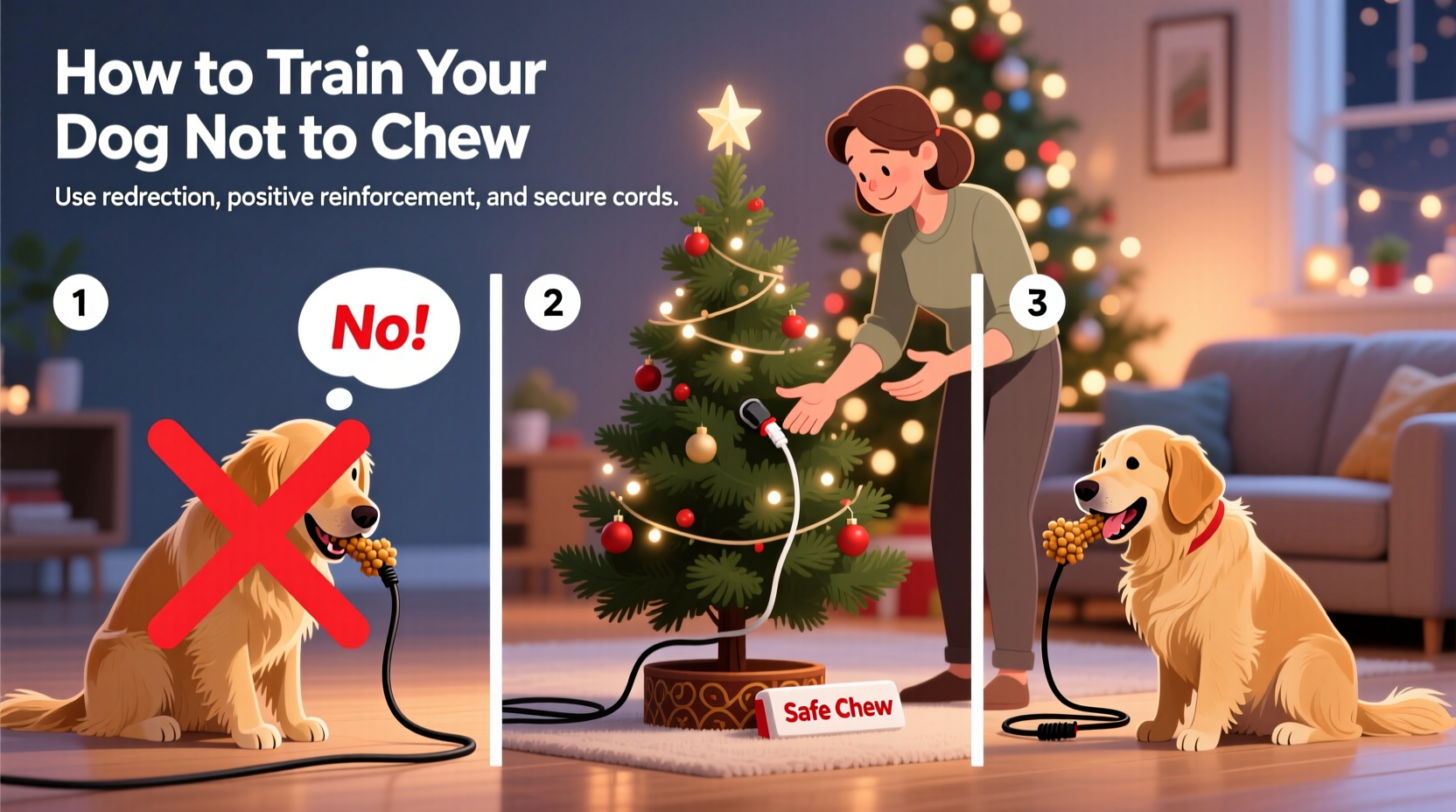
Dogs don’t chew with malicious intent. Their behavior is driven by instinct, environment, and emotional state. During the holidays, homes undergo dramatic changes — new scents, unfamiliar objects, increased foot traffic, and altered routines — all of which can heighten a dog’s stress or excitement levels. A Christmas tree, particularly when placed in a stand filled with water and adorned with blinking lights, becomes a sensory magnet.
Puppies between 3 and 6 months old are especially prone to chewing due to teething. But adult dogs may also engage in destructive behavior if under-stimulated or anxious. Electrical cords mimic the shape and texture of prey animals, triggering a dog’s natural urge to bite and shake. Metal tree stands, often coated in finishes or residues, may carry interesting smells. Even the sound of a loose cord tapping against a wall can attract attention.
Ignoring these behaviors isn’t an option. Chewing on cords can lead to severe burns, cardiac arrest, or fatal electrocution. Tree stands contain spikes, sharp edges, and sometimes chemicals used to preserve the tree — none of which are safe for ingestion. Water in the stand can harbor bacteria, mold, and fertilizers that cause gastrointestinal upset if consumed.
“Dogs explore the world through their mouths. When we introduce high-risk objects into their environment without proper management, we’re setting them up to fail.” — Dr. Karen Ramirez, Veterinary Behaviorist
Step-by-Step Training Plan to Prevent Chewing
Preventing destructive chewing requires more than just saying “no.” It involves shaping your dog’s behavior through repetition, consistency, and clear communication. Follow this five-phase plan over 2–4 weeks to build lasting habits.
- Phase 1: Supervise or Separate (Days 1–3)
Keep your dog in the same room as the tree at all times during initial exposure. Use baby gates or closed doors to restrict access when you're not present. This prevents unsupervised incidents and allows you to intervene early. - Phase 2: Introduce the “Leave It” Command (Days 4–7)
Train your dog to respond to the “leave it” cue using treats. Hold a treat in a closed fist and say “leave it.” When your dog stops sniffing or pawing and looks away, reward them with a different treat from your other hand. Repeat until they consistently back away on command. Practice near, but not directly at, the tree stand. - Phase 3: Controlled Exposure with Redirection (Weeks 2–3)
Allow your dog to approach the tree area while on a leash. If they move toward the stand or cords, say “leave it” firmly. If they obey, immediately redirect them to a chew toy and praise heavily. Repeat multiple times daily. - Phase 4: Increase Distance and Duration (Week 4)
Gradually increase the time your dog spends near the tree without direct supervision — starting with 5-minute intervals. Use verbal cues from another room to test responsiveness. Reward calm behavior with treats or affection afterward. - Phase 5: Maintain and Monitor
Continue occasional reinforcement throughout the season. Even well-trained dogs can regress under stress or fatigue. Never assume the behavior is “fully learned” after one success.
Safety and Environmental Management Strategies
Training alone isn't enough. You must also modify the environment to reduce temptation and risk. Think of it as dog-proofing your holiday space.
- Use cord protectors: Cover exposed electrical cords with spiral wrap tubing, braided sleeves, or hard plastic raceways. These make cords less accessible and unappealing to chew.
- Elevate or hide cords: Route cords behind furniture, along baseboards, or use cord clips to keep them off the floor. Unplug lights when leaving the house or going to bed.
- Secure the tree stand: Place the tree in a corner or against a wall, and anchor it to the ceiling or wall using fishing line or straps. This reduces wobbling and makes it harder for dogs to reach the base.
- Block access to the stand: Surround the tree with a baby gate, playpen, or decorative fencing. Choose options that allow visibility but prevent close contact.
- Use deterrent sprays: Apply pet-safe bitter sprays (like Grannick’s Bitter Apple) to the stand and nearby cords. Reapply every few days or after cleaning.
- Keep the stand covered: Use a tree skirt made of thick fabric or place a removable barrier around the base to block access to water and hardware.
For homes with persistent chewers, consider using an artificial tree with built-in lighting and no external cords. Alternatively, opt for battery-operated lights instead of plug-in versions to eliminate live wires altogether.
Do’s and Don’ts: Managing Holiday Hazards
| Do’s | Don’ts |
|---|---|
| Supervise your dog around the tree, especially during the first few days. | Leave your dog unattended near the tree or cords. |
| Provide plenty of appropriate chew toys to satisfy oral needs. | Use punishment-based corrections like yelling or spraying water. |
| Use bitter sprays on stands and cords to deter chewing. | Assume your dog will “learn the rules” without training. |
| Anchor the tree securely to prevent tipping. | Place tempting ornaments low on the tree where dogs can reach. |
| Unplug lights when not in the room or overnight. | Use extension cords as makeshift decorations or leave them coiled on the floor. |
Real Example: How the Thompson Family Saved Their Tree (and Their Dog)
The Thompsons adopted a 5-month-old Labrador mix named Max just before the holidays. Excited to include him in traditions, they set up a real tree in their living room. Within hours, Max was gnawing on the metal stand and tugging at the power cord for the lights.
After a close call where Max received a mild shock from a frayed wire, they consulted a local dog trainer. They implemented a three-part strategy: installing a mesh playpen around the tree, teaching Max the “leave it” command, and replacing his access to the stand with a frozen Kong filled with peanut butter.
They also wrapped all cords in black braided conduit and used double-sided tape on the tree skirt’s edge — a texture Max disliked. Within ten days, Max stopped showing interest in the tree area unless invited. By Christmas Eve, he could stay in the room unsupervised for short periods without incident.
“We thought he’d grow out of it,” said Sarah Thompson, “but we realized he needed structure, not just time. Now our holidays are joyful — and safe.”
Essential Checklist: Dog-Safe Holiday Setup
Before turning on the tree lights, go through this checklist to ensure your home is secure:
- ✅ Anchor the Christmas tree to the wall or ceiling
- ✅ Cover all electrical cords with protective tubing
- ✅ Unplug lights when leaving the room or sleeping
- ✅ Use pet-safe bitter spray on stands and cords
- ✅ Provide durable chew toys in the same room
- ✅ Block access to the tree stand with a gate or barrier
- ✅ Keep tree water covered and inaccessible
- ✅ Remove low-hanging ornaments or fragile decorations
- ✅ Train your dog on the “leave it” command
- ✅ Supervise interactions during the first two weeks
Frequently Asked Questions
Can I use vinegar or lemon juice to stop my dog from chewing cords?
While citrus and vinegar have strong odors dogs typically dislike, they aren’t reliable long-term solutions. Vinegar can damage certain surfaces, and its scent fades quickly. Pet-specific bitter sprays are formulated to be both safe and long-lasting. Avoid homemade remedies that could irritate your dog’s mouth or skin.
What should I do if my dog already chewed a cord and got shocked?
If your dog shows signs of distress — such as coughing, difficulty breathing, drooling, or lethargy — seek veterinary care immediately. Even minor shocks can cause delayed lung inflammation or heart arrhythmias. Do not touch your dog until the power source is unplugged. Always consult a vet, even if symptoms seem mild.
Is crate training helpful during the holidays?
Yes. Crating your dog when you can’t supervise provides a safe alternative to free roaming. Ensure the crate is comfortable, stocked with toys, and used positively — never as punishment. Many dogs learn to view their crate as a den-like retreat, especially during busy or chaotic seasons.
Conclusion: A Safe and Joyful Holiday Starts with Preparation
Training your dog not to chew on Christmas tree stands or cords isn’t about restricting fun — it’s about creating a safe environment where both pets and people can enjoy the season. With thoughtful planning, consistent training, and smart modifications, you can prevent accidents before they happen. Remember, your dog isn’t being “bad”; they’re responding to an environment full of new stimuli. Your role is to guide them with patience and clarity.
Start today. Secure those cords, practice the “leave it” command, and set up barriers before the tree goes up. Small efforts now can prevent emergencies later. A well-managed holiday doesn’t mean sacrificing tradition — it means celebrating responsibly, with peace of mind.




 浙公网安备
33010002000092号
浙公网安备
33010002000092号 浙B2-20120091-4
Comments
No comments yet. Why don't you start the discussion?