
For many dog owners, a peaceful walk is quickly derailed the moment a squirrel darts across the path. The sudden burst of energy, the sharp tug on the leash, and the frantic barking that follows can turn a relaxing stroll into a test of strength and patience. Squirrels are natural triggers for a dog’s prey drive, and while this instinct is perfectly normal, it doesn’t have to dictate every walk. With consistent training, proper tools, and realistic expectations, you can teach your dog to remain calm and focused—even when wildlife is nearby.
The key isn't to eliminate the instinct but to manage and redirect it. This article outlines practical, step-by-step methods used by professional trainers to help dogs stay attentive during walks, reduce leash pulling, and respond reliably to cues in high-distraction environments.
Understanding the Root of the Behavior
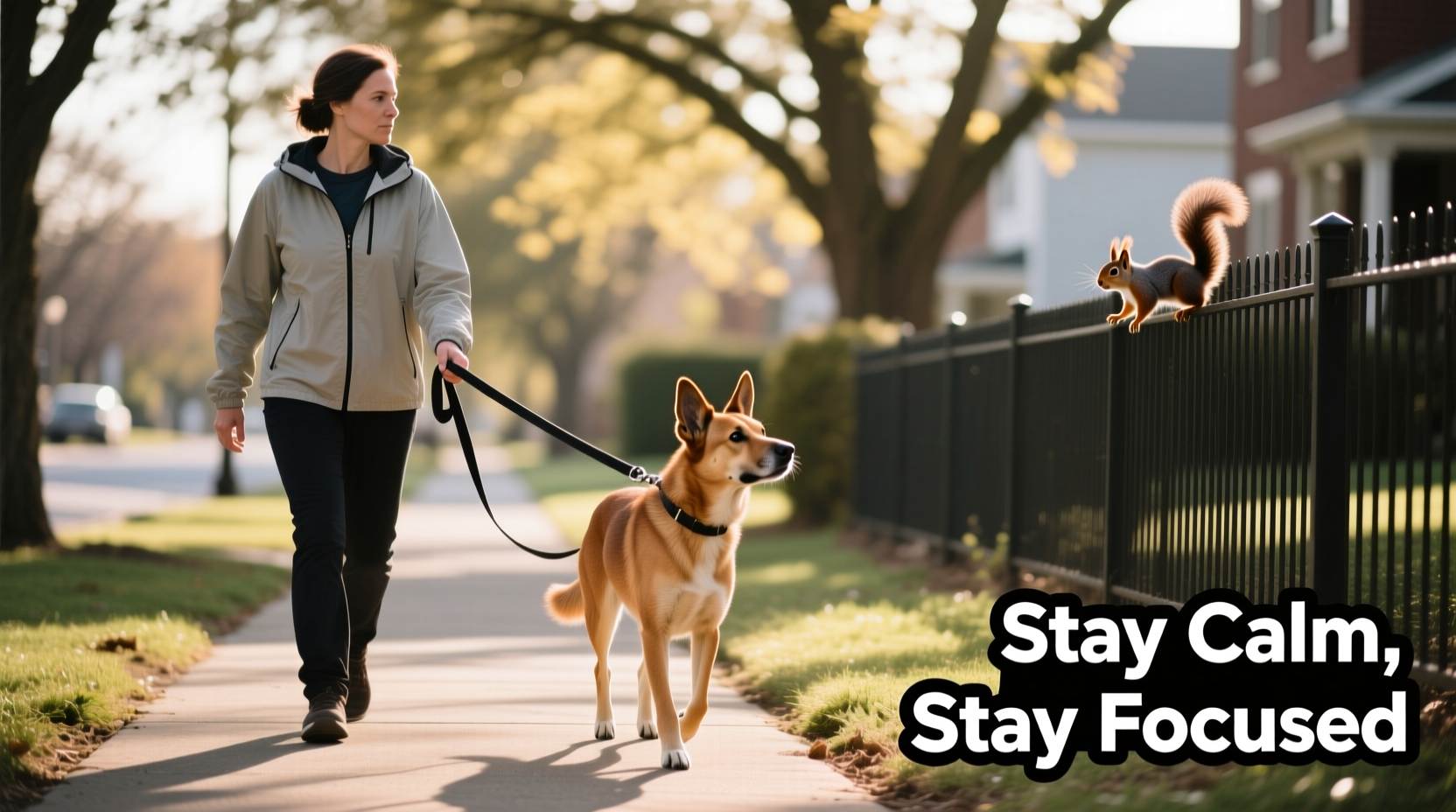
Dogs are hardwired to chase fast-moving objects. Squirrels, with their erratic movements and quick escapes, trigger a primal response in most dogs—especially breeds with strong hunting or herding backgrounds like Border Collies, Jack Russells, or Siberian Huskies. This behavior is not disobedience; it's instinct.
When a dog sees a squirrel, their brain shifts from “social companion” mode to “predator” mode. In that moment, commands like “sit” or “come” may as well be spoken in another language. The challenge lies in bridging that gap—teaching your dog to make a conscious choice to disengage from the squirrel and refocus on you.
Effective training doesn’t suppress this instinct—it builds self-control around it. That means starting with foundational skills in low-distraction environments before gradually introducing more challenging scenarios.
Step-by-Step Training Plan
Training your dog to ignore squirrels is a process that unfolds over weeks or months, depending on your dog’s temperament and prior training. The following timeline provides a structured approach to building focus and impulse control.
- Week 1–2: Master Attention on Cue
Begin indoors or in a quiet yard. Use a high-value treat (like chicken or cheese) and say your dog’s name. The instant they look at you, mark the behavior with a clicker or verbal cue (“Yes!”) and reward. Practice until your dog consistently turns to you when called. - Week 3–4: Introduce the “Leave It” Command
Place a low-value treat in one hand and let your dog sniff. Close your fist and say “Leave it.” Wait for them to stop pawing or sniffing and look up at you. Mark and reward with a different, higher-value treat from your other hand. Repeat until they respond within seconds. - Week 5–6: Practice Leash Manners in Low-Distraction Areas
Use a front-clip harness or head collar to reduce pulling. Reward your dog frequently for walking beside you with a loose leash. If they pull, stop moving. Resume only when the leash slackens. This teaches them that pulling doesn’t get them where they want to go. - Week 7–8: Add Controlled Distractions
Practice near distractions like passing cars, bikes, or other dogs—but at a safe distance. Reinforce attention and loose-leash walking. Gradually decrease the distance as your dog improves. - Week 9+: Simulate Squirrel Scenarios
Have a helper toss a furry toy or roll a ball erratically across a field. Practice your recall and “leave it” commands at increasing proximity. Always end on a success.
Consistency is crucial. Train daily for 10–15 minutes, always ending on a positive note. Over time, your dog will learn that focusing on you is more rewarding than chasing movement.
Essential Tools and Equipment
While training is primarily about behavior modification, the right gear can support your efforts and keep both you and your dog safe.
| Tool | Purpose | Recommended For |
|---|---|---|
| Front-Clip Harness | Reduces pulling by redirecting the dog’s momentum | Dogs that lunge forward aggressively |
| Head Collar (e.g., Gentle Leader) | Offers gentle control over the head and direction | Dogs with high prey drive or strong necks |
| Standard 6-Foot Leash | Provides control without excess slack | All training phases |
| Treat Pouch | Keeps high-value rewards accessible during walks | Reinforcement-based training |
| Clicker | Marks desired behaviors instantly | Dogs learning new cues |
Avoid retractable leashes during training—they encourage pulling and give your dog too much freedom to chase. A fixed-length leash ensures better control and clearer communication.
Real Example: Training Max, the Squirrel-Obsessed Terrier
Max, a 2-year-old Jack Russell Terrier, would lunge at squirrels so violently that his owner, Sarah, once lost balance and sprained her wrist. Walks were stressful, and Max was becoming reactive to even rustling leaves. Sarah consulted a certified dog trainer who recommended a structured plan.
They began with 10-minute daily sessions in the backyard, teaching Max to focus on Sarah in exchange for pieces of boiled chicken. After two weeks, Max reliably looked at her when she said his name. They then introduced the “leave it” command using a stuffed squirrel toy moved slowly along the ground.
Over the next month, Sarah practiced loose-leash walking in quiet neighborhoods. When Max pulled, she stopped. When he walked calmly, she rewarded him. After six weeks, they visited a large park during off-hours. A helper rolled a fuzzy ball down a hill, mimicking a squirrel’s path. At first, Max lunged—but Sarah turned and walked the opposite way, then rewarded him when he followed.
Within three months, Max could walk past trees with real squirrels overhead, glancing up but staying by Sarah’s side after hearing “Leave it.” He still gets excited, but now he has an alternative behavior—and the ability to choose it.
“Dogs don’t fail training—training fails dogs when it skips foundational steps. Build self-control like a muscle: start small, increase difficulty gradually.” — Dr. Karen Becker, Veterinary Behaviorist
Common Mistakes That Undermine Progress
Even well-intentioned owners can unintentionally sabotage training. Avoid these common pitfalls:
- Introducing distractions too soon: Expecting a dog to ignore a squirrel after only practicing at home sets them up for failure.
- Inconsistent rewards: If your dog only gets treats sometimes for good behavior, they’ll learn to gamble—hoping a squirrel chase might pay off.
- Allowing rehearsal of bad habits: Every time your dog pulls toward a squirrel and eventually gets to investigate, the behavior is reinforced.
- Using punishment: Yanking the leash or yelling increases anxiety and damages trust, making focus harder.
- Skipping equipment checks: A poorly fitted harness can slip or cause discomfort, distracting your dog during training.
Checklist: How to Train Your Dog to Ignore Squirrels
Follow this actionable checklist to ensure steady progress:
- ✅ Teach and reinforce the “attention” cue in a distraction-free environment
- ✅ Master the “leave it” command using progressively more tempting items
- ✅ Use a front-clip harness or head collar to minimize pulling
- ✅ Carry high-value treats on every walk for immediate reinforcement
- ✅ Practice loose-leash walking daily, stopping whenever the leash tightens
- ✅ Gradually expose your dog to squirrel-like stimuli (toys, videos, distant real squirrels)
- ✅ Always end training sessions on a positive note
- ✅ Be patient—progress may be slow, but consistency yields results
Frequently Asked Questions
Can all dogs learn to ignore squirrels?
Most dogs can learn to manage their reactivity with consistent training. However, some breeds with extremely high prey drives may never fully suppress the urge. The goal is not elimination but control—teaching your dog to respond to your cues even when tempted.
What if my dog already sees a squirrel? Is it too late to intervene?
Once a dog is fully locked into prey drive, they may not hear commands. Prevention is key. Learn to read your dog’s body language—stiffening, intense staring, or sudden silence often precedes a lunge. Redirect their attention *before* they fixate.
How long does it take to see results?
Basic focus and leash manners can improve in 4–6 weeks. Reliable squirrel ignoring in real-world settings may take 3–6 months or longer, depending on the dog. Short, frequent training sessions yield better results than infrequent long ones.
Conclusion: Building a Calmer, More Connected Walk
Training your dog to ignore squirrels isn’t about suppressing their nature—it’s about giving them the tools to make better choices. Every successful redirection strengthens your bond and builds confidence on both ends of the leash. You’re not just teaching obedience; you’re teaching self-control in the face of temptation.
Progress won’t be linear. There will be setbacks, especially when a squirrel zips up a tree just feet away. But with patience, the right techniques, and unwavering consistency, your walks can become enjoyable again—free from constant pulling and full of connection.




 浙公网安备
33010002000092号
浙公网安备
33010002000092号 浙B2-20120091-4
Comments
No comments yet. Why don't you start the discussion?