
Parrots are intelligent, social creatures capable of forming deep bonds with their human companions. But one of the most common—and often frustrating—challenges owners face is excessive screaming. While vocalization is natural for parrots, persistent or loud screaming can disrupt household peace, strain relationships, and even lead to surrendering the bird to shelters. The good news: screaming is a learned behavior, and with patience, consistency, and the right techniques, it can be significantly reduced or eliminated.
This guide focuses on practical, science-backed strategies to address the root causes of screaming and replace unwanted noise with calm, positive behaviors. No harsh tactics, no yelling back—just understanding, structure, and reinforcement of quiet conduct.
Understanding Why Parrots Scream
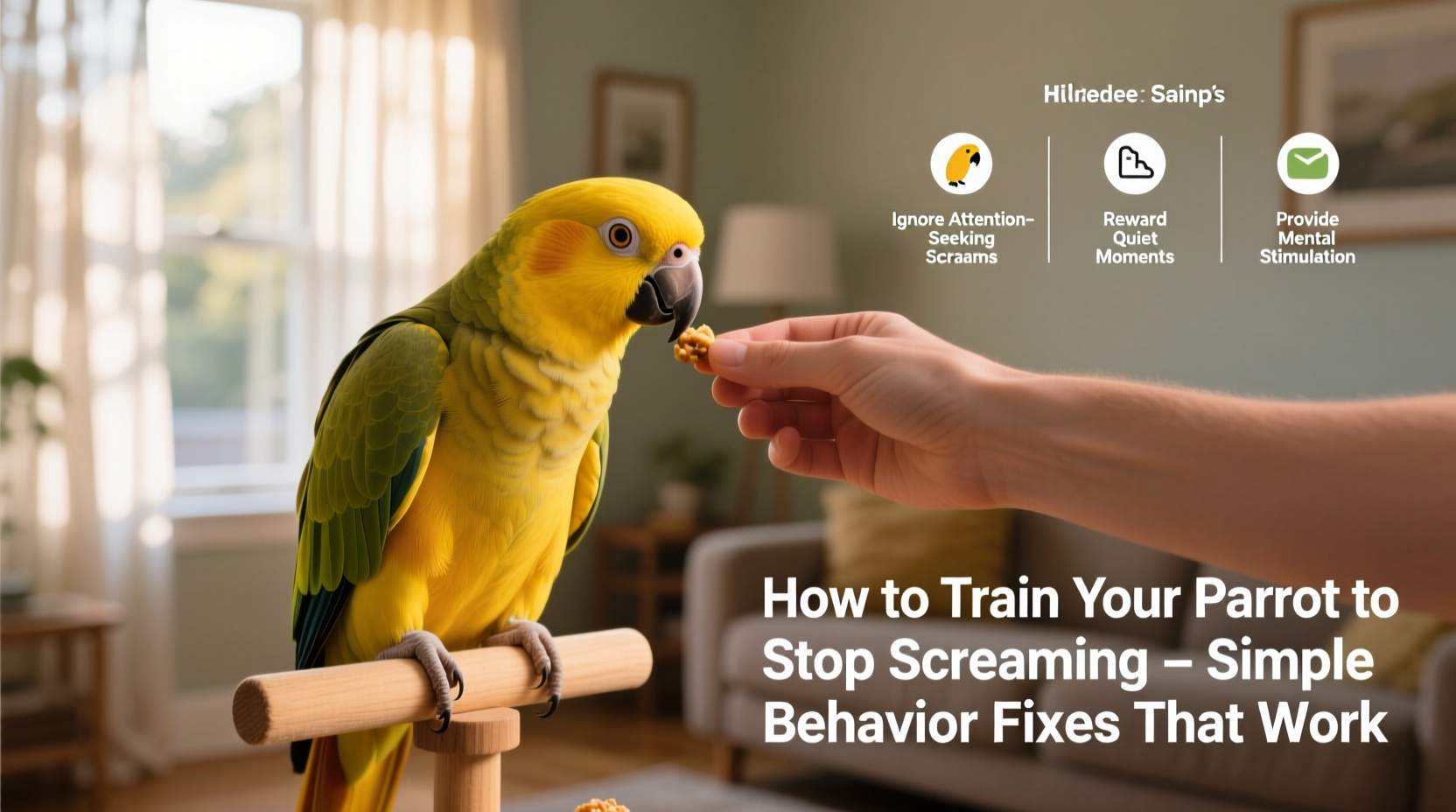
To effectively reduce screaming, you must first understand why it happens. Parrots in the wild use loud calls to maintain contact with flock members across long distances. In captivity, this instinct remains strong. However, domestic environments often misinterpret or unintentionally reinforce these vocalizations.
Common reasons parrots scream include:
- Attention-seeking: If a parrot learns that screaming results in interaction—even if it's negative—it will repeat the behavior.
- Boredom or lack of stimulation: Intelligent birds require mental engagement; without it, they may vocalize out of frustration.
- Fear or anxiety: Sudden noises, unfamiliar people, or environmental changes can trigger distress calls.
- Dawn and dusk calling: Many parrots naturally vocalize during early morning and late afternoon, mimicking flock communication patterns.
- Medical discomfort: Pain or illness can cause increased vocalization. Rule out health issues with an avian veterinarian before assuming behavioral causes.
“Screaming isn’t misbehavior—it’s communication. The key is learning what your parrot is trying to say and teaching them a better way to express it.” — Dr. Irene Pepperberg, Avian Cognition Researcher
Step-by-Step Guide to Reduce Screaming
Changing a parrot’s vocal habits takes time, but following a structured approach yields lasting results. Use this five-phase method to gradually shift your bird’s behavior toward calmness.
- Observe and record patterns: For three to five days, note when screaming occurs, how long it lasts, and what precedes or follows it. Look for triggers like specific times of day, presence of certain people, or periods of isolation.
- Rule out medical issues: Schedule a checkup with an avian vet to ensure pain, infection, or hormonal imbalances aren’t contributing.
- Establish a predictable routine: Parrots thrive on consistency. Set fixed times for feeding, play, sleep, and cage coverage. A stable schedule reduces anxiety-driven vocalizations.
- Reinforce quiet behavior: When your parrot is calm, especially during typical screaming windows, quietly offer praise or a small treat. Do not over-excite—use a soft voice and subtle rewards.
- Teach an alternative behavior: Train your parrot to perform a quiet action (like whistling softly or stepping onto your hand) during high-risk moments. Reward success immediately.
When Screaming Occurs: What To Do (And Not Do)
| Action | Recommended? | Why |
|---|---|---|
| Leave the room silently | Yes | Removes all attention, teaching that silence—not noise—gets space. |
| Yell “Stop!” or clap loudly | No | Increases arousal and models aggressive communication. |
| Cover the cage | Situationally | Can help at bedtime but should not be used punitively during the day. |
| Offer a toy or chew item | Yes | Redirects energy into acceptable activities after the bird quiets down. |
| Pick up the bird to comfort | No (during episode) | Rewards the screaming; wait until calm before offering physical reassurance. |
Environmental Enrichment: Prevent Boredom-Induced Noise
A mentally stimulated parrot is a quieter parrot. Boredom is a leading cause of repetitive screaming, especially in single-bird households. Enrichment doesn’t mean more toys—it means meaningful engagement that taps into natural instincts.
- Foraging opportunities: Hide food in puzzle feeders, cardboard tubes, or shredded paper. Rotate items weekly to maintain novelty.
- Rotating toy selection: Offer 3–5 safe toys at a time, changing one or two every few days. Include destructible, chewable, and manipulative types.
- Background sounds: Play soft music, nature recordings, or talk radio when you're away. Familiar voices can reduce loneliness.
- Mirror use (with caution): Some birds enjoy mirrors as social substitutes, but others become obsessed or aggressive. Monitor closely and remove if negative reactions occur.
Real Example: Reducing Dawn Screaming in a Congo African Grey
Sarah adopted a 7-year-old Congo African Grey named Jasper who screamed for nearly an hour every morning at sunrise. She initially tried covering the cage earlier, speaking calmly, and even moving him to another room—but nothing worked consistently.
After tracking his behavior, she noticed Jasper began calling just as light appeared through the window. He wasn’t hungry or fearful—he was initiating contact with his “flock” (her). Instead of reacting when he screamed, Sarah began entering the room only when he was quiet. She waited patiently outside his door, then stepped in with a soft greeting and a favorite nut only when he paused.
Within two weeks, Jasper’s screaming dropped from 50 minutes to under 10. By week four, he typically greeted her with a soft whistle or head bob. The change wasn’t instant, but consistency made all the difference.
Essential Training Checklist
Use this checklist daily during the first month of training to stay consistent and track progress:
- ☑ Observe and log screaming episodes (time, duration, context)
- ☑ Maintain a strict daily routine (feeding, sleep, playtimes)
- ☑ Reinforce calm behavior with quiet praise or treats
- ☑ Ignore screaming completely—no eye contact, speech, or movement
- ☑ Provide fresh foraging activity each morning
- ☑ Rotate at least one toy weekly
- ☑ Avoid responding to screams, even out of frustration
- ☑ End each day with a brief review: Did I follow the plan? What improved?
Expert-Approved Techniques That Make a Difference
Professional bird trainers emphasize that positive reinforcement is far more effective than punishment. Here are three proven methods endorsed by certified avian behaviorists:
1. Differential Reinforcement of Other Behavior (DRO)
Reward any behavior other than screaming. Even brief moments of chewing, preening, or looking around quietly are opportunities to offer a seed or verbal praise. Over time, the bird learns that being calm leads to positive outcomes.
2. Time-Delayed Attention
Wait for a pause in screaming—no matter how short—before interacting. This teaches the parrot that quiet invites connection. Start with rewarding one-second silences, then gradually increase the required duration.
3. Scheduled Interaction Breaks
If your parrot screams when left alone, build scheduled “check-in” times into your day. Visit every 30–60 minutes with a kind word or quick game. Predictable attention reduces the need to demand it vocally.
“You cannot reason with a screaming parrot in the moment. You shape behavior over time by controlling consequences. Calmness earns rewards. Noise earns nothing.” — Barbara Heidenreich, Certified Animal Behavior Consultant
Frequently Asked Questions
How long does it take to stop a parrot from screaming?
Results vary by bird, age, history, and owner consistency. Most owners see improvement within 2–3 weeks, with significant reduction in 6–8 weeks. Birds with years of reinforced screaming may take several months, but progress is still achievable.
Should I ever cover my parrot’s cage to stop screaming?
Covering can be helpful at night to signal bedtime and block light-triggered dawn calls. However, using a cover during the day as punishment teaches the bird nothing and may increase stress. Use it as part of a sleep routine, not a disciplinary tool.
Is it normal for parrots to scream at certain times every day?
Yes, many parrots have natural “contact call” periods at dawn and dusk. These are instinctive but can be minimized through training. Never reinforce these calls with attention. Instead, remain quiet during the period and reward calmness afterward.
Conclusion: Building a Quieter, Happier Relationship
Training a parrot to stop screaming isn’t about silencing a natural communicator—it’s about guiding that communication into healthier forms. With empathy, structure, and unwavering consistency, you can transform a home filled with piercing cries into one of soft whistles, playful chirps, and mutual trust.
The journey requires patience. There will be setbacks, noisy mornings, and moments of doubt. But every silent minute your parrot chooses calm over chaos is a victory. Celebrate those moments. They are proof that your efforts are working.




 浙公网安备
33010002000092号
浙公网安备
33010002000092号 浙B2-20120091-4
Comments
No comments yet. Why don't you start the discussion?