
A long wallet with high capacity offers undeniable convenience—plenty of slots for cards, multiple bill compartments, and space for receipts or IDs. Yet, without deliberate organization, it quickly becomes a cluttered repository of forgotten tickets, expired coupons, and mismatched cards. Over time, disarray undermines the very purpose of owning a functional wallet. Mastering organization within a large-capacity long wallet isn’t about minimalism alone; it’s about intelligent design, routine maintenance, and personal workflow alignment. This guide delivers actionable strategies to transform your wallet from chaotic to streamlined, ensuring efficiency, security, and peace of mind.
Assess Your Wallet’s Structure and Usage Patterns
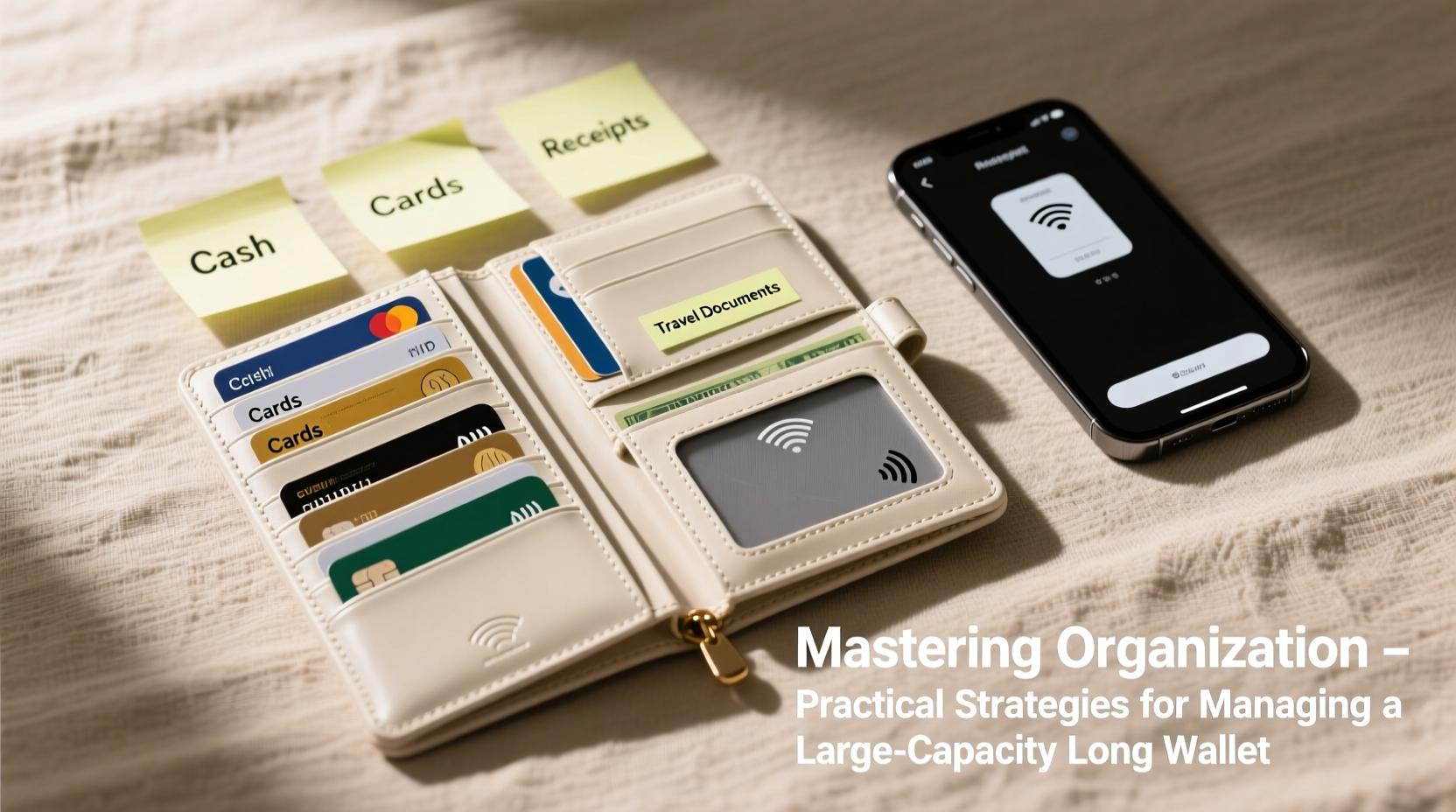
Before implementing any organizational system, understand how your wallet is built and how you actually use it. Large long wallets typically feature six to twelve card slots, two or more currency sections, ID windows, and often zippered or snap-closure pockets for coins or folded documents. Begin by laying out every item currently inside. Categorize them into groups: identification, payment cards, loyalty/rewards, cash, miscellaneous (receipts, business cards, etc.).
Track your daily interactions over one week. Note which cards you use most frequently—likely debit, credit, and office access. Identify items pulled only occasionally, such as insurance cards or gym passes. This audit reveals usage frequency, helping you assign optimal placement based on accessibility.
Design a Logical Internal Layout
Organization thrives on consistency. Assign dedicated zones within your wallet using a functional zoning model:
- Front Zone: Daily-use cards and primary ID.
- Middle Zone: Secondary cards, backup IDs, or transit passes.
- Rear Zone: Infrequently used items like emergency contacts, hotel keys, or membership cards.
- Cash Compartment: Keep bills flat and facing the same direction. Use divider folds if available.
- Zip Pocket: Ideal for coins, USB drives, or folded emergency cash.
Consider vertical stacking for receipts or folded documents to prevent bulging. Avoid overstuffing—your wallet should close smoothly without strain. A well-zoned layout reduces decision fatigue and retrieval time, especially during transactions.
Wallet Zoning Comparison Table
| Zone | Purpose | Recommended Items | Avoid |
|---|---|---|---|
| Front Card Slots | Immediate access | Primary debit/credit, driver’s license | Expired cards, duplicates |
| Middle Section | Frequent but not daily | Rewards cards, secondary ID | Random receipts, loose paper |
| Rear Pockets | Backup or seasonal | Insurance cards, passport copies | Multiple versions of the same card |
| Cash Fold | Bills and small notes | Folded currency, gift cards | Crumbled receipts, sticky notes |
| Zipper Compartment | Secure small items | Coins, SIM eject tool, emergency cash | Used tickets, gum wrappers |
Implement a Monthly Maintenance Routine
Like any organizational system, a wallet requires upkeep. Set a recurring reminder—first of each month—to perform a full review. The process takes less than ten minutes but prevents gradual decay into clutter.
- Empty completely: Remove all contents and place them on a clean surface.
- Wipe down interior: Use a dry microfiber cloth to remove dust and oils. For leather, apply a conditioner sparingly twice a year.
- Sort and purge: Discard expired cards, old receipts, and unused coupons. Shred sensitive documents before disposal.
- Reassess layout: Adjust zones if usage patterns have changed (e.g., new job, travel frequency).
- Refill strategically: Return only essential items, maintaining your designated structure.
“Just five minutes a month can prevent a wallet from becoming a liability. Clutter leads to stress, lost items, and even identity risks.” — Jordan Lee, Productivity Consultant
Real-Life Example: From Chaos to Control
Mark, a sales manager in Chicago, carried a premium long wallet packed with 18 cards—many duplicates from past employers or closed accounts. His cash compartment held crumpled bills and concert stubs from two years prior. After missing a client meeting due to fumbling for his ID, he committed to reorganization.
He began by removing everything and categorizing each item. He eliminated 11 cards, kept 5 essentials, and assigned zones: front slot for driver’s license and primary credit, middle for work badge and secondary card, rear for health insurance. He started folding bills neatly and using the zipper pouch for spare change. Within a week, transaction times dropped noticeably. More importantly, he reported feeling “lighter” and more in control—a psychological benefit he hadn’t anticipated.
Essential Do’s and Don’ts
- Do: Label less obvious cards with discreet dots or colors for quick recognition.
- Do: Carry a mini notebook or use your phone for temporary notes instead of stuffing paper into wallet pockets.
- Don’t: Store boarding passes or event tickets long-term—they lose validity and create clutter.
- Don’t: Overload card slots; pressure can damage chip readers and bend plastic.
- Do: Back up digital copies of important cards in a password-protected cloud vault.
Checklist: Optimize Your Long Wallet in 7 Steps
- ✅ Empty all contents onto a clean surface
- ✅ Sort items into categories: ID, payment, rewards, cash, misc
- ✅ Discard expired, damaged, or redundant items
- ✅ Assign zones based on usage frequency
- ✅ Wipe interior and condition leather if applicable
- ✅ Reinsert items following the new layout
- ✅ Schedule next review for 30 days ahead
Frequently Asked Questions
How many cards should I realistically carry?
Most experts recommend carrying no more than 6–8 essential cards. This includes two payment cards, primary ID, health insurance, work badge, and one backup or rewards card. Reducing quantity improves access speed and lowers loss risk.
Is it safe to keep my passport copy in my wallet?
A photocopy or scanned image stored digitally is safer than a physical copy. If you must carry a physical version—for international travel—use a separate slim sleeve and remove it upon returning home. Physical copies increase identity theft exposure if the wallet is lost.
Can a large wallet still be minimalist?
Yes—minimalism isn’t about size, but intentionality. A large wallet can be minimalist if every item inside serves a current, necessary function. Focus on utility, not volume. An organized spacious wallet supports preparedness without excess.
Conclusion: Take Control One Slot at a Time
A large capacity long wallet doesn’t have to mean disorganization. With thoughtful structuring, disciplined maintenance, and a clear understanding of your daily needs, it can become one of your most efficient personal tools. The habits you build around this small but vital accessory reflect broader principles of clarity and control. Start today—empty your wallet, assess each item, and rebuild it with purpose. You’ll spend less time searching, reduce stress, and move through your day with greater confidence.




 浙公网安备
33010002000092号
浙公网安备
33010002000092号 浙B2-20120091-4
Comments
No comments yet. Why don't you start the discussion?