
Parrots are among the most intelligent birds in the animal kingdom, capable of mimicking human speech with surprising clarity. While not all parrots will become fluent conversationalists, many species—especially African Greys, Amazon parrots, and Budgerigars—can learn words and phrases with consistent training. The key lies not in complexity, but in patience, repetition, and a strong bond between bird and owner. For beginners, the process can seem daunting, but with the right approach, even first-time owners can achieve meaningful results.
Teaching a parrot to talk isn’t about forcing sounds—it’s about creating an environment where communication feels rewarding and natural. This guide breaks down proven, gentle methods that align with how parrots naturally learn, ensuring both you and your feathered companion enjoy the journey.
Understanding Parrot Vocalization: Why They Mimic
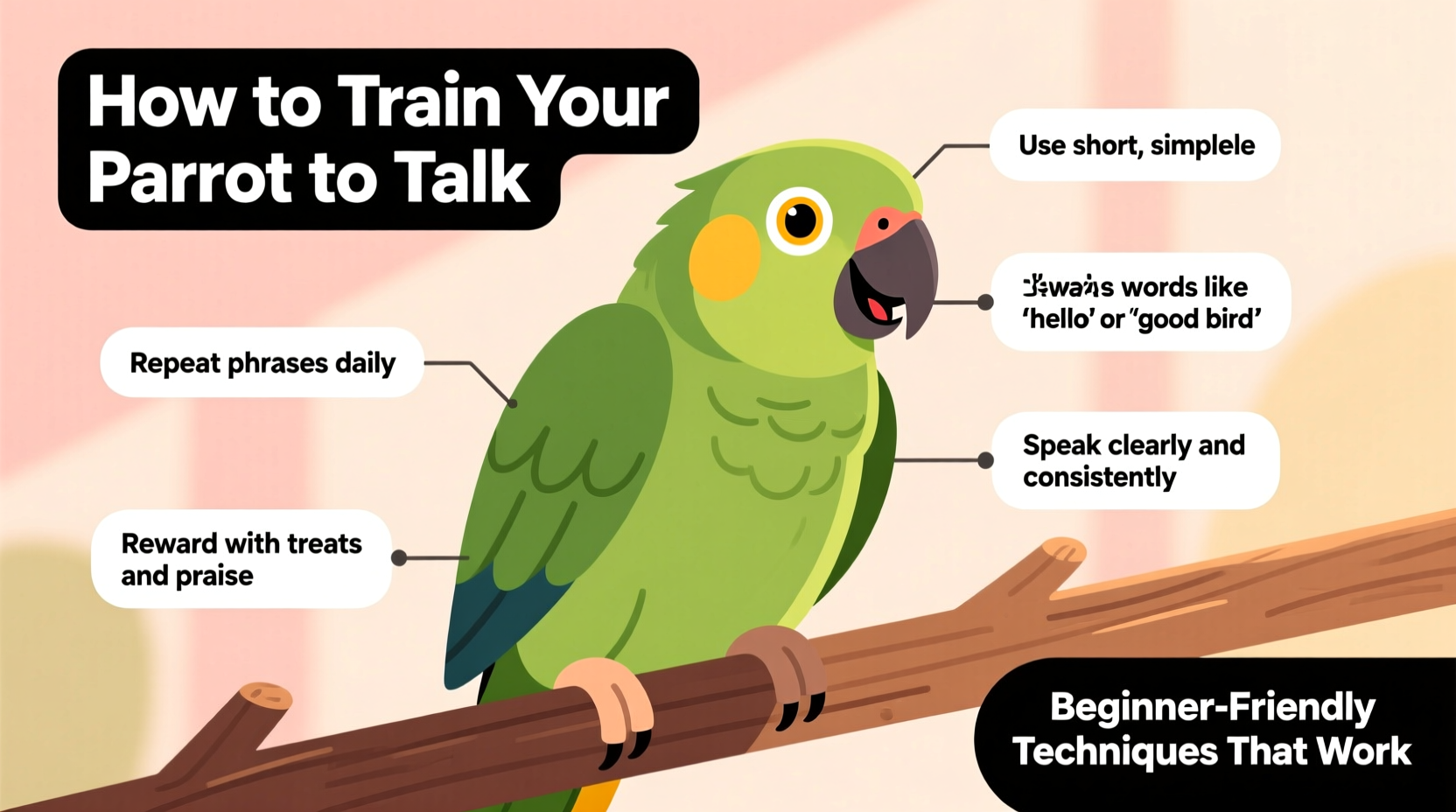
Parrots don’t speak for the same reasons humans do. In the wild, they use vocalizations to maintain flock cohesion, signal danger, or establish territory. When kept as pets, your parrot sees you and your household as its flock. Mimicking human speech is a way to bond, gain attention, and participate in social interaction.
Not every parrot will talk, and that’s normal. Factors like species, age, personality, and exposure play major roles. Younger birds generally learn faster, especially if exposed to regular speech during their first year. Males of certain species, such as Budgies, are also more likely to develop extensive vocabularies than females.
“Parrots are social learners. They pick up sounds in context, not just through repetition. If a word is tied to a routine—like ‘good morning’ when you enter the room—they’re far more likely to use it appropriately.” — Dr. Irene Pepperberg, Avian Cognition Researcher
Essential Conditions for Success
Before diving into training, ensure your parrot is in the right environment to learn. A stressed or unhealthy bird won’t engage in vocal mimicry. Consider these foundational elements:
- Health: Schedule a vet check to rule out illness. A lethargic or quiet bird may not be ready to learn.
- Diet: A balanced diet supports brain function. Include fresh fruits, vegetables, and high-quality pellets.
- Socialization: Spend daily time near your parrot, talking and interacting. Birds thrive on routine contact.
- Cage setup: Place the cage in a busy part of the home—such as the living room or kitchen—where your parrot hears frequent conversation.
- Quiet times: Avoid loud noises or sudden changes that cause anxiety. Calm surroundings promote vocal experimentation.
Step-by-Step Training Process
Effective training follows a clear, repeatable structure. Use this 6-week timeline to build a foundation for speech:
- Week 1–2: Build Trust and Exposure
Spend 15–20 minutes twice daily near the cage, speaking in a calm, clear voice. Use simple phrases like “Hello, [bird’s name]” or “Good bird.” Avoid shouting or exaggerated tones. Let your parrot observe and listen without pressure. - Week 3: Introduce Target Words
Choose 1–2 short, meaningful words—“hello,” “hi,” “night-night.” Repeat each phrase slowly and clearly 5–10 times per session, always at the same moment (e.g., when entering the room). Pair the word with a gesture or treat to reinforce association. - Week 4: Encourage Imitation
After saying the target word, pause and look expectantly at your parrot. If it makes any sound resembling the word—even a squeak—immediately respond with praise and a small treat. Positive reinforcement strengthens the connection between effort and reward. - Week 5: Add Context and Repetition
Use the word consistently in real situations. Say “hello” every time you walk in. Say “night-night” during bedtime routines. This contextual repetition helps your parrot understand usage. - Week 6: Expand Vocabulary Gradually
Once your parrot consistently says one word, introduce a second. Limit new words to one per month to avoid confusion. Focus on clarity over quantity.
What to Do (and Not Do) During Training
| Do | Don't |
|---|---|
| Speak slowly and clearly using simple words | Use complex sentences or slang |
| Repeat words at consistent times each day | Change words too frequently |
| Reward attempts, not just perfect imitation | Punish incorrect sounds or silence |
| Keep sessions short (5–10 minutes) | Force interaction when the bird seems stressed |
| Use a cheerful tone and positive body language | Yell or mimic loud noises that could scare the bird |
Species-Specific Talking Potential
While individual personalities vary, some species are naturally more inclined to mimic speech. Knowing your parrot’s potential helps set realistic expectations.
- African Grey Parrot: Widely regarded as the most skilled talkers. Can learn hundreds of words and use them contextually. Famous example: Alex the Grey, who demonstrated understanding of concepts like color, shape, and number.
- Amazon Parrots: Known for loud, clear voices and musical ability. Yellow-naped Amazons often develop large vocabularies.
- Budgerigars (Budgies): Small but mighty talkers. Male budgies can learn dozens of words with proper training.
- Cockatiels: More limited speakers, but some learn whistles, phrases, or single words. Often mimic environmental sounds like phones or microwaves.
- Conures: Less verbal overall, though some individuals surprise owners with clear phrases.
Real-Life Example: Milo the Young Budgie
Sarah, a first-time bird owner from Portland, adopted a 4-month-old male budgie named Milo. With no prior experience, she followed a simple daily routine: each morning, she greeted him with “Hi, Milo!” while offering a millet spray. At night, she said “Night-night, sweet boy” while covering his cage.
After three weeks, Milo began chirping back after her greetings. By week six, he produced a faint “hi” sound. Sarah celebrated immediately with a treat and gentle praise. Within ten weeks, Milo was clearly saying “hi” and had started mimicking the word “treat” when he saw the bag.
The secret? Consistency and emotional connection. Sarah didn’t drill Milo endlessly—she made speech part of their bonding ritual. Her patience paid off with a bird eager to communicate.
Advanced Techniques for Continued Progress
Once your parrot masters a few words, you can expand its abilities using these proven strategies:
- Mirror Training: Some parrots respond well to mirrors. Saying words near a mirror can spark curiosity and mimicry, especially in solitary birds.
- Audio Recordings: Play short, clear recordings of target words at low volume during the day. Avoid overuse—natural interaction is always more effective.
- Name Recognition: Use your parrot’s name frequently in positive contexts. Birds that recognize their names are more likely to engage in two-way communication.
- Phrase Chaining: After mastering “hello,” add “hello there” slowly. Break longer phrases into parts and reassemble them over time.
“Training a parrot is less about teaching and more about inviting communication. When they feel safe and included, speech becomes a natural extension of their social behavior.” — Dr. Jane Johnson, Avian Behavior Specialist
Common Challenges and How to Overcome Them
Not every training journey is smooth. Here are typical hurdles and practical solutions:
- My parrot isn’t making any sounds.
Ensure the bird is healthy and not in a stressful environment. Some parrots take months to begin vocalizing. Continue consistent exposure and wait patiently. - It only talks when I’m not around.
This is common. Parrots often practice when alone. Use a voice recorder to capture hidden progress. - It screams instead of speaking.
Screaming is often a call for attention. Avoid reinforcing it by reacting loudly. Instead, reward quiet moments and redirect with toys or interaction. - It repeats words at inappropriate times.
Parrots don’t understand meaning initially. Over time, contextual repetition helps them refine usage. Gently ignore off-topic speech and reinforce correct use.
Frequently Asked Questions
Can all parrots learn to talk?
No, not all parrots will talk. Species, genetics, environment, and individual temperament influence ability. Some birds prefer whistling or remain mostly silent, which is perfectly normal.
How long does it take for a parrot to start talking?
Most parrots begin making recognizable attempts within 2–6 months of consistent training. Full words may take 6–12 months. Younger birds typically learn faster than adults.
Should I use treats during training?
Yes, but sparingly. Small, healthy rewards like a seed or piece of fruit immediately after an attempt reinforce learning. Overfeeding can lead to health issues, so keep treats tiny and infrequent.
Beginner’s Checklist for Teaching Your Parrot to Talk
- Choose a healthy, socialized parrot of a talking-prone species.
- Place the cage in a lively area of your home.
- Select 1–2 simple, meaningful words to start.
- Repeat words daily at consistent times (e.g., morning greeting).
- Use a calm, clear voice—avoid yelling or exaggeration.
- Reward any vocal attempt with praise or a tiny treat.
- Keep training sessions under 10 minutes, twice a day.
- Be patient—progress may be slow but steady.
- Record vocalizations monthly to track improvement.
- Gradually expand vocabulary once a word is mastered.
Final Thoughts: Building a Lifelong Connection Through Communication
Teaching your parrot to talk is about more than hearing a bird say “hello.” It’s about building trust, encouraging engagement, and deepening your relationship. Every squawk, whistle, or attempted word is your parrot reaching out in the only way it knows how. Celebrate the small victories—the first mumbled syllable, the unexpected “night-night” as you leave the room.
Success doesn’t require perfection. It requires presence. Show up consistently, speak kindly, and create a space where your parrot feels safe to experiment. Over time, those efforts compound into genuine communication.




 浙公网安备
33010002000092号
浙公网安备
33010002000092号 浙B2-20120091-4
Comments
No comments yet. Why don't you start the discussion?