
Walking your puppy should be a peaceful experience, not a battle of wills. Yet many new dog owners find themselves yanked down the sidewalk, arms aching, as their enthusiastic pup drags them toward every scent, squirrel, and passing cyclist. Pulling on the leash isn’t just frustrating—it can lead to injury, poor socialization, and long-term behavioral issues. The good news? With patience, structure, and science-backed methods, any puppy can learn to walk politely by your side.
The key lies in understanding canine psychology: puppies pull because they’ve learned that tension leads to movement. When they surge forward and the leash tightens, they still get where they want to go. That’s a reward. To change this behavior, you must reverse the cause-and-effect relationship: no forward motion when pulling, immediate progress when walking loosely beside you.
Why Puppies Pull: The Science Behind the Strain
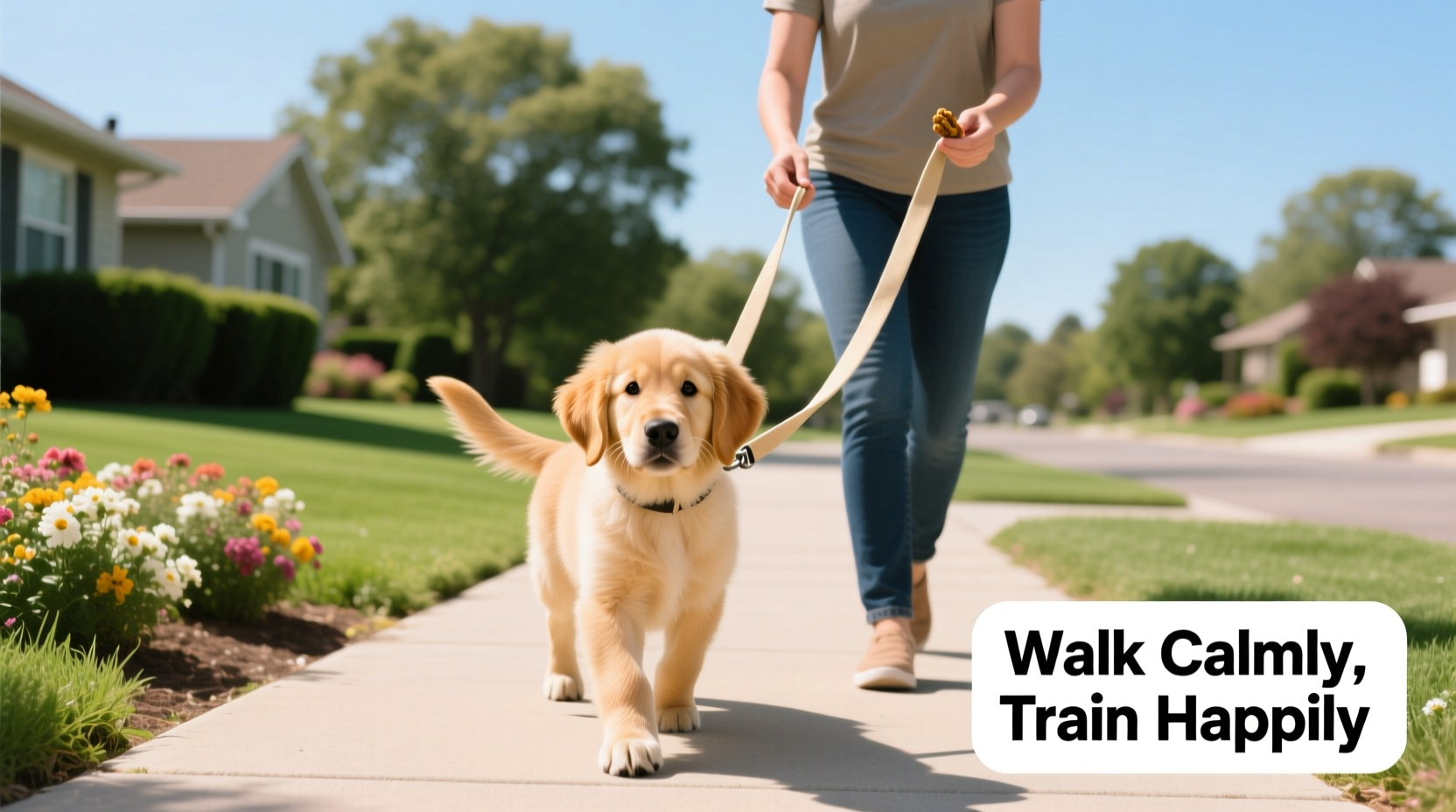
Dogs are natural explorers. From the moment they step outside, their senses are flooded with stimuli—new smells, sounds, and sights. A puppy’s instinct is to move toward what interests them, and if the leash allows it, they’ll forge ahead with little regard for human pace or comfort.
Moreover, traditional training tools like retractable leashes or choke collars often worsen the problem. Retractable leashes teach dogs that pulling extends their range, reinforcing the very behavior we want to eliminate. Choke collars punish after the fact, creating fear or discomfort without teaching an alternative action.
Dr. Sophia Yin, a renowned veterinarian and animal behaviorist, emphasized that “animals do more of what works.” If pulling gets results, your puppy will keep doing it. The solution isn’t force—it’s redirection through positive reinforcement and clear communication.
“Dogs don’t pull because they’re stubborn. They pull because we’ve unintentionally trained them to.” — Dr. Ian Dunbar, Veterinarian and Canine Behavior Expert
Step-by-Step Guide: Teaching Loose-Leash Walking
Training a puppy to walk without pulling is a process, not a single event. It requires daily practice, consistency across all family members, and an environment that sets your puppy up for success. Follow this timeline-based approach over 4–6 weeks to build lasting habits.
- Week 1: Introduce Equipment Indoors
Let your puppy wear the collar or harness inside the house while playing or eating. This builds neutral associations. Attach the leash and let it drag (supervised) so they get used to the sensation without pressure. - Week 2: Practice Focus and Following
Hold the leash and encourage your puppy to follow you around the house using treats. Reward them every few steps for staying close. Use a cue like “Let’s go” to signal movement. - Week 3: Begin Outdoor Sessions in Low-Distraction Areas
Choose a quiet driveway or backyard. Walk slowly and pause whenever the leash tightens. Stand still until the leash goes slack, then mark (“Yes!”) and treat. Resume walking only when the puppy is at your side. - Week 4: Add Direction Changes
If your puppy starts to pull ahead, immediately turn 180 degrees and walk the other way. Say “This way!” cheerfully. Reward them when they catch up and match your pace. This teaches them that pulling doesn’t get them forward—it actually takes them backward. - Weeks 5–6: Gradually Increase Distractions
Move to sidewalks, parks, or pet-friendly stores. Keep sessions short (5–10 minutes) and end on a positive note. Use high-value treats (like chicken or cheese) in challenging environments.
Essential Tools and Techniques
Not all gear is created equal. Choosing the right equipment can make training easier and safer for both you and your puppy.
| Tool | Best For | Why It Works | Avoid If… |
|---|---|---|---|
| Front-Clip Harness (e.g., Freedom Harness) | Puppies who pull hard | Gently turns the dog when they pull, discouraging forward motion | Your puppy has spinal issues (consult vet first) |
| Standard 4–6 Foot Nylon Leash | All training phases | Provides control without encouraging range extension | You’re tempted to use retractable leashes |
| Treat Pouch with Quick Access | Reinforcing loose-leash behavior | Enables fast rewards without fumbling | You’re inconsistent with timing |
| Clicker or Verbal Marker (\"Yes!\") | Precise communication | Marks the exact moment of correct behavior | You forget to follow with a treat |
Avoid retractable leashes during training. They send mixed messages: “Stay close” but also “Go far.” Save them for occasional off-leash areas once your dog is fully reliable.
Real Example: From Sled Dog to Sidekick
Meet Luna, a 14-week-old Australian Shepherd adopted by a first-time owner in Portland, Oregon. On her first walk, Luna lunged at bicycles, barked at mailboxes, and nearly pulled her owner into a bush chasing a leaf. Frustrated, the owner considered quitting walks altogether.
Working with a certified trainer, she started over. She began indoors, using a front-clip harness and a 4-foot leash. For three days, she practiced “follow me” games around the kitchen, rewarding Luna for staying within a foot of her side. By day five, they moved to the driveway.
The turning point came when the owner implemented the “U-turn” method. Every time Luna surged ahead, she turned and walked the opposite direction. At first, Luna looked confused—but after ten repetitions, she began checking in before moving forward.
Within four weeks, Luna was walking calmly past squirrels and joggers. Today, at six months old, she heels effortlessly through city streets. Her owner credits consistency: short, daily sessions and never allowing pulling to be rewarded with forward motion.
Common Mistakes That Sabotage Progress
- Inconsistency: Allowing pulling sometimes (“just this once”) teaches your puppy that persistence pays off.
- Yelling or Yanking: Corrections create fear or resistance, not understanding. Your puppy learns to associate walks with stress.
- Long, Overwhelming Sessions: Puppies have short attention spans. Ten focused minutes are better than 30 minutes of chaos.
- Ignoring Environmental Management: Starting training in a busy park sets your puppy up to fail. Begin in low-distraction zones.
- Using the Wrong Equipment: Slip collars or prong collars may suppress pulling temporarily but don’t teach an alternative behavior.
Checklist: Your First 30 Days of Leash Training
Follow this actionable checklist to stay on track and measure progress.
- ✅ Choose a front-clip harness and 4–6 foot leash
- ✅ Practice leash dragging indoors (supervised)
- ✅ Teach “Let’s go” as a directional cue with treats
- ✅ Conduct 3 short indoor walking sessions per day
- ✅ Start outdoor walks in a quiet area (driveway or empty parking lot)
- ✅ Pause and wait for slack whenever the leash tightens
- ✅ Turn and walk the opposite way if puppy pulls ahead
- ✅ Reward every 3–5 steps of loose-leash walking
- ✅ End each session before your puppy loses focus
- ✅ Gradually introduce mild distractions (a leaf blowing, distant dog)
- ✅ Increase walk duration by 1 minute per week
- ✅ Involve all household members in consistent training
Frequently Asked Questions
How long does it take to stop a puppy from pulling?
Most puppies show improvement within 2–3 weeks of consistent daily practice. Full reliability in distracting environments may take 2–4 months. Progress depends on frequency of training, breed energy level, and environmental management.
Can I use a head halter like a Gentle Leader?
Yes, head halters can be effective for strong-pulling breeds when introduced gradually. However, they require careful acclimation—never force your puppy to wear one. Pair it with positive experiences (feeding, play) before using it on walks.
What if my puppy sits down during walks?
This is common. Avoid pulling or scolding. Instead, back up a few steps and call your puppy enthusiastically. You can also toss a treat behind them so they turn and follow you. Never reinforce stopping by tugging them forward.
Conclusion: Building a Lifelong Habit
Teaching your puppy to walk without pulling isn’t just about convenience—it’s about building trust, communication, and mutual respect. Every walk becomes an opportunity to strengthen your bond and reinforce good behavior. The effort you invest now pays dividends for years, whether you're strolling through the neighborhood or navigating a crowded farmers’ market.
Remember, your puppy isn’t being defiant—they’re simply responding to what they’ve learned works. By changing the rules gently and consistently, you guide them toward better choices. Celebrate small wins: the first time they check in before crossing a threshold, the first full lap around the block without tension, the first time they turn to look at you instead of lunging at a distraction.




 浙公网安备
33010002000092号
浙公网安备
33010002000092号 浙B2-20120091-4
Comments
No comments yet. Why don't you start the discussion?