
Moving to a new gaming console should be exciting, not stressful. Yet for many players, the fear of losing hard-earned game progress—quest completions, character levels, unlockables, or in-game currency—can cast a shadow over the upgrade. Fortunately, with the right preparation and knowledge, transferring your game saves between consoles is not only possible but often seamless. Whether you're upgrading from a PS4 to a PS5, Xbox One to Series X|S, or switching systems entirely, preserving your progress is within reach.
This guide breaks down the most reliable methods across major platforms, outlines common pitfalls, and provides actionable steps to ensure your digital legacy remains intact. No more starting from scratch. With careful planning, you can pick up exactly where you left off—even on a brand-new machine.
Understanding Save Data and Cloud Storage
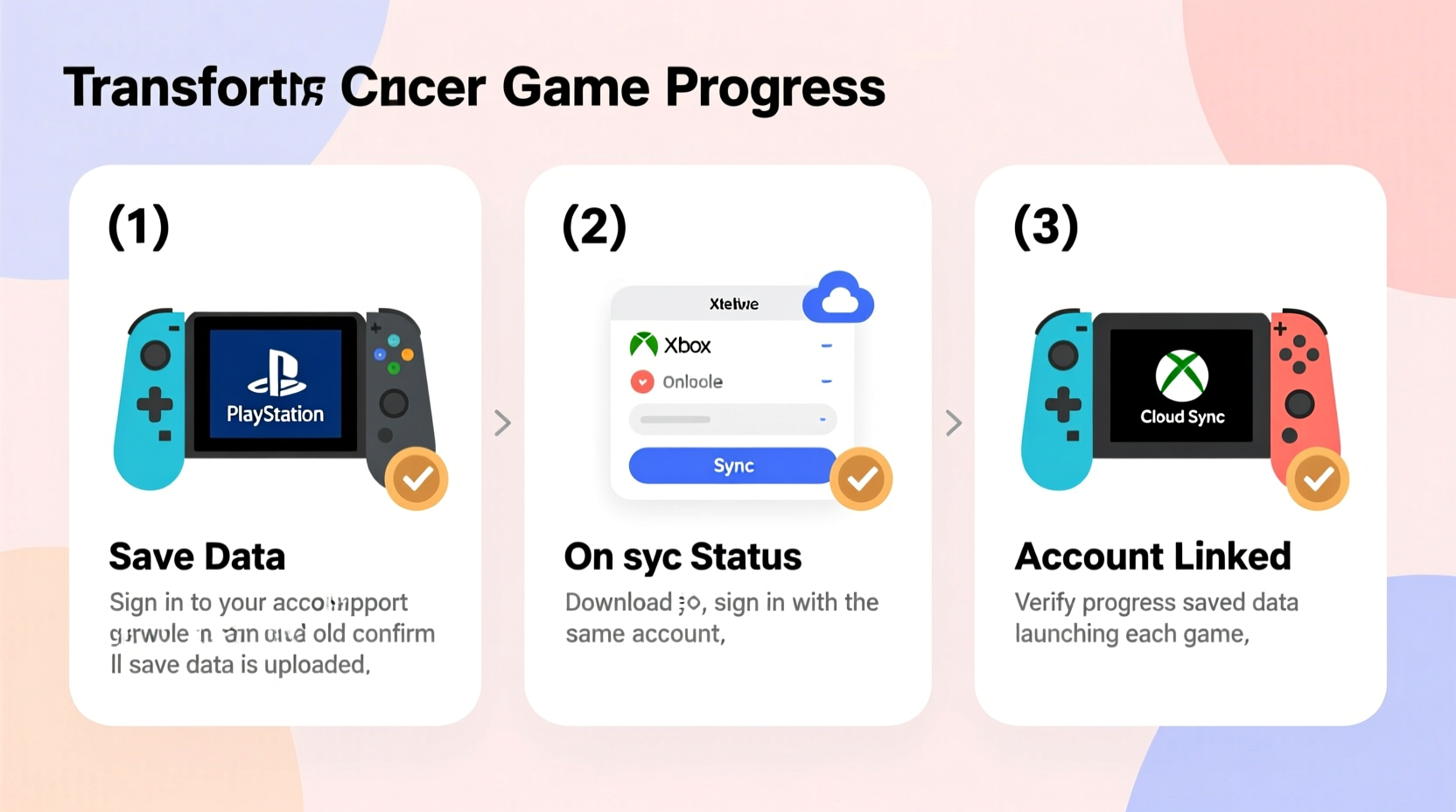
Game progress is stored as “save data,” which records everything from completed missions to inventory items. On modern consoles, this data can live in multiple places: on the internal hard drive, on external storage devices, or in the cloud via online accounts. The method you use to transfer depends largely on where your data currently resides and what tools your platform offers.
Cloud storage has become the backbone of cross-console save transfers. Services like PlayStation Plus, Xbox Live Gold/Game Pass Ultimate, and Nintendo Switch Online allow users to back up their save files automatically. If your subscription includes cloud saving, the process becomes significantly simpler. However, not all games support cloud saves—especially older titles or those with anti-cheat mechanisms—and some require manual intervention.
“Cloud-based save syncing is now standard, but it’s not universal. Always verify compatibility before assuming your progress will auto-transfer.” — Marcus Tran, Senior Console Support Technician at GameTech Solutions
Step-by-Step Guide: Transferring Saves by Platform
Different manufacturers offer different workflows. Below are detailed instructions for the three major console families.
PlayStation: From PS4 to PS5
Sony makes transitioning between generations relatively straightforward, especially if both consoles are connected to the same Wi-Fi network.
- Ensure both your PS4 and PS5 are signed into the same PlayStation Network (PSN) account.
- On your PS4, go to Settings > System > Data Transfer.
- Select Send Data to Another PS5.
- Follow the on-screen prompts to connect the consoles via Wi-Fi or LAN cable.
- Choose which data to transfer: games, apps, save files, screenshots, and settings.
- Wait for the transfer to complete (time varies based on data size).
If the consoles aren't on the same network, use cloud storage:
- Subscribe to PlayStation Plus.
- On your PS4, go to Settings > Saved Data and Game/App Settings > Saved Data (PS4) > Sync Saved Data.
- Upload your saves to the cloud.
- On your PS5, navigate to the same menu and select Download to Console.
- Launch compatible games—they’ll detect the imported save automatically.
Xbox: From Xbox One to Xbox Series X|S
Microsoft’s ecosystem is designed for backward compatibility and seamless transitions. Most saves transfer automatically if you’re using the same Microsoft account.
- Sign in to your new Xbox Series X|S with the same Microsoft account used on your old console.
- Connect to the internet during setup.
- Enable Sync my settings when prompted.
- Open the game you want to continue. If it supports cloud saves, your progress will sync automatically.
- If not, use an external USB drive:
- Plug the drive into your old Xbox.
- Go to Settings > System > Backup & Transfer > Keep What’s Yours.
- Select Transfer Content and follow prompts to copy data to the drive.
- Move the drive to your new console and repeat the process to import.
Note: Smart Delivery ensures that supported games download the correct version (One or Series X|S) automatically, often retaining cross-gen save compatibility.
Nintendo Switch: Moving Between Switch Models
Transferring data between Switch models (e.g., original to OLED or Lite to Standard) requires either local wireless transfer or cloud backup (for Nintendo Switch Online subscribers).
Local Transfer Method:
- Update both consoles to the latest system version.
- On the new Switch, go to System Settings > Data Management > Transfer Your Save Data.
- Select Send Save Data to Another Console on the old device.
- Follow the pairing instructions using QR codes or manual entry.
- Select the user profile and games to transfer.
- Wait for completion—do not interrupt power or connection.
Cloud Backup (Recommended):
- Subscribe to Nintendo Switch Online.
- In any compatible game, check if Save Data Backup is enabled under the game menu or system settings.
- On your new console, log in with the same Nintendo Account.
- Launch the game—the system will prompt you to restore from the cloud.
What to Do When Cloud Sync Isn’t Available
Some games—particularly indie titles or those with server-based progression—don’t support cloud saves. Others tie progress to local profiles only. In these cases, alternative strategies are essential.
Use External Storage Devices
For PlayStation and Xbox, external USB drives can store full game installations and associated save data. Simply plug the drive into the new console and access the data directly. Note that while save files may transfer, you may still need to reinstall the game if it’s not backward compatible.
Leverage In-Game Account Linking
Many modern games (e.g., The Witcher 3, Fortnite, Destiny 2) allow you to link your progress to a third-party account like Steam, Epic Games, or Ubisoft Connect. Before retiring your old console:
- Create an account with the game’s publisher if you haven’t already.
- Link your console profile to that account through the game’s settings.
- Install the game on your new console and log in with the same account.
- Your progress should sync automatically.
“Always link your game to a persistent online account. It’s the single most effective way to future-proof your progress across hardware changes.” — Lila Nguyen, Game Developer & UX Consultant
Checklist: Preparing for a Smooth Transition
Before you power down your old console for the last time, run through this checklist to avoid irreversible data loss.
- ✅ Confirm both consoles are updated to the latest firmware.
- ✅ Sign in with the same primary account on both devices.
- ✅ Subscribe to required online services (PS+, Xbox Live Gold, NSO).
- ✅ Enable automatic save syncing in system settings.
- ✅ Manually upload critical save files to the cloud.
- ✅ Back up saves to an external drive as a fallback.
- ✅ Verify game compatibility with the new console.
- ✅ Test the transfer with one non-critical game first.
- ✅ Document your save file names and dates for reference.
- ✅ Deactivate your old console after transfer (security best practice).
Common Mistakes That Cause Data Loss
Even experienced gamers make errors during console transitions. Avoid these frequent missteps:
| Mistake | Why It’s Risky | How to Avoid |
|---|---|---|
| Assuming all games support cloud saves | Many older or niche titles do not sync to the cloud | Manually verify each game’s save compatibility |
| Using different user accounts | Saves are tied to specific profiles | Always use the same login credentials |
| Skipping system updates | Older firmware may block transfer features | Update both consoles before starting |
| Interrupting transfer mid-process | Can corrupt save files permanently | Ensure stable power and internet; don’t turn off consoles |
| Not deactivating the old console | Leaves account vulnerable; limits cloud access | Deactivate in account settings after migration |
Real Example: Sarah’s Successful PS4-to-PS5 Transfer
Sarah had spent over 200 hours in Final Fantasy VII Remake on her PS4. When she upgraded to a PS5, she was determined not to lose her progress. She followed a cautious approach:
First, she confirmed her PlayStation Plus subscription was active. Then, she manually uploaded her FFVII save file to the cloud through the settings menu. After setting up her PS5, she downloaded the PS5 version of the game and checked for save availability. The system prompted her to download her cloud save, which restored perfectly. She verified the load screen showed her level 47 Cloud and all unlocked abilities. Relieved, she then transferred her other games using the direct Wi-Fi method. By taking precautions and testing one title first, Sarah avoided disaster and continued her journey seamlessly.
Frequently Asked Questions
Can I transfer saves between different console brands?
Generally, no. Sony, Microsoft, and Nintendo use proprietary systems that don’t interoperate. However, some cross-platform games (like Minecraft or Borderlands 3) allow progress transfer if linked to a unified account such as Microsoft or Mojang. Always check the developer’s official policy before assuming compatibility.
What happens if my new console doesn’t recognize the save file?
This can occur due to version mismatches or corrupted transfers. First, ensure the game is fully updated. If the issue persists, try redownloading the save from the cloud or re-copying from external media. If all else fails, contact the game’s support team—they sometimes provide recovery tools for verified users.
Is it safe to sell my old console after transferring data?
Yes, but only after properly deactivating it and performing a factory reset. Go to Settings > Account > Deactivate This Console (or equivalent), then erase all data under System > Initialize Console. This protects your personal information and ensures your licenses remain accessible on the new device.
Conclusion: Preserve Your Progress, Upgrade with Confidence
Transferring game progress from an old console to a new one doesn’t have to be daunting. With cloud backups, external storage options, and account-based syncing, today’s technology makes it easier than ever to carry your achievements forward. The key is preparation: verify compatibility, enable syncing, and always have a backup plan. Whether you’re stepping into next-gen performance or simply replacing aging hardware, your game saves are worth protecting.




 浙公网安备
33010002000092号
浙公网安备
33010002000092号 浙B2-20120091-4
Comments
No comments yet. Why don't you start the discussion?