
January shouldn’t feel like a visual letdown—a sudden plunge from festive warmth into sterile minimalism. Yet for many homeowners, the first week of the new year brings a dissonant choice: leave up twinkling lights that now read as “forgot to take them down,” or strip everything bare overnight, erasing all sense of continuity and comfort. The truth is, Christmas lights don’t have to be binary—on or off, joyful or embarrassing. With intentionality, subtle editing, and an understanding of seasonal psychology, those same strings of warm white LEDs, copper wire accents, and frosted bulbs can evolve gracefully into January’s quieter aesthetic: reflective, grounded, and quietly luminous.
This isn’t about extending holiday decor for the sake of nostalgia. It’s about honoring light as a design element—not just a symbol—and recognizing that January, with its long evenings and muted palette, benefits deeply from intentional illumination. Designers in Nordic countries, where daylight is scarce in January, treat artificial light as architecture: layered, directional, and emotionally resonant. That same principle applies here. Transitioning lights successfully means shifting emphasis—from celebration to ambiance, from abundance to atmosphere, from narrative (Christmas) to mood (calm, renewal, stillness).
1. Understand the January Light Psychology
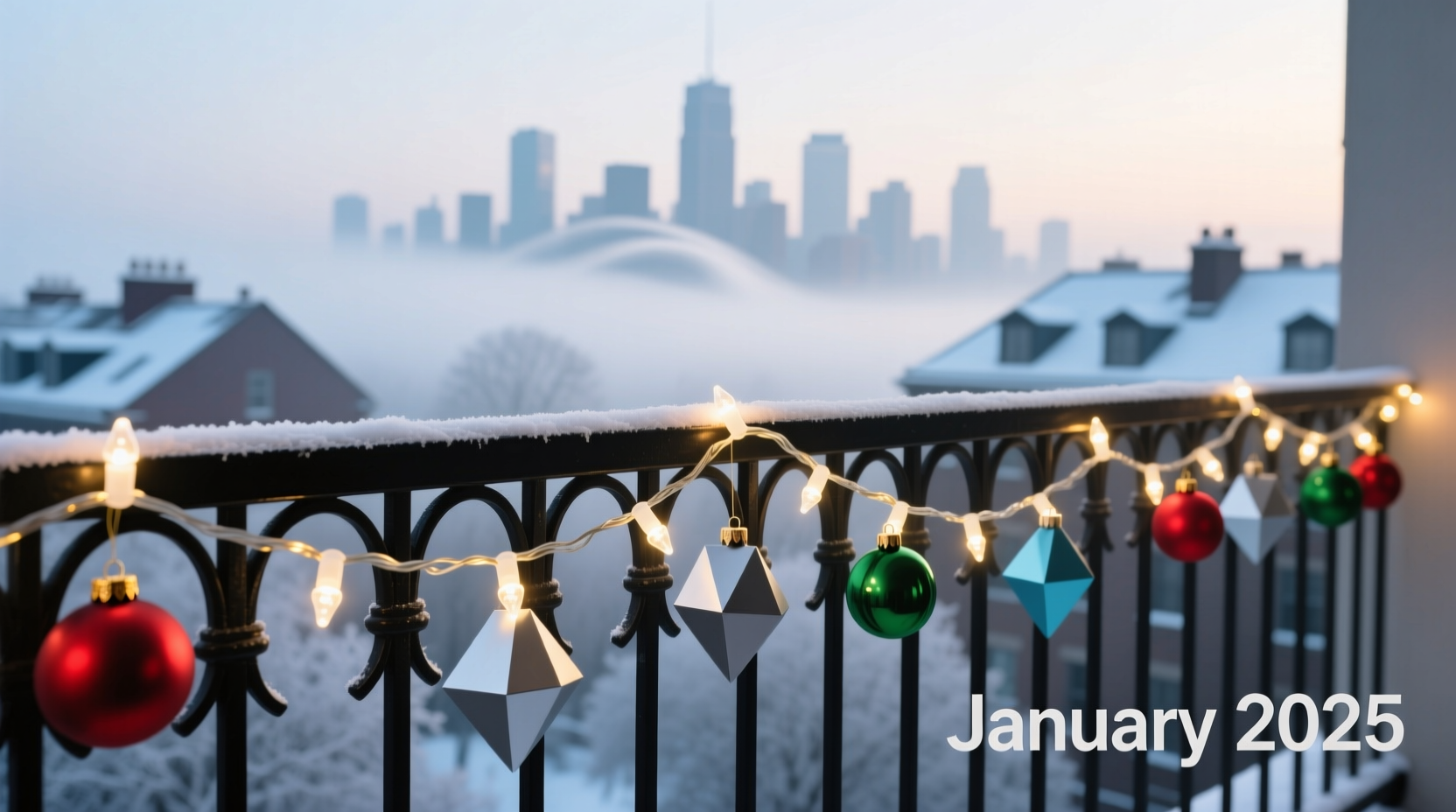
Before adjusting a single bulb, consider what light *does* in January. Days are short, skies are often overcast, and interior spaces can feel dimmer and more enclosed. Human circadian rhythms respond strongly to light temperature and rhythm: cooler, bluer light suppresses melatonin and feels alerting; warmer light (2700K–3000K) supports relaxation and circadian alignment in low-light conditions. This makes warm-white or amber-toned Christmas lights—especially those with dimming capability—ideal for January use. They mimic candlelight and sunset, supporting emotional regulation during darker months.
Contrast this with the typical Christmas lighting approach: high-density clusters, multicolored sequences, and animated patterns. Those features serve excitement and festivity—not calm reflection. January demands lower visual noise, higher intentionality, and greater spatial awareness. The goal isn’t to hide the lights, but to reframe them as functional, soothing infrastructure.
2. The Three-Phase Transition Timeline
A successful transition isn’t abrupt—it’s choreographed. Follow this realistic, weather- and rhythm-aware timeline to maintain cohesion without effort:
- December 26–31 (The Edit Phase): Remove all overtly Christmas-specific elements—ornaments, bows, red/green ribbons, tinsel-wrapped garlands, and figurines. Keep only the lights and their structural supports (e.g., garland base, wreath frame, mantle wiring). Dim lights by 30–50% if controllable. If using smart plugs or remotes, rename scenes: “Evening Glow” instead of “Festive Mode.”
- January 1–7 (The Reframe Phase): Introduce neutral, textural layers: drape unbleached linen ribbons over lit garlands; tuck dried eucalyptus, pampas grass, or bleached birch branches into existing light bases; replace red velvet bows with charcoal wool pom-poms or matte black ceramic beads. Add one new non-holiday anchor object per zone (e.g., a slate coaster stack on the coffee table near a floor lamp with integrated string lights).
- January 8–31 (The Simplify Phase): Reduce density by 40%. Unplug every other section of linear lighting (e.g., skip two feet between lit segments on stair railings); consolidate overhead string lights into focused pools (over reading nooks, kitchen islands, or bedside tables); retire all blinking, chasing, or color-shifting functions. Lights should now function like architectural lighting—not decoration.
This phased method prevents visual whiplash and gives your eye time to recalibrate. It also aligns with real human behavior: most people aren’t ready to “reset” completely on January 1. The timeline honors emotional pacing—not just calendar logic.
3. Strategic Editing: What to Keep, What to Retire
Not all lights translate equally well into January. The key is distinguishing between *light source* and *holiday signal*. A strand of warm micro-LEDs woven through a birch branch remains elegant year-round. A flashing Santa-shaped projector does not—even if it’s technically “just light.” Use this decision framework:
| Light Type | January Potential | Action Required |
|---|---|---|
| Warm-white fairy lights (battery or plug-in) | High — timeless, soft, versatile | Reposition into new zones (e.g., inside glass cloches, wrapped around bedposts, coiled in ceramic bowls) |
| Copper wire lights (bare or with tiny clear bulbs) | Very High — metallic, sculptural, neutral | Leave in place; pair with matte black or natural wood accents |
| Colored mini-lights (red/green/blue/yellow) | Low — chromatically tied to holiday coding | Retire until next November; store separately |
| Net lights (for trees or bushes) | Moderate — only if warm-white and fully embedded in foliage | Remove from front-facing shrubs; keep only on side-yard evergreens where they read as ambient glow, not decoration |
| Projector lights (stars, snowflakes, words) | Low to None — overly thematic and dated | Store immediately after New Year’s Day |
Crucially, avoid “half-transitioning”—leaving red bulbs on a mantle while adding grey wool throws. That creates cognitive dissonance. Commit fully to warmth, texture, and restraint. As interior designer Lena Rostova notes in her book Seasonal Interiors: “Light doesn’t lie. If your bulbs scream ‘Merry Christmas’ but your sofa says ‘January Reset,’ your space will feel unsettled—not serene.”
“People underestimate how much light temperature affects perceived seasonality. A 2200K amber bulb reads as ‘cozy winter’ in January. A 5000K daylight bulb reads as ‘office lighting’—no matter where it’s placed.” — Marco Chen, Lighting Designer & Founder, Lumina Studio
4. Real-World Case Study: The Portland Rowhouse
Sarah M., a graphic designer and mother of two in Portland, Oregon, faced persistent post-holiday fatigue. Her home featured extensive outdoor lighting: 12 strands along gutters, 4 wrapped around porch columns, and a large illuminated wreath. Each January, she’d either rip everything down by midnight on December 31st (leaving her house feeling “like a hospital room”) or leave it up until mid-January, drawing comments like “Did you forget?”
In 2023, she applied the transition method. On December 27th, she removed all colored bulbs and ornaments, then dimmed remaining warm-white strands to 40%. She replaced red velvet bows on porch columns with bundles of dried lavender tied with jute twine. By January 3rd, she’d unplugged half the gutter lights—keeping only the front-facing sections above the entryway and staircase landing. She added a single brass floor lamp with a linen shade beside her reading chair, wired to the same timer as her remaining porch lights, creating a unified “evening circuit.”
The result? Neighbors commented on how “peaceful” her home looked at dusk. Her children reported feeling calmer in the evenings. And Sarah kept the lights up until January 28th—her longest, most intentional post-holiday lighting period yet. “It wasn’t about keeping Christmas alive,” she shared. “It was about keeping *light* alive—without pretending it was still December.”
5. The January Lighting Checklist
Use this actionable checklist to audit and refine your setup—no tools required, under 20 minutes:
- ✅ Verify color temperature: All active bulbs must be 2700K or warmer (amber or soft white). No exceptions.
- ✅ Eliminate motion or pattern: Disable blinking, fading, chasing, or color-changing modes. Static = serene.
- ✅ Reduce density by at least one-third: Remove every third bulb in linear strands, or unplug one of every three connected sections.
- ✅ Add tactile contrast: Introduce at least one natural or matte-textured element near each lit zone (e.g., raw wood slice, stone coaster, unbleached cotton napkin).
- ✅ Anchor with function: Ensure at least one lit area serves daily utility (e.g., kitchen island lights for meal prep, bedside sconces for reading, entryway glow for safe navigation).
- ✅ Set a hard end date: Choose January 25–28 as your final takedown day—and schedule it in your calendar. Knowing the endpoint reduces decision fatigue.
6. FAQs: Addressing Common Concerns
Can I keep lights up past Epiphany (January 6) without seeming lazy?
Absolutely—if your edit is intentional. Epiphany marks a liturgical end point, not a design rule. Design professionals routinely extend warm lighting through late January, especially in northern latitudes. What reads as “lazy” is visual inconsistency: mismatched colors, tangled wires, or lights left on during daylight hours. A curated, dimmed, texturally layered setup reads as deliberate—not delayed.
What if my lights are only available in cool white?
Replace them. Seriously. Warm-white LED replacement bulbs cost $3–$6 per pack and last 25,000+ hours. Cool-white (4000K+) or daylight (5000K+) LEDs create glare, cast harsh shadows, and trigger visual fatigue in low-light months. They’re appropriate for task lighting (under-cabinet kitchen lights), not ambient or decorative use in January. Don’t compromise on this foundation.
Do outdoor lights need special care in January’s wet, cold weather?
Yes—but not for aesthetics. Check all outdoor outlets for GFCI functionality before reactivating. Inspect cord connections for cracks or exposed wiring (moisture + electricity = hazard). If strands are rated for outdoor use (look for “UL Listed for Wet Locations”), they’re fine—but avoid leaving timers or smart plugs exposed to direct rain. Mount them under eaves or in covered outlets. Safety enables serenity.
Conclusion
Transitioning Christmas lights into January isn’t about clinging to the past—it’s about carrying forward what truly serves you: warmth, rhythm, softness, and gentle illumination. In a culture obsessed with abrupt resets and rigid seasonal boundaries, choosing continuity—thoughtfully, quietly, beautifully—is itself an act of intention. Your lights don’t need to shout “Merry Christmas” to earn their place. They only need to whisper “You’re safe here. It’s okay to rest. Light remains.”
Start tonight. Unplug one strand. Swap two bulbs. Drape a length of undyed linen over a lit garland. Notice how the quality of light changes—not just in your room, but in your breath. January doesn’t have to be austere. It can be luminous, grounded, and deeply kind—to your eyes, your energy, and your evolving sense of home.




 浙公网安备
33010002000092号
浙公网安备
33010002000092号 浙B2-20120091-4
Comments
No comments yet. Why don't you start the discussion?