
Traveling doesn’t require privilege, perfect timing, or vast resources. It requires preparation, flexibility, and a clear plan. Whether you're departing from a major city or a remote village, the principles of effective journey planning remain consistent. This guide breaks down how to initiate and execute seamless trips from any starting point, using accessible tools, smart strategies, and real-world tested methods.
Start with Purpose: Define Your Journey’s Objective
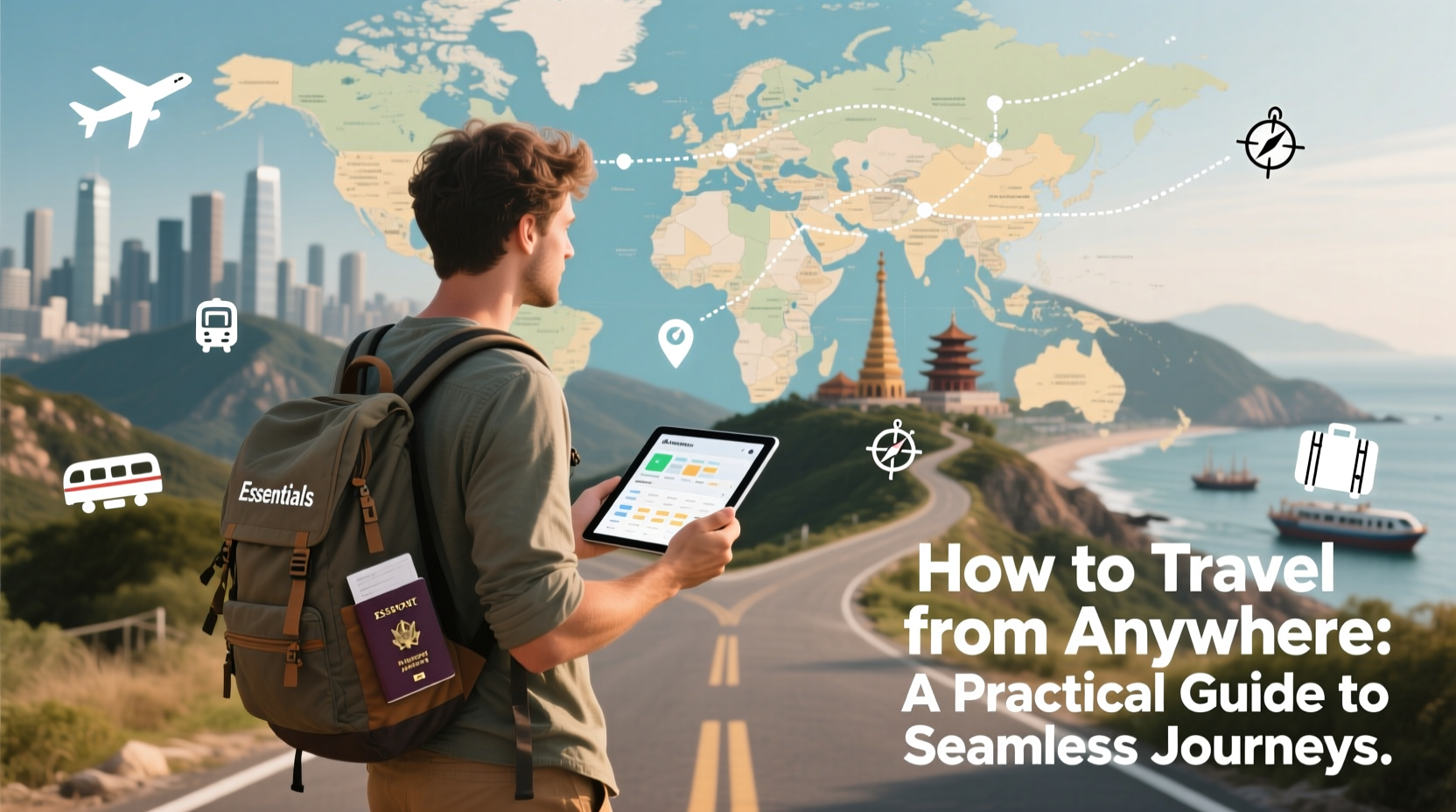
Every successful trip begins with clarity. Ask yourself: Why are you traveling? Is it for leisure, work, relocation, adventure, or cultural immersion? The answer shapes every subsequent decision—from destination selection to transportation mode and budget allocation.
A traveler heading to Kyoto for a two-week cultural retreat has different needs than someone transiting through Istanbul on a long-term overland route. Defining your objective helps filter irrelevant options and focus on what truly matters.
Research Intelligently: Use Free Tools to Map Your Route
In the digital age, comprehensive travel information is freely available. Start with global platforms like Google Maps, Rome2Rio, and OpenStreetMap to compare routes, transit times, and transfer points. These tools allow you to simulate journeys across multiple modes—bus, train, ferry, flight, or even walking.
For off-grid or rural locations, consult local forums (e.g., Reddit’s r/travel or country-specific Facebook groups) or government transport websites. In regions with limited infrastructure, contacting local guesthouses or embassies can yield up-to-date advice on safe and functional routes.
“Knowing your options isn’t about choosing the fastest path—it’s about understanding which path is most reliable under current conditions.” — Lena Torres, International Logistics Coordinator
Step-by-Step Guide to Building Your Route
- Determine your origin and destination.
- Use Rome2Rio to identify all possible combinations of transport.
- Cross-check schedules with official carrier websites (e.g., national rail operators).
- Identify backup routes in case of delays or closures.
- Save offline maps and key contact numbers.
Budget Realistically: Plan for Known and Hidden Costs
Seamless travel hinges on financial preparedness. A realistic budget includes not only tickets and accommodation but also visas, insurance, food, local transport, SIM cards, and emergency funds. Underestimating these leads to stress and last-minute compromises.
Create a tiered budget: minimum (survival), standard (comfortable), and ideal (enhanced experience). Allocate at least 15% as a buffer for unexpected expenses—delays, medical needs, or currency fluctuations.
| Expense Category | Estimated Cost (USD) | Notes |
|---|---|---|
| Round-trip airfare (regional) | $200–$600 | Book 6–8 weeks in advance for best rates |
| Accommodation (per night) | $25–$80 | Hostels vs. guesthouses vs. hotels |
| Daily meals | $15–$30 | Varies significantly by country |
| Local transport | $5–$20/day | Includes buses, metro, taxis |
| Emergency fund (total) | $150+ | Non-negotiable for peace of mind |
Pack Light, Pack Smart: The Minimalist Advantage
The less you carry, the more mobile and adaptable you become. A single carry-on sized bag reduces check-in delays, eliminates baggage fees, and simplifies transfers. Focus on versatility: choose clothing that layers, dries quickly, and suits multiple settings.
- Pack one pair of shoes (comfortable, walkable, all-purpose)
- Roll clothes to save space and reduce wrinkles
- Use compression cubes for organization
- Carry essential documents digitally (PDFs stored offline) and physically
- Include a universal power adapter and portable charger
Pre-Departure Checklist
- Confirm passport validity (minimum 6 months beyond return date)
- Apply for necessary visas or eTAs
- Secure travel insurance with medical coverage
- Notify bank of travel dates to prevent card blocks
- Download offline maps and translation apps
- Pack medications with original labels and prescriptions
- Share itinerary with a trusted contact
Navigate Transitions Smoothly: Master Layovers and Border Crossings
Transit points are where plans often unravel. Airports, bus terminals, and border crossings demand proactive management. Arrive early, especially when crossing international boundaries. Have required documents ready: passport, visa, entry forms, proof of vaccination (if applicable).
When transferring between transport modes, account for processing time. For example, arriving at a rural bus station may require finding a local taxi to reach the next departure point. Always confirm the next leg before leaving the current one.
“At borders, silence is not compliance. Ask questions politely but firmly if procedures are unclear.” — Carlos Mendez, Frequent Overland Traveler
Do’s and Don’ts at Transit Hubs
| Do’s | Don’ts |
|---|---|
| Keep boarding passes and ID accessible | Don’t assume signage is bilingual or accurate |
| Verify gate or platform changes frequently | Don’t leave luggage unattended |
| Ask staff for confirmation of connections | Don’t consume alcohol during layovers |
| Charge devices during long waits | Don’t ignore local safety warnings |
Real-World Example: From Rural Nepal to Lisbon
Sophie, a freelance educator from a mountain village in Nepal, planned a solo trip to attend a conference in Lisbon. With no direct flights nearby, she began by researching regional airports. She took a 6-hour shared jeep to Kathmandu, booked a flight to Doha via Qatar Airways (using a fare comparison tool), then connected to Lisbon.
She used offline Google Maps to navigate the Doha airport transfer, had her Schengen visa approved two weeks prior, and carried a printed invitation letter from the conference organizers. Despite a 4-hour delay, her backup plan included a pre-booked lounge pass and a local SIM for updates. She arrived rested and on time.
Her success came from anticipating friction points and preparing for them—not from luck.
Frequently Asked Questions
Can I travel internationally without a credit card?
Yes, but it limits options. Many booking platforms require credit cards for reservations. Alternatives include prepaid travel cards, bank transfers, or using a trusted friend’s card with reimbursement. Always carry some local cash upon arrival.
What should I do if my flight is canceled last minute?
First, contact the airline for rebooking. If unsatisfied, use your travel insurance to claim accommodations and alternative transport. Having a secondary route mapped in advance (e.g., train or bus options) gives you leverage and independence.
How do I stay safe when traveling alone from an unfamiliar location?
Stay informed: register with your embassy, share live location with contacts, avoid high-risk areas at night, and trust your instincts. Simple precautions—like keeping a whistle or wearing visible identification—can enhance personal security.
Final Thoughts: Begin Where You Are
You don’t need to be in a global hub to start a meaningful journey. Seamless travel is less about geography and more about preparation, adaptability, and confidence. By defining your purpose, researching thoroughly, budgeting wisely, and packing intentionally, you equip yourself to move fluidly across borders and cultures.
The world is navigable—not because everything goes according to plan, but because you’ve planned for things not going according to plan.




 浙公网安备
33010002000092号
浙公网安备
33010002000092号 浙B2-20120091-4
Comments
No comments yet. Why don't you start the discussion?