
A slow-draining or completely clogged shower is one of the most common plumbing frustrations homeowners face. While it’s tempting to reach for chemical drain cleaners or schedule an emergency plumber visit, many blockages can be resolved quickly and safely using natural ingredients already in your kitchen. Not only are these methods cost-effective, but they’re also gentler on your pipes and the environment. From hair buildup to soap scum, this guide walks you through proven techniques to restore proper drainage—without harsh chemicals or expensive service calls.
Why Natural Drain Unclogging Works
Modern plumbing systems are often compromised by repeated use of chemical drain cleaners, which can corrode pipes over time, especially PVC and older metal lines. These products may provide temporary relief but can worsen long-term damage. In contrast, natural solutions like baking soda, vinegar, salt, and boiling water break down organic matter such as hair, grease, and soap residue without harming your pipes.
Natural methods rely on physical and mild chemical reactions. For example, the fizzing action of baking soda and vinegar helps loosen debris, while hot water flushes it away. Salt acts as a mild abrasive when combined with other agents, enhancing scrubbing power inside the pipe walls.
“Household remedies are not only safer for your health and plumbing—they're often just as effective as chemical alternatives for minor to moderate clogs.” — Dr. Lena Patel, Environmental Health Researcher at Green Home Institute
Step-by-Step Guide: How to Unclog Your Shower Drain Naturally
Follow this detailed sequence to clear your shower drain using safe, readily available materials. This process should take no more than 30 minutes and requires minimal tools.
- Remove Visible Debris
Carefully remove the drain cover or strainer. Use tweezers, needle-nose pliers, or even clean fingers to pull out visible hair and gunk trapped near the surface. Dispose of it properly to avoid re-clogging. - Pour Boiling Water (Initial Flush)
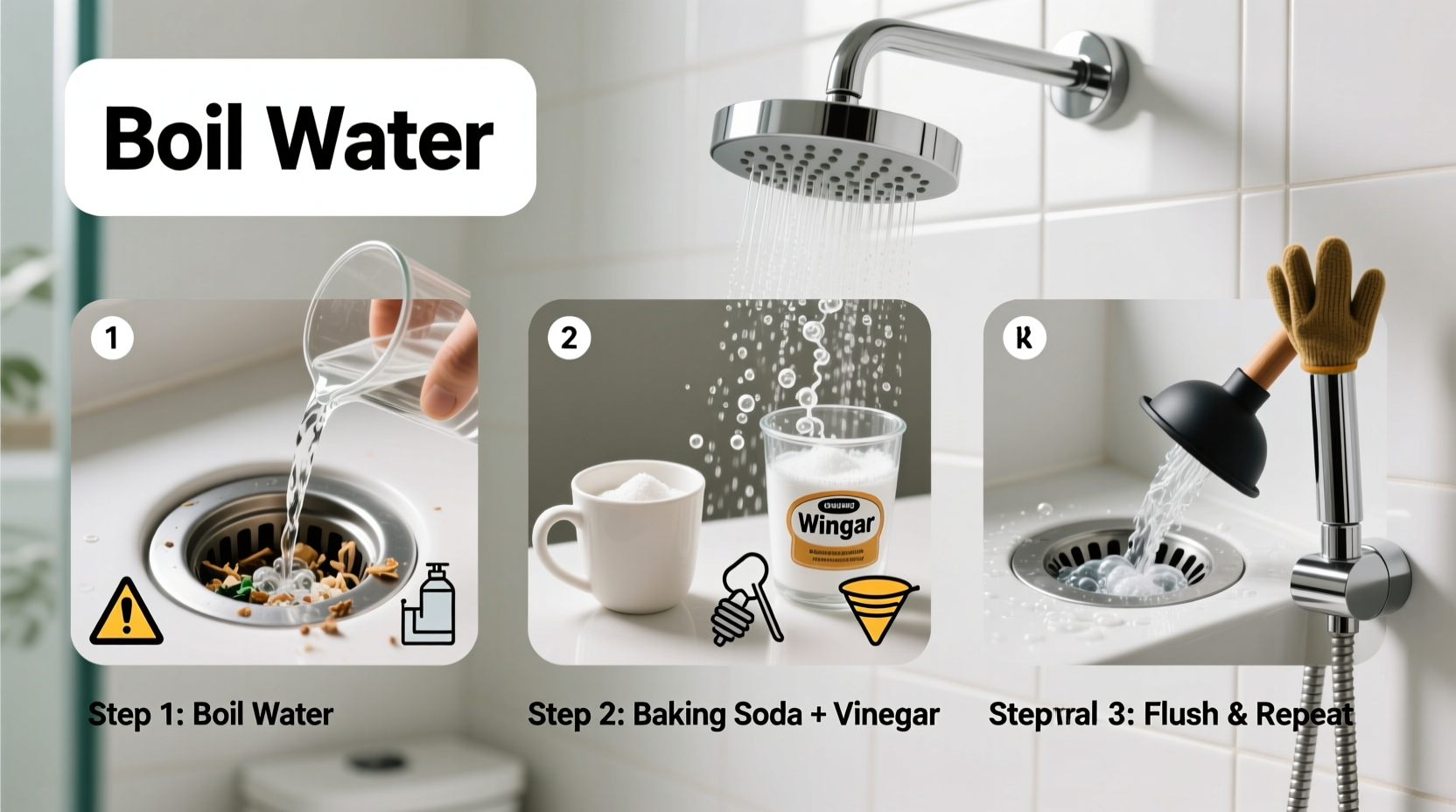
Boil about 4–6 cups of water. Slowly pour it down the drain in two stages, allowing each half to work for 30 seconds before adding the next. This softens grease and begins dissolving light buildup. - Apply Baking Soda and Salt Mixture
Mix ½ cup of baking soda with ¼ cup of table salt. Pour the mixture directly into the drain. The salt enhances abrasiveness, helping dislodge stubborn grime. - Add Vinegar and Let It Sit
Pour 1 cup of white vinegar down the drain. Immediately cover the drain opening with a plug or wet cloth to contain the bubbling reaction. Let the solution sit for 15–30 minutes. During this time, the acid in vinegar reacts with baking soda to create pressure and foam that pushes through clogs. - Final Hot Water Flush
After the waiting period, flush the drain again with another kettle of boiling water. This clears out loosened debris and restores flow. - Test Drain Performance
Run warm water from the showerhead to test drainage speed. If water still drains slowly, repeat the process once more before moving to mechanical options.
Alternative Natural Methods When the Basic Mix Isn’t Enough
If the standard baking soda-vinegar method doesn’t fully resolve the blockage, try these enhanced variations.
Using a Plunger Effectively
Many people assume plungers only work on toilets, but a flat-faced sink plunger works well on showers too.
- Seal the overflow drain (if present) with a wet rag or duct tape to maximize suction.
- Fill the shower base with enough water to cover the rubber cup of the plunger.
- Create a tight seal over the drain and pump firmly 10–15 times.
- Repeat 2–3 times, then flush with hot water.
Baking Soda + Vinegar + Dish Soap Combo
This variation adds dish soap to cut through oily residues.
- Pour ½ cup baking soda into the drain.
- Add 1 tablespoon of liquid dish soap (preferably degreasing type).
- Follow with 1 cup vinegar.
- Cover and wait 15 minutes.
- Flush with boiling water.
The Wire Hanger Snake Method
For deeper clogs caused by hair clumps, fashion a simple drain snake from a wire coat hanger.
- Straighten the hanger, leaving a small hook at one end.
- Insert the hooked end into the drain and gently probe downward.
- Twist and pull upward to extract tangled hair.
- Rinse thoroughly afterward with hot water.
Do’s and Don’ts of Natural Drain Maintenance
| Do’s | Don’ts |
|---|---|
| Use a drain strainer to catch hair and debris | Never pour grease or oil down any drain |
| Flush drains weekly with hot water | Avoid chemical drain cleaners—they erode pipes |
| Perform monthly natural cleaning cycles | Don’t ignore slow drainage; act early |
| Keep spare plungers and hooks on hand | Don’t force tools too deep and risk damaging pipes |
| Dispose of hair and soap scraps in trash | Don’t use excessive amounts of baking soda regularly—it can settle and harden |
Real Example: Sarah’s Stubborn Clog Solved in One Evening
Sarah, a homeowner in Portland, noticed her shower was draining slower every day. After two weeks, standing water remained after each use. She avoided chemical cleaners due to concerns about her septic system. Instead, she tried the baking soda, salt, and vinegar method described above. After removing a large clump of hair manually, she applied the mixture and let it sit overnight. The next morning, she flushed with boiling water—and the drain cleared completely. “I couldn’t believe something so simple worked better than the $12 ‘miracle’ gel I bought last year,” she said. Now, she cleans her drain monthly and uses a mesh strainer daily.
When to Consider Professional Help
While most clogs can be managed naturally, some situations require expert intervention. Recognizing the limits of DIY is crucial to avoiding bigger problems.
Signs you need a plumber include:
- Water backs up into other fixtures (e.g., toilet bubbles when shower runs)
- Foul sewage odors persist despite cleaning
- Multiple drains in the house are slow or blocked
- You’ve tried multiple natural methods with no improvement
- You suspect tree root intrusion or collapsed piping (common in older homes)
In these cases, professionals use camera inspections and motorized augers to diagnose and fix deep-line issues safely.
Prevention Checklist: Keep Your Drain Clear Long-Term
Preventing clogs is easier than fixing them. Follow this checklist to maintain optimal drain function:
- ✅ Install a high-quality drain strainer to trap hair
- ✅ Remove visible hair weekly
- ✅ Run hot water after every few showers
- ✅ Clean the drain monthly using natural solutions
- ✅ Avoid bar soaps high in oils; switch to liquid body wash if possible
- ✅ Educate household members about what not to rinse down the drain (e.g., shaving cream residue, conditioner globs)
- ✅ Schedule biannual deep cleaning even if no issues appear
Frequently Asked Questions
Can baking soda and vinegar damage my pipes?
No, the reaction between baking soda and vinegar is mild and non-corrosive. Unlike chemical cleaners, this combination does not generate heat beyond normal levels and poses no risk to PVC, copper, or PEX piping when used occasionally.
How often should I clean my shower drain naturally?
For best results, perform a full cleaning every 4–6 weeks. Homes with long-haired individuals or frequent shower use may benefit from monthly treatments. A quick hot water flush weekly also helps prevent buildup.
Is it safe to use these methods with a septic system?
Yes—this is one of the biggest advantages. Chemical drain openers can kill beneficial bacteria in septic tanks. Natural methods are septic-safe and environmentally friendly, making them ideal for rural homes and eco-conscious households.
Conclusion: Take Control of Your Drain Health Today
Unclogging a shower drain doesn’t require hazardous chemicals or costly service calls. With basic kitchen staples and a little effort, most blockages can be cleared effectively and safely. The key is consistency: treating your drain with regular care prevents major issues down the line. By adopting natural cleaning habits, you protect your plumbing, reduce environmental impact, and save money over time. Start tonight—remove that strainer, mix up some baking soda and vinegar, and give your drain the refresh it deserves.




 浙公网安备
33010002000092号
浙公网安备
33010002000092号 浙B2-20120091-4
Comments
No comments yet. Why don't you start the discussion?