
Every day, millions of people log into Facebook to connect with friends, share updates, and browse content. But behind the convenience lies a growing concern: privacy. One of the most persistent myths circulating online is whether it’s possible to see who views your Facebook profile. The short answer? No—Facebook does not allow users to track profile visitors. Despite countless third-party apps and websites claiming otherwise, this feature simply doesn’t exist on the platform. Understanding what’s real and what’s misinformation is crucial for protecting your digital footprint.
The Myth of Profile View Tracking
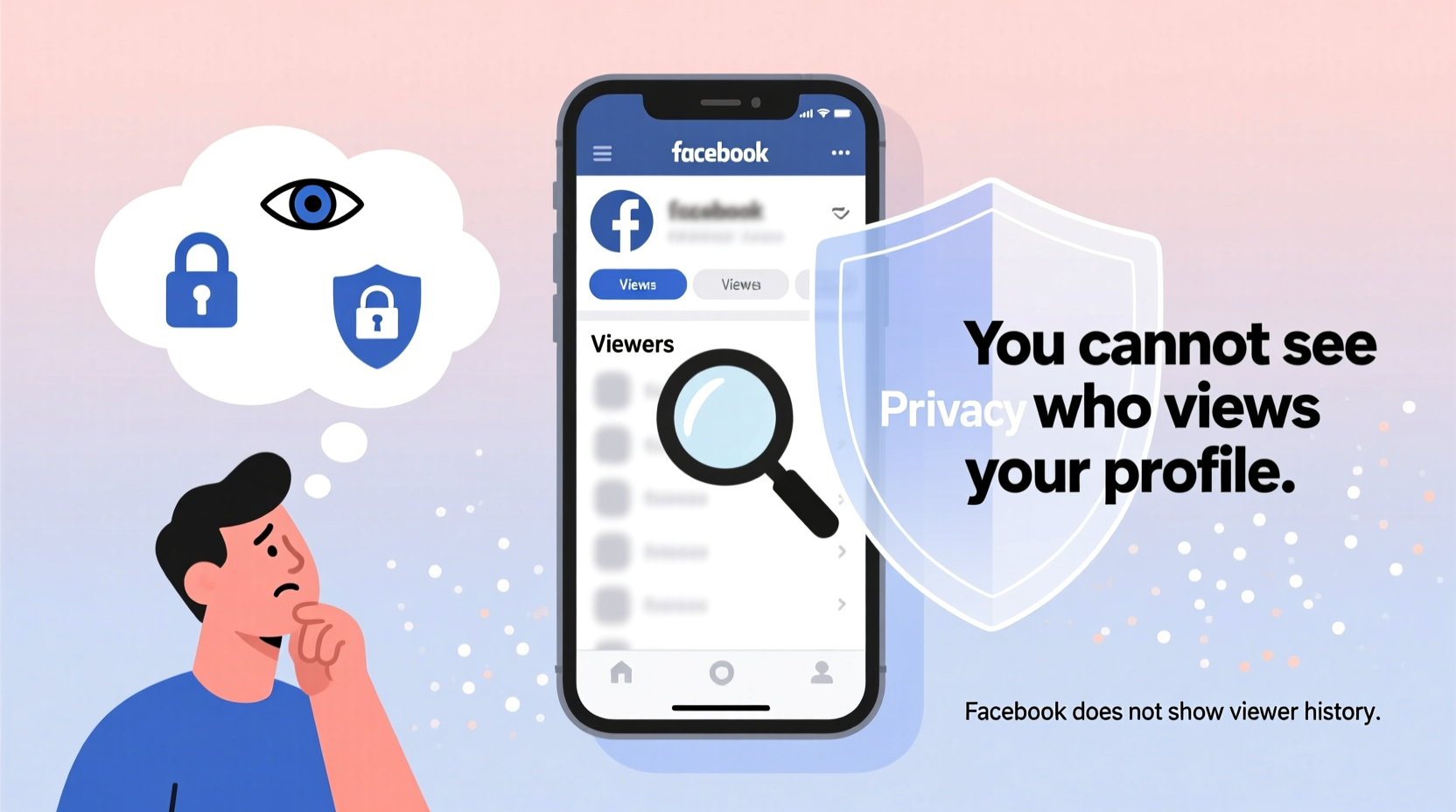
Rumors about seeing who visits your Facebook profile have circulated for over a decade. You’ve likely seen posts or ads promising tools that reveal anonymous stalkers or secret admirers. These claims often come with sensational headlines like “See Who Checked Your Profile!” or “Find Out Who’s Spying on You.” However, these are almost always scams designed to harvest your data or install malware.
Facebook has repeatedly confirmed that it does not provide any feature allowing users to monitor profile views. In fact, Mark Zuckerberg himself addressed privacy concerns in a 2019 statement: “We design our systems so that people don’t know when they’re being looked at unless there’s an explicit interaction, like a message or friend request.”
“We design our systems so that people don’t know when they’re being looked at unless there’s an explicit interaction, like a message or friend request.” — Mark Zuckerberg, Facebook CEO
When you view someone’s profile, they are not notified—nor do you receive notifications when others view yours. Any app or website offering this functionality is either fake or collecting your login credentials under false pretenses.
What Facebook Actually Tracks (And Why It Matters)
While Facebook won’t tell you who viewed your profile, it does collect extensive data about your behavior on the platform. This includes:
- Pages you visit and how long you spend on them
- Posts you interact with (likes, shares, comments)
- Ads you click or ignore
- Your device type, location, and browsing habits
- Friends you interact with most frequently
This information fuels Facebook’s targeted advertising engine. While the platform argues this enhances user experience by showing relevant content, it also raises serious privacy concerns. The more Facebook knows about you, the more valuable your attention becomes to advertisers.
Unlike profile view tracking—which would violate user expectations of anonymity—behavioral tracking happens silently in the background. Most users aren’t fully aware of the depth of data collection, nor how easily it can be used to infer sensitive details such as political views, relationship status, or even mental health patterns.
How to Protect Your Facebook Privacy: A Step-by-Step Guide
You can't control everything Facebook collects, but you can significantly limit exposure through proactive settings management. Follow these steps to strengthen your privacy:
- Review Your Privacy Settings: Go to Settings & Privacy → Privacy Shortcuts → Who Can See My Stuff? Adjust visibility for past and future posts.
- Limit Past Posts: Use the “Limit Past Posts” tool to change old public posts to “Friends Only” in one click.
- Control Tagging: Enable review before tags appear on your timeline to prevent strangers from linking you publicly.
- Disable Face Recognition: Navigate to Settings → Privacy → Face Recognition and turn it off to stop automatic photo tagging.
- Manage Ad Preferences: Visit Ads Settings to limit how your data is used for ad targeting.
- Log Out of Unused Devices: Check active sessions under Security and Login, then log out of unfamiliar devices.
Checklist: Essential Facebook Privacy Actions
- ✅ Set default post audience to \"Friends\"
- ✅ Run \"Limit Past Posts\" once per year
- ✅ Disable facial recognition
- ✅ Review and remove unused apps connected to Facebook
- ✅ Turn off location tracking in mobile app settings
- ✅ Enable two-factor authentication
Real Example: How Misinformation Led to Data Theft
In 2021, a viral link spread across Facebook groups promising to “reveal your profile stalkers.” Thousands of users clicked the link, which redirected them to a fake login page mimicking Facebook’s interface. Once users entered their credentials, attackers gained full access to their accounts.
One victim, Sarah T., a 34-year-old teacher from Ohio, lost control of her account after using the service. “I thought it was a new feature,” she said. “Within hours, my account was sending spam messages to all my friends. It took days to recover.”
This case highlights how curiosity and lack of awareness make users vulnerable. Cybercriminals exploit psychological triggers—like fear of being watched or desire for social validation—to trick people into compromising their own security.
Do’s and Don’ts of Facebook Privacy
| Do | Don’t |
|---|---|
| Use strong, unique passwords and enable two-factor authentication | Share personal details like your address or daily routine publicly |
| Regularly audit apps connected to your Facebook account | Click on links claiming to show profile viewers |
| Customize privacy settings for each post | Accept friend requests from strangers without verification |
| Log out of shared or public devices | Assume Facebook notifies others when you view their profile |
Frequently Asked Questions
Can anyone see if I look at their Facebook profile?
No. Facebook does not notify users when someone views their profile. There is no built-in or third-party method to reliably track profile visitors. If you see such a tool, it is likely a scam.
Are Facebook stalking apps safe to use?
No. Apps that claim to show who viewed your profile typically require your login credentials or access to your account. They may steal your data, post spam, or sell your information to advertisers. Avoid them entirely.
Does Facebook track my activity even if I don’t post much?
Yes. Facebook tracks interactions like scrolling behavior, time spent on pages, ad clicks, and even passive engagement (such as hovering over a post). Even inactive accounts generate behavioral data that can be used for profiling.
Conclusion: Take Control of Your Digital Identity
The idea of knowing who looks at your Facebook profile is tempting—but it's a distraction from the real issue: understanding how your data is used. Instead of chasing myths, focus on what you can control. Customize your privacy settings, stay skeptical of sensational claims, and treat your online presence with the same care as your physical identity.
Privacy isn’t about hiding; it’s about choice. By making informed decisions today, you protect not only your current reputation but also your long-term digital well-being. Don’t wait for a breach to act.




 浙公网安备
33010002000092号
浙公网安备
33010002000092号 浙B2-20120091-4
Comments
No comments yet. Why don't you start the discussion?