
Smartwatches have evolved from simple time-telling devices into powerful personal assistants. Most users only scratch the surface of what their wearable can do—relying on notifications, step tracking, and basic apps. But beneath the standard interface lie dozens of hidden features that can transform your experience: extended battery modes, secret gestures, developer tools, and even offline music controls most never discover.
Whether you own a Samsung Galaxy Watch, Apple Watch, or a Wear OS device from Fitbit or Fossil, manufacturers often embed advanced functions that aren’t advertised in user manuals. These tools improve efficiency, privacy, and customization—but they require specific steps to activate. With a few adjustments and insider knowledge, you can turn your smartwatch into a far more capable tool than you ever imagined.
Access Developer Options and Hidden Menus
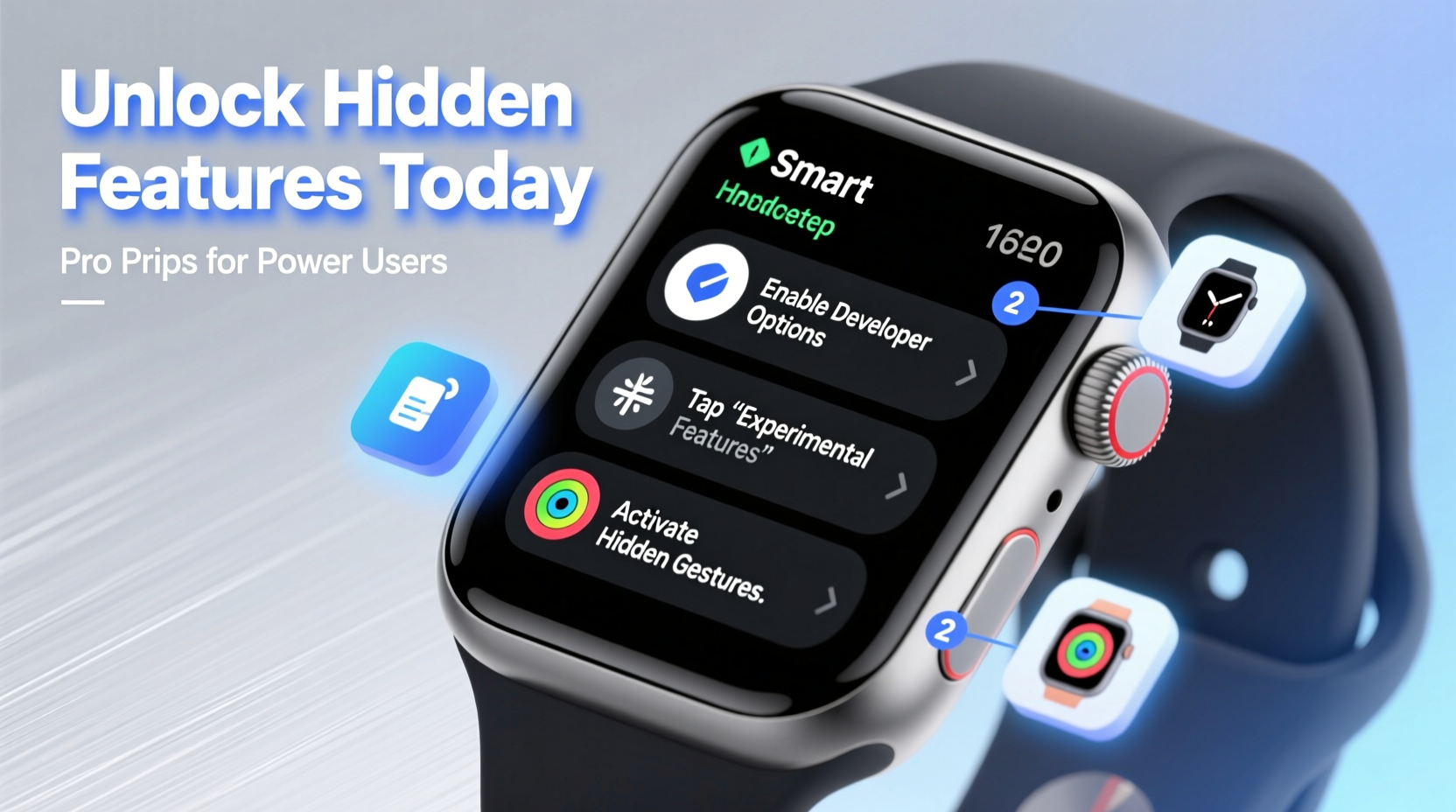
Like smartphones, many smartwatches run on operating systems with built-in developer settings. These options are disabled by default to prevent accidental changes, but unlocking them gives access to diagnostic tools, animation speed tweaks, and experimental features not available through regular menus.
For Wear OS watches (including Pixel Watch and Fossil models), follow this sequence:
- Open the “Settings” app on your watch.
- Scroll down and tap “About.”
- Repeatedly tap the “Build Number” field until a message appears saying “You are now a developer!”
- A new menu labeled “Developer Options” will appear in Settings.
In this menu, you can enable USB debugging (if supported), simulate secondary displays, or adjust window animation scales for faster UI response. While most features cater to developers, some—like enabling debug logs or monitoring sensor data—are useful for troubleshooting performance issues.
Activate Secret Gestures and Shortcuts
Manufacturers often include gesture-based shortcuts that remain undocumented. These allow quick access to functions without navigating menus. For example:
- Samsung Galaxy Watch: Double-tap the edge of the screen when viewing the watch face to activate “Tap Bar,” which lets you assign two frequently used actions (e.g., flashlight, heart rate monitor).
- Apple Watch: Turn your wrist inward toward your body twice in succession to trigger Theater Mode silently—ideal during meetings or movies.
- Fitness-Oriented Watches: Some Garmin and Fitbit models respond to shaking the wrist three times rapidly to start a workout automatically if enabled in accessibility settings.
These gestures reduce reliance on touch input, which is especially helpful during workouts or when wearing gloves. To customize them, visit Accessibility or Shortcut settings within your watch’s configuration panel.
Real Example: Silent Alarms via Gesture Control
Jamal, a nurse working night shifts, needed a discreet way to set reminders without disturbing patients. His Samsung Galaxy Watch allowed him to assign a double-knock gesture to launch a silent timer. By tapping the side of his wrist twice, he could start a five-minute countdown visible only on-screen—no sound, no vibration. This hidden feature, combined with a custom complication showing elapsed time, became essential to his workflow.
“Most people think wearables are just about fitness and calls. But when you unlock gesture logic and contextual automation, they become true productivity partners.” — Dr. Lena Patel, Human-Computer Interaction Researcher at MIT Media Lab
Customize Watch Faces Beyond Default Options
The watch face is the most visible part of your smartwatch—but most users stick to preloaded designs. However, deeper customization unlocks real utility. Third-party platforms like Facer (for Wear OS) or Clockology (for Apple Watch) let you install dynamic faces with embedded tools: moon phase trackers, calendar previews, battery gauges, or even Morse code translators.
Beyond aesthetics, these faces can display live data such as weather alerts, commute ETAs, or unread email counts—all without opening an app. Some advanced faces support tap zones: touching different quadrants of the screen triggers unique actions (e.g., top-left corner launches Spotify, bottom-right starts a breathing session).
To install custom watch faces:
- Download a compatible app (Facer, WatchMaker, or directly from the App Store/Google Play).
- Browse and preview designs tagged “Interactive” or “Functional.”
- Select one and sync it to your watch via Bluetooth.
- Press the crown or power button on your watch and choose the new face from the gallery.
| Platform | Best App for Customization | Key Feature |
|---|---|---|
| Wear OS | Facer | Live complications + gesture zones |
| Apple Watch | Clockology | Scriptable widgets using JavaScript |
| Samsung Galaxy Watch | Galaxy Watch Designer | Create your own face from scratch |
| Garmin | Connect IQ Store | Performance metrics overlays |
Enable Undocumented Health Monitoring Modes
While FDA-approved medical features are strictly regulated, some smartwatches include beta-grade health sensors accessible through indirect methods. For instance, certain Huawei and Oppo watches use optical sensors capable of estimating blood oxygen variability during sleep—though the full report isn’t shown unless accessed via engineering mode.
Similarly, newer Apple Watches can detect high heart rate variability (HRV) trends over time, but detailed graphs are buried under Health app exports. By enabling “Extended Health Logging” (available after linking with a research study via Apple Research app), users gain access to minute-by-minute HRV heatmaps and stress baseline projections.
On Wear OS devices, installing the open-source NanoHealth Monitor app (via sideloading) enables continuous skin temperature sampling every 15 minutes—a function typically reserved for clinical trials. This data can help track menstrual cycles, early illness signs, or recovery patterns post-exercise.
Keep in mind: These readings are not diagnostic. But as trend indicators, they offer valuable context when reviewed alongside lifestyle habits.
Step-by-Step: Unlock Sleep Stage Analysis on Fitbit
Fitbit advertises sleep tracking, but detailed REM/deep/light breakdowns are sometimes hidden behind subscription paywalls. However, long-term users who consistently wear their device to bed may qualify for early access to advanced analytics via firmware updates. Here’s how to check:
- Ensure your Fitbit has updated to the latest firmware (Settings > About > Check Update).
- Go to the Fitbit app on your phone and navigate to Profile > Settings > Advanced Settings.
- Scroll to “Research Features” and toggle on “Sleep Insights Beta.”
- Wear your watch for seven consecutive nights with >4 hours of sleep recorded.
- After one week, return to the Sleep tab—you should see expanded stage duration charts and snoring detection (if supported).
This process leverages Fitbit’s machine learning models trained on longitudinal data. The system gradually unlocks richer analysis once it confirms reliable usage patterns.
Extend Battery Life Using Hidden Power Modes
One of the biggest frustrations with smartwatches is short battery life. While manufacturers promote \"multi-day\" claims, real-world usage often falls short. Fortunately, several unadvertised low-power modes exist across platforms.
- Apple Watch: Enable “Reduced Motion” and disable “Wake on Wrist Raise” to cut background processing. Then go to Accessibility > Touch > AssistiveTouch and set “Double Pinch” to activate Low Power Mode instantly.
- Samsung Galaxy Watch: Dial
*#0*on the watch’s keypad (yes, even without cellular). This opens a service menu where you can force “Ultra Power Saving Mode” independently of phone linkage. - Wear OS: Install the Tasker app paired with Wear Scripting plugin. Create a profile that disables GPS, Wi-Fi, and heart rate scanning between 10 PM and 7 AM unless motion is detected.
These techniques can extend usable life by 30–50%, depending on model and usage.
Checklist: Maximize Your Smartwatch Potential
Use this checklist weekly to ensure you’re leveraging all available capabilities:
- ✅ Enable Developer Options and review animation settings
- ✅ Assign at least one gesture shortcut for daily tasks
- ✅ Install a custom watch face with functional complications
- ✅ Activate any beta health logging available through official apps
- ✅ Test silent alarms or emergency SOS sequences
- ✅ Review battery usage by app and disable energy hogs
- ✅ Back up watch settings before major OS updates
Frequently Asked Questions
Are hidden features safe to use?
Most are completely safe. Features like developer modes or gesture shortcuts don’t modify core firmware. However, avoid rooting or flashing third-party ROMs unless you accept the risk of bricking your device or voiding warranty.
Will unlocking hidden features void my warranty?
Generally, no—as long as you don’t permanently alter system files. Using built-in menus like Developer Options or installing authorized third-party apps does not affect warranty status. However, physical modifications or bootloader unlocking might.
Can I revert changes if something goes wrong?
Yes. Nearly all hidden features can be undone by resetting the watch to factory settings. Always back up your data first through the companion phone app. After reset, simply re-pair and restore preferences.
Take Control of Your Device’s Full Potential
Your smartwatch is more than a notification ticker or pedometer—it’s a compact computer designed to adapt to your life. Yet too many people accept its default behavior without exploring what lies beneath. From silent gesture commands to granular health logging and ultra-efficient power modes, the tools are already on your wrist. All they need is intentional activation.
The technology exists not just to track you, but to empower you. By investing an hour to explore developer menus, customize interfaces, and test undocumented functions, you shift from passive user to active conductor of your digital ecosystem. That kind of mastery doesn’t come from buying the newest model—it comes from understanding the one you already own.




 浙公网安备
33010002000092号
浙公网安备
33010002000092号 浙B2-20120091-4
Comments
No comments yet. Why don't you start the discussion?