
A Pop Socket has become more than just a phone accessory—it’s a functional upgrade and a fashion statement. Whether you're scrolling through social media, taking selfies, or holding your phone during long video calls, a well-placed Pop Socket improves grip, reduces strain, and adds personality to your device. But when your phone is in a case, attaching one properly requires more than just peeling and sticking. Done incorrectly, it may fall off, damage your case, or fail to deliver the support you need. This guide walks you through the best practices for using a Pop Socket on a phone with a case—securely, effectively, and with style.
Understanding How Pop Sockets Work with Phone Cases
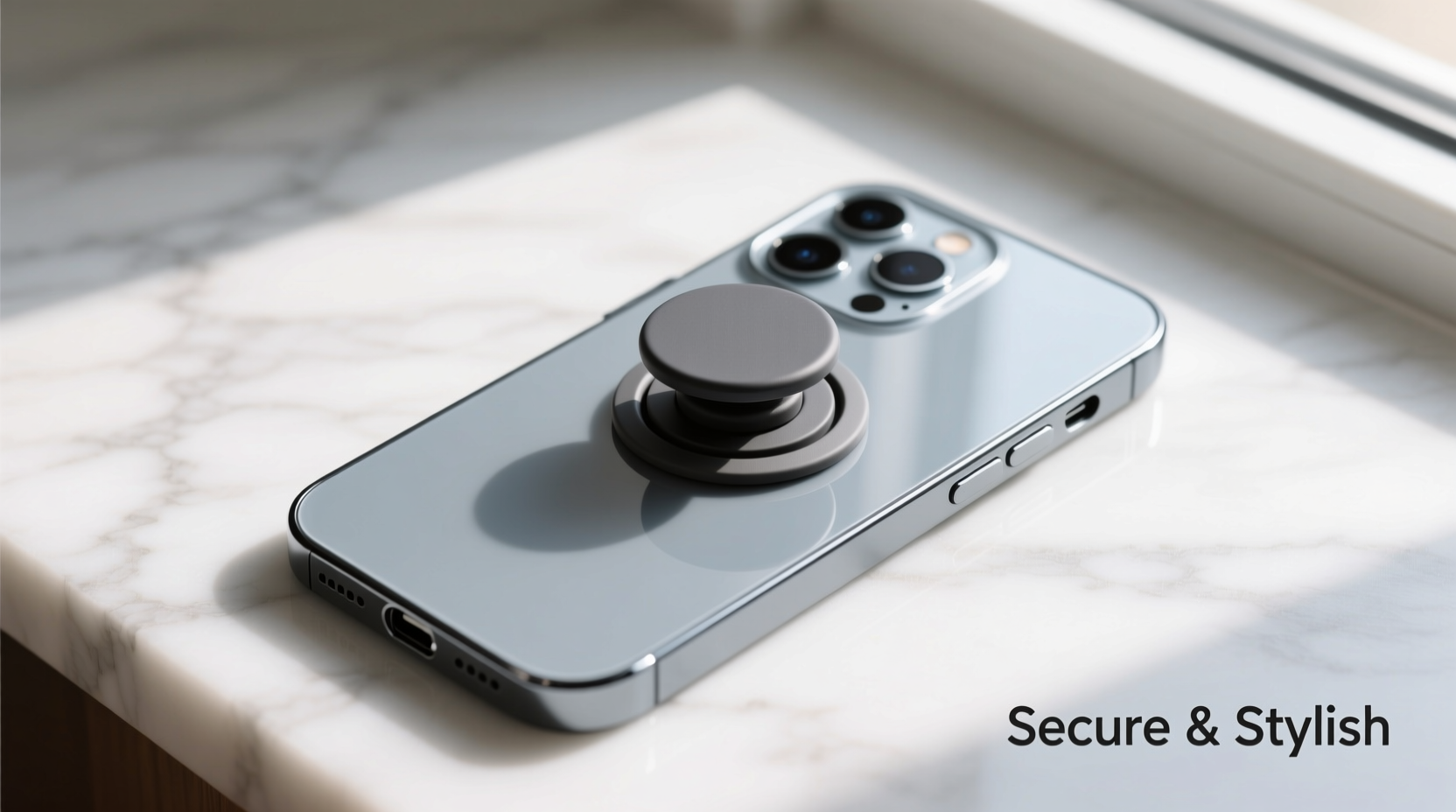
Pop Sockets adhere using a strong gel pad that bonds to flat, non-porous surfaces. Most modern phone cases are made from materials like TPU (thermoplastic polyurethane), polycarbonate, silicone, or leather. While these offer protection, they vary in surface texture and porosity—factors that affect adhesion.
The key challenge lies in ensuring the gel pad makes full contact with a clean, dry, and stable surface. Textured, soft, or curved cases can interfere with this bond. Additionally, some cases have raised edges around the back camera or buttons, which may limit placement options.
Despite these challenges, millions of users successfully use Pop Sockets with cases every day. The secret? Proper preparation, correct positioning, and choosing compatible accessories.
Step-by-Step Guide to Secure Attachment
Attaching a Pop Socket might seem simple, but skipping steps can lead to early detachment. Follow this detailed process to ensure a lasting bond.
- Clean the Surface: Use an alcohol wipe or cotton ball dampened with rubbing alcohol to thoroughly clean the area on the back of your case. Remove dust, oils, and residue. Let it dry completely—this step alone can double adhesive longevity.
- Choose the Right Spot: Center the Pop Socket vertically along the spine of the phone, midway between the top and bottom. Avoid near the charging port or camera bump unless your case has a perfectly flat zone there.
- Peel and Place: Slowly peel the protective film from the gel pad. Align the Pop Socket carefully—once contact is made, repositioning weakens the bond.
- Press Firmly: Apply steady pressure for 30 seconds. Don’t just tap it; press down with the palm of your hand to maximize surface contact.
- Wait Before Use: Allow at least 1–2 hours before expanding or using the Pop Socket. For optimal bonding, wait overnight before heavy use.
This method ensures maximum adhesion strength, especially critical when using thicker or textured cases.
Best Placement Options Based on Case Type
Not all phone cases are created equal. The material and design influence where and how well a Pop Socket will stick. Here's a breakdown by common case types:
| Case Type | Adhesion Quality | Recommended Placement | Notes |
|---|---|---|---|
| Hard Plastic (Polycarbonate) | Excellent | Center spine or lower third | Smooth surface provides ideal bonding; avoid glossy coatings that may degrade over time. |
| Silicone | Poor to Fair | Not recommended | Gel doesn’t bond well to flexible silicone; prone to sliding and detachment. |
| TPU (Clear or Matte) | Good | Middle of back panel | Ensure surface isn't too soft; matte finishes often work better than glossy. |
| Leather or Fabric | Fair | Only if backing is rigid | Porous materials absorb adhesive strength; consider adding a slim metal plate underneath. |
| Rugged/Dual-Layer | Variable | Avoid shock-absorbing zones | Stick only to the hard outer shell, not the rubberized inner layer. |
For cases with poor adhesion potential, consider upgrading to a compatible model or using an adapter disc designed for Pop Sockets.
Styling Your Pop Socket: Function Meets Fashion
Beyond utility, Pop Sockets offer a canvas for self-expression. With hundreds of designs—from minimalist patterns to licensed artwork—you can match your accessory to your mood, outfit, or season.
To style your Pop Socket thoughtfully:
- Coordinate with your case: Choose colors or themes that complement rather than clash. A marble-patterned case pairs well with metallic or neutral-toned sockets.
- Rotate seasonally: Keep multiple tops and swap them out like jewelry. Floral designs for spring, bright hues for summer, deep tones for winter.
- Use limited editions: Artists and brands frequently release collectible versions. These can reflect hobbies, fandoms, or travel memories.
- Customize with photos: Some models allow you to insert personal images under a transparent cap, turning your socket into a tiny digital frame.
Remember, style doesn’t have to compromise function. A beautifully designed Pop Socket should still lie flat when collapsed and expand smoothly when needed.
Real Example: From Frustration to Perfect Fit
Sophie, a freelance photographer based in Portland, struggled with her Pop Socket falling off within days. She used a popular silicone case known for its soft touch but didn’t realize the material was sabotaging the adhesive. After three replacements, she switched to a hybrid polycarbonate case with a smooth center panel. She cleaned the surface with alcohol, applied the socket carefully, and waited 12 hours before use. It’s been securely attached for over seven months—even surviving drops and daily pocket carry.
“I thought the issue was the brand,” she said. “But it was the case all along. Once I matched the right case with proper prep, everything changed.”
Her experience highlights a common misconception: people blame the Pop Socket when, in fact, compatibility and application matter most.
Expert Insight: What Designers Recommend
“Proper surface prep is 80% of the battle. Even the strongest adhesive fails on oily or uneven surfaces. We always recommend pairing our products with hard-shell cases for longest wear.” — Jordan Lee, Product Engineer at PopSockets LLC
This insight underscores the importance of understanding the science behind adhesion. The gel pad works by creating molecular-level contact. Any barrier—dust, oil, texture—reduces that connection, leading to premature failure.
Troubleshooting Common Issues
Even with care, problems can arise. Here’s how to handle frequent concerns:
- Socket keeps detaching: Re-clean the surface and reapply. If repeated failures occur, the case material may be incompatible.
- Gel feels sticky or collects lint: Rinse the gel under lukewarm water, let it air dry completely, then reattach. Do this monthly for maintained performance.
- Socket wobbles when expanded: This usually means partial adhesion. Press down firmly again or reapply entirely.
- Leaves residue when removed: Use a small amount of rubbing alcohol on a cloth to gently lift any leftover adhesive without damaging the case.
If your Pop Socket loses stickiness over time, don’t discard it. Most can be rehydrated by rinsing the base and allowing it to dry naturally before reuse.
Checklist: Applying a Pop Socket on a Cased Phone
Follow this checklist before, during, and after installation to ensure success:
- ✅ Confirm your case has a flat, non-flexible surface
- ✅ Clean the attachment area with alcohol and dry thoroughly
- ✅ Decide on placement (center spine is safest)
- ✅ Peel backing slowly and align precisely
- ✅ Press down firmly for 30 seconds
- ✅ Wait at least 1–2 hours before first use
- ✅ Test stability gently before relying on it for support
- ✅ Store extra tops in a dry container for future swaps
Frequently Asked Questions
Can I move my Pop Socket to a new case?
Yes. Most Pop Sockets are reusable. To transfer, slowly peel it off, rinse the gel pad with water, let it dry for 10–15 minutes, then apply to the new case following the standard process. Note: Each removal slightly reduces adhesive strength.
Will a Pop Socket interfere with wireless charging?
It depends on thickness and placement. If the socket is directly over the charging coil (usually center-bottom), it may disrupt the connection. Placing the socket higher up or removing it during charging resolves this. Slimmer models are less likely to interfere.
Are Pop Sockets safe for all phone models?
Yes, as long as they’re attached to the case, not the phone itself. They add negligible weight and don’t affect internal components. However, avoid placing them over vents, microphones, or ports to prevent accidental blockage.
Final Thoughts: Elevate Your Grip and Style
A Pop Socket is more than a grip aid—it’s a smart fusion of ergonomics and personal expression. When used correctly on a phone with a case, it enhances usability, reduces drop risk, and reflects your individuality. The key is respecting the mechanics of adhesion while embracing creative customization.
By choosing the right case, preparing the surface meticulously, and maintaining the accessory over time, you ensure both durability and delight. Whether you're commuting, working remotely, or capturing memories, a securely mounted Pop Socket becomes a seamless extension of your phone experience.




 浙公网安备
33010002000092号
浙公网安备
33010002000092号 浙B2-20120091-4
Comments
No comments yet. Why don't you start the discussion?