
As the holiday season approaches, millions of homes come alive with vibrant displays of Christmas lights. Behind every dazzling strand is careful installation—and often overlooked, a real risk: electrostatic discharge (ESD). While LED gloves are commonly associated with festive fashion or performance art, they can also serve a practical role in protecting delicate light circuits from static damage during handling. Understanding how to use LED gloves effectively—not just for show, but as part of an ESD-safe workflow—can extend the life of your lighting display and prevent frustrating mid-season failures.
This guide explores the science behind static electricity and its impact on Christmas lights, explains how certain types of LED gloves can mitigate that risk, and provides actionable steps for safe, efficient decoration setup. Whether you're a homeowner, seasonal decorator, or part of a commercial display team, integrating proper gear and technique ensures reliability and safety throughout the holidays.
The Hidden Danger: Static Electricity and Christmas Lights
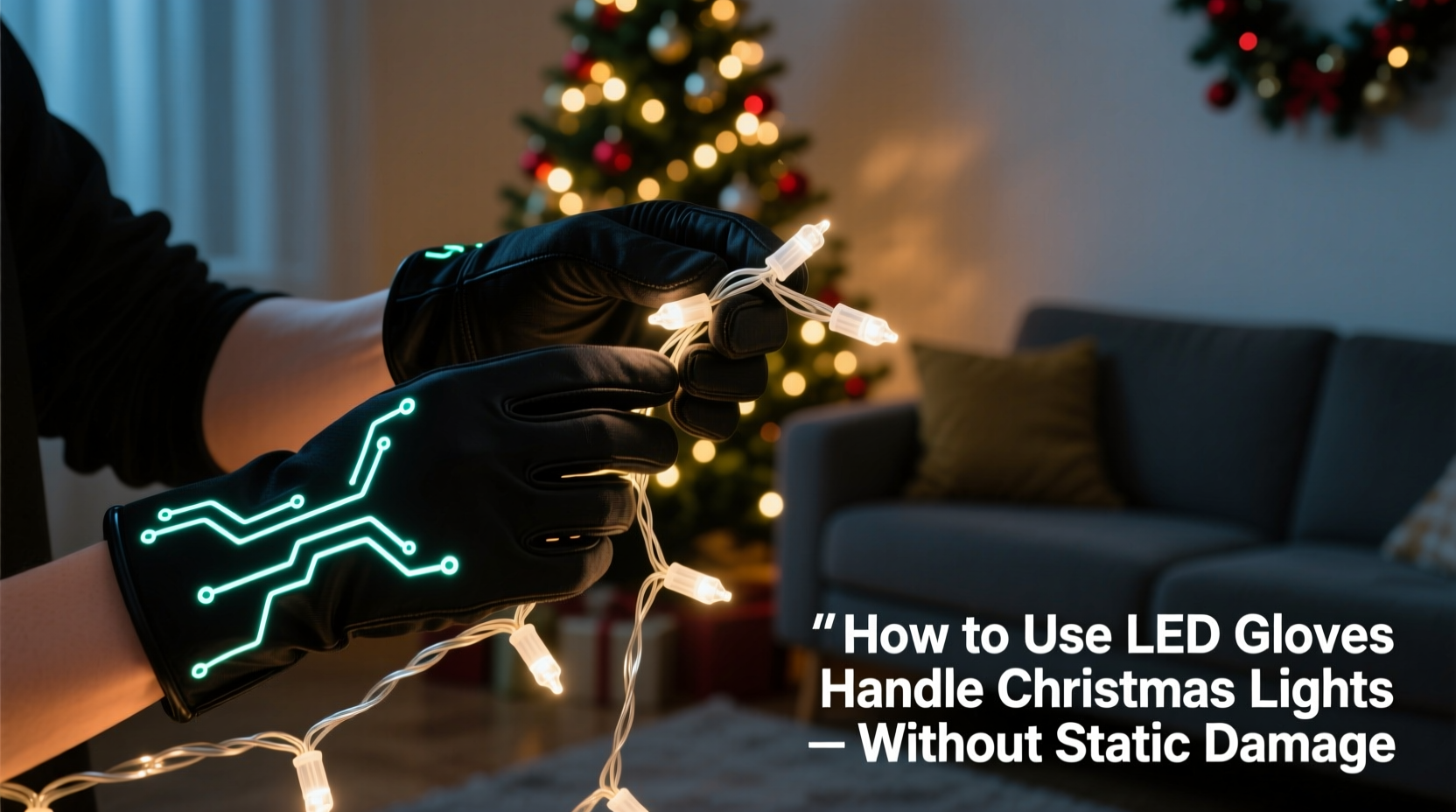
LED Christmas lights are energy-efficient and long-lasting, but their semiconductor components are vulnerable to electrostatic discharge. A static shock too small for you to feel—sometimes as low as 30 volts—can degrade or destroy the microchips inside LEDs. This damage may not cause immediate failure; instead, it can lead to flickering, dimming, or shortened lifespan over time.
Static buildup occurs naturally when materials rub together—a phenomenon known as triboelectric charging. Common winter clothing like wool sweaters, synthetic jackets, and rubber-soled shoes are prime contributors. When you reach into a box of tangled lights wearing such attire, your body can carry thousands of volts. Touching a light strand allows that charge to jump, potentially damaging internal circuitry.
Traditional anti-static measures include grounding straps and conductive mats, typically used in electronics manufacturing. However, these aren’t practical for most homeowners. That’s where purpose-selected LED gloves come in—not because they emit light, but because some models are designed with static-dissipative or conductive fibers that safely channel charges away from sensitive components.
Choosing the Right LED Gloves for ESD Protection
Not all LED gloves offer protection against static damage. Many are purely decorative, featuring battery-powered lights woven into the fabric for visual effect. These do nothing to prevent ESD and may even increase risk if made from insulating synthetic materials.
To be effective, LED gloves must incorporate conductive threads—typically carbon fiber, silver-coated nylon, or stainless steel blends—that create a continuous path from fingertip to wrist, allowing static charges to dissipate gradually rather than discharge suddenly.
Look for gloves marketed as “ESD-safe,” “anti-static,” or “static-dissipative.” Some high-end models combine both illuminated elements and protective functionality. In these hybrids, the lighting circuit is electrically isolated from the conductive layer, ensuring visibility without compromising safety.
“Even minor ESD events accumulate over time, leading to premature failure in LED strings. Using properly grounded, conductive gloves reduces this risk significantly.” — Dr. Alan Reeves, Electrical Engineer & Holiday Lighting Consultant
Key Features to Look For
- Conductive Thread Integration: Ensure the palm and fingertips contain embedded conductive fibers.
- Wrist Grounding Strap: A metal snap or cord that connects to a grounded surface (like a metal ladder frame or grounded outlet screw).
- Low Resistance Rating: Optimal gloves measure between 10^5 and 10^9 ohms—enough to slow discharge without blocking it entirely.
- Durable Insulation Over Lights: The LED elements should not interfere with the glove’s static-dissipative properties.
Step-by-Step Guide to Using LED Gloves Safely During Light Installation
Using LED gloves correctly involves more than just putting them on. It requires a systematic approach to minimize static buildup and ensure safe dissipation. Follow this timeline for optimal results:
- Prepare Your Environment
Work indoors if possible, ideally in a room with humidity above 40%. Dry air increases static risk. Use a humidifier if needed. - Turn Off Power Sources
Ensure all light strands are unplugged before handling. Even low-voltage LEDs can be damaged by ESD while connected to power adapters. - Discharge Yourself First
Touch a grounded metal object—like a faucet, appliance chassis, or electrical outlet cover screw—to neutralize existing static. - Put On the Gloves Properly
Slide hands in fully, ensuring conductive areas make contact with skin. Avoid wearing thick insulating socks underneath unless the design accounts for it. - Attach the Grounding Strap
Clip the glove’s grounding wire to a verified earth point. If working outdoors, attach to a metal stake driven into damp soil or a grounded ladder. - Handle Lights Gently
Grasp strands by the plastic housing, not the wires or bulbs directly. Move deliberately to avoid friction-induced charging. - Test Before Final Placement
After connecting strands, plug in briefly to test function. Recheck after adjustments. - Remove Gloves Safely
Detach the grounding strap first, then remove gloves slowly to prevent recharging through motion.
Do’s and Don’ts: Best Practices for Static-Safe Decorating
| Do | Don’t |
|---|---|
| Use ESD-safe gloves with grounding capability | Use regular LED fashion gloves without conductive features |
| Work on hard flooring (wood, tile) instead of carpet | Walk across rugs or synthetic mats while handling lights |
| Keep lights in anti-static bags until ready to install | Store strands loosely in cardboard or plastic bins |
| Maintain relative humidity above 40% | Decorate in extremely dry conditions without mitigation |
| Ground yourself frequently during long installations | Assume one initial touch is enough for the entire session |
Real Example: Preventing Season-Long Issues at a Community Display
In Parkville, Missouri, the annual Winter Lights Festival features over 500,000 LEDs across 20 themed zones. In 2022, organizers noticed an unusually high rate of early burnouts—nearly 12% of lights failed within the first two weeks. An investigation revealed that volunteers were installing strands barehanded or wearing standard knit gloves, often after walking across dry grass or concrete in synthetic footwear.
The following year, the team introduced ESD-safe protocols: all handlers wore hybrid LED gloves with silver-thread conductivity and wrist grounding clips attached to temporary grounding rods. They also implemented mandatory pre-work grounding stations and limited shifts to reduce fatigue-related lapses.
The result? Failure rates dropped to under 3%, saving thousands in replacement costs and reducing maintenance labor. More importantly, the display remained consistently bright throughout the six-week run. One volunteer noted, “We could actually see the difference—fewer flickers, no random dark sections. It felt more professional.”
Checklist: ESD-Safe Christmas Light Handling Routine
Use this checklist every time you install or repair holiday lights:
- ☐ Check indoor humidity level (aim for 40–60%)
- ☐ Gather ESD-safe gloves with functional grounding straps
- ☐ Identify a reliable ground point (faucet, outlet screw, metal stake)
- ☐ Unplug all light strands before handling
- ☐ Discharge personal static by touching grounded metal
- ☐ Wear gloves and connect grounding strap securely
- ☐ Handle lights by insulated bases, not wires or bulbs
- ☐ Test lights after connection but before final mounting
- ☐ Store unused strands in anti-static packaging
- ☐ Clean gloves after use to maintain conductivity
Frequently Asked Questions
Can I use regular work gloves instead of specialized LED gloves?
Most standard work gloves—especially those made from rubber, latex, or thick polyester—are insulators that trap static charge. They offer no protection and may worsen the problem. Only gloves specifically engineered with static-dissipative materials should be used for handling sensitive electronics like LED lights.
Do LED gloves need batteries to prevent static damage?
No. The illumination function is separate from ESD protection. As long as the conductive fibers are intact and properly grounded, the gloves will dissipate static even if the lights are off or the batteries are removed. However, illuminated versions can improve visibility during evening installations, adding practical value.
How do I clean and maintain ESD-safe LED gloves?
Hand wash in lukewarm water with mild detergent. Avoid bleach or fabric softeners, which can coat conductive fibers and reduce effectiveness. Air dry away from direct heat. Inspect stitching and grounding connections monthly. Replace if fraying occurs near critical contact points.
Conclusion: Shine Bright Without the Shock
Using LED gloves to handle Christmas lights isn’t just about making a visual statement—it’s about adopting smarter, safer decorating habits. By selecting gloves designed for both illumination and static control, grounding yourself properly, and following disciplined handling procedures, you protect your investment and ensure a flawless display from Thanksgiving to New Year’s Day.
The holiday spirit thrives on consistency and joy, not troubleshooting flickering strands or replacing damaged sections. With the right tools and knowledge, you can spend less time repairing and more time enjoying the magic of the season. Make this year’s setup the most reliable yet—start with your hands.




 浙公网安备
33010002000092号
浙公网安备
33010002000092号 浙B2-20120091-4
Comments
No comments yet. Why don't you start the discussion?