
Every year, millions of households face the same frustrating ritual: untangling knotted Christmas lights after months in storage. The struggle is real—and entirely avoidable. One simple, cost-effective solution has gained traction among decorators and organizers alike: using mesh baskets. These breathable, flexible containers are more than just laundry accessories—they’re powerful tools for preserving delicate light strands and streamlining seasonal prep. When used correctly, mesh baskets can dramatically reduce tangles, protect wiring, and make decorating faster and safer.
This guide explores how to leverage mesh baskets specifically for managing tangled Christmas light strands. From selecting the right basket size to wrapping techniques that prevent future snarls, you’ll learn a system that transforms chaos into order—one strand at a time.
Why Mesh Baskets Work for Christmas Light Storage
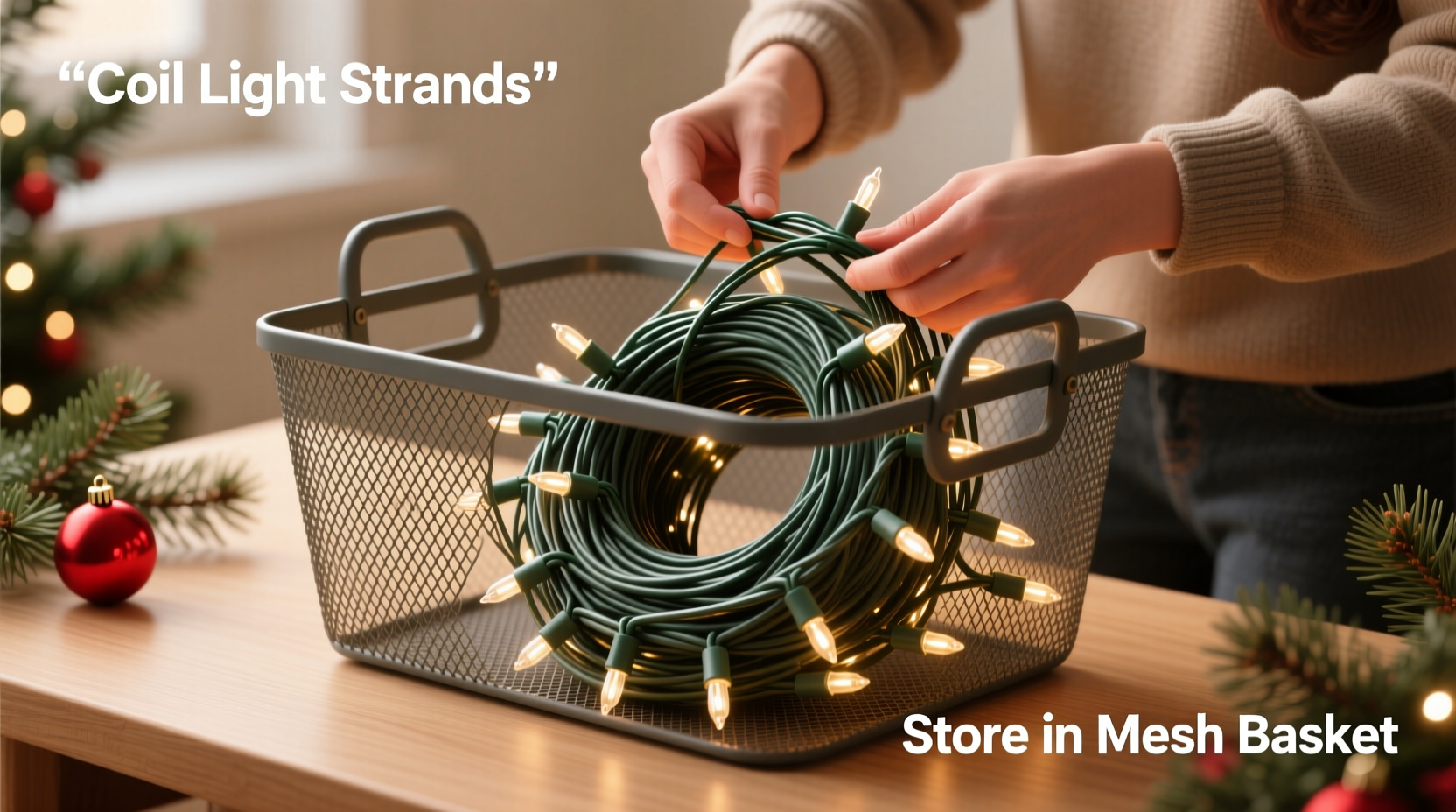
Traditional storage methods—dumping lights into boxes or loosely wrapping them around cardboard—often lead to crushed bulbs, frayed wires, and complex knots. Mesh baskets offer a structural yet flexible alternative. Their open weave allows airflow, preventing moisture buildup that can corrode electrical components over time. Unlike plastic bins, they don’t trap humidity, which is especially important if you store decorations in basements, garages, or attics.
Beyond breathability, mesh baskets provide visibility. You can see exactly which set of lights is inside without unpacking multiple containers. This saves time during setup and breakdown seasons. Most mesh baskets also feature reinforced handles, making them easy to carry and hang on shelving units or closet rods.
“Proper storage isn’t just about convenience—it’s about safety and longevity. Using ventilated containers like mesh baskets helps prevent insulation degradation and short circuits.” — Dr. Alan Reeves, Electrical Safety Consultant, National Holiday Lighting Association
The flexibility of mesh material means it can conform slightly to the shape of coiled lights, reducing internal pressure points that might damage wire casings. And because they're lightweight and collapsible when not in use, they take up minimal space off-season.
Step-by-Step Guide to Storing Tangled Lights in Mesh Baskets
If you already have tangled strands, don’t throw them out—use the basket as part of your recovery and reorganization process. Follow these steps to restore order and prevent future issues.
- Unplug and inspect each strand: Before doing anything, ensure all lights are unplugged. Check for broken bulbs, exposed wires, or melted sockets. Discard any strand with visible damage to avoid fire hazards.
- Untangle carefully: Lay the strand flat on a clean surface like a table or floor. Begin at one end and gently work through knots using your fingers. Avoid pulling sharply; instead, loosen loops gradually. For stubborn tangles, try holding one loop steady while feeding adjacent sections through.
- Clean lightly if needed: Wipe down the wire with a dry microfiber cloth to remove dust. Do not use water or cleaning solutions unless specified by the manufacturer.
- Wrap using the hand-and-elbow method: Hold the plug end securely in one hand (usually your non-dominant). Use your other hand to loop the strand around your elbow and opposite hand, creating consistent coils approximately 12–18 inches wide. Keep tension even but not tight.
- Secure the coil: Once fully wrapped, slide the bundle off your arm. Use twist ties, velcro straps, or reusable zip ties to fasten the coil at two or three points. Avoid metal wire, which can cut into insulation.
- Place in mesh basket: Gently lower the secured coil into the basket. If the basket is large enough, you can store multiple small strands together—but keep different types (e.g., warm white vs. multicolor) separate.
- Label clearly: Attach a waterproof label indicating length, color, bulb type, and location where used (e.g., “Front Porch – 50ft Warm White LEDs”).
Choosing the Right Mesh Basket for Your Needs
Not all mesh baskets are created equal. Size, durability, and design features impact their effectiveness for light storage. Consider the following factors before purchasing:
- Size: Small baskets (10” x 8”) suit mini LED strands under 35 feet. Medium (14” x 10”) handle most standard 50–100 foot sets. Large (18” x 12”) accommodate heavy-duty C9 strands or longer runs.
- Material: Look for reinforced polyester or nylon mesh with stitched seams. Avoid flimsy, thin fabrics that tear under weight.
- Handles: Double-stitched handles support heavier loads. Some models include padded grips for comfort during transport.
- Stackability: Flat-bottomed baskets stack neatly on shelves. Round or oval designs may roll and waste vertical space.
- Foldability: Collapsible options save storage room when empty but may lack rigidity for long-term stacking.
| Basket Type | Best For | Limitations |
|---|---|---|
| Standard Rectangular Mesh Basket | Most users; balances capacity and stability | Less portable than smaller models |
| Folding Laundry-Style Mesh Bag | Lightweight strands; limited storage space | Lacks structure; may slump under load |
| Heavy-Duty Garden Harvest Basket | Large commercial-grade light sets | Bulkier; harder to find indoors |
| Hanging Closet Organizer (Mesh Cubes) | Small strands; vertical space maximization | Lower weight tolerance per compartment |
For most homeowners, a medium-sized rectangular mesh basket offers the best balance of function and availability. They’re commonly sold in home organization or laundry sections and typically cost between $8 and $15.
Real Example: How a Busy Family Reduced Setup Time by 70%
The Thompson family decorates their home annually with over 1,200 feet of Christmas lights—on eaves, trees, railings, and lawn displays. In past years, setup took nearly eight hours across two weekends, mostly due to untangling and testing faulty strands.
In January, they committed to reorganizing their entire lighting collection. They purchased six medium mesh baskets, sorted lights by zone (front yard, roofline, porch), and rewound each strand using the elbow-wrap technique. Each basket was labeled with a laminated tag detailing voltage, length, and usage notes (“Flickers near end—replace soon”). Damaged strands were retired.
The following December, setup took just under two and a half hours. Because each strand was pre-coiled, protected, and clearly identified, they avoided guesswork and frustration. The children could help carry baskets outside without risk of crushing lights. Even mid-season adjustments became easier—when one section dimmed, they quickly located the correct replacement strand from storage.
“It changed our whole experience,” said Sarah Thompson. “What used to feel like a chore now feels joyful. We even added more lights last year because we knew they’d be easy to manage.”
Common Mistakes to Avoid
Even with the right tools, improper use can undermine the benefits of mesh baskets. Steer clear of these frequent errors:
- Overstuffing the basket: Jamming multiple thick strands into one container creates pressure that can deform coils and pinch wires. Stick to one primary strand per basket, or two only if both are thin and short.
- Using rubber bands: While convenient, rubber bands degrade over time, becoming sticky or brittle. They can leave residue or snap unexpectedly. Opt for fabric-covered twist ties or velcro wraps instead.
- Storing while damp: Never place lights in a basket immediately after outdoor use if they’re wet. Moisture trapped inside promotes mold and corrosion. Allow strands to air-dry completely indoors first.
- Neglecting labels: Without identification, you lose the efficiency advantage. A basket full of identical-looking white lights becomes a guessing game come installation day.
- Ignoring bulb orientation: For directional mini-lights (where bulbs face one way), maintain consistent winding direction so all bulbs point the same way when uncoiled.
Checklist: Preparing Christmas Lights for Mesh Basket Storage
Follow this checklist every post-holiday season to ensure optimal results:
- ✅ Unplug all strands and bring indoors
- ✅ Inspect for damaged bulbs, frayed wires, or cracked sockets
- ✅ Test functionality using an outlet or battery tester
- ✅ Untangle completely and lay flat
- ✅ Clean gently with a dry cloth
- ✅ Wind using hand-and-elbow method (12–18” diameter coils)
- ✅ Secure with velcro or twist tie at 2–3 intervals
- ✅ Label with details: color, length, location, notes
- ✅ Place in appropriately sized mesh basket
- ✅ Store in cool, dry, rodent-free area away from direct sunlight
FAQ: Frequently Asked Questions
Can I wash a mesh basket if it gets dirty?
Yes, most mesh baskets can be hand-washed with mild detergent and lukewarm water. Rinse thoroughly and air-dry completely before reuse. Avoid machine washing unless the care label specifies it’s safe, as agitation may weaken stitching.
Are mesh baskets safe for LED lights?
Absolutely. In fact, LEDs benefit even more from proper storage due to their thinner wiring and sensitivity to bending. Mesh baskets prevent sharp creases and reduce stress on solder points, helping maintain circuit integrity over time.
What should I do if I don’t have time to untangle now?
If immediate untangling isn’t feasible, place the tangled strand in a mesh basket anyway—but mark it clearly as “Tangled – Needs Repair.” This isolates it from functional sets and ensures it won’t damage others. Schedule a repair session in spring or summer when time is less pressured.
Maximize Longevity and Minimize Stress
Christmas lights are an investment—both financially and emotionally. They contribute to cherished traditions, festive ambiance, and neighborhood cheer. Treating them with care extends their usable life, often doubling or tripling the number of seasons they perform reliably.
Mesh baskets are a small upgrade with outsized returns. They turn disorganized tangles into manageable, labeled systems. They protect against environmental harm and simplify logistics. Most importantly, they preserve the joy of decorating by removing one of its biggest pain points.
Start this year with intention. As you take down your lights, resist the urge to toss them into a box. Instead, invest a few extra minutes in proper winding, protection, and placement. Choose durable baskets, label meticulously, and store thoughtfully. Next holiday season, you’ll open that basket and pull out a perfect coil—ready to shine again.




 浙公网安备
33010002000092号
浙公网安备
33010002000092号 浙B2-20120091-4
Comments
No comments yet. Why don't you start the discussion?