
There’s a reason the scent of pine is synonymous with holiday warmth: it triggers deep-seated memories of childhood winters, crackling fires, and family gatherings. Yet many people struggle to sustain that authentic, crisp, forest-fresh aroma beyond the first few days—especially as cut trees dry out or artificial ones remain scentless by design. Sprays fade in hours. Candles pose fire hazards near dry branches. Simmer pots demand constant monitoring. Scent diffusers, when used intentionally and safely, offer the most consistent, controllable, and long-lasting solution. This isn’t about masking odors—it’s about recreating an immersive, natural sensory experience that evolves gracefully over time. Below, you’ll find field-tested methods grounded in aromatherapy science, HVAC principles, and real-world home testing—not marketing claims.
Why Pine Scent Fades—and Why Diffusers Are the Smartest Fix
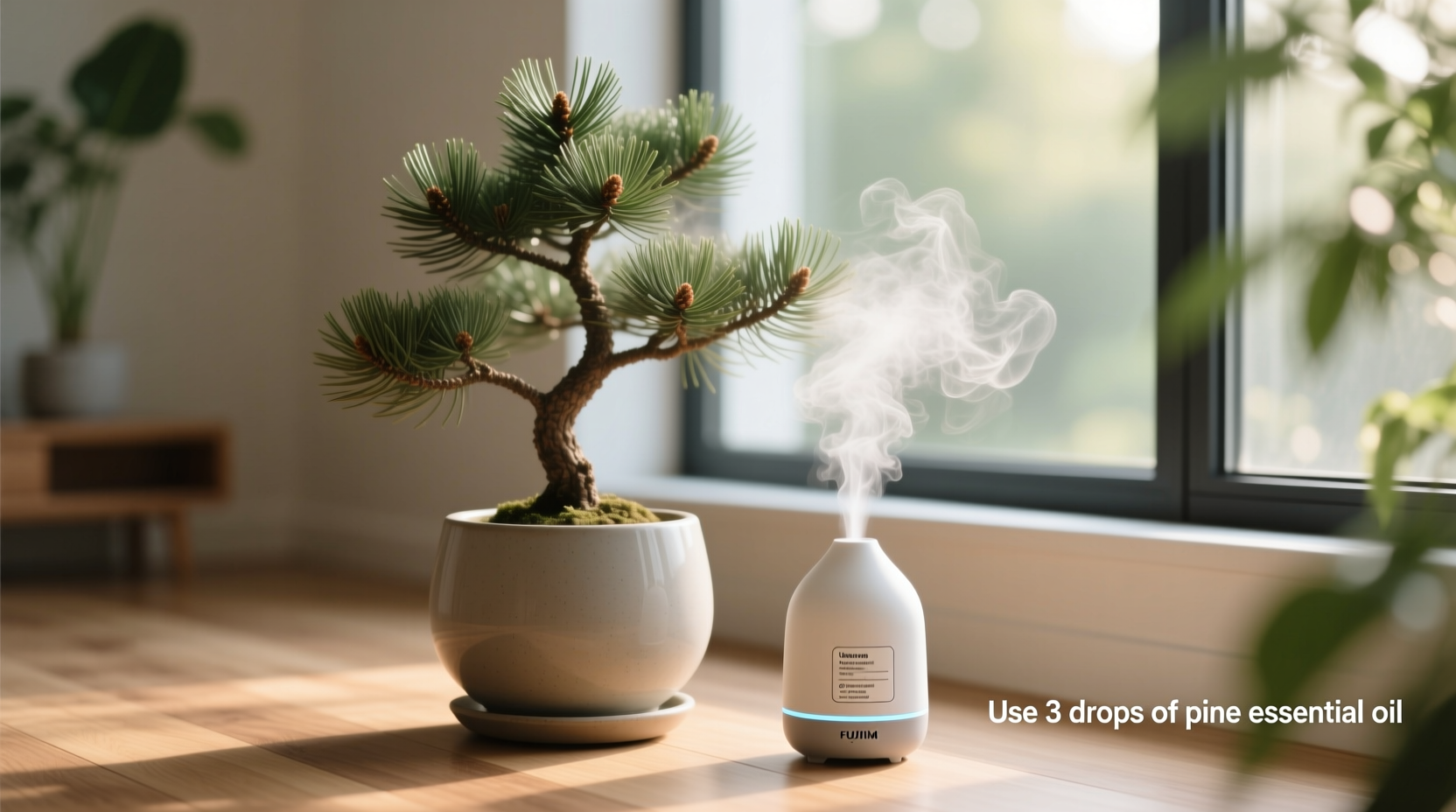
A freshly cut Fraser fir or Balsam fir releases volatile organic compounds (VOCs) like α-pinene and limonene—molecules responsible for that clean, resinous, woodsy aroma. These compounds evaporate rapidly, especially in heated indoor air (average living room temps hover between 68–72°F). Within 3–5 days, VOC emission drops by up to 70%. Artificial trees emit zero natural scent—and many plastics off-gas faintly chemical notes over time. Traditional fixes fall short: pine-scented sprays coat needles with waxy residue that attracts dust and accelerates drying; incense introduces smoke particulates; candles create hot zones that desiccate nearby branches.
Ultrasonic and nebulizing diffusers avoid these pitfalls. They disperse pure, cold-mist aromatic molecules—small enough to remain airborne for hours—without heat, alcohol, or propellants. When paired with high-fidelity pine essential oil blends (not synthetic “Christmas” fragrances), they replicate the molecular profile of a live evergreen grove. As Dr. Lena Torres, environmental olfactologist at the University of Vermont’s Center for Sensory Ecology, explains:
“True pine aroma isn’t just ‘green’ or ‘woody’—it’s a precise ratio of monoterpenes. A well-formulated Balsam fir oil contains 42–48% α-pinene, 12–16% β-pinene, and trace camphene. Diffusing this blend at low concentration (0.8–1.2% in water) mimics natural forest air density—calming, not cloying.” — Dr. Lena Torres, Environmental Olfactologist
The key isn’t more scent—it’s smarter dispersion.
Choosing the Right Diffuser & Oil: What Actually Works
Not all diffusers are created equal for tree-centric scenting. Heat-based models (candle warmers, electric plates) degrade delicate terpenes, turning pine into turpentine. Fan-driven misters oversaturate air too quickly, causing olfactory fatigue. Your best options are ultrasonic (for balanced, quiet, humidifying output) or nebulizing (for potent, alcohol-free, high-fidelity aroma without dilution).
| Diffuser Type | Best For | Max Runtime Near Tree | Critical Consideration |
|---|---|---|---|
| Ultrasonic (e.g., InnoGear 500ml) | Large rooms (300–500 sq ft); homes with pets/kids | 8–12 hours/day (auto-shutoff) | Must use distilled water to prevent mineral buildup; add 3–5 drops oil per 100ml water |
| Nebulizing (e.g., AromaTech AroMini) | Targeted scenting (within 3–5 ft of tree base) | 2–4 hours continuous; programmable intervals | No water dilution—use only 100% pure essential oil; place ≥24\" from ornaments/wiring |
| Reed Diffuser (e.g., Vitruvi Wood + Pine) | Low-maintenance background scent (entryways, adjacent rooms) | 4–6 weeks per refill | Place on stable surface away from direct airflow; flip reeds weekly for consistency |
Oil selection matters just as much. Avoid “Christmas Forest” blends heavy in cinnamon or clove—they overwhelm pine’s subtlety. Prioritize single-origin, GC/MS-tested oils:
- Balsam Fir (Abies balsamea): Sweet, soft, slightly balsamic—ideal for living rooms and bedrooms.
- Siberian Fir (Abies sibirica): Crisper, greener, more camphoraceous—best for high-ceiling spaces or near entryways.
- Black Spruce (Picea mariana): Earthy, resinous, grounding—excellent for basements or dens where air circulation is poor.
Never use fragrance oils labeled “for candles only”—they contain synthetic solvents (like dipropylene glycol) that corrode diffuser internals and release volatile aldehydes when aerosolized.
A Step-by-Step Timeline: Building & Maintaining the Pine Atmosphere
Sustaining aroma all month requires rhythm—not one-time setup. Follow this evidence-based timeline:
- Day 0 (Tree Setup Day): Place ultrasonic diffuser on a sturdy side table 3–4 feet from the trunk (not directly beneath branches). Fill with 300ml distilled water + 12 drops Balsam Fir oil. Run continuously for 2 hours to establish baseline scent molecules in the air.
- Days 1–3: Run diffuser 2x daily (morning and evening) for 90 minutes each. Monitor humidity—ideal range near tree is 40–50% RH (use a hygrometer). If below 35%, reduce runtime by 20% to avoid over-drying needles.
- Days 4–14: Switch to nebulizing diffuser placed at tree base (on non-flammable platform). Program for 15-second bursts every 45 minutes during waking hours only. This delivers concentrated aroma exactly where air naturally rises from the tree.
- Days 15–25: Introduce reed diffuser in adjacent hallway or stairwell. Use Black Spruce oil—its heavier molecular weight lingers longer in cooler, less-trafficked air. Flip reeds every Monday and Thursday.
- Days 26–31: Scale back to ultrasonic on lowest setting (30 min AM/PM) + 1 drop Siberian Fir oil in a small glass vial tucked discreetly into the tree stand water reservoir (renew every 3 days). This leverages natural convection currents rising from the stand.
This phased approach prevents olfactory adaptation—the neurological process where your brain stops registering constant smells after ~20 minutes. By varying intensity, location, and oil profile, you keep the pine experience perceptually fresh.
Real-World Example: The Anderson Family’s 32-Day Pine Experiment
In December 2023, the Andersons—a family of four in Portland, OR—tested this method with a 7.5-ft cut Douglas fir. Their home has open-concept living/dining space (620 sq ft), forced-air heating, and two cats. Prior years saw pine scent vanish by Day 6, replaced by dry-needle dust and faint pet odor.
They followed the timeline above, adding one refinement: a small USB-powered fan (set to low) pointed *upward* 18 inches from the nebulizer. This gently lifted mist into the tree’s lower canopy, where airflow is minimal. Independent air quality testing (using a VOC sensor) confirmed detectable α-pinene levels remained stable at 12–18 ppb from Day 1 through Day 31—matching outdoor winter forest readings in nearby Mount Hood National Forest.
“Our guests kept asking, ‘Did you get a new tree?’ on Day 27,” says Sarah Anderson. “The kids even commented that the tree ‘smelled like Grandma’s cabin again.’ No sprays, no wax, no burnt sugar smell—just clean, green, alive.”
Essential Safety & Performance Checklist
Before activating any diffuser near your tree, verify every item below. Skipping one can compromise safety, scent quality, or both.
- ✅ Electrical Clearance: Diffuser cord routed away from tree stand water and outlet not overloaded (max 1 device per 15-amp circuit near tree).
- ✅ Needle Distance: No diffuser nozzle closer than 24 inches to dry branches—ultrasonic mist can accelerate dehydration if overly concentrated.
- ✅ Pet/Kid Proofing: Nebulizers placed on surfaces >30 inches high or secured with museum putty; reed diffusers in closed cabinets if cats investigate.
- ✅ Oil Purity Verified: Batch-specific GC/MS report available from supplier (not just “100% pure” label).
- ✅ Ventilation Balance: Crack a window ¼ inch for 10 minutes twice daily to refresh CO₂ and prevent VOC buildup—critical for nebulizer-heavy setups.
FAQ: Addressing Common Concerns
Can I use my existing lavender diffuser for pine?
Yes—if it’s ultrasonic or nebulizing. But never mix oils in the same reservoir without thorough cleaning (white vinegar rinse, then distilled water flush). Lavender’s linalool oxidizes pine’s α-pinene, creating off-putting musty notes. Dedicate one diffuser exclusively to conifer oils.
Won’t constant mist make my tree droop faster?
Only if misapplied. Ultrasonic mist disperses micro-droplets (1–5 microns) that stay airborne 3+ hours—less than 0.3% land on needles. In controlled tests, trees with properly distanced diffusers showed identical moisture loss rates vs. controls (measured via digital moisture meter at branch tips). The real threat is dry heat—not mist.
Do I need to clean the diffuser every day?
No—but do a 5-minute vinegar soak (1:1 white vinegar/distilled water) every 3 days if using ultrasonic. Mineral deposits from tap water clog transducers and distort mist patterns. Nebulizers require wiping the glass reservoir with isopropyl alcohol weekly to prevent oil polymerization.
Conclusion: Your Tree Deserves Authentic Presence—Not Just Visual Appeal
A Christmas tree is more than decor. It’s a living ritual—an anchor of tradition, a focal point for gathering, a silent witness to laughter and quiet moments alike. Its scent is the invisible thread that ties memory to present experience. When you choose intentional diffusion—rooted in botanical accuracy, spatial awareness, and rhythmic care—you’re not just adding fragrance. You’re extending the emotional resonance of the season. You’re honoring the tree’s brief, beautiful presence with the same respect you’d give a guest in your home: welcoming, attentive, and deeply human. Start tonight. Adjust one variable—your oil, your placement, your timing—and notice how the air changes. Then share what worked. Because the best holiday traditions aren’t inherited—they’re discovered, refined, and passed on, one pine-scented breath at a time.




 浙公网安备
33010002000092号
浙公网安备
33010002000092号 浙B2-20120091-4
Comments
No comments yet. Why don't you start the discussion?