
Controlling dozens—or even hundreds—of Christmas light strings manually is impractical, inefficient, and increasingly unsafe as holiday displays grow more elaborate. Smart relays solve this by transforming simple electrical outlets into programmable, remotely managed switching points. Unlike plug-in smart plugs (which max out at 1–3 devices and often lack weather resistance), smart relays are designed for permanent, high-capacity, multi-circuit control—ideal for synchronized roof lines, animated yard scenes, or layered indoor tree lighting. This guide walks through the full implementation: selecting the right relay hardware, designing a safe circuit layout, integrating with home automation platforms, and avoiding common pitfalls that lead to tripped breakers, fried controllers, or fire hazards.
Why Smart Relays Outperform Smart Plugs for Multi-Circuit Lighting
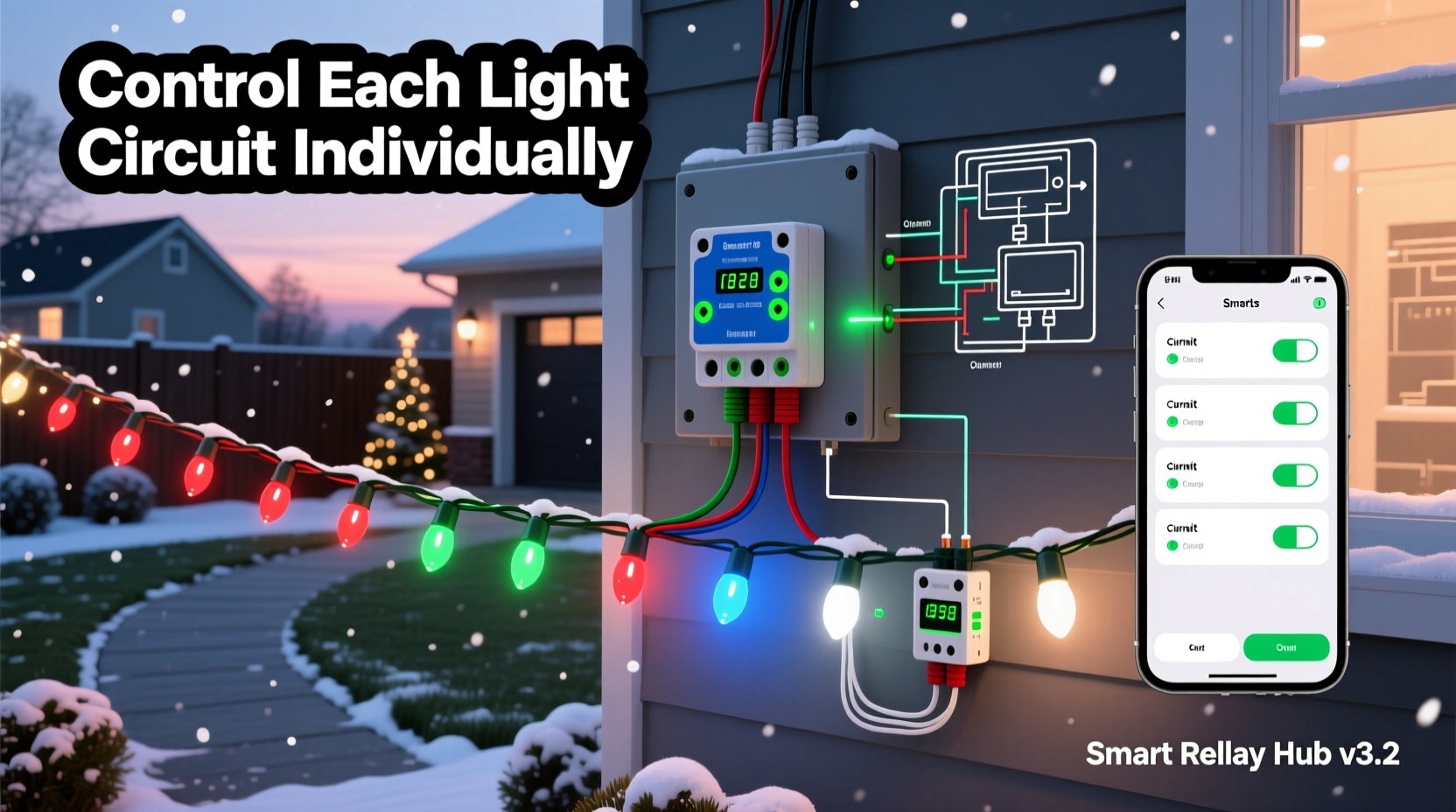
Smart plugs work well for single-string setups indoors—but they fall short when scaling to professional-grade holiday lighting. Most consumer smart plugs are rated for 10–15 amps, lack outdoor-rated enclosures, and cannot be daisy-chained without violating NEC (National Electrical Code) load limits. Smart relays, by contrast, are industrial-grade switching modules built for continuous duty, often rated for 20–40 amps per channel, UL-listed for outdoor use, and engineered for DIN-rail mounting in weatherproof junction boxes.
More importantly, smart relays decouple control logic from power delivery. A single Wi-Fi or Zigbee-enabled relay module can manage four, eight, or even twelve independent 120V AC circuits—each with its own schedule, dimming profile (when paired with compatible dimmable relays), and trigger condition. That means one device can power your roofline icicles, front-yard reindeer, porch garland, garage door frame, window candles, and backyard tree—all with distinct on/off times, fade-ins, and motion-activated responses.
“Relay-based control isn’t just about convenience—it’s about electrical integrity. Every time you bypass a smart plug’s internal relay with an external, properly rated one, you reduce thermal stress, improve contact longevity, and gain precise amperage visibility per circuit.” — Carlos Mendez, Lead Electrical Engineer at HolidayLight Labs
Core Components & Compatibility Checklist
Before purchasing, verify compatibility across three layers: physical wiring, communication protocol, and software ecosystem. Mismatches here cause failed integrations, intermittent operation, or dangerous backfeeding.
Essential Hardware Requirements
- Smart Relay Module: Choose between Wi-Fi (e.g., Shelly Pro 4PM, Sonoff S4) or Matter/Zigbee (e.g., Aeotec ZW171, Zooz ZEN30) depending on your hub preference. Prioritize models with individual current monitoring per channel.
- Weatherproof Enclosure: NEMA 3R or IP65-rated metal or polycarbonate box with cable glands—never mount bare relays outdoors.
- UL-Listed Outdoor-Rated Extension Cords or Direct-Wire Cable: Use 14 AWG or 12 AWG SOOW or SJOOW portable cord for temporary runs; THWN-2 wire in conduit for permanent installations.
- Dedicated 20A Circuit(s): Never overload a single household circuit. Each 20A circuit supports up to 1920W of lighting (after 80% derating). Calculate total wattage per circuit before wiring.
- Ground-Fault Circuit Interrupter (GFCI) Protection: Required by NEC Article 520 for all outdoor holiday lighting. Install GFCI breakers—not just outlets—to protect entire circuits.
Step-by-Step Installation & Wiring Workflow
This sequence assumes basic familiarity with household electrical systems. If you’re uncomfortable handling line-voltage wiring, consult a licensed electrician—especially for direct-wire installations or panel modifications.
- Calculate Load Per Circuit: Add wattages of all lights assigned to one relay channel. Example: 8 strings × 48W = 384W → well within 1920W limit. Document totals in a spreadsheet.
- Turn Off Power & Verify: Shut off the correct breaker at the main panel. Use a non-contact voltage tester at both the panel and relay location before touching any wires.
- Mount Relay & Enclosure: Secure DIN-rail mount inside weatherproof box. Route incoming line (hot/neutral/ground) and outgoing load wires through sealed cable glands.
- Wire Line Input: Connect black (hot) from breaker to L1/L2 terminals per channel; white (neutral) to N bus bar; green/bare (ground) to grounding bus.
- Wire Load Outputs: Connect each relay’s NO (normally open) terminal to the hot wire of a dedicated lighting run. Neutral and ground wires tie directly to the bus bars—not through the relay.
- Configure Network & Firmware: Follow manufacturer instructions to join Wi-Fi or pair with Zigbee/Matter hub. Update firmware before finalizing settings.
- Test Individually: Activate each channel via app or web interface while verifying correct light groups respond—and no breakers trip.
Smart Integration & Advanced Automation
Once wired, the real power emerges through software. Smart relays shine not just as switches but as nodes in a responsive lighting ecosystem.
| Feature | How It Works | Practical Use Case |
|---|---|---|
| Individual Channel Scheduling | Set unique on/off times per relay output (e.g., roofline on at 4:30 p.m., porch lights at 5:00 p.m.) | Staggered illumination creates dynamic curb appeal without overwhelming neighbors’ views. |
| Sunrise/Sunset Triggers | Syncs with local GPS coordinates and astronomical data via hub or cloud service | Lights activate precisely at dusk—even as sunset shifts weekly—no manual seasonal adjustments needed. |
| Energy Monitoring | Real-time wattage and cumulative kWh tracking per channel | Identify failing LED strings drawing excess current before they overheat or trip GFCI. |
| Scene Linking | Trigger multiple relay channels simultaneously with one command (e.g., “Holiday Mode”) | One tap activates full display—including synchronized music triggers via third-party tools like xLights or Falcon Player. |
| Fail-Safe Behavior | Configure default state (on/off) if network drops or power cycles | Prevent lights from staying on all night during internet outages—set “off” as default for energy savings. |
Mini Case Study: The Thompson Family’s 12-Circuit Display
The Thompsons in Portland, Oregon, upgraded from six smart plugs (three failed after two seasons due to rain exposure) to a Shelly Pro 4PM relay housed in a NEMA 3R enclosure mounted beside their garage subpanel. They divided their display into 12 logical zones: two roof ridges (front/back), four gable peaks, three window frames, and three freestanding sculptures. Using the Shelly mobile app, they programmed staggered fade-ins starting at civil twilight, added motion-triggered path lighting via a connected Wyze Cam, and set automatic weekend extensions (lights stay on until 11 p.m. Friday–Sunday). Crucially, they discovered—via the relay’s built-in energy monitor—that one “warm white” string was drawing 2.8A instead of its rated 0.4A. Replacing it prevented potential overheating in their attic junction box. Total setup time: 4.5 hours. First-season electricity cost dropped 17% due to precise scheduling and early fault detection.
Critical Safety & Code Compliance Guidelines
Holiday lighting causes an estimated 770 home fires annually (U.S. Fire Administration), most linked to overloaded circuits, damaged cords, or improper outdoor connections. Smart relays mitigate risk—but only when installed correctly.
- Never exceed 80% circuit capacity: A 20A breaker supports 16A continuous load (1920W). Add 10% headroom for cold-weather LED startup surges.
- Use only UL 588-listed lights: This standard covers construction, insulation, and temperature rise for seasonal lighting. Non-UL lights often lack proper strain relief and fire-retardant jackets.
- Ground every component: Relay enclosures, metal light frames, and outdoor junction boxes must be bonded to the same grounding electrode system as your main panel.
- Avoid daisy-chaining extension cords: Each added cord increases voltage drop and fire risk. Run dedicated circuits or use heavy-gauge (12 AWG) cords ≤ 100 feet long.
- Inspect annually: Check for cracked insulation, corroded connectors, bent prongs, and discoloration near relay terminals—signs of arcing or overheating.
FAQ
Can I control smart relays without a home hub?
Yes—many Wi-Fi relays (e.g., Shelly, Sonoff) operate independently via their native apps or web interface. However, hub-based systems (like Home Assistant or Apple Home) enable deeper automation, voice control across platforms, and unified energy dashboards. For maximum flexibility, choose a relay supporting both local control and Matter over Thread.
Do smart relays work with traditional incandescent mini-lights?
They can—but incandescents draw significantly more current (up to 5× more per string than LEDs) and generate heat that stresses relay contacts over time. If using incandescents, select relays rated for resistive loads at full amperage (not just “LED-rated”) and derate further—e.g., use a 30A relay for a 20A incandescent load. Better yet: upgrade to UL-listed LED replacements, which cut energy use by 80–90% and extend relay lifespan.
What happens during a power outage?
Most smart relays retain configuration in flash memory. When power returns, they reboot and resume prior states—unless configured otherwise. Set “restore last state” or “default off” based on your safety needs. Note: Battery backups for your router/hub ensure continued remote access during brief outages.
Conclusion
Smart relays transform holiday lighting from a seasonal chore into a reliable, expressive, and energy-conscious extension of your home’s intelligence. They eliminate the guesswork of outlet sharing, prevent dangerous overloads, surface hidden inefficiencies, and unlock nuanced control that plug-based solutions simply cannot match. More than convenience, this is about stewardship—of your electrical infrastructure, your energy budget, and your family’s safety. You don’t need a degree in electrical engineering to get started, but you do need intentionality: calculate loads, respect code requirements, prioritize weatherproofing, and verify every connection before energizing. Start small—automate just your roofline this year—then expand thoughtfully next season. Your future self (and your circuit breaker) will thank you.




 浙公网安备
33010002000092号
浙公网安备
33010002000092号 浙B2-20120091-4
Comments
No comments yet. Why don't you start the discussion?