
Stacking multiple rings on a single finger has evolved from a bold fashion statement into a refined art form. Once seen as excessive, the trend now graces red carpets, editorial spreads, and everyday wardrobes with intentional elegance. The key lies not in quantity but in curation—choosing the right combination of styles, sizes, metals, and placements to create harmony rather than clutter. When done well, multi-ring stacking adds personality, dimension, and visual interest to your look without sacrificing comfort or practicality.
The rise of personalized jewelry and minimalist designs has made it easier than ever to mix and match pieces that reflect individual taste. Whether you're drawn to delicate bands, vintage signets, or bold statement rings, understanding the principles behind stacking ensures your fingers become an extension of your style narrative—not an afterthought.
Understand Finger Anatomy and Ring Placement
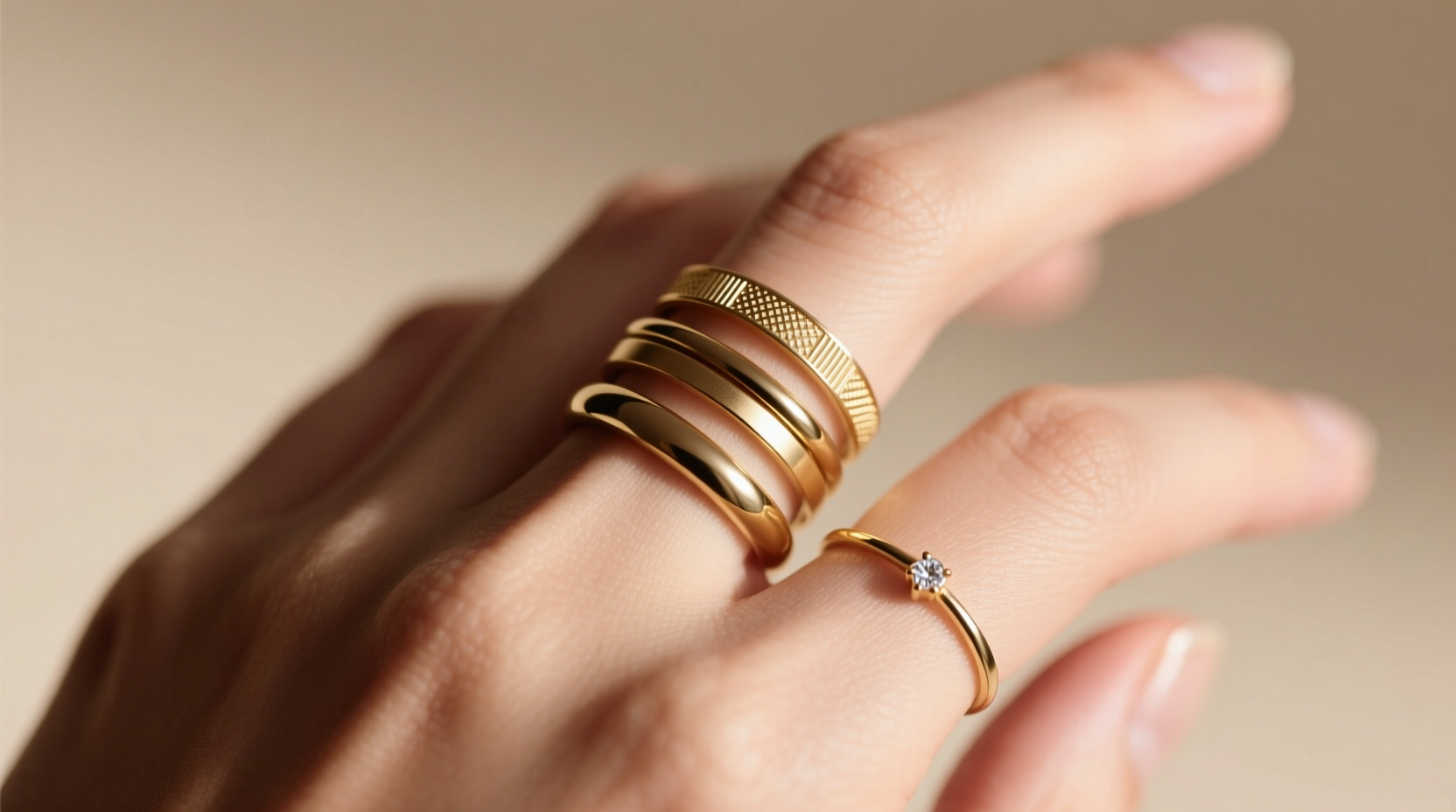
Before selecting rings, consider the natural proportions of your fingers. Not all fingers are created equal: some taper more sharply, others are broader at the base, and knuckle size can vary significantly. These anatomical details influence both comfort and visual balance.
The most common fingers used for stacking are the ring finger and index finger, though the middle and pinky fingers are gaining popularity. The ring finger tends to be slightly longer and thinner, making it ideal for layered looks. The index finger offers a bolder canvas, often associated with power and confidence when adorned.
Pay attention to where your knuckles sit in relation to ring placement. A tight-fitting band over a large knuckle may pinch if not sized properly, while too-loose rings can spin or catch on fabric. For comfort, choose flexible materials like titanium or slightly malleable gold alloys, which adapt better to movement.
Choose Complementary Styles and Metals
Cohesion is critical when wearing multiple rings on one finger. Even contrasting textures and shapes can work together if they share a unifying element—such as metal tone, design motif, or level of polish.
Mixing metals—like pairing rose gold with white gold or silver with yellow gold—can add depth, but should be done thoughtfully. Limit mixed-metal combinations to two types per hand to avoid visual noise. Alternatively, opt for tonal layering: use variations within the same metal family (e.g., brushed gold next to high-polish gold) for subtle contrast.
Texture plays a major role in creating dimension. Combine smooth bands with engraved patterns, milgrain edges, or gemstone accents. A matte finish next to a shiny one creates tactile contrast that catches light differently throughout the day.
| Ring Type | Best Paired With | Avoid Pairing With |
|---|---|---|
| Thin Band (1–2mm) | Medium bands, textured rings | Other ultra-thin bands (may get lost) |
| Statement Ring (wide or gem-set) | Simple bands above/below | Other wide rings (overcrowding) |
| Vintage Signet | Engraved bands, oxidized finishes | Bright cubic zirconia (clashes) |
| Minimalist Stackable | Matching set or similar width | Mismatched thicknesses (uneven look) |
Follow a Step-by-Step Stacking Process
Building a cohesive stack isn’t about randomly slipping on rings—it’s a deliberate process. Follow this timeline to ensure both aesthetic appeal and physical comfort.
- Determine the anchor ring: Choose one central piece—often a wedding band, heirloom, or favorite signet—that will serve as the foundation of your stack.
- Select supporting rings: Pick 1–3 complementary bands that enhance, not compete with, the anchor. Vary widths slightly for rhythm.
- Test spacing: Place rings on your finger with small gaps (1–3mm) between them. This prevents rubbing and allows each piece to breathe visually.
- Adjust for mobility: Make a fist, open your hand, and observe how the rings move. If any pinch or rotate excessively, reposition or remove them.
- Balance across hands: If stacking heavily on one finger, consider lighter accents on others to maintain symmetry.
For example, begin with a 3mm brushed gold band as your centerpiece. Add a slim 1.5mm diamond-pave ring below it and a hammered-texture band above. The variation in sparkle and surface keeps the eye moving while maintaining a unified golden palette.
Real Example: From Cluttered to Curated
Sophie, a graphic designer in Portland, loved collecting rings during her travels but found her fingers looked chaotic after trying to wear five on one finger. After consulting a local jeweler, she refined her approach.
She started by identifying her favorite piece—a hand-carved jade ring from Taiwan—and built around it. She paired it with a thin platinum band beneath and a braided rose gold ring above. The remaining three were set aside for alternate days or different fingers.
“I realized I didn’t need to wear everything at once,” she said. “Now, people actually notice the jade carving instead of just seeing ‘a lot of rings.’” Her new stack felt lighter, looked intentional, and drew compliments rather than confusion.
This shift—from accumulation to curation—mirrors a broader trend in modern accessorizing: less about display, more about meaning.
Expert Insight: Designers Weigh In
Jewelry designers emphasize intentionality over excess. As sustainable practices gain traction, so does the idea of meaningful adornment.
“The most stylish stacks tell a story. It might be heritage, travel, milestones—but when rings are chosen with purpose, even three on one finger feel balanced.” — Lena Torres, Contemporary Jewelry Designer
“Comfort shouldn’t be sacrificed for style. If a ring restricts blood flow or catches on sweaters, it’s not working, no matter how beautiful it is.” — Marcus Reed, Master Goldsmith
These insights underscore a dual priority: aesthetic harmony and ergonomic function. A successful stack must pass both the mirror test and the daily wear test.
Essential Checklist for Stylish Multi-Ring Wear
Before finalizing your look, run through this checklist to ensure your stack is both fashionable and functional:
- ✅ Rings are securely fitted but not too tight (should slide on with slight resistance)
- ✅ Metal tones complement each other or follow a clear mixing strategy
- ✅ No sharp edges or prongs that could snag clothing or skin
- ✅ Visual weight is distributed evenly (e.g., don’t cluster all thick rings together)
- ✅ At least one ring has personal significance or anchors the theme
- ✅ You can type, write, and wash hands comfortably
- ✅ The overall look matches your outfit’s formality (e.g., minimal stacks for office, bolder ones for evenings)
Avoid Common Mistakes
Even seasoned stylists can misstep. Here are frequent errors and how to correct them:
- Overstacking: More than four rings on one finger usually overwhelms. Stick to 2–3 for most looks.
- Ignoring proportions: Petite fingers may be drowned by wide bands. Opt for slender profiles (under 3mm).
- Mismatched sizing: Rings that spin or slip indicate poor fit. Consider professional resizing.
- Neglecting maintenance: Dirt accumulates between stacked rings. Clean weekly with a soft brush and mild soap.
- Forgetting context: What works for a night out may hinder productivity at work. Have go-to minimalist stacks for professional settings.
Frequently Asked Questions
Can I wear engagement and wedding rings with stackable bands?
Yes—many do. Place your engagement ring as the centerpiece and add thin bands above and below. Ensure the added rings don’t obstruct the center stone or make removal difficult. Some couples now design matching “bridal stacks” for a modern twist on tradition.
How do I keep my rings from scratching each other?
Choose metals of similar hardness (e.g., avoid stacking soft gold next to harder platinum). Store stacked rings separately when not worn. You can also apply a micro-layer of clear nail polish between rings temporarily, though this should be removed regularly to prevent buildup.
Is it okay to mix gemstones on one finger?
Yes, but limit the number of different stones to two or three. Coordinate colors—for example, sapphire with amethyst, or citrine with topaz. Avoid clashing hues like bright red ruby next to neon green emerald unless intentionally going for a maximalist look.
Final Thoughts: Style Meets Substance
Wearing multiple rings on one finger is more than a trend—it’s a form of self-expression. When approached with care, it becomes a signature detail that enhances your presence. The difference between looking overdressed and impeccably styled lies in restraint, proportion, and authenticity.
Start small. Experiment with two rings before adding more. Pay attention to how they feel after hours of wear, not just how they look in photos. Let your stack evolve with your life: add a ring for a milestone, retire one that no longer fits your style.
Ultimately, jewelry should serve you—not burden you. A well-composed stack doesn’t shout for attention; it invites closer inspection. It rewards those who take the time to notice the craftsmanship, the story, the quiet confidence behind each carefully chosen band.




 浙公网安备
33010002000092号
浙公网安备
33010002000092号 浙B2-20120091-4
Comments
No comments yet. Why don't you start the discussion?