
For decades, fashion purists insisted that pairing socks with open-toe shoes was a cardinal sin. But times have changed. What was once considered a sartorial misstep has evolved into a bold, intentional styling choice embraced by designers, influencers, and everyday trendsetters alike. The key lies not in whether you wear socks with open-toe shoes—but how you do it. Done right, this combination can elevate your outfit with texture, color, and personality. Done poorly, it risks looking accidental or mismatched.
The modern wardrobe thrives on individuality and rule-breaking—when executed with intention. Wearing socks with sandals, mules, or peep-toes is no longer about hiding bare feet during colder months; it’s about making a statement. From Paris runways to street-style hubs like Seoul and Copenhagen, this look has cemented its place in contemporary fashion. But mastering it requires an understanding of proportion, material harmony, and context.
Understanding the Shift: Why It’s Now Stylish
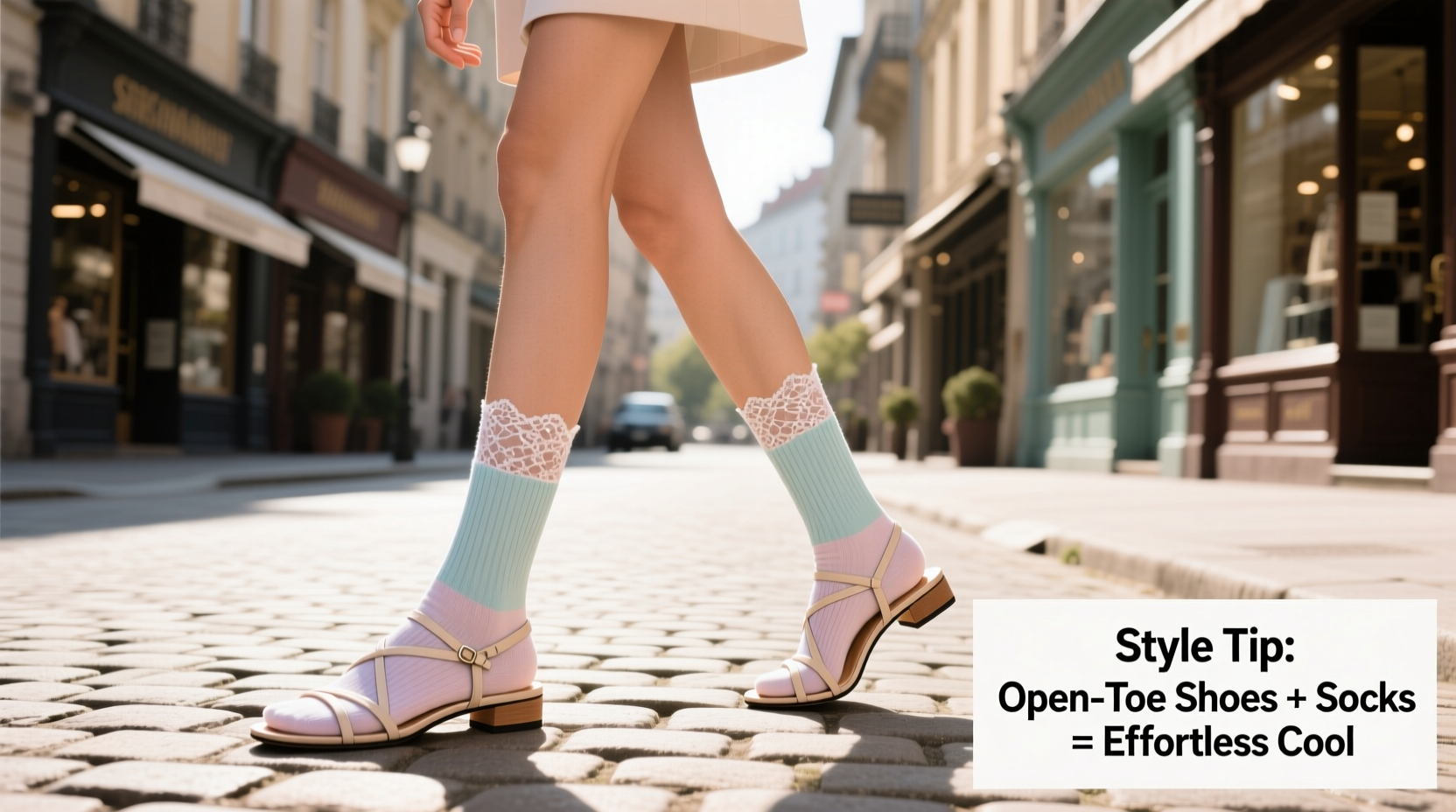
Fashion evolves through cultural shifts and reinterpretations of tradition. The taboo around open-toe footwear with socks began to dissolve in the early 2010s, as minimalist sock brands introduced sheer, ribbed, and patterned designs specifically meant to be seen. Designers such as Maison Margiela, Prada, and Comme des Garçons showcased models walking runways in chunky sandals paired with crew-length socks—a deliberate contrast that challenged conventions.
This aesthetic gained momentum alongside the rise of “ugly chic” and normcore movements, where comfort and irony were celebrated over polish. Simultaneously, practical needs drove innovation: people wanted warmth, hygiene, and blister prevention without sacrificing personal expression. As a result, visible socks became part of layered dressing, much like tights under ripped jeans or gloves with short sleeves.
“Fashion isn’t about rigid rules—it’s about confidence and coherence. If your outfit tells a story, even unexpected combinations can work.” — Lena Tran, Fashion Editor at *Verve Style Weekly*
Choosing the Right Socks: Types That Work
Not all socks are created equal when it comes to pairing with open-toe shoes. The success of the look hinges on selecting styles that complement rather than clash with the shoe’s structure. Below are the most effective sock types for this trend:
- Invisible/no-show socks: Ideal for breathable coverage while maintaining a barefoot illusion. Best for warm weather or minimal looks.
- Ankle socks: Sit just above the heel, offering slight visibility. Opt for thin cotton or merino wool for a clean line.
- Quarter-length socks: Rise 1–2 inches above the ankle. These add subtle volume and come in patterns or colors to accentuate outfits.
- Sheer socks: Often made from nylon or silk blends, these provide coverage with elegance. Perfect for office settings or formal events.
- Textured or ribbed socks: Add dimension and interest. Pair with wide-strapped sandals for balance.
- Statement socks: Bold stripes, polka dots, or contrasting trims. Use sparingly and anchor them with neutral footwear.
Dos and Don’ts: A Practical Guide
To avoid the \"accidental mismatch\" effect, follow these curated guidelines based on real-world styling principles and editorial standards.
| Do | Don’t |
|---|---|
| Pair low-cut socks with wide-strap sandals (e.g., Birkenstocks, Tevas) to create visual balance. | Wear thick athletic socks with delicate stilettos or strappy heels—they compete for attention. |
| Use sheer or nude socks under peep-toe pumps for modesty without sacrificing elegance. | Mix overly busy sock patterns with equally loud shoes—clash creates chaos. |
| Roll or fold down sock tops neatly to prevent bunching and maintain a polished edge. | Allow socks to slip below the shoe opening midday—this looks disheveled, not intentional. |
| Choose moisture-wicking materials in humid climates to prevent odor and slippage. | Ignore fit—loose socks will wrinkle and ruin both comfort and aesthetics. |
| Coordinate sock color with one element in your outfit (bag, top, or jewelry). | Wear dark socks with light sandals unless going for high contrast as a design feature. |
When Context Matters
Workplace environments may demand subtlety. In corporate offices, sheer or nude ankle socks under peep-toe flats remain acceptable and professional. Creative industries offer more leeway—think colorful ribbed socks with platform loafers. For casual outings, experiment freely: striped tube socks peeking out from fisherman sandals can become a signature look.
Step-by-Step: How to Style Open Toe Shoes with Socks Confidently
Follow this five-step process to integrate socks into your open-toe footwear rotation with assurance and flair.
- Assess Your Shoe Type
Identify whether your open-toe shoe has wide straps, narrow bands, or cutouts. Chunkier soles support bolder sock choices; dainty silhouettes call for discretion. - Select the Appropriate Sock Height
For mules and slides, go for no-show or invisible socks. For T-strap sandals or clogs, try quarter-length for a retro vibe. Avoid anything above the ankle unless styling with long skirts or cropped pants. - Pick Materials Wisely
Cotton and bamboo blends breathe well and stay comfortable. Merino wool adds warmth in cooler months. Avoid synthetic-heavy socks that trap sweat and cause odor. - Match or Contrast Intentionally
If blending in, match sock tone to skin or shoe. If standing out, pick one standout color already present elsewhere in your ensemble. Example: red socks with red lipstick and a burgundy tote. - Test Movement and Fit
Walk around indoors before heading out. Ensure socks stay in place and don’t slide down inside the shoe. Trim toenails and use anti-slip pads if needed to prevent friction.
Real-Life Example: Maya’s Office-to-Evening Transition
Maya, a graphic designer in Portland, wears black leather clog mules daily. During winter, she found her feet getting cold—and noticed unsightly chafing along her heels. She started wearing thin black merino wool socks underneath, choosing ones with reinforced heels and a snug fit. At first hesitant, she soon realized no one questioned the look; instead, colleagues complimented her cozy-chic aesthetic. By evening, she swapped her work blouse for a metallic skirt and added a pop of color with cherry-red quarter socks—transforming the same shoes into night-out attire. Her secret? Confidence and consistency. “It stopped being weird once I owned it,” she says.
Expert-Approved Tips for Long-Term Success
Sustaining this style beyond a fleeting trend means integrating it thoughtfully into your routine. Consider these insights from stylists and podiatrists who’ve observed the shift firsthand.
“Many patients come in with blisters from ill-fitting sandals. Adding a thin sock layer reduces friction significantly. The trick is choosing one that doesn’t add bulk.” — Dr. Arjun Patel, Podiatrist & Footwear Consultant
Beyond health benefits, proper sock selection enhances durability of footwear. Leather interiors degrade faster with direct skin contact due to salt and moisture. A barrier layer slows this process, preserving your investment.
Checklist: Getting It Right Every Time
Before stepping out, run through this checklist to ensure your look lands:
- ✅ Sock height complements shoe openness (not too high, not slipping)
- ✅ Material suits the season (lightweight for summer, warm fibers for winter)
- ✅ Color either coordinates or contrasts purposefully
- ✅ No wrinkles, folds, or bunching visible
- ✅ Overall silhouette feels balanced—not top-heavy or disjointed
- ✅ Outfit context matches setting (professional, creative, casual)
- ✅ Feet feel secure, dry, and comfortable
Frequently Asked Questions
Can I wear socks with flip-flops?
While technically possible, traditional flip-flops rarely accommodate socks well due to their flat, open design and lack of heel retention. However, sportier versions like Teva or Chaco sandals—with heel straps and contoured footbeds—are designed to be worn with socks, especially in outdoor or hiking contexts. For fashion purposes, stick to structured sandals over flip-flops.
Are there any cultures where this pairing is standard?
Yes. In parts of Scandinavia and Germany, it’s common to wear wool socks with leather clogs or orthopedic sandals year-round, prioritizing comfort and insulation. Japanese street fashion often features knee-high socks with platform sandals, particularly in youth subcultures like Lolita or Decora. These traditions predate Western trends and demonstrate that cultural norms shape what we perceive as “acceptable” footwear.
How do I keep my socks from showing too much?
If you want only a hint of sock, opt for no-show styles labeled “invisible” or “low-cut.” Look for silicone grips along the heel to prevent slipping. Alternatively, roll the top hem once so it sits flush beneath the shoe collar. For wider openings, choose sheer fabrics that blend with skin tone rather than opaque ones that draw focus.
Conclusion: Own the Look With Confidence
Wearing open-toe shoes with socks isn't about defying fashion—it's about redefining it. The most enduring styles emerge not from blind adherence to rules, but from thoughtful experimentation grounded in self-expression. When you understand the principles of proportion, material synergy, and contextual appropriateness, even the boldest combinations become wearable art.
Start small: try sheer ankle socks under your favorite peep-toes. Then experiment with textures, heights, and hues. Pay attention to how different pairings affect your posture, stride, and mood. You might discover that the right sock doesn’t just protect your feet—it completes your identity.




 浙公网安备
33010002000092号
浙公网安备
33010002000092号 浙B2-20120091-4
Comments
No comments yet. Why don't you start the discussion?