
Oversized blazers have become a cornerstone of modern wardrobes, offering a relaxed silhouette that blends professionalism with effortless cool. But while the trend leans into volume and drape, wearing an oversized blazer can easily overwhelm a smaller or average build if not styled with intention. The key isn’t avoiding the trend altogether—it’s mastering proportion, tailoring, and styling techniques that keep the look balanced and flattering. Whether you’re 5'2\" or 5'9\", slender or curvy, the right approach ensures you command attention without disappearing into fabric.
Understand What “Oversized” Really Means
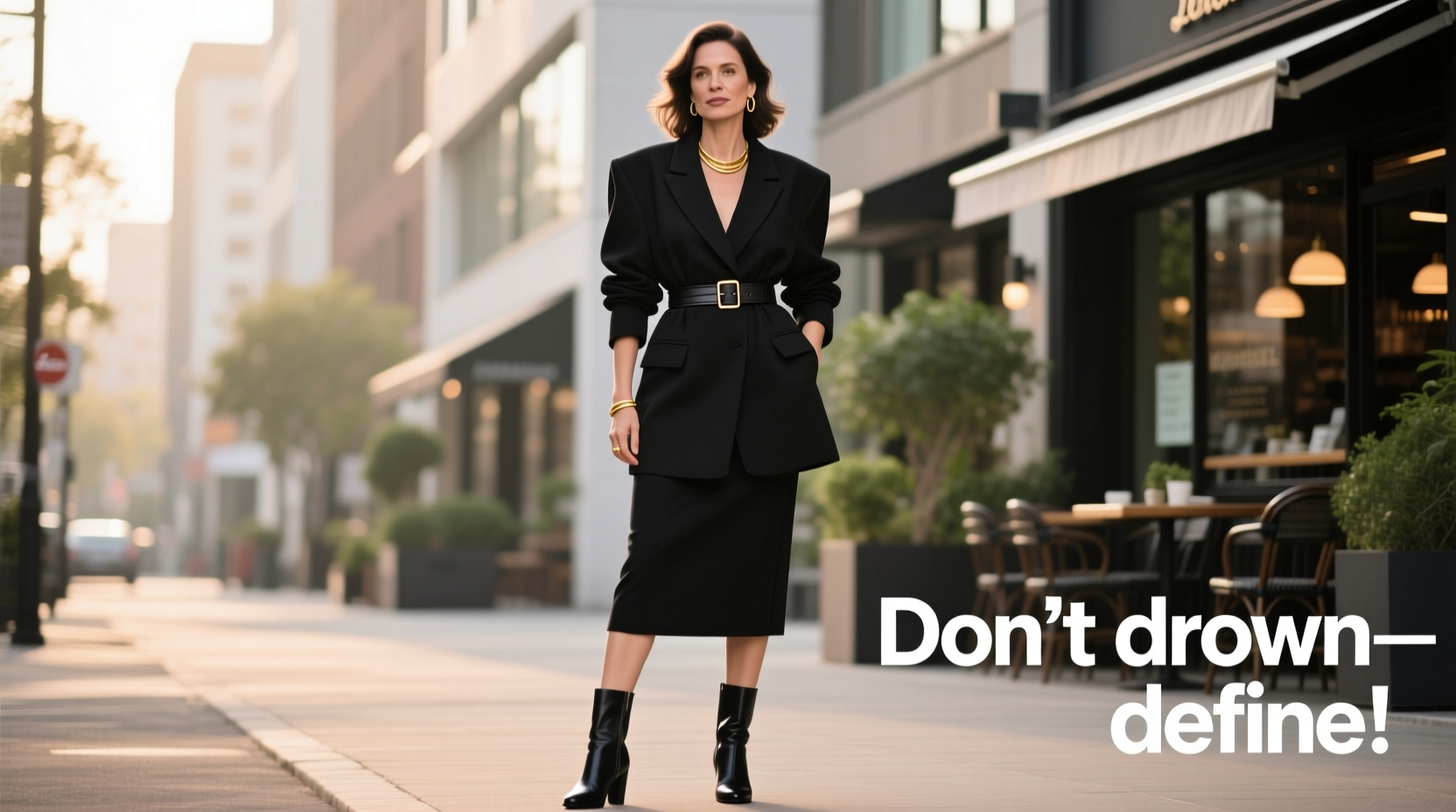
An oversized blazer isn’t just any large jacket. It’s intentionally cut wider and longer than standard sizing to create a slouchy, architectural shape. However, “oversized” doesn’t mean “ill-fitting.” A well-chosen oversized piece should still follow certain structural guidelines:
- Shoulder seams should sit at or slightly beyond the edge of your natural shoulder—never drooping down the arm.
- Sleeve length should allow your wrist to remain visible; ideally, they end mid-palm when arms are down.
- Hip coverage typically extends below the hip line, but shouldn’t drag or bunch at the waist.
- Chest and torso room should allow movement without excess fabric pooling at the sides.
The goal is volume with structure—not a sack-like silhouette. As stylist and fashion consultant Naomi Kim explains,
“An oversized blazer should feel like armor, not a blanket. It enhances your presence, not obscures it.” — Naomi Kim, Fashion Stylist & Wardrobe Architect
Balance Proportions with Strategic Layering
One of the most effective ways to avoid being swallowed by fabric is through intentional layering. Oversized outerwear demands contrast—pairing volume on top with sleekness below (or vice versa) creates visual harmony.
Rule of Contrast: Volume vs. Definition
If your blazer adds width up top, balance it with streamlined bottoms. Think:
- Fitted turtlenecks or bodysuits under the blazer
- Skinny jeans, tailored trousers, or leather leggings on the bottom
- A tucked-in top to define the waist
Layering for Height and Frame Considerations
For petite frames (under 5'4\"), excessive length can shorten the silhouette. Combat this by:
- Choosing cropped oversized blazers that hit at the hip
- Pairing with high-waisted pants or skirts to elongate legs
- Wearing pointed-toe shoes or heels to maintain vertical lines
Taller individuals can carry longer lengths more easily, but even they benefit from waist definition. Try belting the blazer loosely at the hips or wearing it open over a longline vest or dress for added structure.
Fit Adjustments That Make a Difference
You don’t need a tailor on speed dial, but minor alterations go a long way in refining an oversized blazer’s impact.
Essential Tailoring Tweaks
| Adjustment | Purpose | Ideal For |
|---|---|---|
| Slight shoulder taper | Prevents slouching; keeps blazer anchored | Narrow shoulders, petite frames |
| Sleeve shortening | Restores proportion; avoids covering hands | Shorter arms, cropped sleeve trends |
| Back seam nip | Removes excess fabric across the back | Slender torsos, avoiding boxiness |
| Hemming length | Customizes coverage (hip vs. thigh) | Height balancing, seasonal versatility |
Even a single alteration—like taking in the sleeves—can transform how the entire garment drapes on your body.
Styling Strategies for Every Body Type
The beauty of the oversized blazer lies in its adaptability. With thoughtful styling, every figure can wear it confidently.
For Petite Frames
The concern isn’t wearing oversized pieces—it’s ensuring they don’t overpower. Focus on maintaining vertical continuity.
- Opt for blazers 1–2 sizes up, not 3+.
- Choose structured fabrics like wool or cotton twill that hold shape without collapsing.
- Wear with monochrome or tonal outfits to elongate the body.
- Roll sleeves once to expose wrists and add lightness.
For Curvier Figures
Oversized blazers can beautifully skim curves without clinging. The trick is defining the waist subtly.
- Try double-breasted styles—they naturally cinch at the fullest part of the bust.
- Leave the blazer open over a form-fitting dress or top with wide-leg pants.
- Use a slim belt over the blazer at hip level for casual polish.
- Avoid overly boxy cuts that erase all shape.
For Tall or Androgynous Builds
You have the advantage of natural proportions that support bold silhouettes. Play with drama.
- Experiment with extra-long blazers that graze the knee.
- Go full minimalist: wear an oversized blazer as a dress with boots and no top underneath.
- Mix textures—pair a slouchy linen blazer with sleek satin pants.
Real-Life Example: From Swamped to Sculpted
Meet Lena, 5’3”, with a slender build and a love for menswear-inspired fashion. She bought an oversized navy blazer during a sale, drawn to its sharp lapels and relaxed drape. When she first wore it, however, the shoulders slipped, the sleeves covered her hands, and the hem hit mid-thigh—making her look shorter and buried in fabric.
She took it to a local tailor who:
- Reduced the shoulder width by ½ inch on each side.
- Shortened the sleeves so her fingertips remained visible.
- Added a slight back dart to eliminate puffiness.
Afterward, Lena paired the blazer with a black turtleneck tucked into high-waisted cigarette pants and ankle boots. The transformation was immediate: the blazer now looked intentionally oversized, not poorly fitted. “It went from ‘I found this in my dad’s closet’ to ‘I meant to look this powerful,’” she said.
Step-by-Step Guide: How to Style Your Oversized Blazer Right Now
Follow this five-step process to ensure your oversized blazer enhances rather than overwhelms.
- Assess the fit: Put on the blazer. Check shoulder alignment, sleeve length, and whether the fabric pulls or sags. If it’s too loose, consider tailoring.
- Choose your base layer: Pick a snug top—a bodysuit, tank, or slim sweater—that won’t add bulk underneath.
- Define your waist: Tuck the top in, use a belt, or pair with high-waisted bottoms to create a focal point.
- Select complementary bottoms: Balance volume above with tailored or narrow-cut pants, skirts, or shorts.
- Finish with footwear: Elevate the look with heels, pointed flats, or boots that extend the leg line.
Checklist: Wear Your Oversized Blazer Like a Pro
Before stepping out, run through this checklist:
- ✅ Shoulder seams sit at the edge of your shoulders or just beyond
- ✅ Sleeves end at the base of the thumb or mid-palm
- ✅ Waist is defined—either through tucking, belting, or high-waisted bottoms
- ✅ Bottom half is streamlined (skinny, straight, or flared—but never baggy)
- ✅ Outfit includes vertical elements (monochrome tones, long necklaces, open front)
- ✅ Shoes elongate the leg (nude tones, pointed toes, heels)
Do’s and Don’ts at a Glance
| Do | Don’t |
|---|---|
| Pair with slim-fit trousers or jeans | Wear baggy pants with an oversized blazer (creates a tent effect) |
| Tuck in your top or use a French tuck | Let everything hang loose with no waist definition |
| Roll sleeves once for a crisp look | Wear unaltered sleeves that cover your hands |
| Use accessories like hoops or a long pendant to draw eyes upward | Overload on chunky necklaces that compete with the blazer’s lapels |
| Opt for structured fabrics in cooler months | Choose limp, clingy materials that lose shape |
Frequently Asked Questions
Can I wear an oversized blazer if I’m short?
Absolutely—but be strategic. Stick to hip-length or slightly cropped oversized blazers, pair them with high-waisted bottoms, and always define your waist. Avoid ultra-long versions that cut your body in half.
Should I ever size down in an oversized blazer?
Yes, especially if you're petite or prefer subtle volume. Some brands design \"oversized\" fits that run extremely large. Sizing down one size can give you the aesthetic without the excess fabric.
How do I know if my blazer is too big?
If the shoulders sag past your arm, the sleeves cover your hands, or the fabric bunches excessively at the back when buttoned, it’s too big. A blazer should drape, not drown.
Final Thoughts: Own the Look, Don’t Let It Own You
The oversized blazer is a statement of confidence, not concealment. When worn with awareness—of fit, proportion, and personal style—it becomes a tool of empowerment. It’s not about hiding your frame but redefining it with bold lines and intelligent styling. Whether you’re dressing for work, a weekend brunch, or a night out, this season’s trend is yours to command.




 浙公网安备
33010002000092号
浙公网安备
33010002000092号 浙B2-20120091-4
Comments
No comments yet. Why don't you start the discussion?