
A beautifully lit Christmas tree is the centerpiece of holiday decor. But achieving that perfect glow—where every branch sparkles without dark spots or tangled clusters—requires more than just draping lights haphazardly. The difference between an amateur and professional-looking display often comes down to one thing: technique. Wrapping your tree with lights evenly ensures balanced illumination, enhances depth, and creates a mesmerizing effect whether viewed up close or from across the room.
Many people underestimate the time and strategy involved in proper light placement. Too often, trees end up with clumps near the base, bare patches at the top, or visible cords zigzagging down like afterthoughts. With the right approach, you can avoid these common pitfalls and create a tree that radiates warmth and festive charm.
Why Even Light Distribution Matters
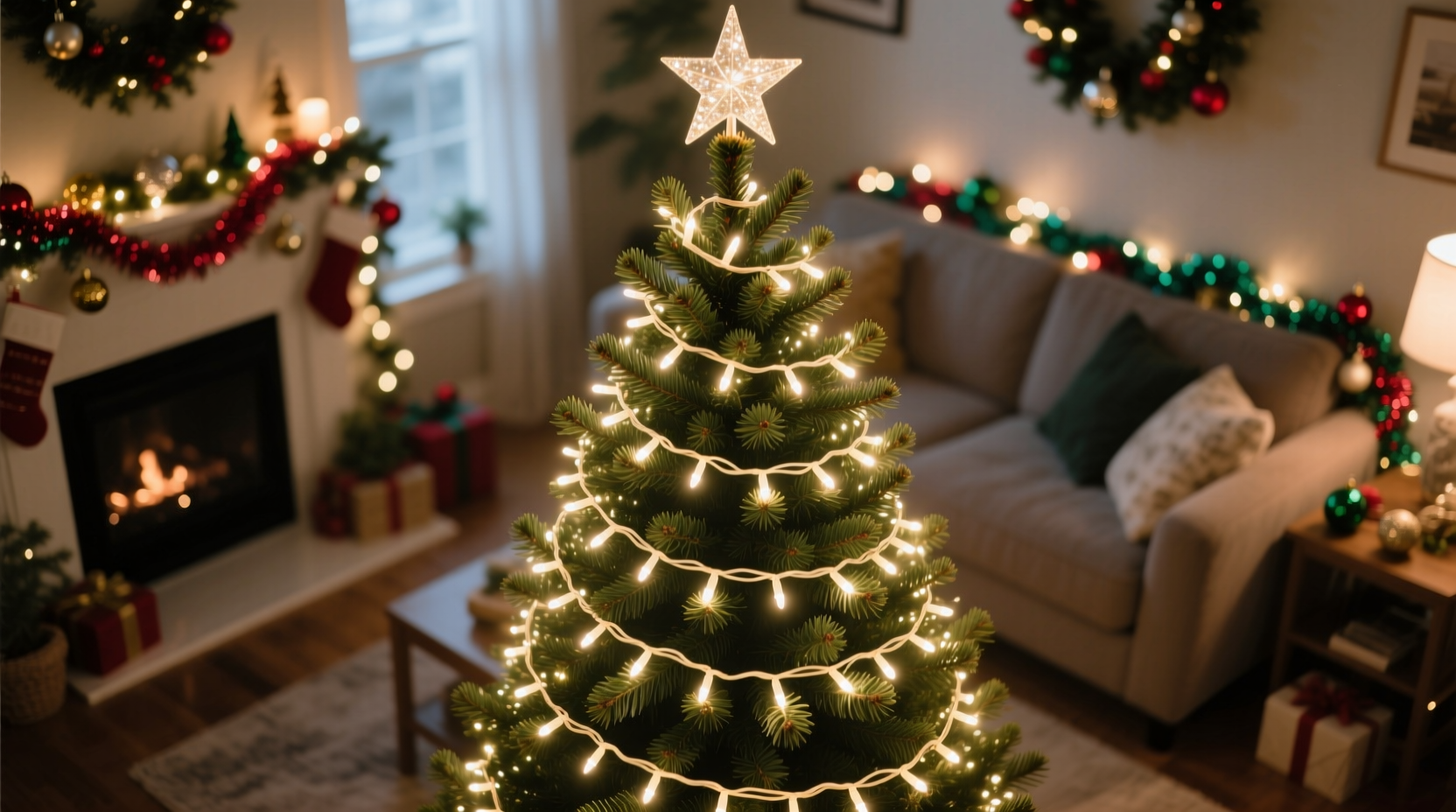
Evenly distributed lights do more than look good—they transform the tree into a cohesive visual element. When lights are spaced consistently, they accentuate the tree’s natural shape, highlight ornaments, and reduce eye strain caused by overly bright or dim areas. This balance is especially important if your tree is the focal point of a living room or entryway.
From a design perspective, uniform lighting creates depth. Lights tucked slightly into the branches give the illusion of glowing from within, mimicking candlelight on a traditional tree. This layered effect draws the eye inward rather than focusing on a single hotspot.
“Lighting is the foundation of tree decoration. If the lights aren’t applied thoughtfully, even the finest ornaments won’t shine.” — Daniel Reyes, Holiday Display Designer & Former Lead Decorator at Rockefeller Center
Step-by-Step Guide to Wrapping Your Tree Evenly
The key to flawless lighting lies in preparation, pattern, and patience. Follow this detailed process to achieve professional-level results.
- Start with a pre-lit check (if applicable): If your artificial tree comes with built-in lights, test them before assembly. Replace any burnt-out bulbs early to avoid frustration later.
- Choose the right type and length of lights: For full coverage, use warm white or multicolor mini lights depending on your theme. As a rule of thumb, use 100 lights per foot of tree height. A 6-foot tree needs about 600–700 lights; larger trees may require multiple strands.
- Fluff the tree thoroughly: Before adding lights, fully fluff each branch layer. Compressed branches will hide lights and create uneven spacing. Work from the bottom up, pulling outer tips outward and lifting inner branches to create volume.
- Begin at the base and work upward: Plug the first strand into a power source near the floor. Start wrapping from the bottom third of the trunk, moving upward in a spiral. This prevents tripping over cords and allows gravity to help drape strands naturally.
- Use the “S-wrap” method: Instead of circling the tree horizontally like a barber pole, drape the lights in an S-pattern. Hook the wire around a branch, bring it forward, then loop it onto the next branch above or below, forming an S-shape. This technique covers more surface area and reduces visible straight lines.
- Weave lights into the canopy: Don’t just lay lights on the surface. Gently tuck them 3–5 inches into the branch tips, especially on the outer layers. This creates depth and avoids a “strung-on” appearance.
- Maintain consistent spacing: Keep about 4–6 inches between each light drop, depending on bulb density. Use your hand as a measuring guide—the width of an open palm is roughly 4 inches.
- Overlap strands seamlessly: When one strand ends, begin the next at the same level, overlapping by 6–8 inches. Conceal connectors behind branches to maintain continuity.
- Test as you go: After completing each major section (bottom, middle, top), plug in the lights to check for dark zones or flickering. Adjust positioning while the tree is still accessible.
- Add secondary lighting (optional): For extra brilliance, wrap a second set of smaller fairy lights along the inner core or use LED ribbon lights to highlight specific tiers.
Common Mistakes to Avoid
Even experienced decorators make errors that compromise the final look. Recognizing these pitfalls helps ensure a flawless finish.
- Starting from the top: Beginning at the crown increases the risk of knocking out already-placed lights during lower work. It also makes cord management harder.
- Circling instead of S-wrapping: Horizontal wrapping creates flat, predictable patterns that emphasize the tree’s conical shape rather than enhancing its texture.
- Leaving connectors exposed: Visible plugs or junction boxes break the illusion of seamless glow. Tuck them behind full branches or use decorative covers.
- Overloading outlets: Connecting too many strands can trip breakers or overheat wires. Check manufacturer limits—most incandescent strings support only 3–5 connected units.
- Ignoring the backside: If your tree is viewable from all angles, treat it as such. Spend equal time on the rear branches to maintain symmetry.
| Mistake | Why It Hurts the Look | Solution |
|---|---|---|
| Clumping lights near trunk | Creates a bright center with dark edges | Distribute evenly outward using S-wrap |
| Using mismatched bulb colors/temperatures | Breaks visual harmony | Stick to one color temperature per tree |
| Skipping the fluffing step | Lights get buried or obscured | Fluff fully before lighting |
| Not testing strands beforehand | Dead bulbs lead to gaps | Test each string individually |
| Hanging ornaments before lights | Blocks access to branches | Always light first, decorate second |
Real Example: Transforming a Flat-Looking Tree
Sarah, a homeowner in Portland, had struggled for years with her 7-foot pre-lit artificial tree. Despite having hundreds of built-in lights, it always looked dull—especially in photos. One year, she decided to rewire it entirely with additional strands using the S-wrap method.
She started by removing the existing tangled loops and replacing them with three new sets of 350-count warm white LEDs. Working from the base upward, she wove each strand deep into the branches, maintaining consistent spacing. She paid special attention to the midsection, which had previously been sparse.
The result? A tree that glowed uniformly from every angle. Friends commented that it looked “like it was lit from within,” and Sarah noticed her holiday photos improved dramatically. By investing two extra hours in proper wrapping, she elevated her entire seasonal aesthetic.
Pro Tips for Maximum Sparkle
Beyond basic wrapping, small refinements can amplify the impact of your lights.
- Layer different bulb types: Combine mini lights with twinkle or icicle lights for dynamic movement. Place steady-burn bulbs as the base layer and twinkling ones as accents.
- Use warm white for coziness: Warm white (2700K–3000K) creates a soft, inviting ambiance ideal for living rooms. Cool white works better in modern or minimalist settings.
- Incorporate smart lighting: Smart LED strings allow color changes, scheduling, and remote control. Program gentle fade-ins at dusk or sync with music for parties.
- Conceal the trunk base: Wrap the stand with a decorative skirt or place presents strategically to hide any exposed wiring at the bottom.
- Consider ambient context: Turn off overhead lights when viewing the tree. A darkened room lets the tree become the sole focus, revealing any missed spots.
Checklist: Perfect Tree Lighting in 10 Steps
Follow this concise checklist to ensure no detail is overlooked:
- ✅ Test all light strands before starting
- ✅ Fully fluff the tree from bottom to top
- ✅ Choose appropriate bulb count (100 lights per foot)
- ✅ Begin wrapping at the base with S-pattern technique
- ✅ Weave lights 3–5 inches into branch tips
- ✅ Maintain 4–6 inch spacing between drops
- ✅ Overlap strands by 6–8 inches for continuity <8>✅ Conceal connectors behind dense foliage
- ✅ Test illumination after each section
- ✅ Add accent lights if desired (e.g., fairy or rope lights)
- ✅ Hang ornaments only after lighting is complete
Frequently Asked Questions
How many strands of lights do I need for a 6-foot tree?
A 6-foot tree typically requires 600–700 mini lights for even coverage. If using standard 100-light strands, that’s 6–7 strands. For denser trees or premium sparkle, consider adding a second layer.
Can I mix LED and incandescent lights on the same tree?
Technically yes, but not recommended. They often differ in color temperature and brightness, creating an inconsistent look. Stick to one type for visual harmony.
Should I wrap lights clockwise or counterclockwise?
Direction doesn’t matter as long as you’re consistent. What matters more is the S-wrap motion and depth of placement. Choose the direction that feels most comfortable and maintains even distribution.
Conclusion: Shine Bright This Season
Wrapping a Christmas tree with lights isn’t just about plugging in decorations—it’s an act of craftsmanship. Taking the time to apply lights evenly transforms a simple evergreen into a radiant symbol of the season. Whether you’re decorating for family, guests, or quiet winter evenings, a well-lit tree brings joy, warmth, and a sense of magic.
By following proven techniques like the S-wrap method, avoiding common mistakes, and applying thoughtful details, you can achieve a display that rivals professional installations. This year, go beyond tradition and elevate your tree with intention, care, and precision.




 浙公网安备
33010002000092号
浙公网安备
33010002000092号 浙B2-20120091-4
Comments
No comments yet. Why don't you start the discussion?