
Spiral staircases are architectural highlights in many homes, offering elegance and space efficiency. During the holidays or for ambient lighting, wrapping them in string lights can enhance their beauty. However, doing so improperly introduces safety risks—especially tripping hazards from dangling wires or loose connections. The goal isn’t just visual appeal; it’s achieving a stunning display while maintaining safety, accessibility, and durability. With careful planning, the right materials, and attention to detail, you can illuminate your spiral staircase safely and beautifully.
Why Safety Matters on Spiral Staircases
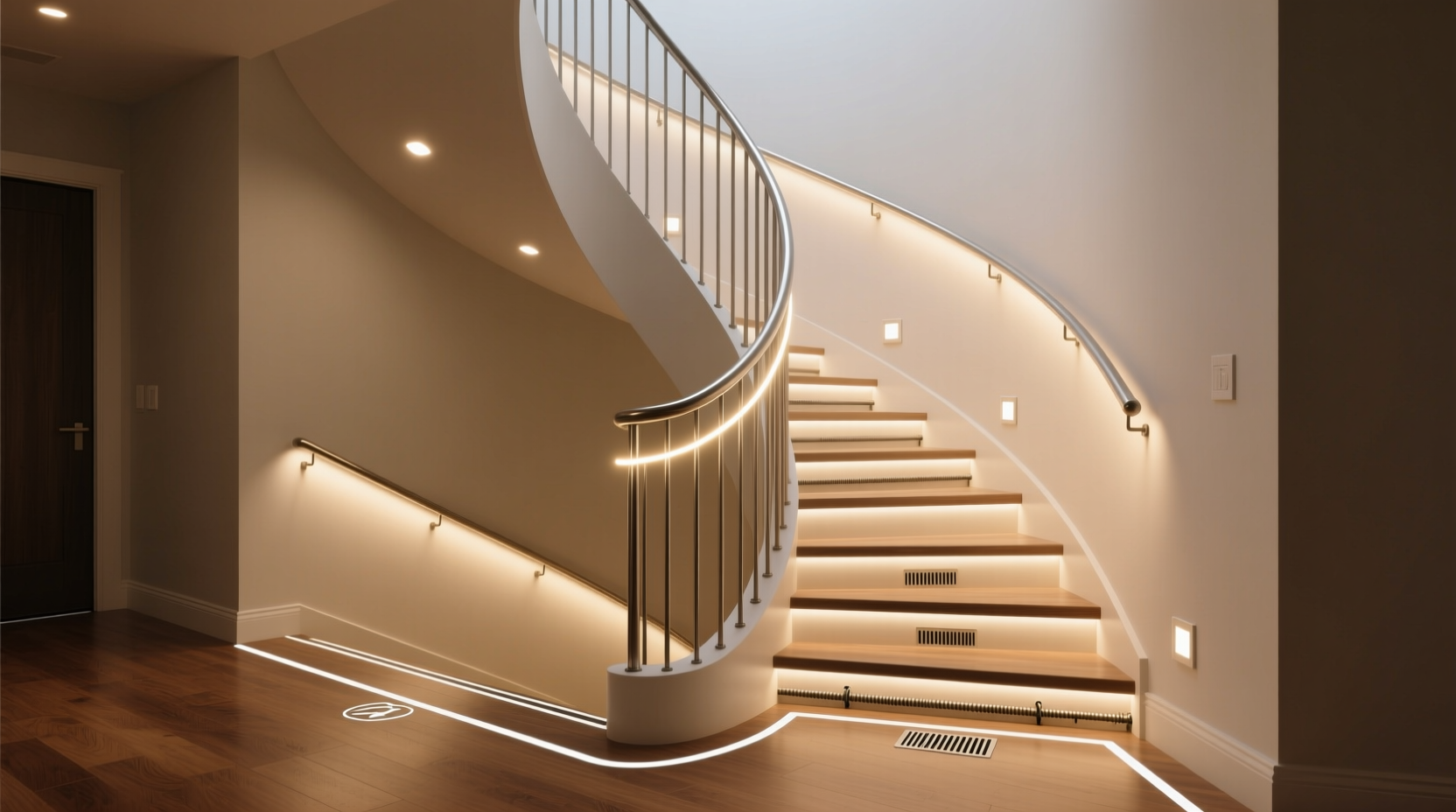
Spiral staircases present unique challenges compared to straight-run stairs. Their curved design, often tighter treads, and central support column limit handrail space and footpath width. Adding lighting increases complexity. A misplaced wire or poorly secured plug can become a snag point, especially in low-light conditions when the lights are actually on. According to the National Safety Council, falls on stairs account for over a million injuries annually in U.S. homes alone. Many of these incidents involve environmental hazards like clutter, poor lighting, or obstructed pathways—exactly what improper light installation could create.
The risk is not limited to guests. Family members, especially children and older adults, are more vulnerable to missteps. Lights that drape below the handrail or stretch across steps invite contact with feet or clothing. Even decorative garlands combined with lights can compound the danger if not installed thoughtfully.
“Lighting should enhance visibility and ambiance, not compromise safety. On spiral stairs, every inch counts—both visually and functionally.” — Laura Simmons, Interior Safety Consultant
Step-by-Step Guide: Safe Light Installation Process
Wrapping lights on a spiral staircase requires precision. Follow this sequence to ensure both aesthetic success and hazard-free use.
- Measure the staircase height and railing circumference
Use a flexible measuring tape to determine the total vertical rise from bottom to top landing. Then, measure the length of the railing by tracing its curve. Multiply this by 1.5 to estimate the ideal light strand length, allowing gentle overlap without overcrowding. - Choose the right type of lights
Opt for LED mini lights or fairy lights with thin, flexible cords. Avoid heavy-duty C9 bulbs or thick cables. Look for strands labeled “low heat” and “shatterproof.” Consider battery-powered or USB-rechargeable options to eliminate floor-level cords. - Inspect all strands for damage
Check each bulb, socket, and wire segment. Discard any with frayed insulation, loose connections, or flickering lights. Test the strand fully before installation. - Start at the top or bottom? Choose your anchor point
Begin at the bottom if you want the plug accessible near a floor outlet. Start at the top if using a cordless setup or if the top landing has an outlet. This decision affects cord routing and visibility. - Wrap clockwise or counterclockwise with consistent spacing
Maintain a steady rhythm—one loop per baluster or spindle. Keep spacing between wraps uniform (4–6 inches apart). Use a small level or visual guide to avoid drifting upward or downward. - Secure the cord discreetly but firmly
Use clear plastic cable ties or adhesive-backed clips designed for railings. Attach only to the underside of the handrail or along the central pole, never across tread surfaces. Clip every 12–18 inches to prevent sagging. - Route power cords safely
If using plug-in lights, run the cord vertically down the central support column, securing it with clips every 10 inches. Never let cords cross steps. Use a cord cover if the base must traverse flooring, choosing a low-profile, non-slip version. - Test the installation at night
Turn off room lights and walk slowly up and down the staircase. Observe shadows, glare, and whether any part of the installation distracts or obstructs movement.
Essential Tools and Materials Checklist
Having the right supplies streamlines the job and improves safety outcomes. Gather everything before starting.
- LED string lights (preferably with spare bulbs and fuses)
- Measuring tape
- Clear plastic cable ties (6–8 inch)
- Adhesive-backed mounting clips (railing-specific)
- Step ladder or stable platform
- Scissors or tie-cutting tool
- Extension cord (UL-listed, outdoor-rated if needed)
- Cord covers (non-slip, flat profile)
- Gloves (for handling metal rails or sharp edges)
- Notepad (to track outlet locations and strand lengths)
Do’s and Don’ts: Comparison Table for Safe Installation
| Do | Don’t |
|---|---|
| Use lightweight, low-heat LED lights | Use heavy incandescent strands that generate excess heat |
| Secure cords to the underside of the railing or center pole | Let cords dangle near steps or landings |
| Use adhesive clips instead of nails or tape | Use duct tape or staples that damage surfaces or fail over time |
| Install cord covers on floor-level extensions | Leave bare cords across walking paths |
| Test lights before and after installation | Assume all bulbs work after storage |
| Turn off lights when unattended for long periods | Leave lights on 24/7, especially with pets or young children |
Real Example: A Homeowner’s Holiday Lighting Success
When Maria Thompson renovated her 1920s townhouse in Portland, she preserved the original iron spiral staircase leading to the second floor. Each December, she wanted to decorate it with warm white lights but had previously given up due to tangled wires and a close call when her daughter caught her shoe on a loose strand.
This year, she followed a structured plan. She measured the railing (14 feet tall, 38 feet of spiral length) and purchased three 15-foot LED strands with replaceable bulbs. She used adhesive clips rated for metal surfaces, placing one every 10 inches along the underside of the handrail. The power cord ran down the central column and connected to a smart plug at the base, hidden behind a plant stand. She avoided crossing the floor by using a wireless extender linked to an outlet on the adjacent wall.
The result was a glowing ribbon effect that highlighted the staircase’s curve without compromising safety. Her family now uses the stairs at night with greater confidence, and visitors consistently compliment the subtle elegance. Most importantly, no tripping, snagging, or overheating has occurred—even after six weeks of continuous seasonal use.
Expert Tips for Long-Term Safety and Maintenance
Even a perfect installation degrades over time. Environmental factors like temperature shifts, humidity, and physical contact affect light performance and placement.
Check connections monthly during active use. Inspect clips for loosening and look for signs of wire abrasion where strands bend around corners. Rotate lights seasonally—don’t leave them up year-round unless specifically rated for permanent outdoor use.
If using extension cords, ensure they’re not coiled tightly, which can cause overheating. Instead, lay them in loose figure-eights or straight runs. For multi-strand setups, avoid daisy-chaining more than three sets unless the manufacturer approves it.
“People underestimate how much vibration spiral staircases generate from foot traffic. Over time, this shakes loose clips and wears down insulation. Secure every connection as if it will be tested daily.” — Daniel Reeves, Electrical Safety Inspector, NFPA Contributor
Frequently Asked Questions
Can I use extension cords on a staircase?
You can, but only if they’re securely fastened away from foot traffic. Run them vertically along the central support column using clips, never horizontally across steps. Use a UL-listed cord with ground protection and consider a cord cover if it touches the floor. Better yet, use battery-powered lights to eliminate cords entirely.
How do I prevent lights from swaying or loosening?
Use high-quality adhesive clips designed for outdoor or industrial use. Clean the railing surface with rubbing alcohol before applying. Space clips closer together (every 8–10 inches) on steeper spirals. Avoid overtightening cable ties, which can compress wires and weaken insulation.
Are there alternatives to wrapping the railing?
Yes. Consider installing recessed step lights into the treads or mounting LED puck lights inside the central column. Another option is hanging pendant lights above the staircase (secured to the ceiling) to illuminate the area without touching the rail at all. These solutions remove tripping hazards entirely while improving functional lighting.
Final Recommendations for a Hazard-Free Display
A beautifully lit spiral staircase enhances your home’s atmosphere, but only if it doesn’t endanger those who use it. Prioritize safety from the start by selecting appropriate materials, planning the cord path, and securing every component thoughtfully. Remember that aesthetics and safety aren’t competing goals—they’re complementary. A well-installed lighting scheme should draw admiration without drawing concern.
Whether you’re decorating for the holidays or adding year-round ambiance, take the extra time to do it right. Measure twice, test thoroughly, and maintain vigilance throughout the display period. Small details—like clip placement, cord routing, and bulb selection—make the difference between a fleeting decoration and a lasting, safe feature.




 浙公网安备
33010002000092号
浙公网安备
33010002000092号 浙B2-20120091-4
Comments
No comments yet. Why don't you start the discussion?