
In a world increasingly aware of waste and environmental impact, rethinking how we celebrate—and how we gift—has never been more important. Traditional gift wrapping consumes millions of tons of paper, tape, and decorative plastic each year, most of which ends up in landfills before New Year’s Day. But it doesn’t have to be that way. You can wrap presents with elegance, creativity, and professionalism using only recycled materials and absolutely no tape. This isn’t just about sustainability—it’s about craftsmanship, mindfulness, and the quiet joy of giving something truly thoughtful.
The art of tape-free, eco-conscious gift wrapping has roots in cultures around the world, from Japanese furoshiki cloth-wrapping to Scandinavian traditions of using old maps and newspapers. By combining these time-tested methods with modern resourcefulness, you can elevate your gifting game while reducing waste. The result? A present that looks professionally wrapped, carries emotional weight, and honors the planet.
Why Go Tape-Free and Plastic-Free?
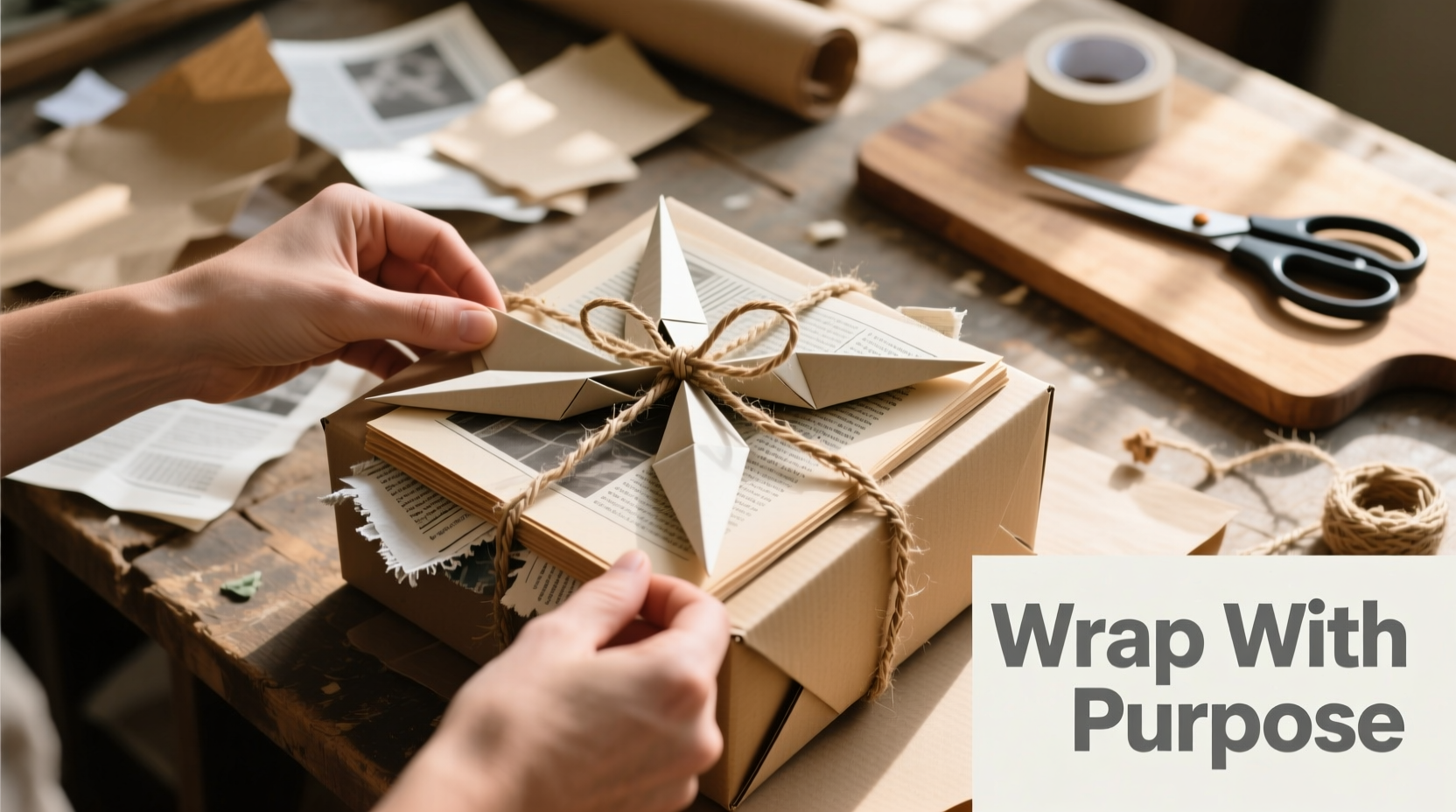
Tape might seem harmless—one small strip per gift—but collectively, it’s a major contributor to non-recyclable waste. Most adhesive tapes are made from polypropylene or PVC, materials that contaminate recycling streams. Even “paper” tape often contains synthetic adhesives that don’t break down easily. Once applied, tape renders otherwise recyclable paper unrecyclable. And let’s not forget: peeling off tape often tears the paper, making reuse impossible.
Going tape-free eliminates this problem entirely. It also encourages cleaner lines, intentional folds, and structural precision—skills that define professional-level wrapping. When combined with recycled materials, this approach reduces demand for virgin resources and keeps usable items out of landfills.
“Eliminating tape isn’t just an environmental choice—it’s a design challenge that elevates the entire presentation.” — Lena Torres, Sustainable Design Educator and Author of *Zero-Waste Celebrations*
Essential Materials: What You’ll Need (And Where to Find It)
You don’t need specialty supplies. The best materials are already in your home—discarded newspapers, old magazines, fabric scraps, cardboard boxes, twine, and even repurposed clothing. The key is knowing how to use them effectively.
Paper Alternatives:
- Newsprint or newspaper – Great for lightweight items; choose comics or international editions for visual flair.
- Pages from old books or sheet music – Ideal for literary gifts or musical instruments.
- Maps or atlases – Perfect for travel-themed presents or adventurous recipients.
- Unwanted packaging – Flip inside-out cereal boxes, tea tins, or shipping mailers for clean inner surfaces.
Fabric Options:
- Cotton scarves, bandanas, or pillowcases – Double as part of the gift.
- Old shirts or linen napkins – Sturdy and attractive when folded properly.
- Tea towels or flour sacks – Naturally textured and absorbent; great for kitchen gifts.
Fasteners (No Tape Needed):
- Natural twine or hemp cord – Strong, biodegradable, and easy to tie.
- Reusable ribbon or fabric strips – Cut from worn clothes or curtains.
- Wooden clips or vintage brooches – Functional and decorative.
- Origami-style folding – Uses tension and precision instead of adhesives.
Step-by-Step: Mastering the Tape-Free Wrap
Whether you're using paper or fabric, the technique relies on clean folds, balanced tension, and secure knots. Follow this universal method for rectangular or box-shaped gifts—the most common type.
- Choose your material wisely. For paper, ensure it’s at least 1.5 times larger than the gift on each side. For fabric, aim for double the diagonal measurement of the item.
- Lay the gift in the center. Position the object face-down on the wrapping surface, aligning it with the grain or pattern if desired.
- Fold opposite sides over the gift. Bring one edge across and press firmly along the edges. Repeat with the opposite side, creating a snug sleeve. Overlap slightly if needed.
- Create tension with folding. At each end, fold the open flaps inward like an envelope corner—this creates a clean edge and prevents slipping.
- Secure with knot-based closure. Wrap twine around the package perpendicular to the seam. Tie a simple knot or bow. For extra hold, make a cross-wrap (both directions) and knot at the top.
- Add a natural embellishment. Tuck in a sprig of pine, dried citrus slice, or cinnamon stick under the knot for seasonal charm.
This method works seamlessly with both paper and fabric. With fabric, you can go further using the Japanese furoshiki technique, where specific knots serve both function and symbolism.
Furoshiki Variations for Different Shapes
| Gift Shape | Recommended Fold | Knot Type | Best Material |
|---|---|---|---|
| Box or book | Basic square fold | Kanoko (deer-spot) knot | Cotton or silk scarf |
| Bottle or cylinder | Column wrap | Hana (flower) knot | Stretchy cotton blend |
| Two small items | Otsukai (carry-all) | Simple loop knot | Stiff linen or canvas |
| Irregular shape | Free-form gather | Drawstring closure with cord | Light muslin or gauze |
Furoshiki isn’t just practical—it’s poetic. Each knot has a meaning: the kanoko knot symbolizes connection, while the hana knot celebrates beauty. Wrapping becomes a ritual, not a chore.
Real Example: A Zero-Waste Holiday Season
Sophie, a high school teacher in Portland, decided to eliminate all single-use wrapping after watching a documentary on ocean plastics. She started small: her daughter’s birthday was coming up, and she wanted the gift to reflect her values. Instead of buying paper, she used pages from a discarded novel she’d finished reading—carefully selecting chapters with hopeful themes. She cut a piece twice the size of the small puzzle box inside.
She wrapped it using the tape-free method, folding crisply and securing it with a length of unraveled yarn from an old sweater. She tied a tiny bundle of rosemary on top with a note: “For clarity and warmth.” Her daughter loved the presentation as much as the gift, later framing the page used on top.
That holiday season, Sophie wrapped all 14 gifts—ranging from wine bottles to scarves—using only reused materials. She kept a basket by the door labeled “Future Wrapping,” collecting interesting papers and fabrics throughout the year. By December, she had enough variety to assign themes: maps for travelers, sheet music for her pianist nephew, comic strips for her nephew who loves superheroes.
Her family now requests “Sophie-style” wrapping. More importantly, they’ve started doing it themselves. One less roll of tape bought. One fewer bag of trash headed to landfill.
Common Challenges and How to Solve Them
Transitioning to tape-free, recycled-material wrapping comes with learning curves. Here’s how to overcome frequent hurdles:
- Problem: Paper won’t stay folded.
Solution: Use heavier recycled paper like kraft or cardstock. Alternatively, reinforce with a decorative wooden clip or clothespin painted to match the theme. - Problem: Fabric slips on smooth surfaces.
Solution: Pre-wash fabric to reduce slipperiness. Or use a rubber-edged tray to stabilize the item during wrapping. - Problem: Twine cuts into soft paper.
Solution: Place a small cardboard reinforcement disc under the knot, or use wider ribbon made from fabric strips. - Problem: Recycled paper has print on both sides.
Solution: Embrace it. Mix and match for a collage effect, or use the busier side outward for abstract appeal.
Checklist: Your Zero-Tape Gift Wrapping Routine
Follow this checklist every time you prepare a gift:
- ☐ Select a clean, sturdy recycled material (paper or fabric).
- ☐ Measure and cut with generous overlap (at least 3 inches on all sides).
- ☐ Position gift face-down in the center.
- ☐ Fold long sides tightly over the gift and crease edges.
- ☐ Fold end flaps inward like envelope corners.
- ☐ Wrap twine or ribbon around the package and tie securely.
- ☐ Add a natural or reusable embellishment (e.g., dried flower, button).
- ☐ Store leftover scraps for future use or compost paper trimmings.
With practice, this process takes no longer than traditional wrapping—and often feels more satisfying.
FAQ
Can I really wrap any gift without tape?
Yes—with the right technique. Boxes, books, bottles, and soft items all respond well to folding and knotting methods. For oddly shaped items, fabric wraps with drawstrings or gathers offer maximum flexibility. The key is choosing the right fold and fastener for the form.
What if the recipient wants to reuse the wrapping?
That’s the goal! Tape-free wrapping is inherently reusable. Fabric can be washed and refolded. Paper, if kept intact, can be carefully unfolded and stored flat for next time. Include a note: “Please reuse me!” to encourage mindful unwrapping.
Is this method durable enough for shipping?
For light packages, yes—especially when using sturdier recycled kraft paper and double-knotting the twine. Reinforce seams with paper reinforcement tabs (small folded triangles tucked under the knot). Avoid fragile recycled paper like newsprint for mailed gifts unless double-layered.
Final Thoughts: Wrapping That Reflects Your Values
Wrapping a gift without tape or new materials isn’t a compromise—it’s an upgrade. It forces intentionality. It slows us down. It turns a routine task into an act of care—for the person receiving the gift and for the planet we share.
You don’t need glossy paper or glittery bows to impress. What stands out is thoughtfulness: the texture of an old map, the scent of twine mingling with cedar, the surprise of finding a favorite poem on the outside of a present. These details linger far longer than any sticker or plastic ribbon.
Every time you choose to wrap mindfully, you’re voting for a different kind of culture—one that values reuse, craftsmanship, and connection over convenience and consumption. And when others see your beautifully wrapped, tape-free gifts, they’ll ask how you did it. That’s your moment to inspire.




 浙公网安备
33010002000092号
浙公网安备
33010002000092号 浙B2-20120091-4
Comments
No comments yet. Why don't you start the discussion?