
Gift-giving is no longer just about the item inside—it’s about the experience of unwrapping. Imagine handing someone a present that glows softly the moment their fingers brush the paper. With conductive ink and basic circuit principles, you can transform traditional gift wrapping into an interactive, electrifying surprise. This isn’t science fiction; it’s accessible, creative electronics made simple. By integrating conductive inks, LEDs, and small power sources into your wrapping process, you create not only a visual spectacle but a tactile connection between giver and receiver.
Conductive ink contains particles like silver, carbon, or copper that allow electricity to flow through it like a wire—only on paper. When used thoughtfully, it enables circuits to be drawn directly onto wrapping materials. Combined with touch-sensitive activation, these circuits can trigger lights, sounds, or even vibrations. While this may sound complex, the process is surprisingly approachable for crafters, educators, and tech enthusiasts alike.
Understanding Conductive Ink and How It Works
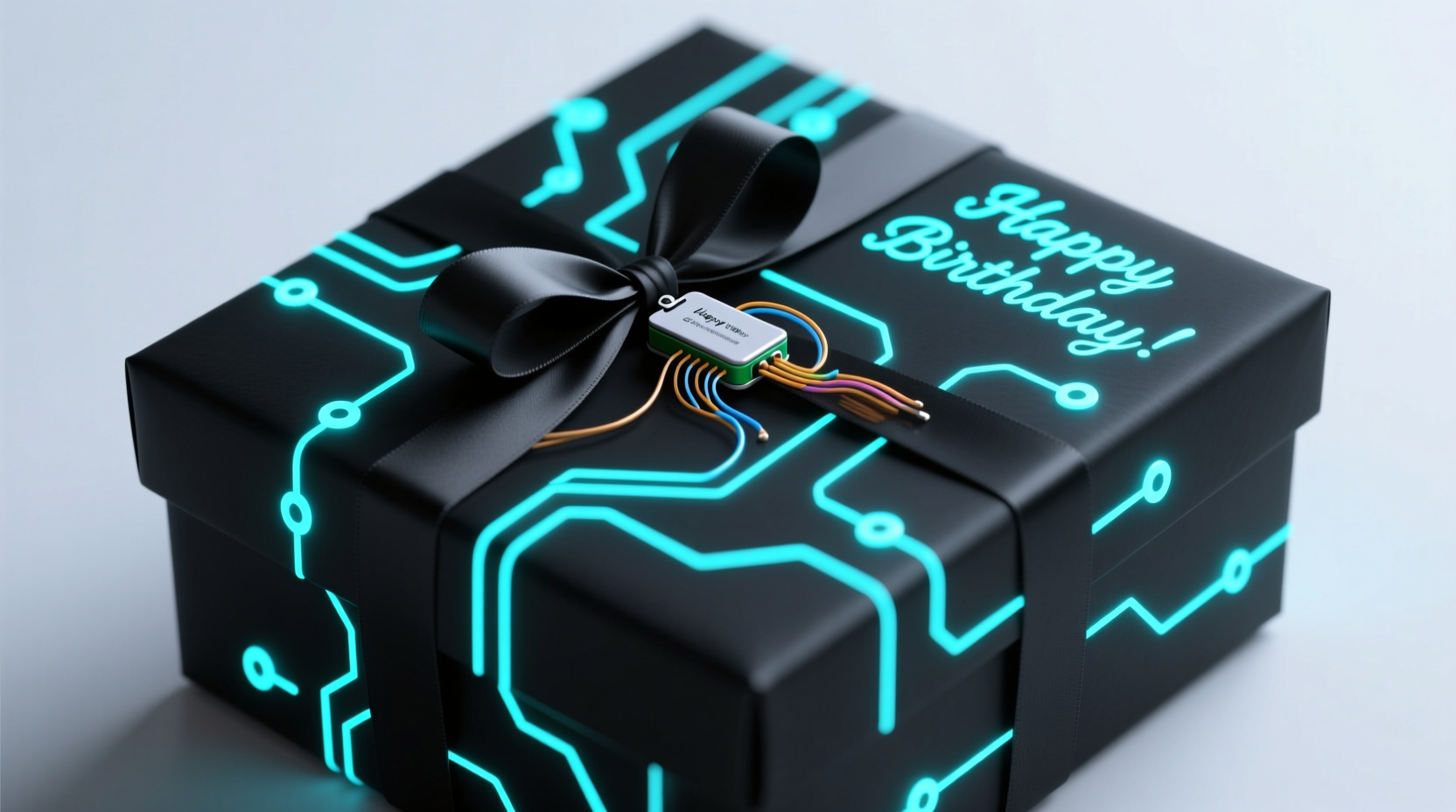
Conductive ink behaves like a liquid wire. Once applied and dried, it forms a pathway through which electrical current can travel. Most commercial conductive inks are water-based and non-toxic, making them safe for use in crafts. They typically dry clear or with a faint metallic sheen, allowing for subtle integration into designs without compromising aesthetics.
The key to success lies in continuity: the ink must form unbroken lines from power source to component. Gaps, smudges, or overly thin applications can interrupt the circuit. Unlike regular ink, conductive versions require time to cure—usually 5 to 15 minutes depending on humidity and thickness. Rushing this stage risks poor conductivity.
These inks work best on porous surfaces like paper, cardboard, or fabric. Smooth, glossy wrapping papers may require light sanding or priming for better adhesion. Always test your ink on a scrap piece before applying it to your final design.
“Conductive ink bridges art and engineering. It allows creators to embed functionality into everyday objects without visible wires.” — Dr. Lena Torres, Materials Scientist at MIT Media Lab
Materials You’ll Need for Interactive Gift Wrapping
To bring your glowing present to life, gather the following components. Many are available in educational electronics kits or online craft retailers specializing in e-textiles and DIY electronics.
- Conductive ink – Choose a reliable brand such as Bare Conductive Electric Paint or Circuit Scribe Ink.
- LEDs (low-voltage) – Surface-mount (SMD) or flexible strip LEDs work best to minimize bulk.
- CR2032 coin cell battery – Compact, lightweight, and ideal for temporary circuits.
- Capacitive touch sensor module (optional) – Enhances sensitivity and prevents false triggers.
- Insulating tape or varnish – Prevents short circuits where ink paths cross.
- Wrapping paper or cardstock – Sturdy, matte-finish paper holds ink well.
- Scissors, ruler, pencil – For precise folding and layout planning.
- Clear adhesive labels or laminating sheet – Protects circuits while maintaining touch sensitivity.
Before assembly, sketch your circuit layout lightly in pencil. Plan where the battery will sit, how the LED will be positioned, and where the touch zone will activate the light. Keep wire runs short to reduce resistance and ensure brightness.
Step-by-Step Guide: Creating a Touch-Activated Light Circuit on a Wrapped Gift
Follow this sequence to integrate a working circuit into your wrapped present. The goal is a seamless blend of decoration and function—where the technology enhances, rather than distracts from, the gift.
- Wrap the gift normally using your chosen paper. Ensure clean folds and minimal creasing, especially on the top surface where the circuit will go.
- Design the circuit path with a pencil. Draw two parallel lines starting from one edge (for the battery) and converging near the center (for the LED). Add a separate “touch pad” area—a small circle or shape—at one corner.
- Apply conductive ink along the pencil lines using a steady hand. Fill the battery contact points (two pads: positive and negative), the LED pads (anode and cathode), and the touch sensor pad. Let dry completely—do not skip this step.
- Test conductivity with a multimeter if available. Set to continuity mode and touch probes to each end of a line. A beep indicates a complete path.
- Mount the LED by bending its legs to lie flat, then pressing them gently onto the designated pads. Secure with a tiny dab of conductive glue or tape if needed.
- Attach the battery by placing the CR2032 cell over the positive pad, then folding a small tab of conductive tape over the back to connect the negative side. This creates a pressure-activated switch.
- Integrate the touch circuit: Draw a line from the touch pad to the base of the LED’s positive leg. When a finger touches the pad, body capacitance completes the circuit, grounding the system and allowing current to flow.
- Seal sensitive areas with clear nail polish or insulating spray, leaving only the touch pad exposed. Cover the battery connection with removable tape so the recipient can disable the light after opening.
- Add decorative elements—stickers, ribbons, or hand-drawn patterns—that don’t cover functional zones. Consider labeling the touch point with a playful clue like “Touch here to reveal the magic.”
- Final test: Touch the designated spot. The LED should glow steadily or pulse gently, depending on your setup.
It’s important to note that human skin acts as part of the circuit by providing a ground path. If the light doesn’t activate, try touching another grounded surface (like a metal table leg) with your other hand while touching the pad. Alternatively, attach a hidden ground wire to the package’s underside that makes contact with a surface when placed down.
Tips, Troubleshooting, and Best Practices
Even with careful planning, issues can arise. Here’s how to avoid common pitfalls and optimize performance.
| Issue | Possible Cause | Solution |
|---|---|---|
| LED doesn’t light up | Broken ink trace, poor drying, reversed polarity | Inspect for gaps, reapply ink, verify LED orientation |
| Light flickers intermittently | Loose battery contact or high resistance | Reinforce connections with conductive tape |
| Touch pad unresponsive | Too small, insulated by coating, or insufficient grounding | Increase pad size, remove sealant from surface, add ground reference |
| Battery drains quickly | Short circuit or continuous draw | Check for overlapping traces, add switch or disconnect when not in use |
For longer-lasting displays, consider adding a momentary switch under a ribbon or bow. This keeps the circuit off during transport and lets the recipient activate it intentionally. Also, avoid placing circuits across fold lines—repeated bending can crack the dried ink and break conductivity.
Real Example: A Birthday Surprise That Lit Up Literally
Jamie, a high school physics teacher, wanted to make her daughter’s 12th birthday unforgettable. She wrapped a handmade journal in kraft paper and painted a constellation pattern using conductive ink. At the center of Orion’s belt, she embedded three tiny blue LEDs connected in parallel. A touch-sensitive star in the corner served as the activation point.
When her daughter reached out to touch the star, the entire constellation lit up—softly at first, then brighter as she held her finger there. The look of wonder was immediate. Later, Jamie explained how the circuit worked, turning the gift into both a keepsake and a mini science lesson. Friends at the party asked for tutorials, and within days, two other parents had created similar projects for upcoming events.
This example shows how blending emotion, education, and innovation can elevate a simple gesture into something memorable. No advanced tools were used—just patience, planning, and curiosity.
Checklist: Preparing Your Smart-Wrapped Gift
Use this checklist to ensure every element is in place before presenting your creation:
- ✅ Wrapped gift with smooth, flat surface for circuit application
- ✅ Circuit layout planned and tested on scrap material
- ✅ Conductive ink fully dried and continuity verified
- ✅ LED correctly oriented and securely attached
- ✅ Battery holder or connection method in place
- ✅ Touch pad clearly marked and exposed
- ✅ Insulation applied to prevent shorts
- ✅ Final activation test completed successfully
- ✅ Decorative elements added without covering critical zones
- ✅ Instructions or hint included for interaction
Frequently Asked Questions
Can I reuse the conductive ink packaging?
No—once the circuit is activated and the battery is engaged, removing components usually damages the ink traces. However, recipients can keep the wrapping as a decorative piece. Some save it framed as a memento.
Is conductive ink safe for children?
Most commercial conductive inks are non-toxic and water-soluble, making them safe for supervised use. However, they should not be ingested. Always wash hands after handling and keep away from eyes. For young children, seal all inked areas with a non-conductive clear coat.
How long will the light stay on?
With a standard CR2032 battery and a single LED, expect 30 minutes to several hours of continuous use. To extend life, design the circuit so the light only activates during touch (capacitive sensing uses minimal power). Disconnect the battery after gifting if longevity is a concern.
Pushing the Boundaries: From Gifts to Experiential Design
What starts as a novelty can evolve into a new form of personal expression. Artists now use conductive ink in greeting cards, pop-up books, and wearable art. Educators incorporate it into STEM workshops to teach circuitry through creativity. The same principles used in gift wrapping apply to interactive posters, smart packaging prototypes, and even musical instruments drawn on paper.
Future iterations could include Bluetooth-enabled responses, color-changing thermochromic layers activated by warmth, or motion-triggered effects using accelerometers. As materials become cheaper and more accessible, the barrier to entry continues to fall.
The real power of this technique isn’t just in the glow—it’s in the engagement. A gift that responds to touch invites participation. It says, “This was made for you, and it knows you’re here.” In a world of mass-produced items, that level of personalization stands out.
Conclusion
Wrapping a present with conductive ink that lights up when touched merges craftsmanship with innovation. It transforms a routine act into a moment of delight, surprise, and discovery. With readily available materials and a methodical approach, anyone can master this technique—not just engineers or artists, but parents, students, and hobbyists eager to make their gifts unforgettable.
You don’t need a lab or expensive tools. You need curiosity, attention to detail, and a willingness to experiment. Start small: a glowing heart on a Valentine’s gift, a twinkling holiday tag, a birthday box that sparkles at first touch. Each project builds confidence and opens doors to more complex ideas.




 浙公网安备
33010002000092号
浙公网安备
33010002000092号 浙B2-20120091-4
Comments
No comments yet. Why don't you start the discussion?